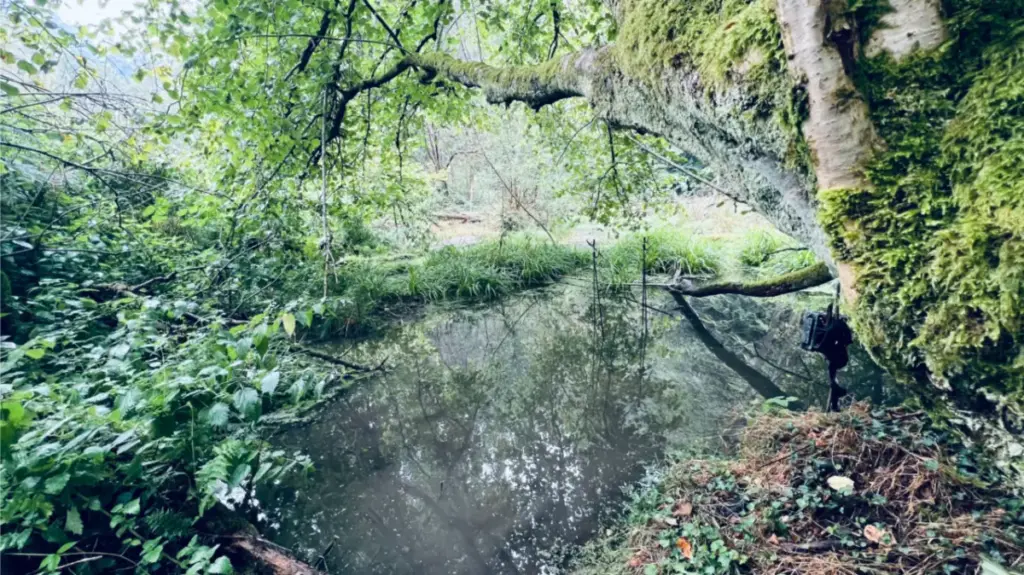
In the verdant landscapes of the West of England, a quiet ecological revolution is quietly gathering momentum. Conservationists, land managers, and government bodies are increasingly looking to the past to solve the pressing environmental challenges of the future. At the center of this movement is Castor fiber—the Eurasian beaver. Long absent from the British countryside, this semi-aquatic mammal is being hailed not merely as a returning native, but as an indispensable "ecosystem engineer" capable of reversing biodiversity loss while building crucial resilience against extreme weather, water scarcity, and climate change.
Recent initiatives spearheaded by the Gloucestershire Wildlife Trust and Forestry England have set their sights on conducting comprehensive suitability surveys across targeted areas of Gloucestershire, most notably the Severn Vale. The overarching goal is to evaluate landscapes for potential new reintroduction programs that require formal governmental licensing through the Department for Environment, Food and Rural Affairs (Defra).
This prospective return is more than just a wildlife conservation triumph; it represents a fundamental paradigm shift in how modern environmentalists approach watershed management. By reshaping waterways, constructing intricate dams, and engineering sprawling wetlands, beavers perform complex hydrological labor that humans struggle to replicate efficiently. As climate projections indicate hotter summers, more volatile rainfall patterns, and heightened risks of agricultural and municipal drought, the natural water-retention capabilities of beaver-engineered habitats offer an urgently needed, nature-based defensive shield.
Detailed Chronology: From Extinction to Experimental Recovery
The story of the beaver in Britain is a classic narrative of human-driven ecological displacement followed by modern redemption.
The Historical Disappearance
For millennia, beavers were a foundational component of British freshwater ecosystems. However, intense commercial exploitation over the centuries drastically reduced their populations. Hunted relentlessly for their dense, waterproof pelts, prized meat, and castoreum—a glandular secretion historically sought after for medicinal and perfumery uses—beavers were driven to extinction in the wild across England and Wales by the 16th or early 17th century, disappearing entirely from the West of England roughly 400 years ago. Their removal left a profound ecological void, transforming dynamic, multi-threaded river systems into uniform, single-channel waterways far more susceptible to flash flooding, soil erosion, and severe summer droughts.
The Modern Reintroduction Era
The turning point for British beavers began in the early 21st century, characterized by cautious, highly monitored trials. The first major milestone occurred in Scotland with the Scottish Beaver Trial in Knapdale, Argyll, initiated in 2009, which eventually led to beavers being officially recognized as a native species in Scotland in 2019.
In England, progress took a slightly different path, prioritizing enclosed trials to study local impacts before contemplating wider releases. A landmark moment took place in 2018 when beavers were successfully introduced into a secure enclosure at Greathough Brook within the Forest of Dean, Gloucestershire. Managed closely by Forestry England, this contained population has provided invaluable empirical data regarding how the animals interact with local flora, fauna, and water tables.
Current Expansion and Future Horizons
Building upon the successes of enclosed habitats like Greathough Brook—where roughly six years of observation have revealed a blossoming web of biodiversity—conservationists are now pushing for un-enclosed, landscape-scale restorations. To date, England has authorized three licensed wild releases of beavers. Propelled by growing political and public support, industry projections suggest that approximately 100 beavers are expected to be released into various carefully selected British catchments over the course of this year alone. In Gloucestershire, organizations like the Gloucestershire Wildlife Trust and the Beaver Trust are laying the groundwork for these future releases, transitioning from experimental enclosures to broad regional integrations.
Supporting Context & Metrics: The Science of Ecosystem Engineering
To understand why conservationists are so eager to welcome beavers back, one must examine the specific mechanics of what makes them premier "ecosystem engineers."
Transforming Hydrology: From Streams to Sponges
Beavers are uniquely adapted to modify their immediate environment to suit their survival needs, primarily through the construction of dams using branches, mud, and stones. When a beaver builds a dam across a small stream or river, it impedes the downstream flow of water, backing it up to form deep ponds and complex wetland networks.
This simple architectural feat has profound hydrological consequences:
Flood Mitigation: During heavy downpours and winter storms, beaver ponds act as giant holding reservoirs. They slow the velocity of peak floodwaters, absorbing excess volume and releasing it gradually downstream, thereby protecting downstream human communities from sudden inundations.
Drought Resilience: Conversely, during prolonged dry spells and heatwaves, these same wetlands act as sponges. They store vast quantities of water in the landscape, maintaining elevated water tables, keeping adjacent soils moist, and ensuring that trickling streams continue to flow when unmitigated channels dry up entirely.
Water Purification: As water slows down behind beaver dams, suspended sediments, agricultural runoff, and pollutants settle out of the water column. Natural filtration by wetland vegetation helps improve overall water quality before it reaches major rivers and municipal reservoirs.
The Ripple Effect on Biodiversity
The ecological transformation triggered by a single family of beavers is staggering. By converting a uniform, shaded stream into a mosaic of open ponds, deadwood, shallow marshes, and wet woodlands, they construct a diverse ecological theater that supports countless species at every level of the food chain.
At Greathough Brook in the Forest of Dean, biological surveys have documented a dramatic upturn in species richness. The initial boom begins with aquatic invertebrates, amphibians, and wetland plants that colonize the newly formed ponds. These insects and small organisms quickly form the foundational base of a rich trophic pyramid.
Field experts working within the region have noted extraordinary wildlife returns:
Predatory Mammals: Observers have reported sightings of stoats, weasels, and even elusive pine martens utilizing the newly restored margins.
Avian Life: Wetland-dependent birds, waterfowl, and raptors find rich foraging grounds and nesting sites within the complex, structurally diverse canopy created by beaver activity.
Botanical Diversity: Tree species such as willows, when coppiced by beaver gnawing, respond with vigorous, multi-stemmed regrowth, creating dense thickets favored by nesting birds and small mammals.
Official Statements and Stakeholder Perspectives
The push to reintroduce beavers is not merely a grassroots conservation dream; it is backed by nuanced policy discussions, institutional support, and cautious stakeholder engagement.
Government Backing: Defra’s Position
The Department for Environment, Food and Rural Affairs (Defra) has emerged as a key institutional champion for the return of the species, viewing it as a vital tool for achieving national environmental targets.
A Defra spokesperson articulated the government’s stance:
"Reintroducing beavers has the potential to make a huge difference to nature recovery, and we are proud to champion this work. We will continue to support our partners and ensure that the return of beavers benefits both wildlife and communities."
This official endorsement signals a regulatory environment increasingly friendly to managed rewilding, provided that proper frameworks are put in place to manage human-wildlife coexistence.
Conservationists on the Ground
For environmental organizations spearheading the groundwork, the focus is squarely on collaboration, scientific rigor, and public education.
Emily Bowen of the Beaver Trust emphasizes the fundamental role the species plays in ecological restoration:
"Beavers are a keystone species. They are ecosystem engineers, which means that they can have a massive impact on the landscape around them. By changing the land to suit their needs, they can change it in such a way that boosts biodiversity and increases resilience in terms of climate change."
Echoing this sentiment, Kate Wollen of Forestry England describes the transformation witnessed inside the Forest of Dean enclosure:
"The beavers have created this amazing habitat that has brought in all the insects that are at the bottom of the food chain and then it brings in all the other animals that then feed on them, it’s just a whole wonderful network of habitats… It’s a true watery wonderland."
However, conservationists are acutely aware that reintroductions cannot happen in a vacuum. Mega Adamou of the Gloucestershire Wildlife Trust highlights the intensive community engagement currently underway in regions like the Severn Vale:
"We have to make sure that we are working really closely with people who live, work and manage the areas that we’re thinking about putting beavers. We’ll be seeing more complex wetland habitats being created, and a little bit more resilience to drought in those areas where the beavers might end up living. It’s been really interesting to see how the general public have taken to beavers and getting people thinking about seeing them back in our countryside."
Future Outlook: Navigating Challenges and Embracing the Future
As Gloucestershire Wildlife Trust and Forestry England press forward with their suitability surveys and stakeholder consultations across the Severn Vale and wider county landscapes, the path ahead holds both immense promise and distinct challenges.
Mitigating Human-Wildlife Conflict
While the ecological and hydrological benefits of beavers are well-documented, their presence can occasionally lead to friction with local landowners and farmers. Beaver dam building can result in localized flooding of agricultural fields, damage to commercial timber trees, or blocked culverts.
Addressing these challenges requires proactive management strategies, including:
Beaver Management Groups: Establishing local advisory bodies to help landowners implement mitigation measures such as flow devices (often called "beaver deceivers") that regulate water levels without removing the animals.
Compensation and Support Schemes: Ensuring that farmers and landowners are supported financially or logistically if beaver activity impacts their livelihoods, thereby fostering local stewardship rather than resentment.
Comprehensive Licensing and Monitoring: Utilizing strict government licensing frameworks to ensure that any future wild releases are placed in optimal catchments where conflict potential is minimized and ecological gain is maximized.
A Blueprint for Climate Adaptation
Looking toward the coming decades, the integration of beavers into British river catchments could serve as a cornerstone of national climate change adaptation strategy. As weather extremes become the norm rather than the exception, traditional, highly engineered flood defenses are proving increasingly expensive and ecologically damaging.
By deputizing nature’s premier engineers, Britain has a rare opportunity to repair degraded watersheds at a landscape scale. If current surveys in Gloucestershire translate into successful, well-managed reintroductions, the sight of busy beavers shaping local waterways may soon transform from an experimental novelty into an ordinary, cherished feature of the British countryside—safeguarding both our fragile wildlife and our water security for generations to come.