

Executive Overview
For decades, international conservation movements have operated under a comforting, if occasionally romanticized, assumption: that returning ancestral lands to Indigenous populations automatically translates to ecological restoration. The narrative suggests that Indigenous stewardship and modern biodiversity conservation are inextricably intertwined, moving in a synchronized rhythm toward the expansion of natural carbon sinks, the resurgence of primary forests, and the shelter of endangered species.
A landmark study published in Nature Sustainability challenges this long-held paradigm, offering a nuanced and empirically rigorous look at the environmental realities of Indigenous land restitution. Analyzing decades of satellite imagery and administrative records across southern Chile, researchers found that returning historical territories to the Indigenous Mapuche people yielded a mixed bag of environmental outcomes. While the transfer of land successfully dismantled non-native, industrial tree plantations and expanded traditional grasslands for livestock, it did not produce an immediate boost in natural forest cover, biodiversity enhancement, carbon sequestration, or soil erosion control.
Rather than serving as a indictment of Indigenous land management, these findings dismantle generalized tropes about how Indigenous peoples should use their land. Experts argue that true self-determination cannot be measured against external ecological benchmarks imposed by conservationists or state agencies. Instead, true autonomy means granting communities the unfettered right to define their own land-use priorities, free from the burdens of colonial exploitation, historical fragmentation, and external expectations.
Detailed Chronology: The Arc of Dispossession and Return
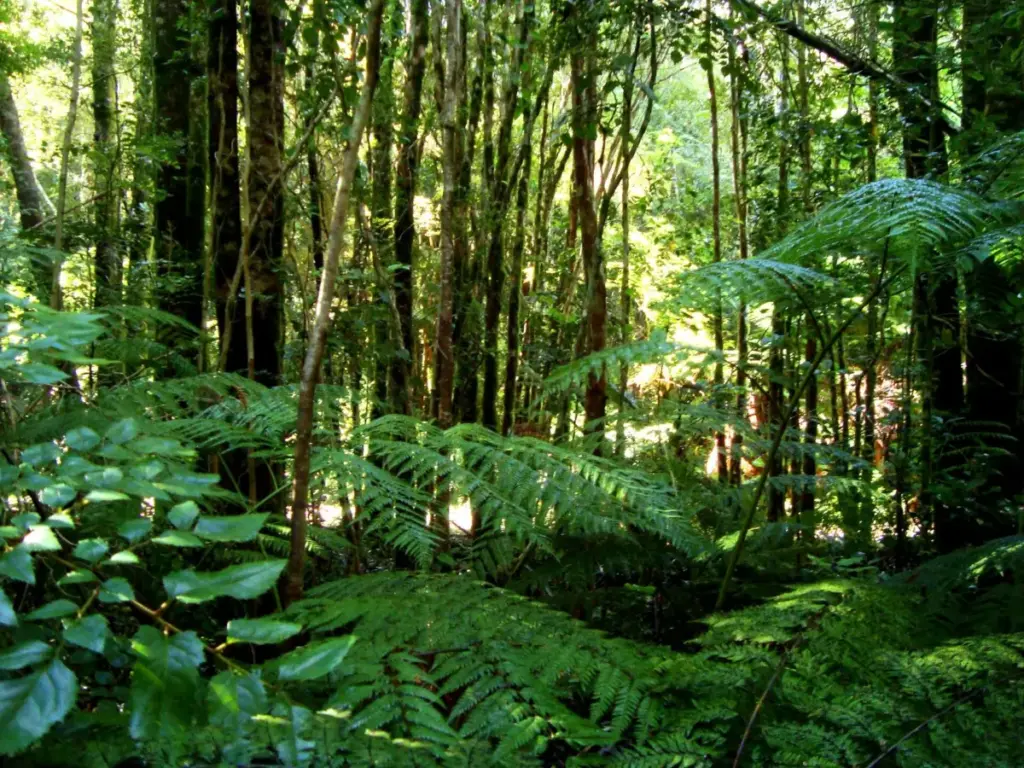
To understand the complex environmental state of restituted lands in southern Chile, one must first look at the historical forces that shaped the landscape. The geographical focus of the recent study encompasses the traditional Mapuche territories of Biobío, Araucanía, Los Ríos, and Los Lagos—regions largely contained within Chile’s breathtaking yet fragile Valdivian temperate rainforest ecoregion.
The Historical Erasure of Mapuche Territory
Before the arrival of European colonizers, Mapuche lands were characterized by dense, ancient temperate rainforests. The introduction of European livestock by Spanish conquistadors in the 16th century slowly integrated pastoralism into the Mapuche way of life, though land use remained largely balanced with the forest ecosystems.
The catastrophic disruption of this equilibrium arrived in the late 19th century. Through aggressive military campaigns orchestrated by the Chilean and Argentine governments—euphemistically known in state histories as the "Pacification of Araucanía"—the Mapuche people were systematically stripped of more than 90% of their ancestral territory. Displaced from their sovereign lands and forced onto confined reservations, the population experienced rapid ecological degradation. Their remaining lands were heavily deforested to make way for intensive wheat farming and, later, vast industrial monoculture plantations of non-native pine and eucalyptus trees managed by powerful timber conglomerates.
The Establishment of the FTAI
Decades of systemic marginalization, poverty, and cultural suppression eventually forced the Chilean state to reckon with its historical wrongdoings. In 1993, the enactment of Chile’s Indigenous Law established the Indigenous Land and Water Fund (FTAI), managed by the National Corporation for Indigenous Development (CONADI).

The FTAI’s core mandate was straightforward: address historical dispossession by purchasing land from private owners or state entities and transferring legal ownership back to Indigenous communities. Between 1994 and 2022, this program successfully returned 217,716 hectares (approximately 538,000 acres) across 1,577 properties to 36 distinct Mapuche communities within the target southern regions.
Administrative Bottlenecks and Modern Conflict
Despite its progressive intent, the land-titling mechanism administered by CONADI has been plagued by deep structural inefficiencies. Mapuche communities have repeatedly criticized the agency for sluggish bureaucratic processes, noting that individual land claims can take up to a quarter of a century to process.
This bureaucratic paralysis has fueled violent land conflicts throughout southern Chile. In June 2023, former President Gabriel Boric intervened by establishing a dedicated commission to untangle the escalating violence linked to delayed titling and the overwhelming presence of corporate forestry operations. The commission’s sobering assessment revealed the depth of the administrative crisis: at CONADI’s current processing speed, it would take between 80 and 162 years to clear the existing backlog of land claims.
Supporting Context & Metrics: What the Data Reveals
The Nature Sustainability study sought to move beyond anecdotal assumptions by conducting a large-scale, empirical evaluation of environmental changes following land restitution. Researchers cross-referenced high-resolution satellite data with administrative records to track the exact ecological trajectories of 1,577 properties before and after they were returned to Mapuche communities.
Rejecting Corporate Monocultures, Expanding Grasslands
When Mapuche communities finally regained title to their ancestral properties, they inherited landscapes that bore little resemblance to the pristine forests of their ancestors. In many cases, the land was heavily modified, fragmented, or blanketed by commercial pine and eucalyptus plantations established by the timber industry.
The data reveals a decisive and immediate rejection of these corporate land-use models. Communities systematically dismantled non-native tree plantations, reclaiming the soil for uses that aligned more closely with their cultural heritage and economic security. Specifically, the data highlights a significant expansion of grasslands dedicated to small-scale livestock production.
For the Mapuche, livestock rearing is not merely an economic enterprise; it is a foundational cultural pillar deeply integrated into their livelihoods since the Spanish introduction of cattle centuries ago. By converting industrial timberlands into pasture, communities asserted control over their economic survival.

The Ecological Balance Sheet
However, the shift from corporate forestry to small-holder grasslands came with ecological trade-offs. While the removal of invasive, water-guzzling pine and eucalyptus monocultures is a positive step for regional hydrology, the rapid expansion of livestock pastures did not translate into immediate gains for biodiversity, carbon sequestration, or soil erosion control.
The researchers noted several critical drivers behind these outcomes:
- Initial Land Condition: Lands handed back to communities are rarely pristine. Decades of intensive extraction, chemical use, and monoculture forestry leave soils severely depleted and lacking the ecological resilience necessary to bounce back into native forests without active intervention.
- Geographical Disconnection: Restituted parcels are frequently located far away from the existing reservations where recipient communities currently reside, complicating daily management and monitoring.
- Institutional Erosion: Generations of displacement and forced fragmentation have eroded the robust, traditional collective institutions once used by Mapuche communities to sustainably manage large tracts of common land.
Furthermore, study co-author Robert Heilmayr, an associate professor at the University of California Santa Barbara, emphasized that these findings challenge global conservation dogmas. "In the past, conservation advocates have at times adopted romanticized views of what such self-determination would mean, assuming that Indigenous communities will always choose to allocate land towards more ‘natural’ uses," Heilmayr explained via email. He noted that the research "complicates this narrative," proving that true self-determination must allow Indigenous groups to define land uses according to their own evolving needs, rather than external green fantasies.
Official Statements and Expert Perspectives
The publication of the study has ignited a broader conversation within academic and Indigenous circles regarding the ethics of evaluating human rights through an exclusively environmental lens.
Challenging the "Ecological Native" Stereotype
Verónica Figueroa Huencho, a Mapuche academic at the University of Chile who was not involved in the research, offered a sharp critique of how environmental metrics are applied to Indigenous lands.
"Most communities usually receive fragmented, degraded, or plantation-covered lands, so recovering ownership does not mean immediately restoring a native forest or recovering in a few years the soils and water affected for decades by extractive industries," Huencho stated.
She stressed that achieving specific environmental goals requires an infusion of time, substantial financial resources, physical infrastructure, and targeted technical assistance—none of which are automatically guaranteed alongside a land title. More troublingly, Huencho warned against the growing trend of making human rights conditional upon ecological performance.
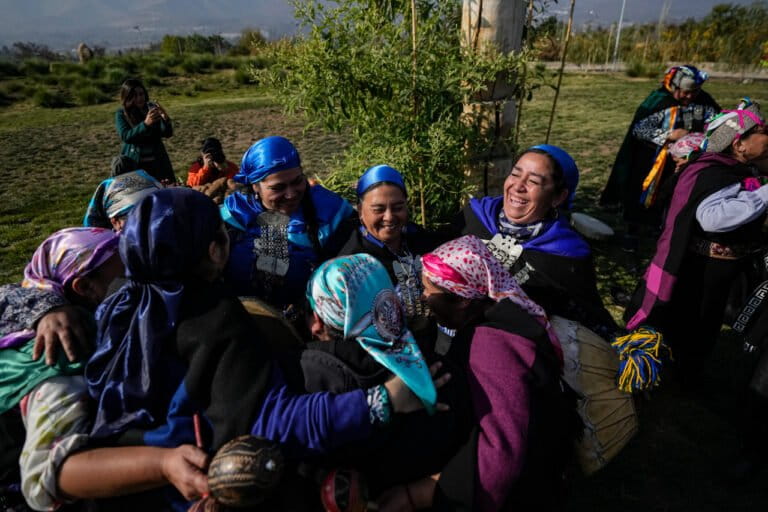
"The exercise of the rights of Indigenous peoples, in this case the Mapuche people, could end up becoming a reward conditioned on an environmental performance defined by third parties," Huencho cautioned. "The lands are not returned because a community captures more carbon, but because there was dispossession and because Indigenous peoples have the right to decide their development priorities."
While acknowledging that environmental stewardship is a core tenet of Mapuche culture and their profound responsibility to Ñuke Mapu (Mother Earth), Huencho argued that the burden is unfairly shifted onto Indigenous shoulders. The expectation that Indigenous groups should automatically act as flawless guardians of biodiversity—without structural reforms from the corporations and nation-states that created the environmental crisis in the first place—is both hypocritical and unsustainable.
Future Outlook: Navigating Self-Determination and Conservation
As Chile grapples with the dual imperatives of enacting peace in its southern territories and meeting international climate commitments, the path forward requires a delicate balancing act.
A Case-by-Case Reality
Researchers are quick to point out that the dynamics observed in southern Chile cannot be generalized globally. Indigenous land restitution yields vastly different environmental results depending on regional histories and ecosystems. For instance, while Indigenous-managed forests in the Amazon basin continue to serve as vital, robust carbon sinks, studies in other regions—such as parts of Bolivia and Peru—reveal that Indigenous lands can occasionally function as carbon sources due to necessary agricultural expansion or localized development needs.
Redefining the Conservation Contract
For future land restitution programs to succeed both socially and ecologically, policymakers must abandon the "ecologic-noble-savage" trope. True partnership with Indigenous nations means supporting their vision of development rather than policing their land management choices from afar.
If the Chilean state—and the global conservation community—wants to see an increase in native forest cover and biodiversity restoration on restituted lands, it must provide the necessary financial scaffolding, ecological restoration funds, and institutional support requested by communities themselves. Restitution is, above all else, an act of historical justice and the restoration of fundamental human rights. Only when sovereignty is fully secured can Indigenous communities be truly empowered to chart a sustainable future on their own terms.



