

Executive Overview
The landscape of the United States clean energy sector presents a striking paradox as the first quarter of 2026 comes to a close. On one hand, private developers and utility providers are engaged in a historic, frantic rush to break ground on new solar, wind, and battery storage infrastructure. Driven by an unprecedented surge in national electricity demand—fueled heavily by the proliferation of artificial intelligence (AI) data centers, rapid industrial reshoring, and the ongoing electrification of the transportation sector—clean energy remains the fastest, most cost-effective power source available for deployment at scale.
However, this outward acceleration masks deep structural turbulence. According to the latest "Clean Economy Works" report released by the environmental policy organization E2, clean energy developers announced 54 new utility-scale renewable projects between January and March 2026, representing over $18 billion in planned capital investment. This figure nearly doubles the volume of active project announcements recorded during the entirety of 2025.
Simultaneously, however, the industry is bleeding projects and facing historic headwinds. During that exact same three-month window, companies scrapped 38 major utility-scale clean energy projects, nearly matching half of the total cancellations recorded throughout the previous year. Furthermore, the manufacturing side of the green economy is facing a pronounced contraction. Policy uncertainty, legislative attacks on federal incentives, and aggressive regulatory maneuvers by the Trump administration to roll back the landmark climate legislation passed previously are freezing executive boardrooms, threatening supply chains, and casting a long shadow over the future of American energy independence.
Detailed Chronology of Q1 2026: A Race Against the July 4 Deadline
To understand the frantic pace of the first quarter of 2026, one must examine the calendar as much as the balance sheets. The primary catalyst driving the sudden surge in project announcements is a looming regulatory deadline tied to the controversial Omnibus Budget and Benefits Act (OBBA) passed late last year.
January 2026: The Starting Gun
As the calendar turned to 2026, the industrial and utility sectors faced a newly recalibrated federal landscape. The OBBA introduced stringent new hurdles, higher compliance thresholds, and restricted access criteria for federal clean energy tax credits established under previous administrations. Crucially, the legislation established a hard administrative threshold: July 4, 2026. Projects that fail to meet specific "begun construction" definitions or fail to secure financing frameworks prior to this date face the prospect of losing lucrative tax incentives, rendering future infrastructure financing exponentially more difficult and expensive.
Recognizing this existential financial threat, clean energy developers activated contingency plans en masse. Throughout January, engineering, procurement, and construction (EPC) firms rushed to finalize site acquisitions, secure interconnection queue positions, and lock down equipment supply agreements. This panic-driven acceleration resulted in an immediate spike in utility-scale solar and battery storage project declarations.
February 2026: The Bifurcated Market Takes Shape
By the middle of the quarter, the dichotomy of the American clean energy market became glaringly apparent. While generation developers accelerated their timelines to beat the legislative guillotine, manufacturing executives were slamming the brakes.
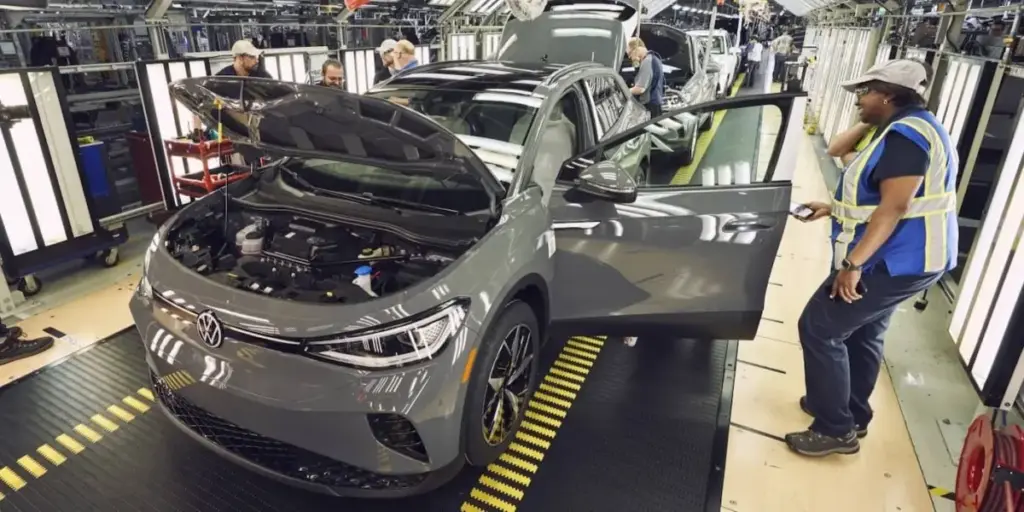
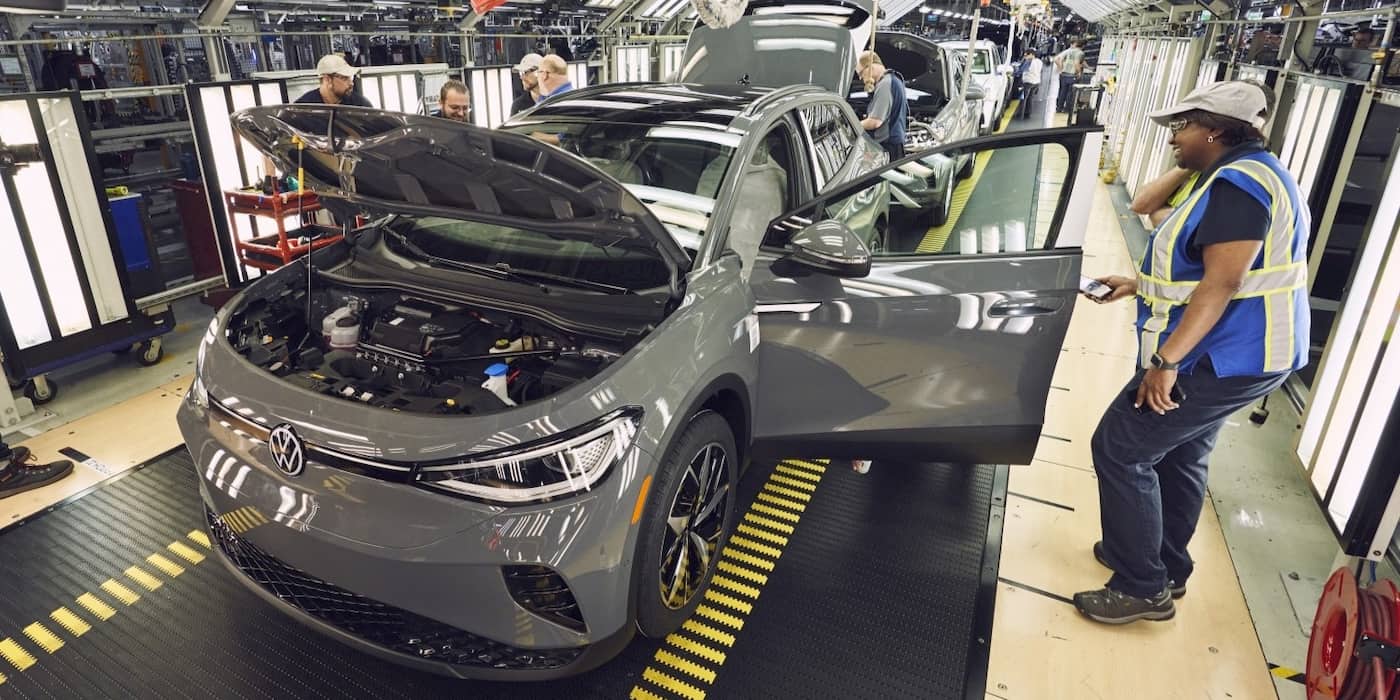
E2’s tracking data for February highlighted a troubling trend: while power generation projects multiplied, component manufacturing facilities faced immediate downsizing or outright cancellation. Supply chain stakeholders pointed directly to the shifting political winds in Washington. Congressional efforts to dismantle green manufacturing subsidies, coupled with the Trump administration’s vocal hostility toward federal green tech spending, created a chilling effect on capital expenditure for factories. States that had previously enjoyed a manufacturing boom—such as Ohio, North Carolina, Georgia, and Oklahoma—began reporting facility downscaling and cancellations, particularly in the electric vehicle (EV) and battery sectors.
March 2026: The Climax of Uncertainty
As the quarter drew to a close in late March, the industry reached a fever pitch. Developers filed administrative paperwork at unprecedented rates to secure grandfathered status under existing tax guidelines before the July 4 deadline. Yet, the cost of this regulatory whiplash was already evident. The sheer volume of canceled projects in Q1—totaling 38 utility-scale installations—signaled that smaller developers and those reliant on specialized manufacturing components were being squeezed out of the market entirely.
Supporting Context & Metrics: The Numbers Behind the Boom and Bust
The economic dimensions of the Q1 2026 report are vast, illustrating both the immense potential of the clean energy transition and the severe damage inflicted by policy volatility.
The Power Generation Surge
The 54 utility-scale solar, wind, and battery storage projects announced in Q1 2026 represent more than $18 billion in planned infrastructure investments. Combined, these installations will add over 12 gigawatts (GW) of new electricity generation and storage capacity to regional power grids across the United States. To put this figure into perspective, 12 GW of capacity is sufficient to power approximately 2 million American homes.
This capacity is desperately needed. The rapid expansion of energy-intensive AI data centers, combined with industrial electrification and the transition toward electric mobility, has pushed regional transmission organizations (RTOs) to issue warnings regarding potential grid capacity shortfalls. Because wind, solar, and battery storage remain the most economically viable and rapidly deployable assets available, market demand for these projects has proven resilient despite political headwinds.

The Cost of Cancellations
Conversely, the negative impacts of regulatory uncertainty and political opposition are quantifiable and severe. During the first quarter alone, companies canceled 38 utility-scale generation projects. These scrapped developments represent:
- Capacity Loss: Nearly 8 GW of lost electricity generation capacity, enough to power 2 to 3 million homes.
- Investment Loss: Nearly $13 billion in canceled local capital investments.
- Labor Impact: Approximately 33,000 lost construction and development jobs.
For context, these Q1 figures represent nearly half of the total project cancellations recorded during all of 2025, when 85 projects were scrapped—a total that accounted for $27 billion in lost investment and 45,000 jobs. The acceleration of cancellations indicates that the friction introduced by the current administration and congressional rollbacks is rapidly compounding.
Manufacturing Sector Breakdown
The manufacturing segment of the clean energy economy experienced an acute contraction in Q1 2026:
- The Downturn: E2 tracked seven canceled, closed, or downsized manufacturing projects across states like Oklahoma, Ohio, North Carolina, and Georgia. These failed ventures represented $1.35 billion in lost capital and roughly 8,100 potential jobs.
- The Slowdown: In stark contrast, companies announced only 12 new major manufacturing facilities during the quarter, totaling a modest $758 million in investment and creating fewer than 2,000 jobs. This represents a dramatic deceleration compared to the post-legislation boom years of 2023 and 2024, when industrial players routinely announced over 60 new clean energy factories every single quarter.
Sector-Specific Disparities
Different sub-sectors within the clean energy manufacturing economy experienced divergent fates in Q1 2026:
- Electric Vehicles (EVs): EV manufacturing has absorbed the heaviest blows. While the sector retains 166 active projects totaling over $84.4 billion in announced investment, it has also suffered 58 canceled, closed, or downsized projects since 2022, wiping out roughly $25.5 billion (nearly 25%) of total announced capital.
- Battery Energy Storage: Battery manufacturing has logged the highest relative cancellation rate. Out of $16.9 billion in active investments tracked, more than $8.6 billion across 18 distinct projects has been canceled or downsized—meaning one-third of all announced capital in this crucial sector has vanished.
- Renewables Manufacturing (Solar & Wind): Solar and wind component manufacturing has proven more resilient, maintaining 116 active projects accounting for $20.4 billion in investment, with only $2 billion in project cancellations (less than 10%).
- Grid and Transmission Equipment: Proving to be the most stable segment overall, grid equipment and transmission manufacturing has seen over $6.4 billion in active investment across 58 projects, marred by just a single $150 million cancellation since 2022. Interestingly, nearly all new factory announcements in Q1 2026 were concentrated in this grid-infrastructure category.
Official Statements and Industry Perspectives
The release of the E2 report has triggered sharp commentary from industry analysts, economic researchers, and clean energy advocates, who point to a profound disconnect between federal policy and economic reality.
Bob Keefe, executive director of E2, emphasized the dual nature of the current economic landscape during a briefing on the report’s findings:

"What we are seeing is a desperate, high-stakes race against the clock. On one side, developers are rushing to break ground because the American economy—driven by data centers, advanced manufacturing, and electrification—is demanding more electricity than the grid can comfortably supply. On the other side, artificial political roadblocks and congressional rollbacks are injecting a poison pill into our industrial supply chains, killing thousands of well-paying jobs and billions in local investments."
Industry stakeholders have voiced particular frustration over the partisan geographical impact of these regulatory shifts. Data compiled within the E2 tracker reveals that congressional districts represented by Republican lawmakers—many of whom have consistently voted in favor of rolling back clean energy tax credits and environmental legislation—have continued to capture the largest share of both clean energy investments and, conversely, project cancellations. Economists note that rural and suburban communities in the industrial Midwest and the Sunbelt, which stood to benefit most from factory job creation, are bearing the brunt of the current manufacturing slowdown.
Utility executives, speaking on the condition of anonymity due to ongoing regulatory filings with the Federal Energy Regulatory Commission (FERC), noted that the July 4 deadline has created an administrative bottleneck. Engineering firms report being overwhelmed by permit applications, environmental reviews, and interconnection studies as developers attempt to clear bureaucratic hurdles before federal rules change.
Future Outlook: Navigating the Post-July 4 Landscape
As the energy sector looks past the immediate horizon of the July 4, 2026 deadline, the trajectory of the American clean energy transition remains heavily contested.
The Short-Term Rush and Post-Deadline Lull
Industry analysts predict a massive spike in groundbreaking ceremonies and final investment decisions (FID) through the end of June 2026. Developers are expected to exhaust every available legal and financial mechanism to establish "safe harbor" provisions under current tax codes, locking in incentives before the OBBA provisions fully tighten access.
However, market experts warn of a significant hangover effect in the third and fourth quarters of 2026. Once the July 4 deadline passes, the pipeline of new utility-scale project announcements is expected to contract sharply. Without predictable, long-term federal incentives, smaller developers may exit the market entirely, leaving infrastructure expansion dominated by legacy utilities and massive multinational energy conglomerates capable of absorbing higher capital costs.

The Looming Power Crisis
The fundamental driver of renewable energy deployment—surging electricity demand—will not abate. Independent system operators (ISOs) across the country, including PJM Interconnection, ERCOT, and MISO, have repeatedly revised their load forecasts upward due to the explosive growth of energy-guzzling AI data centers and the transition toward fleet electrification.
Because natural gas infrastructure faces its own supply chain constraints and long lead times, and nuclear power projects require decade-long development cycles, wind, solar, and battery storage remain the only asset classes capable of bringing new generation online within a 12- to 24-month window. Consequently, market forces may ultimately override political opposition; utilities cannot afford to ignore the capacity shortfalls, regardless of shifting federal administrations.
Manufacturing Resilience vs. Policy Risk
The manufacturing sector faces a more precarious recovery. While grid infrastructure and transmission equipment manufacturing will likely remain stable due to urgent modernization requirements, EV and advanced battery manufacturing will continue to tread water until federal regulatory signals stabilize. International competitors—particularly in Asia and Europe—are closely watching the policy turbulence in Washington, positioning themselves to capture global market share if American manufacturing incentives continue to erode.
Ultimately, the Q1 2026 data serves as a stark warning. The American clean energy economy possesses the technological maturity, private capital backing, and domestic market demand to lead the world into the next century of power generation. Yet, it remains acutely vulnerable to the whims of political partisanship and regulatory instability—a vulnerability that threatens not only economic growth, but the long-term reliability of the United States power grid.



