

Executive Overview
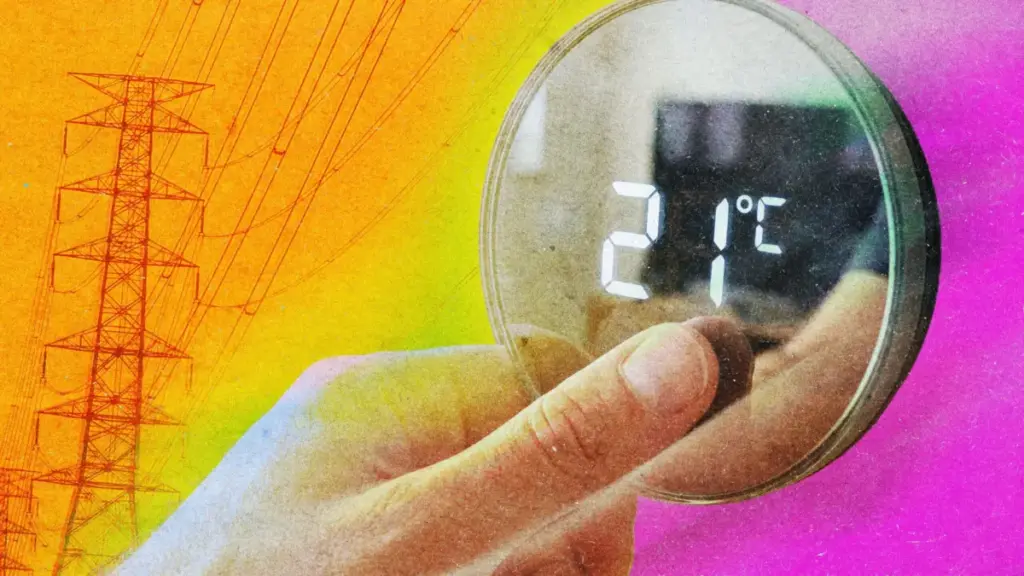
To the casual observer, the interior of a modern home looks remarkably ordinary. Wall-mounted thermostats maintain comfortable room temperatures, electric vehicles sit quietly in garages plugged into Level 2 chargers, and sleek home battery packs hum softly in utility closets. Yet, to the engineers monitoring regional power grids, these seemingly mundane appliances represent something entirely different: a vast, untapped, and highly responsive network of distributed energy resources.
As extreme weather events strain aging electrical grids, and as the proliferation of power-hungry technologies—from residential heat pumps to data centers fueling the artificial intelligence boom—accelerates electricity demand, utility companies are changing how they view household energy consumption. Rather than exclusively relying on massive, fossil-fuel-burning peaking power plants that sit idle most of the year, utilities are increasingly turning to Virtual Power Plants (VPPs).
A VPP is a software-orchestrated aggregation of everyday household devices that can be dynamically controlled to reduce electricity demand during critical peak hours or, increasingly, to feed stored energy back into the grid. While the power adjustments made to any single home are intentionally minor—such as preemptively cooling a house by a degree or two before a heatwave, or delaying an electric vehicle’s charging cycle by an hour—the collective impact at scale is profound. When aggregated across hundreds of thousands or millions of households, these micro-adjustments mirror the output of a traditional, multi-megawatt power plant.
For consumers, participating in a VPP offers tangible financial incentives, including upfront sign-up bonuses, annual performance credits, and lower overall energy bills. However, navigating the landscape of virtual power plants requires a nuanced understanding of program mechanics, device compatibility, household energy flexibility, data privacy considerations, and regional availability. This investigative guide explores the mechanics of VPPs, assesses their rapid growth, weighs their benefits and potential pitfalls, and provides a comprehensive framework for homeowners considering participation.
Detailed Chronology: The Evolution of Demand Response to Virtual Power Plants
To understand how virtual power plants became a cornerstone of modern energy planning, it is necessary to trace the historical progression of grid management, moving from blunt industrial tools to sophisticated, consumer-centric software platforms.
1. The Era of Industrial Curtailment (Pre-2010s)
For decades, the concept of managing peak electricity demand—known broadly as demand response—was largely restricted to heavy industry. Aluminum smelters, paper mills, and large manufacturing plants would enter agreements with utilities or grid operators to temporarily shut down or throttle heavy machinery during emergency grid conditions in exchange for lower industrial electricity rates. Residential customers, by contrast, were treated as passive consumers of electricity with flat-rate pricing structures that provided zero financial incentive to curb usage when the grid was under the greatest strain.
2. The Rise of the Smart Thermostat (2010–2018)
The commercialization and widespread adoption of connected smart thermostats, pioneered by companies like Nest, marked the beginning of residential demand response. Utilities quickly realized that by partnering with hardware manufacturers, they could remotely adjust residential air conditioning settings during summer heatwaves when air conditioning loads drove peak grid demand. Initial programs were rudimentary, typically manifesting as voluntary opt-in events where a utility would nudge temperatures up by two or three degrees for a few hours.
3. Software Aggregation and Device Diversification (2018–2023)
As the Internet of Things (IoT) matured, software platforms emerged to bridge the gap between fragmented household hardware and sophisticated utility grid operations. Companies like EnergyHub developed enterprise software capable of managing millions of heterogeneous devices simultaneously. Simultaneously, the market expanded beyond smart thermostats to include residential solar photovoltaic systems, stationary home battery storage units (such as Tesla Powerwalls), and connected electric vehicle (EV) supply equipment (EVSE). During this period, the nomenclature shifted from basic "demand response" to the broader, more ambitious concept of the "Virtual Power Plant."
4. Commercial Scaling and Big Tech Investment (2023–Present)
By 2023, the United States alone boasted more than 500 active VPP programs, engaging an estimated 4 million households with smart thermostats. The market crossed a critical threshold as major technology corporations—most notably Google—began heavily investing in VPP infrastructure not just for consumer energy management, but to help power their massive, energy-intensive artificial intelligence data centers. Today, VPPs are recognized by energy regulators and grid operators as an indispensable tool for decarbonization, grid resilience, and cost containment.
Supporting Context & Metrics: The Anatomy of a Modern VPP
Virtual power plants function by leveraging cloud-based software to coordinate decentralized energy assets. To appreciate their economic and operational scope, it is helpful to examine the current metrics driving market expansion.
Financial Incentives for Consumers
Compensation structures for VPP participants vary widely depending on the type of device enrolled, the hosting utility, and the local regulatory environment:
- Smart Thermostats: Typically offer an initial sign-up bonus ranging from $50 to $150, supplemented by recurring annual performance payments of $25 to $50.
- Home Batteries and Electric Vehicles: Yield significantly higher financial returns due to their massive storage capacity. Annual savings and performance incentives for batteries and EVs frequently range from hundreds to thousands of dollars, realized through lower utility bills, smart-charging rebates, or direct grid-export compensation.
Market Projections and Adoption Scale
According to data compiled by industry groups like the Rocky Mountain Institute (RMI) and hardware manufacturers like Resideo, participation is heavily concentrated in regions characterized by volatile weather, constrained transmission infrastructure, or aggressive state-level clean energy mandates. Leading markets include:
- California: Driven by high renewable energy penetration, strict decarbonization goals, and regular threats of grid strain during wildfire season.
- Texas (ERCOT): Characterized by an energy-only market structure that creates high price spikes during extreme weather events, making automated demand response highly lucrative for battery and EV owners.
- New England and the Mid-Atlantic: Supported by regional grid operators (such as ISO-New England and PJM) that actively integrate demand-side resources into capacity markets.
The Problem of "Ghost" Reductions
Despite the optimistic growth metrics, VPP architectures face sophisticated economic challenges. Severin Borenstein, faculty director of UC Berkeley’s Energy Institute at Haas and a member of the board of governors of the California Independent System Operator (CAISO), points out the risk of baseline forecasting errors. If a utility or aggregator implements a poorly designed program, they may fail to accurately predict what a household’s baseline energy use would have been absent the VPP event. Consequently, the utility might end up paying consumers for reducing energy they were never planning to use in the first place—an inefficiency that can inadvertently drive up electricity rates for non-participating ratepayers.
"If we do it well, I think it can really be a benefit," Borenstein notes, emphasizing that effective VPP execution helps utilities bypass the multi-billion-dollar costs of constructing new transmission lines or commissioning emergency fossil-fuel peaking plants.
Official Statements and Industry Perspectives
To understand the trajectory of virtual power plants, industry leaders and academic researchers offer critical insights into the operational realities, privacy implications, and socio-economic barriers facing the market.
-
Seth Frader-Thompson (CEO and Co-founder, EnergyHub):
Highlighting the cumulative power of micro-adjustments, Frader-Thompson explains the core philosophy of software-driven aggregation: "When you put it together at the scale of hundreds of thousands, or millions, it has a pretty profound impact, equivalent to firing up a power plant." Addressing the societal value of participation, he adds: "There are not that many things that you can do that directly contribute to decarbonizing the electric supply, or to improving affordability, or to improving reliability, and this is just a clearly effective way to do that. And you get paid for it." -
Joseph Vellone (CEO, ChargeScape):
Focusing on the frictionless integration of electric vehicles into VPP networks, Vellone notes how user experience has evolved: EV drivers can review terms, verify financial incentives, and enroll in managed charging programs "with a click of a button" directly inside their automotive manufacturer applications. Regarding data privacy concerns, Vellone stresses that the information harvested by charging platforms is strictly functional, focused primarily on "the physics and the energy of the asset itself." -
Sanya Carley (Professor, University of Pennsylvania, and Faculty Director of the Climate Center for Energy Policy):
Sounding a note of caution regarding equity and accessibility, Carley highlights that not all households are equally positioned to participate in energy flexibility markets. "Some households do not have the flexibility to engage in one of these programs," Carley warns. She points out that shift workers, caregivers, individuals with specialized health needs, and low-income families who already practice aggressive energy conservation to manage monthly utility bills often lack the thermal or operational leeway required to let a utility modify their heating, cooling, or charging schedules during peak hours.
Future Outlook: Navigating and Enrolling in a Virtual Power Plant
For consumers interested in transforming their homes into active nodes of the modern electrical grid, navigating the enrollment process requires careful evaluation across four distinct operational steps.
1. Identify Your Utility and Check Device Compatibility
Finding a VPP program is not always straightforward. Homeowners should begin by examining their local utility’s website, though searching explicitly for the term "Virtual Power Plant" may yield limited results. Utilities frequently market these initiatives under alternative nomenclature, including:
- Demand response
- Peak rewards
- Connected solutions
- Battery storage incentives
- Smart thermostat rewards
- Managed charging / Bring your own device (BYOD)
Beyond utility websites, hardware manufacturers serve as primary onboarding channels. Notifications frequently appear directly within native smart thermostat, EV, or battery management applications, or arrive via email campaigns from original equipment manufacturers (OEMs).
Eligibility criteria can be highly specific. A smart thermostat program may demand an approved Wi-Fi-enabled model; an EV program often depends on the specific automaker, charger hardware, regional utility territory, or underlying retail electricity rate plan; and a home battery program relies heavily on the battery brand, inverter model, professional installation parameters, and communication protocols.
2. Evaluate Household Energy Flexibility
Before committing to a VPP, consumers must realistically assess their household’s operational tolerance for automated external control.
- Low-Impact Integration: If an electric vehicle remains plugged in for twelve hours overnight but requires only two hours of active charging, a utility’s decision to shift that charging window to the middle of the night is entirely invisible to the driver.
- High-Impact Scenarios: Conversely, households with erratic schedules, heavy daytime occupancy, or tight heating and cooling tolerances must determine whether minor environmental adjustments during peak events will compromise household comfort or safety.
3. Review Opt-Out Provisions and Data Privacy Terms
Robust VPP programs must preserve consumer autonomy. Participants should carefully verify the terms governing opt-out rights. Can you easily override a thermostat adjustment if you are hosting guests? Can you bypass a charging delay if an unexpected road trip arises? Are you able to maintain a guaranteed state-of-charge reserve on your home battery in the event of an impending storm-related power outage?
Simultaneously, privacy advocates, including the Electronic Frontier Foundation (EFF), have raised concerns regarding data telemetry. Smart thermostats, home batteries, and connected vehicles continuously transmit granular operational data. While software providers emphasize that telemetry is limited to aggregate energy metrics and physical asset performance, smart home data can theoretically be analyzed to infer private daily routines, sleeping patterns, and occupancy schedules. Homeowners should review privacy policies to understand how data is shared between utilities, device manufacturers, and third-party software aggregators.
4. Weigh the Value Proposition
Ultimately, participation in a virtual power plant should align with a household’s financial and environmental priorities. While high-capital assets like electric vehicles and home stationary batteries yield the greatest financial returns—creating an equity barrier for lower-income households unable to afford such technologies—smart thermostat programs offer a low-stakes, accessible entry point.
Conclusion
The modern home is no longer an isolated castle drawing passively from an infinite electrical reservoir. Through the quiet expansion of virtual power plants, everyday devices—our thermostats, our cars, our batteries—are forging a resilient, software-driven energy grid. Your home may never look or feel like a sprawling industrial power plant, but when the grid faces its moments of greatest need, your appliances can flex, adapt, and help power the future.



