

Executive Overview
The Brazilian Amazon is once again the epicenter of a high-stakes humanitarian and environmental crisis. More than 500 land-grabbers, illegal loggers, and speculative ranchers have aggressively stormed the Ituna/Itatá Indigenous Land in the northern state of Pará. This surging wave of occupation poses an existential threat to the Igarapé Ipiaçava Indigenous people, a group living in voluntary isolation who possess no immunity to outside diseases and maintain no peaceful contact with modern civilization.
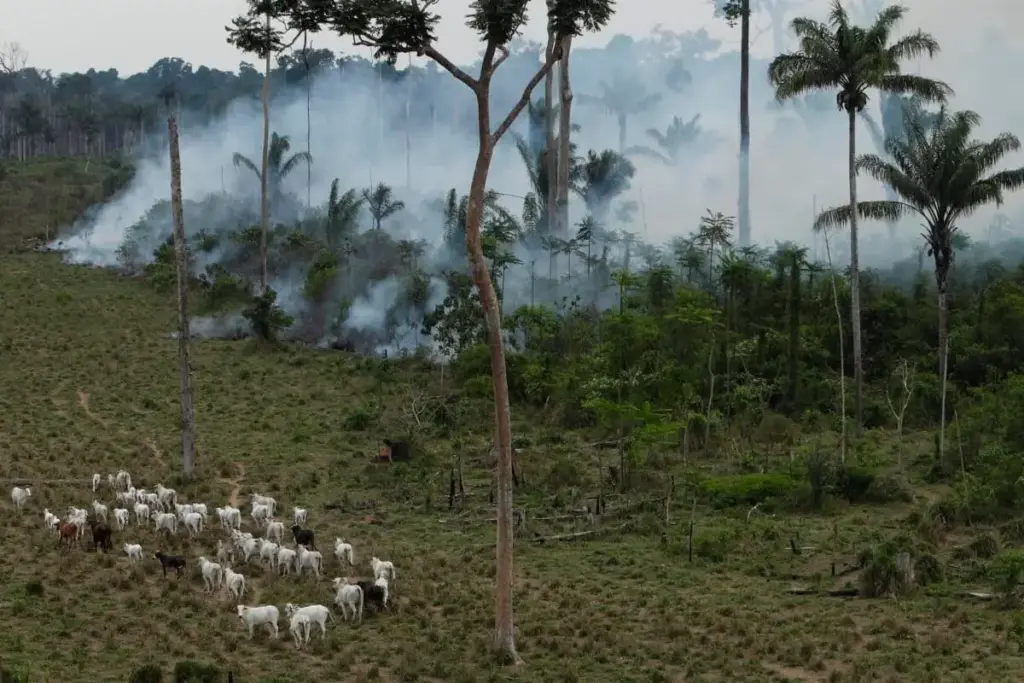
The mass incursions—marked by heavy machinery, the rapid opening of clandestine roads, and deliberate, retaliatory forest fires—have transformed a legally protected sanctuary into a zone of lawlessness and confrontation. Despite a federal court order issued on August 26 mandating the immediate deployment of the National Public Security Force within 48 hours, bureaucratic inertia and political friction have left the territory dangerously exposed. As of mid-September, federal boots on the ground remain absent, prompting federal prosecutors to take drastic legal action.
The Federal Public Prosecutor’s Office (MPF) has petitioned the judiciary to levy daily fines of 50,000 Brazilian reais (approximately $9,000 USD) against the federal government for its failure to act. Compounding the crisis is a dangerous legal contradiction: the creation of a state-level environmental protection area that entirely overlaps the federal Indigenous territory. This jurisdictional overlap has been actively weaponized by land-grabbers to legitimize illegal occupation, cattle ranching, and land speculation.
With the Amazon experiencing a severe dry season compounded by an intensifying El Niño climate cycle, experts warn that the intentional setting of fires by invaders could trigger a catastrophic ecological disaster, driving vulnerable, uncontacted populations toward annihilation.
Detailed Chronology of the Incursions
The escalation of tensions within the Ituna/Itatá Indigenous Territory did not happen in a vacuum; it follows a calculated sequence of legislative maneuvering, aggressive land grabs, and direct attacks on federal inspection teams.
Legislative Catalyst and Territorial Overlap
The seeds of the current crisis were sown with the legislative creation of the Bacajá Environmental Protection Area (APA Bacajá). Established under a new state law in Pará, the APA Bacajá was ostensibly designed to regulate environmental oversight. However, its boundaries entirely overlap the pre-existing, federally protected Ituna/Itatá Indigenous Land.
While environmental protection areas under Brazilian law often permit sustainable use and private landownership—including building homes and raising livestock—such activities are strictly prohibited within federally demarcated Indigenous territories. Land-grabbers and speculative agro-pastoralists quickly seized upon this legal ambiguity. By pointing to the state-level decree, bad actors have attempted to justify their illegal incursions, convincing hundreds of individuals that the land is open for settlement and agricultural development.
The Surge of Invasions and Forest Degradation
In the weeks following the enactment of the overlapping state law, more than 500 people flooded into the sanctuary. According to overflights conducted by the Indigenous Affairs Agency (Funai) and the Federal Police, the invaders arrived equipped with heavy machinery, chainsaws, and tractors.
In a remarkably short window, these groups carved out more than 30 kilometers (18.6 miles) of forest trails and clandestine roads. These thoroughfares serve a dual purpose: they segment the pristine rainforest into easily manageable, illegal land plots for speculative sale, and they facilitate the transport of cattle and equipment deep into the protected zone.
Direct Confrontations and Retaliatory Arson
The situation escalated from illegal land-clearing to open hostility against state and federal authorities during inspection operations. During the final week of August, Brazil’s environmental enforcement agency, IBAMA, executed a sweep of the territory, destroying illicit machinery, trucks, and infrastructure utilized by the invaders.
Rather than deterring the occupiers, the enforcement actions triggered violent retaliation. Leaked audio recordings that circulated among the invaders reveal a coordinated effort to violently resist law enforcement. In the audio clips, a ringleader is heard rallying between 100 and 200 individuals to actively surround a Funai inspection team, burn their vehicles, and force the government officials to flee the territory on foot.
Furthermore, investigative reports revealed that a state government cargo vehicle was actively utilized to support the infrastructure of the illegal settlement during the height of the inspections—a troubling indication of potential complicity or administrative breakdown at the local level.
Following the destruction of their machinery by IBAMA, the invaders escalated their tactics by intentionally setting fires to the surrounding forest. The MPF has characterized these blazes as "clear retaliation and an attempt at intimidation," designed to punish environmental agents and deter future enforcement operations.
Supporting Context & Metrics
The unfolding tragedy within Ituna/Itatá is best understood through a combination of geographical, demographic, and environmental data points that underscore the fragility of the region.
The Guardians of the Forest: The Igarapé Ipiaçava People
The Ituna/Itatá Indigenous Territory was established to safeguard the Igarapé Ipiaçava Indigenous people, who remain in voluntary isolation. These groups have intentionally chosen to avoid contact with the broader Brazilian society following historical traumas, massacres, and epidemics brought by rubber tappers, loggers, and colonizers.

Because they lack acquired immunity to common external pathogens, even a fleeting contact with outsiders can introduce diseases like the common cold, measles, or the flu, which can decimate an entire uncontacted community within weeks. Furthermore, the disruption of their traditional hunting and gathering grounds forces them into dangerous proximity with hostile interlopers, threatening their physical survival and cultural continuity.
Climatic Vulnerability: The El Niño Threat
The timing of the current invasion could not be more perilous. Helena Palmquist, deputy coordinator of the Observatory of Isolated and Recently Contacted Indigenous Peoples (OPI), highlighted the terrifying environmental backdrop of the crisis in communications with researchers.
"What worries us most right now is the fire situation," Palmquist stated via voice messages. "We are experiencing an Amazonian dry season with the prospect of an El Niño event far more severe than previous ones; this makes the forest more volatile and prone to catching fire."
The deliberate burning of cleared plots by land-grabbers, combined with drought conditions fueled by climate anomalies, turns the Amazon basin into a tinderbox. Uncontrolled fires threaten not only the flora and fauna upon which the uncontacted Igarapé Ipiaçava depend for sustenance, but also threaten to trigger massive carbon releases that exacerbate global climate change.
Key Metrics of the Crisis
- 500+: The estimated number of illegal invaders who have stormed the Ituna/Itatá Indigenous Land in recent weeks.
- 30+ Kilometers: The total length of illegal roads and forest trails hacked through the pristine canopy by land-grabbers using heavy chainsaws and tractors.
- 50,000 Reais ($9,000 USD): The daily fine requested by the MPF against the federal government for failing to meet court-ordered security deployments.
- 48 Hours: The original window given by a federal court on August 26 for the deployment of the National Public Security Force—a deadline that passed without action.
Official Statements and Legal Battles
The legal and political landscape surrounding the Ituna/Itatá invasion is characterized by a fierce standoff between federal prosecutors, the judiciary, and executive authorities deadlocked over jurisdictional responsibilities.
The MPF’s Aggressive Legal Action
Faced with inaction from the executive branch, the Federal Public Prosecutor’s Office (MPF) took the extraordinary step of petitioning the federal court to impose hefty daily financial penalties on the federal government. The MPF argues that the ongoing failure to deploy the National Public Security Force violates constitutional mandates requiring the state to protect Indigenous lands, particularly those designated for isolated peoples under temporary land-use restriction orders.
In its official press statement, the MPF emphasized that the federal government possesses the explicit legal authority—and the moral obligation—to intervene on federal lands to halt environmental crimes and protect human lives, regardless of state-level resistance or bureaucratic hesitation.
The Inter-Governmental Stalemate
The federal government has defended its delayed response by arguing that it requires formal authorization and coordination from the government of Pará state before dispatching security forces. Officials in Brasília claim that local political dynamics and uncooperative state agencies have hindered joint operations.
However, federal prosecutors have systematically dismantled this defense, pointing out that Ituna/Itatá is a federally recognized Indigenous territory. Under Brazilian constitutional law, federal agencies have sovereign jurisdiction over federal lands and do not require state-level sign-offs to enforce federal laws or protect Indigenous populations.
As of the publication of this report, neither the federal government nor the administration of Pará state has responded to inquiries and requests for comment from journalists, reflecting a pervasive culture of opacity surrounding ongoing Amazonian conflicts.
Future Outlook
The trajectory of the crisis in the Ituna/Itatá Indigenous Territory remains precarious, with the coming weeks serving as a critical litmus test for Brazil’s rule of law and its commitment to Amazonian conservation and human rights.
Immediate Risks and Humanitarian Concerns
If federal security forces fail to deploy immediately, the consequences could be irreversible. The consolidation of illegal settlements within Ituna/Itatá will embolden land-grabbers across the Brazilian Amazon, signaling that court orders can be ignored with impunity. For the uncontacted Igarapé Ipiaçava people, the continued presence of hundreds of hostile outsiders armed with heavy machinery and fire represents an existential countdown. An accidental or intentional encounter could wipe out one of the last truly isolated cultures on Earth.
Environmental Repercussions
Ecologically, the confluence of illegal deforestation, intentional arson, and an intensifying dry season creates the recipe for a mega-fire event. Once these fires breach the deep interior of the protected territory, they become exceptionally difficult to contain, potentially destroying hundreds of square kilometers of primary rainforest, displacing wildlife, and projecting dense smoke across the continent.
Policy Implications and Accountability
The ongoing legal battle initiated by the MPF could set a vital precedent regarding government accountability in environmental enforcement. If the federal court grants the requested daily fines, it will establish that executive branch inaction in the face of Amazonian invasions carries severe financial and political costs.
Ultimately, resolving the crisis will require more than temporary police deployments. It demands a definitive legal reckoning between federal and state authorities to nullify overlapping state decrees that undermine federal Indigenous protections, clear out the criminal networks profiting from land speculation, and permanently secure the borders of Ituna/Itatá for the sole benefit of its rightful, uncontacted inhabitants.



