

Executive Overview
The coastline of California, stretching over 1,200 miles from the rugged cliffs of Crescent City to the sun-drenched shores of San Diego, represents one of the most ecologically diverse and economically vital marine environments on the planet. Yet, this dynamic Pacific ecosystem faces escalating threats from climate change, industrial runoff, overfishing, and habitat degradation.
Amid these mounting challenges, a powerful synergy of athletic endurance and grassroots environmental activism has emerged to capture the public imagination.
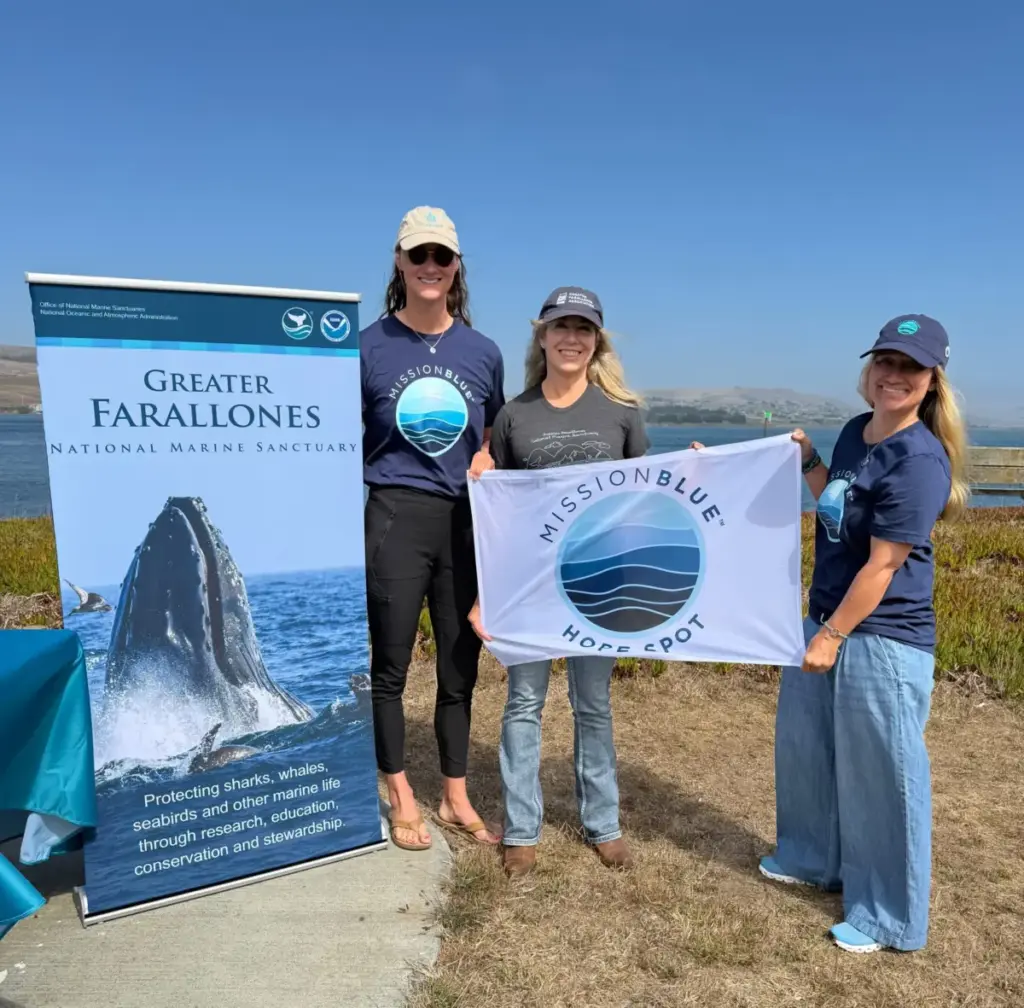
Recently, Shannon McIntyre Rake of the internationally renowned ocean conservation organization Mission Blue appeared on KTVU to spotlight critical preservation efforts in Bodega Bay. Rake’s television appearance coincided with an extraordinary feat of human endurance: Bay Area native and elite open-water swimmer Catherine Breed embarking on a historic, grueling 900-mile swim along the entire length of the California coast.
Breed’s journey is not merely a test of physical stamina; it is a floating symposium on marine stewardship. As she carves her path through the cold, unpredictable waters of the Pacific, she is intentionally stopping in vulnerable coastal communities to elevate the profiles of local organizations, scientists, and grassroots advocates working tirelessly to safeguard marine life.
This article provides an in-depth examination of the convergence between Breed’s monumental swim and Mission Blue’s localized conservation initiatives in Bodega Bay. We explore the broader ecological metrics defining the health of California’s marine ecosystems, analyze the specific vulnerabilities of the Bodega Bay Hope Spot, review official commentary from conservation leaders, and project the long-term outlook for West Coast marine protected areas (MPAs) in an era of unprecedented environmental transition.
Detailed Chronology: From Bay Area Waters to the Bodega Bay Spotlight
The genesis of this statewide conservation narrative can be traced through a meticulous timeline of athletic preparation, community mobilization, and media engagement that brought local grassroots efforts onto a national platform.
The Genesis of an Epic Journey: Planning the 900-Mile Swim
For years, Catherine Breed has pushed the boundaries of open-water endurance. A native of the San Francisco Bay Area with a deep-rooted affinity for the Pacific Ocean, Breed conceived the idea of swimming the length of California to draw a direct line between human resilience and environmental vulnerability. Planning a 900-mile open-water transit requires years of logistical coordination, safety planning, meteorological assessment, and psychological conditioning.
Unlike traditional athletic events, Breed’s swim is entirely self-driven and mission-oriented. Every nautical mile conquered serves as a moving platform to highlight a different coastal community facing unique environmental pressures. From the kelp forest canopies of the north to the urbanized marine boundaries of the south, Breed’s route maps a cross-section of California’s fragile aquatic habitats.
The Coastal Stops: Grassroots Amplification
As Breed moves southward—or coordinates her multi-stage expedition across key migratory corridors—her support vessel acts as a mobile embassy for ocean health. At each scheduled stopover, she collaborates with local marine labs, indigenous groups, and non-profit coalitions.
These stops are strategically chosen to highlight regions where conservation efforts are either flourishing against the odds or suffering from a lack of visibility and funding. By embedding herself within these coastal enclaves, Breed bridges the gap between isolated marine research stations and the broader public consciousness.
Bodega Bay and the Mission Blue Intersection
One of the most critical legs of this overarching narrative centers on Bodega Bay, a picturesque yet ecologically sensitive indentation of the Sonoma County coastline. Home to rich upwelling systems, diverse marine mammal populations, and vital fisheries, Bodega Bay is a microcosm of the challenges facing the broader California Current Large Marine Ecosystem.
Recognizing the pivotal role of Bodega Bay in regional marine health, Mission Blue—founded by legendary oceanographer Dr. Sylvia Earle—has actively championed the protection of these waters. Shannon McIntyre Rake’s recent appearance on KTVU served to synthesize these parallel narratives. Rake detailed how Breed’s arrival in the region acted as a catalyst for community engagement, drawing local residents, fishermen, and scientists together to discuss actionable strategies for marine conservation.
The KTVU interview served as a public call to action, translating the visceral, physical reality of Breed’s swim into concrete policy and community-level conservation goals.
Supporting Context & Metrics: The State of California’s Marine Ecosystems
To fully comprehend the significance of Mission Blue’s work in Bodega Bay and Catherine Breed’s endurance swim, one must examine the empirical data defining the health—and vulnerability—of the California coast.
The California Current Large Marine Ecosystem
The waters navigated by Breed are part of the California Current, one of the world’s major eastern boundary current systems. Driven by equatorward winds, this system produces coastal upwelling—a process that pulls cold, nutrient-rich water from the deep ocean up to the surface. These nutrients fuel massive phytoplankton blooms, which in turn support a complex web of life ranging from tiny zooplankton and commercially vital fish stocks to apex predators like great white sharks, orcas, and blue whales.
However, the very mechanics that make this ecosystem so productive also make it exceptionally vulnerable to climate change.
| Environmental Metric / Stressor | Current Status & Trend | Ecological Impact |
|---|---|---|
| Ocean Acidification (OA) | Accelerating along the West Coast due to upwelling and carbon absorption. | Dissolves calcium carbonate shells of pteropods, crabs, and oysters, threatening the base of the food web. |
| Marine Heatwaves ("The Blob") | Recurrent temperature anomalies causing sustained surface warming. | Disrupts upwelling, starves seabirds and marine mammals, and triggers toxic algal blooms. |
| Kelp Forest Depletion | Over 90% loss of bull kelp forests in Northern California (including Sonoma County). | Decimates red abalone and sea urchin fisheries; collapses juvenile fish nurseries. |
| Marine Protected Areas (MPAs) | Approximately 124 MPAs covering ~16% of state waters. | Provides localized refuge, though enforcement and climate-proofing remain ongoing challenges. |
The Bodega Bay Ecological Microcosm
Bodega Bay is uniquely positioned within this broader framework. Flanked by the UC Davis Bodega Marine Laboratory, the area is one of the most intensely studied marine environments in North America. Yet, despite rigorous academic oversight, local ecosystems face severe anthropogenic and climatic pressures.
The collapse of northern bull kelp forests—primarily driven by an explosion of purple sea urchins following the decimation of sunflower sea stars by sea star wasting disease—has fundamentally altered the benthic ecology of the Sonoma coast. Without kelp, species like the iconic red abalone have faced starvation, leading to the indefinite closure of the recreational fishery.
It is within this high-stakes environment that Mission Blue operates, advocating for ecosystem-based management that addresses not just overfishing, but the compounding crises of warming waters and habitat destruction.
Official Statements & Expert Perspectives
The convergence of elite athletics and rigorous marine conservation has generated significant commentary from leaders within the scientific and environmental advocacy communities.
Shannon McIntyre Rake on the Mission Blue Vision
During her appearance on KTVU, Shannon McIntyre Rake emphasized that ocean conservation cannot succeed in a vacuum; it requires a deeply interconnected network of local stewards and global advocates.
"What Catherine Breed is doing out there in the open water is a physical manifestation of the grit required to protect our oceans today," Rake stated during her KTVU interview. "When we look at places like Bodega Bay, we aren’t just looking at a pretty stretch of Northern California coastline. We are looking at a vital biological engine. Mission Blue is dedicated to identifying and protecting these Hope Spots because the health of Bodega Bay directly dictates the health of the entire Pacific migratory corridor."
Rake further elaborated on the importance of community-led stewardship, noting that national and international policies are ultimately only as effective as the local communities willing to enforce and respect them.
"When local fishermen, indigenous groups, academic researchers, and conservationists lock arms—symbolically or literally, as we are seeing with Catherine’s journey—we create an impenetrable wall of advocacy. That is what Mission Blue strives to foster in every Hope Spot we touch."
Catherine Breed on the Visceral Reality of the Ocean
While battling hypothermic water temperatures, unpredictable currents, and marine wildlife encounters, Breed has consistently redirected the spotlight away from her personal endurance and toward the fragility of the marine environment.
In pre- and mid-swim dispatches, Breed has reflected on the profound intimacy of experiencing the California coast at sea level:
"When you are swimming nine hundred miles through these waters, you experience the ocean not as a map or a statistic, but as a living, breathing entity," Breed noted in a community address. "You feel the sudden drop in temperature where industrial runoff meets the current. You see the density of the kelp beds—or heartbreakingly, the lack of them. Every coastal community I stop in has a story to tell about change. My goal is to amplify those local voices so that people living inland realize that what happens off the coast of Bodega Bay impacts every single one of us."
Future Outlook: Safeguarding California’s Marine Legacy
As Catherine Breed pushes toward the final milestones of her historic 900-mile journey, and as organizations like Mission Blue continue their tireless advocacy in Bodega Bay and beyond, the critical question remains: What is the long-term outlook for California’s marine conservation movement?
Scaling Up "Hope Spots" and MPAs
The concept of "Hope Spots"—pioneered by Mission Blue—refers to special areas of the ocean that are scientifically identified as critical to the health of the planet. While California has established a robust network of Marine Protected Areas (MPAs), conservationists argue that these zones must evolve to become climate-resilient.
Future conservation frameworks in regions like Bodega Bay will likely focus on:
- Dynamic Ocean Management: Implementing flexible protective measures that shift boundaries in real-time based on migratory patterns and warming anomalies.
- Restorative Aquaculture and Seeding: Actively intervening to restore kelp forests through targeted urchin removal and lab-cultivated spore outplanting.
- Cross-Sector Partnerships: Fostering deeper alliances between commercial fishing industries, academic institutions, and conservation NGOs to ensure sustainable resource utilization.
The Legacy of Athletic Activism
Breed’s swim demonstrates a modern paradigm in environmental communication. Traditional academic papers and policy briefings, while essential, often struggle to capture the public’s emotional investment. By pairing rigorous scientific frameworks—such as those championed by Mission Blue—with visceral human endurance, the conservation movement is finding new ways to inspire urgency and action.
As Rake summarized in her KTVU broadcast, the momentum generated by this historic convergence must not be allowed to dissipate once the swim concludes.
"The finish line of a 900-mile swim is not the end of the mission; it is the starting gun for sustained public engagement," Rake concluded. "Bodega Bay has shown us what is possible when community passion meets dedicated conservation science. Now, we must carry that wave forward."
To learn more about Mission Blue’s ongoing conservation initiatives, or to view the full interview detailing the Bodega Bay preservation efforts, visit the official KTVU Video Archive.



