


At first glance, the U.S. Supreme Court and the global clean technology transition appear to occupy entirely different spheres of public policy. One deals with the intricate statutory interpretations of environmental legislation, regulatory authority, and corporate accountability, while the other focuses on the deployment of solar arrays, utility-scale wind farms, battery storage chemistry, and electric vehicle adoption curves. Yet, a deeper investigation reveals an inescapable convergence: the apex court serves as the ultimate gatekeeper for climate action, environmental regulation, and civil rights in the United States.
Recent jurisprudence from the Roberts Court—marked by the systematic dismantling of long-standing regulatory precedents, the gutting of the Voting Rights Act, and the erosion of the Environmental Protection Agency’s authority under the Chevron doctrine and the Endangerment Finding—has transformed the judicial branch into a formidable barrier against environmental progress. This realization has forced publications traditionally dedicated to sustainable energy, such as CleanTechnica, to confront structural legal reform not as an extraneous political distraction, but as an absolute prerequisite for achieving a sustainable, decarbonized future.
The debate over the structural integrity of the Supreme Court has intensified across the American political landscape, drawing inspiration from historical precedents, contemporary public polling, and comparative constitutional models. Proposals range from expanding the number of justices to match the thirteen federal judicial circuits, to instituting strict 18-year term limits, to addressing deep-seated conflicts of interest regarding stock ownership and financial transparency among public officials. However, institutional reformers and legal scholars warn against viewing court expansion or any single legislative adjustment as a magical bullet. Lasting democratic renewal will require a comprehensive strategy: reasserting congressional legislative authority, restoring equal access to federal courts, and eliminating the corrupting influence of dark money and partisan polarization over the judiciary.
Detailed Chronology
Understanding the modern debate over Supreme Court reform requires examining the historical evolution of the judiciary, the lessons of the Reconstruction era, and the decades-long conservative strategy that reshaped American jurisprudence.
The Historical Fluidity of Court Size
Contrary to popular assumption, the U.S. Constitution does not mandate a nine-member Supreme Court. Article III establishes the judiciary but leaves the structural design to Congress. Throughout the 18th and 19th centuries, the size of the Supreme Court fluctuated frequently, expanding and contracting alongside the geographic and political growth of the nation. It began with six justices in 1789, grew to ten during the Civil War, and dropped to seven under the Judicial Circuits Act of 1866 before settling at nine members in 1869.
Historically, these adjustments were driven by the need to manage burgeoning caseloads across expanding judicial circuits. Today, the federal judiciary is organized into thirteen distinct judicial circuits. Legal scholars and reform advocates frequently note the logical symmetry of aligning the number of Supreme Court justices with the current count of thirteen judicial circuits, mirroring the 19th-century practice where individual justices bore circuit riding responsibilities.
The Reconstruction Era as a Blueprint
In an analysis published by Salon in January 2023, Paul Rosenberg highlighted discussions with David Gans, director of the Human Rights, Civil Rights, and Citizenship Program at the Constitutional Accountability Center. Gans pointed to the post-Civil War Reconstruction era as a crucial historical touchstone for modern court reform.
During Reconstruction, Congress actively utilized its constitutional powers to reshape the federal judiciary, passing landmark legislation such as the Habeas Corpus Act of 1867 and Section 1983 in 1871. These statutes expanded federal jurisdiction, empowering courts to protect newly emancipated Black citizens and rein in systemic abuses of state power.
However, Gans also offered a cautionary historical lesson. Despite structural modifications and new appointments, the Reconstruction-era Supreme Court repeatedly gutted the Fourteenth Amendment, capitulating to a shifting national mood that ultimately abandoned the promises of racial justice and gave rise to the Jim Crow era. This historical trajectory demonstrates that simply altering court composition or expanding jurisdiction is insufficient without a sustained national commitment to democratic norms and civil equality.
The 60-Year Conservative Campaign
The current composition and ideological posture of the Supreme Court are not accidents of history, but the calculated result of a multi-decade political and financial campaign. Spearheaded by conservative networks, strategists systematically laid the groundwork over sixty years to capture the federal judiciary. This meticulous long-term strategy involved coordinated funding of ideological legal organizations, targeted judicial selection processes, and disciplined legislative maneuvering.
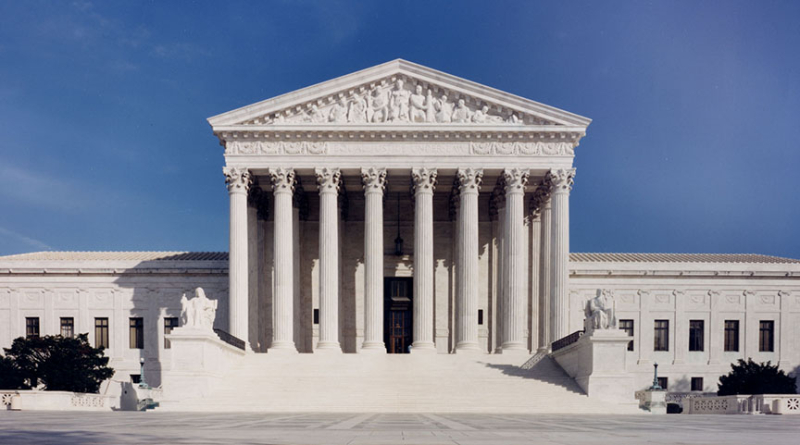
This strategy achieved peak execution through procedural maneuvers in the U.S. Senate—most notably when Republican leadership successfully blocked the nomination of Merrick Garland in 2016 by arguing that a vacancy should not be filled during an election year, contrasted against the accelerated confirmation of a conservative justice weeks before the 2020 presidential election. The resulting court has systematically dismantled regulatory guardrails, restricted access to federal courts for victims of corporate and government overreach, and erected formidable legal walls to shield the fossil fuel industry from accountability.
Supporting Context & Metrics
Public sentiment regarding the legitimacy and structure of the Supreme Court has reached a critical juncture. Grassroots polling and institutional analysis reveal a profound disconnect between the American public and the unelected judiciary.
Public Opinion and Democratic Desire for Reform
In September, veteran Florida news correspondent JC Bruce published an analysis on his Substack platform addressing the public appetite for judicial restructuring. His reporting featured two prominent opinion polls that captured overwhelming desires for institutional change among engaged readerships:
- Court Expansion: When asked whether the Supreme Court should be expanded or remain at nine members, 60 percent of respondents voted in favor of expansion, while only 32 percent favored maintaining the status quo.
- Term Limits: When polled on the implementation of term limits for Supreme Court justices, an overwhelming 99 percent of respondents voted in favor, with just 1 percent opposed.
While these localized polls reflect specific reader demographics rather than a broad national cross-section, they mirror broader nationwide polling trends indicating widespread public skepticism regarding the court’s political neutrality and ethical standards.
Global Norms and Comparative Constitutionalism
The United States remains an outlier among global democracies regarding the tenure and structure of its high court. According to Gabe Roth, executive director of the nonpartisan watchdog group Fix the Court, nearly every democracy established after the United States incorporates mandatory retirement ages or term limits for apex court justices. Furthermore, 49 out of 50 U.S. states utilize term limits, mandatory retirement ages, or periodic retention elections for their own highest state courts.
The lifetime appointment model unique to the federal judiciary was originally designed as a safeguard against British monarchical interference—specifically preventing colonial judges from being summarily dismissed by a capricious king. Legal scholars argue that maintaining a system where justices can serve well into cognitive or physical decline, simply to honor an 18th-century anti-monarchical mechanism, defies common sense and modern democratic governance.
Official Statements
Stakeholders across the political and legal spectrum hold sharply divergent views on how to address the structural crisis in the federal judiciary.
The Defense of the Status Quo
Defenders of the existing judicial structure argue that any attempt to alter the size of the Supreme Court constitutes partisan court-packing that threatens institutional legitimacy. In January 2025, Representative Andy Biggs (R-AZ) introduced a constitutional amendment in Congress designed to permanently fix the size of the Supreme Court at nine members. In subsequent statements defending the resolution, Biggs argued:
"This action will protect the Court’s legitimacy, preserve the checks and balances that safeguard our cherished freedoms, and ensure every American’s rights remain secure — no matter who holds political power."
Proponents of the "Keep Nine" framework maintain that altering the court’s size in response to unfavorable rulings sets a dangerous precedent, destabilizing the rule of law and transforming the judiciary into a purely political body.

The Case for Regularized Term Limits
Reform advocates argue that incremental structural adjustments offer a more stable path forward than reactionary court expansion. Gabe Roth of Fix the Court has cautioned against viewing court expansion as a magical cure-all for complex systemic issues, noting that adding four justices will not automatically restore voting rights or reproductive freedoms overnight. Instead, Roth champions legislation introduced by Representative Ro Khanna, which would establish 18-year staggered term limits for Supreme Court justices.
Under this model, each U.S. president would have the opportunity to nominate two justices during a standard four-year term—one during their first year and one during their third year. This regularized appointment schedule would eliminate the arbitrary nature of lifetime tenure, where some presidents make multiple appointments while others make zero, and would prevent vacancies from turning bitter presidential and congressional campaigns into high-stakes referendums on the judiciary. Roth emphasized:
"Every democracy that’s younger than ours has term limits or age limits for their apex court justices. Forty-nine out of 50 states have term limits, age limits, or retention elections for their apex courts… It’s basically like you add a new justice every two years, and if there are 10 or 11 justices for 10 or 15 years, so be it."
Reclaiming Congressional Responsibility
Beyond judicial restructuring, legal analysts argue that the legislative branch must reclaim constitutional responsibilities that it has abdicated over the past several decades. Both Republican and Democratic lawmakers have frequently bypassed difficult legislative votes, delegating core policymaking authorities to the executive branch and federal administrative agencies. When courts subsequently invalidate these agency rules, the resulting regulatory paralysis halts progress on critical national priorities, including environmental protection and clean energy deployment.
Furthermore, mounting ethical concerns surrounding financial conflicts of interest—exemplified by reports of Supreme Court justices and members of Congress trading shares in corporations directly impacted by legislative and judicial decisions—have eroded public trust. Ethics watchdogs and policy experts argue that mandatory recusals, stringent financial disclosures, and strict bans on individual stock trading for federal officials and judges are non-negotiable prerequisites for restoring institutional integrity.
Future Outlook
The trajectory of American jurisprudence over the coming decade will profoundly influence the global clean energy transition, environmental justice initiatives, and the resilience of democratic institutions. Relying solely on court expansion offers an incomplete remedy, prone to retaliatory escalation whenever political control of Washington shifts.
To secure a stable, equitable, and sustainable future, reformers argue that a multi-pronged legislative agenda must be pursued:
- Enacting Staggered Term Limits: Transitioning Supreme Court justices to fixed, non-renewable 18-year terms ensures regular turnover, aligns the U.S. with international democratic norms, and depoliticizes the appointment process.
- Restoring Federal Judicial Access: Reversing the jurisprudential trend of closing courthouse doors to victims of corporate and government overreach, thereby empowering citizens to utilize federal courts as partners in enforcing constitutional rights and environmental protections.
- Reasserting Legislative Duty: Congress must end its reliance on administrative buck-passing, enacting explicit, robust statutory frameworks for climate action and infrastructure development that do not rely solely on agency interpretation vulnerable to judicial fiat.
- Enforcing Strict Ethical Standards: Banning stock trading and financial entanglements for members of Congress, the executive branch, and Supreme Court justices to eradicate perceived and actual corruption at the highest levels of government.
The structural challenges facing American governance are deep, but they are not insurmountable. Restoring the promise of equal justice under law requires collective political will, an informed and engaged citizenry, and a steadfast dedication to the foundational principle that public office is a public trust designed to serve the nation, not special interests.



