

Executive Overview
The global transition toward vehicle electrification has long faced a critical, albeit often overlooked, Achilles’ heel: the refining bottleneck. While nations scramble to secure extraction rights for critical minerals, the midstream processing of raw materials like lithium has historically been dominated by a handful of overseas jurisdictions. This heavy reliance on foreign processing has exposed automotive supply chains to severe price volatility, geopolitical friction, and logistical vulnerabilities.
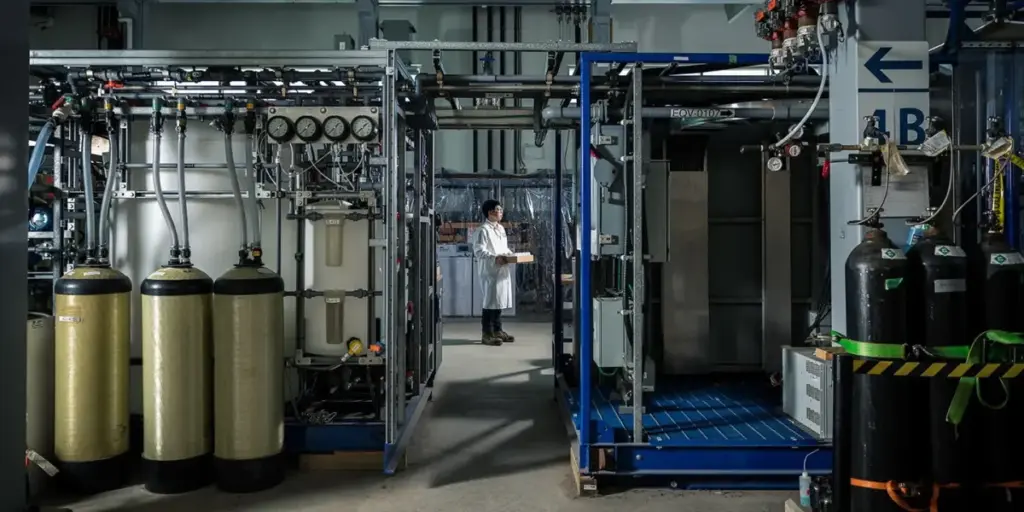
Now, a major milestone in North American energy independence has been achieved. Mangrove Lithium has officially inaugurated North America’s first commercial electrochemical lithium refinery. Located in Delta, British Columbia, the newly unveiled facility—designated as the Single Stack Plant (SSP)—represents a 1,000-tonne-per-year commercial leap forward. Operating as both the company’s flagship refining hub and its new corporate headquarters, the Delta site marks a decisive shift away from traditional, highly polluting chemical refining methods toward an agile, sustainable, and economically competitive domestic supply chain.
By employing a proprietary electrochemical process, Mangrove is sidestepping conventional paradigms to convert raw lithium extracts directly into battery-grade material. At peak capacity, the Delta facility will output enough high-purity lithium to support approximately 25,000 electric vehicles (EVs) annually. Yet, this 1,000-tonne milestone is merely a prologue. Bolstered by millions in federal backing from the Canadian government and strategic partnerships with domestic mining outfits, Mangrove is laying the groundwork for a fully integrated, "mine-to-cathode" domestic ecosystem. If the company’s ambitious roadmap unfolds as planned, Canada is poised to transform from a raw-resource exporter into a heavyweight processing powerhouse capable of feeding the burgeoning North American EV manufacturing base.
Detailed Chronology: The Journey to Commercialization
To understand the significance of Mangrove’s Delta facility, one must trace the meticulous trajectory of its technological and corporate development. The path from bench-scale chemistry to a commercial-grade electrochemical plant has been marked by rigorous piloting, strategic alignment, and scaling efforts designed to prove that domestic lithium refining is not merely an environmental ideal, but a commercial reality.
From Laboratory Concept to Industrial Reality
For years, the lithium-refining sector remained bound to legacy chemical precipitation techniques. These conventional methods often require vast quantities of reagents, generate significant waste, and demand immense geographic footprints, making them difficult to permit and operate sustainably within Western regulatory environments. Recognizing these structural inefficiencies, Mangrove’s engineering teams spent years developing an alternative: a proprietary electrochemical platform designed to process varied lithium inputs—whether derived from brines or hard-rock sources—with unprecedented precision and lower environmental impact.
The transition from conceptual R&D to pilot testing laid the foundation for the current commercial breakthrough. Over successive phases of optimization, the company demonstrated that its single-stack electrochemical architecture could reliably yield battery-grade lithium carbonate and lithium hydroxide without the extensive waste streams characteristic of legacy operations.
The Delta Ribbon-Cutting and the Single Stack Plant (SSP)
The culmination of these developmental phases materialized in Delta, British Columbia, where company executives, industry stakeholders, and government officials gathered for an official ribbon-cutting ceremony. The Single Stack Plant (SSP) is designed to operate as a continuous commercial facility, validating the economic and operational viability of Mangrove’s technology at scale.
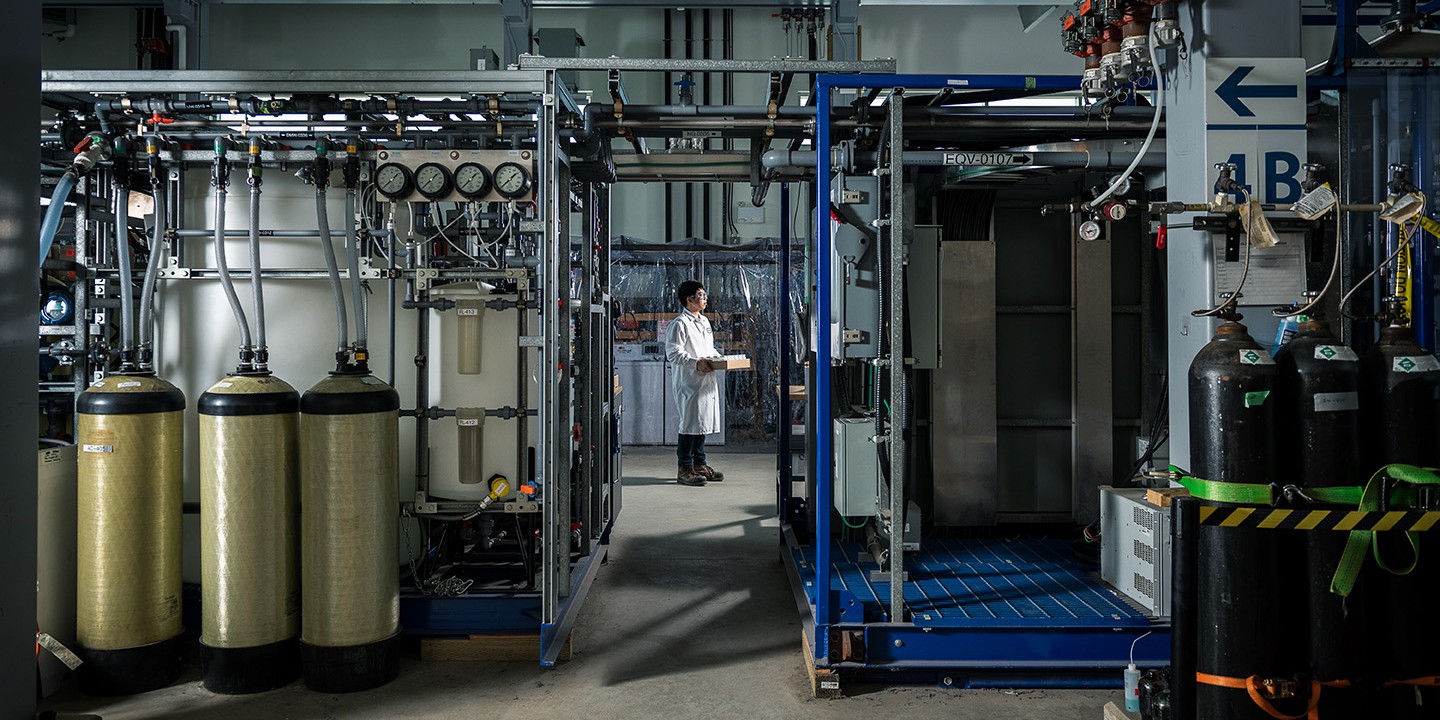
By siting its headquarters and its inaugural commercial plant in British Columbia, Mangrove has anchored its operations within a jurisdiction offering clean hydroelectric power, robust environmental oversight, and proximity to major Pacific trade corridors. The SSP serves a dual purpose: it acts as a revenue-generating production facility and functions as a live demonstration plant for prospective global partners looking to license or integrate Mangrove’s electrochemical technology into their own regional operations.
Charting the Next Frontier: Eastern Expansion
Even as the ribbons fell in Delta, Mangrove’s strategic gaze was already fixed on the horizon. The company has formally initiated plans for its second, exponentially larger facility, slated for Eastern Canada. Unlike the Delta site, which serves as an immediate commercial validator, the proposed Eastern facility is engineered to tackle hard-rock spodumene concentrate at a massive industrial scale.
Designed to process raw mineral concentrates into battery-grade chemicals capable of supporting approximately 500,000 EVs annually, this second-generation plant represents the true scaling phase of Mangrove’s vision. To bridge the gap between planning and execution, the company has secured conditional funding support of up to $21.88 million CAD from Natural Resources Canada (NRCan) via its Critical Minerals Research, Development, and Demonstration (CMRDD) program. This capital injection is earmarked specifically to advance critical engineering studies, environmental assessments, and comprehensive spodumene piloting protocols.
Supporting Context & Metrics: Reshaping the Supply Chain
The urgency behind Mangrove’s expansion cannot be fully grasped without examining the macro-economic and geopolitical realities governing the global battery supply chain. For decades, the economic value of critical minerals has leaked out of resource-rich Western nations during the midstream processing phase.
[Raw Spodumene / Brine Extraction]
             │
             ▼
[Mangrove Electrochemical Refining (SSP Delta / Future Eastern Plant)]
             │
             ▼
[Battery-Grade Lithium (Carbonate/Hydroxide)]
             │
             ▼
[Cathode Production & Domestic EV Manufacturing (500k+ EVs)]
Breaking the Overseas Bottleneck
Historically, raw lithium extracted in the Americas and Australia was shipped predominantly to overseas facilities—frequently in Asia—for refining and conversion into battery-grade chemicals. This "round-trip" supply chain introduces massive carbon footprints through maritime shipping, subjects automakers to severe geopolitical supply risks, and exposes North American manufacturers to arbitrary price fluctuations.
As regulatory frameworks like the United States’ Inflation Reduction Act (IRA) and Canada’s corresponding clean economy investment tax credits demand higher percentages of regional mineral sourcing, the pressure to domesticate refining has reached a fever pitch. Mangrove’s electrochemical process arrives precisely as automakers seek compliant, transparent, and secure domestic supply channels.
The "Mine-to-Cathode" Vision via Élévra Partnership
A cornerstone of Mangrove’s expansion strategy is the elimination of fragmented supply chains through vertical integration. To this end, the company has executed a pivotal memorandum of understanding (MOU) with lithium producer Élévra. Under this agreement, Mangrove will secure raw spodumene feed directly from Élévra’s Quebec-based mining operations.

This partnership forms the bedrock of a true "mine-to-cathode" domestic supply chain. By linking extraction directly with electrochemical refining within Canada, the partnership minimizes transport emissions, ensures strict traceability, and insulates domestic battery cell manufacturers from foreign market shocks. It establishes a closed-loop economic model where Canadian resources are extracted, processed, and integrated entirely within North America.
Key Metrics at a Glance
- Delta Facility Capacity: 1,000 tonnes of battery-grade lithium per year.
- Delta EV Impact: Sufficient output to power approximately 25,000 electric vehicles annually.
- Proposed Eastern Facility Capacity: Sized to supply battery materials for roughly 500,000 EVs annually.
- Federal Support: Up to $21.88 million CAD in conditional funding secured from Natural Resources Canada (NRCan).
- Core Technology: Proprietary electrochemical processing yielding lower waste, higher flexibility, and reduced carbon intensity compared to conventional methods.
Official Statements: Leadership Perspectives
The inauguration of North America’s first electrochemical lithium refinery elicited strong reactions from industry leaders and government stakeholders alike, emphasizing the national security and economic implications of the milestone.
Highlighting the transformative nature of the technology and its alignment with national priorities, Saad Dara, CEO and founder of Mangrove Lithium, stated during the inaugural ceremonies:
"This is a landmark moment not just for Mangrove, but for Canada. By commissioning the first commercial electrochemical lithium refinery in North America, we are proving that lithium can be refined domestically, sustainably, and competitively. This facility is an important step toward a fully Canadian lithium supply chain, one that strengthens our energy security, accelerates the transition to EVs, and positions Canada as a global leader in critical mineral processing."
Dara’s sentiments underscore a growing consensus among industrial planners: energy transition goals cannot be achieved without aggressive innovation in domestic processing technologies. By proving that advanced electrochemical methods can successfully displace legacy chemical extraction, Mangrove has positioned itself as a technological pioneer capable of rewriting the playbook for critical mineral refinement.
Government officials have similarly championed the initiative as a validation of Canada’s Critical Minerals Strategy. Federal investments through Natural Resources Canada reflect a deliberate strategy to fund midstream processing—the vital missing link that transforms raw dirt into high-value battery components. By de-risking early-stage engineering and piloting studies for Mangrove’s Eastern facility, Ottawa is signaling its commitment to building a resilient, end-to-end industrial base capable of weathering future global disruptions.
Future Outlook: The Road Ahead for North American Refining
As the Delta Single Stack Plant transitions from commissioning to continuous commercial operation, the broader implications for the North American automotive landscape are profound. The facility serves as a proof-of-concept that could fundamentally alter how global mining and refining projects are capitalized and executed.

Scaling Up and Commercial Replication
The immediate focus for Mangrove will be optimizing the Delta plant’s operational efficiencies, validating its continuous output metrics, and fulfilling early commercial offtake agreements. Concurrently, engineering teams will leverage operational data from Delta to accelerate the design and permitting of the larger Eastern Canada facility.
If the proposed Eastern plant achieves its target output of supporting 500,000 EVs annually, it will instantly position Canada as a Tier-1 global exporter of refined battery chemicals. Furthermore, Mangrove’s modular electrochemical approach lends itself well to global licensing. Beyond North America, mining companies operating in South America, Australia, and Europe are actively seeking cleaner, more modular alternatives to massive, capital-prohibitive chemical refineries. Mangrove’s success in British Columbia could well serve as the blueprint for decentralized, green lithium refining worldwide.
Overcoming Structural Headwinds
Despite the enthusiasm surrounding the launch, the road ahead is not without challenges. Scaling complex electrochemical processes from a 1,000-tonne plant to a multi-kilotonne industrial facility requires flawless execution, continued capital deployment, and steady macroeconomic conditions. Additionally, global lithium market pricing has experienced considerable cyclical volatility, requiring midstream refiners to maintain hyper-efficient cost structures to remain competitive against entrenched foreign incumbents.
However, structural tailwinds heavily favor domestic processors. With Western governments increasingly viewing critical minerals through the lens of national security, regulatory fast-tracking, preferential procurement policies, and direct financial subsidies are expected to insulate domestic innovators against international price wars.
Conclusion
Mangrove Lithium’s successful commissioning of the Delta Single Stack Plant is much more than a corporate milestone; it is a critical stress test for North America’s industrial policy. By demonstrating that advanced electrochemical refining can be executed cleanly, efficiently, and competitively on home soil, Mangrove has provided the missing link in the continent’s EV supply chain. As construction planning begins on its massive Eastern Canadian successor, the vision of a self-sustaining, "mine-to-cathode" North American battery ecosystem moves rapidly from ambition to undeniable reality.



