

Dateline: Global Ocean Conservation Desk
Executive Overview
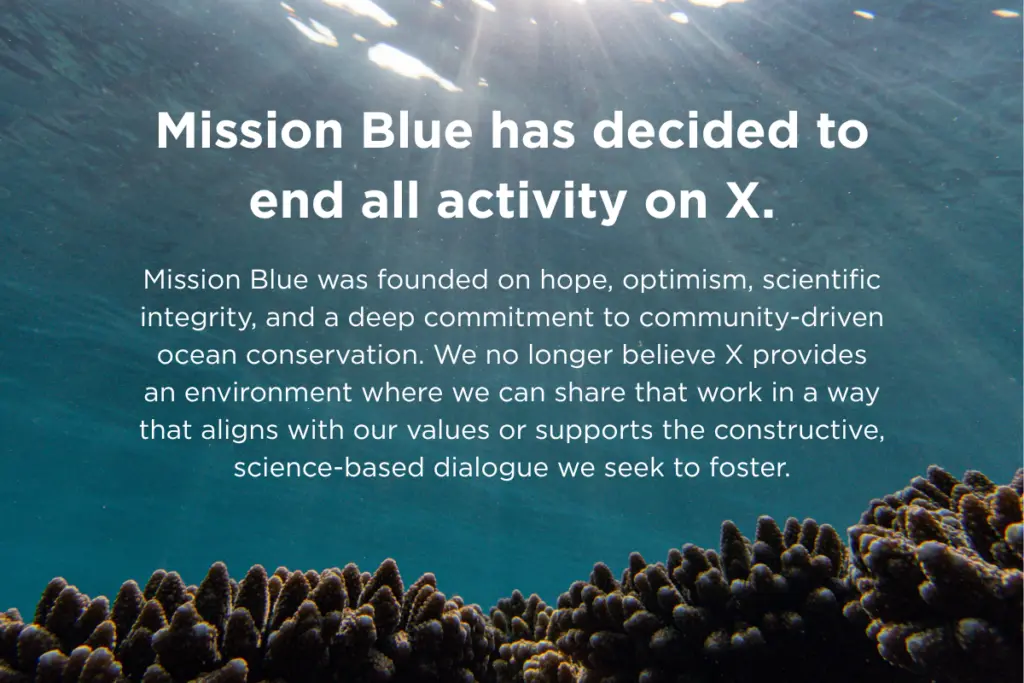
In a decisive move that reflects a growing trend among non-profit organizations, scientific bodies, and advocacy groups worldwide, Mission Blue—the internationally renowned ocean conservation foundation founded by legendary oceanographer Dr. Sylvia Earle—has officially announced the cessation of its active operations on the social media platform X (formerly Twitter).
Citing a fundamental incompatibility with its core values of hope, optimism, and constructive dialogue, the organization has pivoted its digital outreach strategy toward alternative platforms where it believes civil discourse, scientific integrity, and community-building can be better sustained. Moving forward, Mission Blue will concentrate its social media efforts on Instagram, Facebook, LinkedIn, and YouTube, alongside its direct-to-subscriber email newsletters.
The decision underscores a broader, systemic reckoning within the scientific and environmental communities regarding the utility and safety of participating in digital spaces where the amplification of misinformation, escalating hostility, and polarized rhetoric have increasingly overshadowed substantive engagement. For Mission Blue, an initiative dedicated to galvanizing global support for marine protected areas known as "Hope Spots," the atmosphere on X had drifted too far from the inclusive, solutions-oriented environment required to foster meaningful environmental stewardship.
While the foundation’s historical archive on X will remain accessible for reference purposes, no new content will be published, and active community management on the platform has ceased entirely. This report provides an in-depth examination of the decision, tracing the evolution of Mission Blue’s digital strategy, analyzing the broader shifts in the digital ecosystem that precipitated the exit, and outlining the foundation’s forward-looking communication roadmap.
Detailed Chronology: From Early Adoption to Strategic Departure
The Early Days: Fostering Optimism in the Twitterverse
When Mission Blue first established its presence on Twitter years ago, the platform was widely viewed by environmental organizations as an indispensable tool for real-time advocacy. Founded in the spirit of hope and optimism, Mission Blue utilized the platform to bridge geographical divides, connecting marine scientists aboard research vessels in remote corners of the globe with policymakers, philanthropists, and passionate ocean advocates.
During this formative era, the platform facilitated rapid-response communications during marine expeditions, accelerated the dissemination of peer-reviewed oceanographic findings, and built a vibrant, engaged community of "Champions"—individuals committed to defending marine life and establishing global Hope Spots. For an organization whose foundational philosophy centers on the belief that humanity can heal the oceans if given clear, actionable paths forward, the microblogging site offered a dynamic arena for storytelling and coalition-building.
The Shift: Navigating a Changing Digital Landscape
As the years progressed, however, the foundational architecture and cultural norms of the platform underwent a profound transformation. Following significant corporate restructuring, leadership transitions, and shifts in content moderation policies under its current ownership, the digital ecosystem on X began to experience exponential growth in polarized rhetoric, coordinated harassment campaigns, and the unfettered spread of unverified claims.
For Mission Blue, the tipping point arrived when these systemic changes began to directly impact the discourse surrounding environmental science and climate change. The organization observed a marked increase in hostility directed not only at institutions but at individual scientists and conservationists sharing empirical data. Constructive debates regarding marine policy, overfishing, and biodiversity loss were frequently drowned out by inflammatory, divisive content that actively undermined scientific consensus.
The Decision to Step Back
Faced with a platform culture that increasingly rewarded sensationalism over nuance, Mission Blue’s leadership undertook a comprehensive internal review of its digital footprint. The core question facing the foundation was simple yet profound: Did the diminishing returns of audience reach on X justify compromising the organization’s commitment to maintaining a respectful, welcoming, and scientifically rigorous community?
The conclusion was unequivocal. Recognizing that its digital presence must mirror its real-world mission—which emphasizes healing, unity, and evidence-based action—Mission Blue determined that continuing to invest resources into X was no longer tenable. The formal decision to archive the account marked the end of an era, closing the chapter on one digital frontier while opening the door to more aligned communication channels.
Supporting Context & Metrics: The Exodus of Science from X
Mission Blue’s departure is far from an isolated incident. Across the global scientific, academic, and non-profit sectors, a quiet yet powerful migration has been underway, as organizations reevaluate the risks and rewards of maintaining a presence on X.
The Rise of Scientific Misinformation
Independent digital media researchers and academic institutions have documented a steep rise in the visibility of climate skepticism, anti-science rhetoric, and unverified environmental claims on X. Algorithm changes that prioritize high-engagement, emotionally charged content have inadvertently elevated polarizing viewpoints, often placing rigorous scientific data on equal footing with uncorroborated assertions.
For environmental organizations whose credibility depends entirely on empirical accuracy, operating in an environment where facts are routinely contested with hostility poses a severe institutional risk. Engaging with bad-faith actors not only drains valuable organizational time and resources but can also dilute the clarity of critical conservation messaging.
The Changing Economics of Social Media Engagement
Beyond the cultural toxicity of the platform, non-profits are increasingly factoring resource efficiency into their digital strategies. Maintaining an active social media presence requires dedicated community managers, content creators, and strategists. When the return on investment—measured in meaningful community engagement, donor conversion, and educational impact—declines, organizations are forced to reallocate these precious resources.
For Mission Blue, redirecting energy away from a platform characterized by escalating friction and channeling it toward communities primed for constructive dialogue represents a fiscally and ethically sound realignment.
The Broader Trend Among Conservation Giants
Mission Blue joins a growing roster of conservation organizations, academic journals, and public institutions that have either scaled back or entirely abandoned their operations on X. While mainstream media outlets and political entities remain tethered to the platform due to its breaking-news velocity, mission-driven entities focused on long-term systemic change are finding that depth, civility, and educational value are better cultivated elsewhere.
Official Statements and Institutional Philosophy
To fully understand the gravity of Mission Blue’s decision, one must examine the philosophical framework articulated by the organization’s leadership and communication teams.
The Power of "Ocean Hope"
At the heart of Mission Blue’s identity is Dr. Sylvia Earle’s unwavering philosophy of "ocean hope." Unlike traditional environmental messaging that often relies on doom-laden narratives and eco-anxiety to drive engagement, Mission Blue has consistently championed a positive, solutions-oriented approach. The foundation believes that people are motivated to protect what they love, and that highlighting success stories—such as the recovery of overfished zones or the formal designation of new Hope Spots—is the most effective catalyst for behavioral and policy change.
In its official transition announcement, the organization emphasized this ethos:
"We are all connected to the same ocean. Through our digital strategy, we seek to build a curious, welcoming online community. We cannot, in good faith, continue to use the X platform."
This statement highlights a core ethical boundary: an organization dedicated to fostering global unity and scientific literacy cannot reconcile its mission with a digital environment that frequently incentivizes division and anti-science sentiment.
A Pledge to Respectful Dialogue
Mission Blue’s leadership has made it clear that while they are closing the door on X, they remain deeply committed to public engagement. However, that engagement must take place within spaces where respectful dialogue is protected and nurtured. By stepping away from a platform that prioritizes volume over value, the foundation is actively protecting the mental well-being of its staff, scientists, and digital community members from unnecessary hostility.
Future Outlook: Building Resilient Communities Elsewhere
As Mission Blue turns the page on its chapter with X, the organization is directing its considerable creative and educational energies toward platforms that better align with its values and operational goals.
Expanding Horizons on Alternative Platforms
The foundation has formally invited its global community of supporters, scientists, and ocean advocates to reconnect across its active, highly curated channels:
- Instagram: Serving as the visual powerhouse for Mission Blue, Instagram allows the foundation to showcase breathtaking underwater imagery, short-form documentary reels of Hope Spot expeditions, and direct visual storytelling from marine biologists in the field.
- Facebook: Acting as a robust hub for community building, Facebook enables longer-form discussions, community-driven fundraising campaigns, and localized conservation updates for advocates worldwide.
- LinkedIn: Providing a crucial bridge to the corporate, philanthropic, and policy sectors, LinkedIn serves as Mission Blue’s primary platform for discussing sustainable marine economies, corporate environmental responsibility, and science-backed policy frameworks.
- YouTube: As the home for deep-dive storytelling, mini-documentaries, and educational webinars, YouTube allows Mission Blue to present comprehensive, uninterrupted narratives about the state of the global ocean and the solutions being implemented to save it.
The Direct-to-Inbox Strategy: Newsletters
In an era where algorithmic changes on social media platforms can gatekeep an organization’s reach from its own followers, Mission Blue is placing a renewed emphasis on direct communication through its newsletter subscription model. By delivering Hope Spot updates, ocean stories, and actionable conservation steps directly to the inboxes of dedicated supporters, the foundation ensures an unbroken, un-manipulated line of communication with its most loyal advocates.
Conclusion: A Defining Moment for Environmental Advocacy
Mission Blue’s exit from X serves as a bellwether for the broader environmental movement. It demonstrates that the integrity of scientific communication and the psychological safety of digital communities must take precedence over mere audience size or algorithmic trends.
As the global community faces unprecedented challenges—ranging from marine heatwaves and overfishing to plastic pollution and acidification—the need for clear, compassionate, and scientifically rigorous dialogue has never been greater. By stepping away from the noise of X and concentrating its efforts on spaces designed for genuine connection, Mission Blue has reinforced its role not only as a protector of the ocean, but as a guardian of constructive, hopeful discourse in the digital age.
For more information on Mission Blue’s ongoing conservation initiatives, or to join their community of hope by subscribing to their newsletters and following their verified channels on Instagram, Facebook, LinkedIn, and YouTube, please visit the official Mission Blue website.



