

Executive Overview
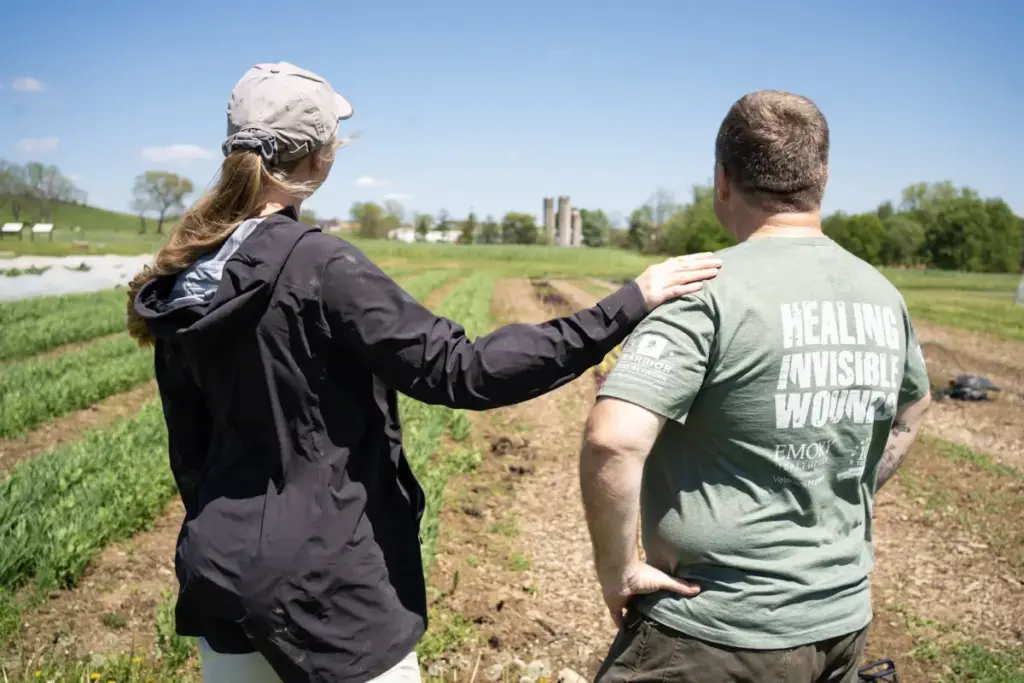
Farmers feed the world, yet they frequently do so at the direct expense of their own physical and psychological wellbeing. In contemporary conversations regarding farmworker justice and agricultural equity, the primary focus is traditionally cast upon fair wages, structural labor protections, and accessible healthcare. While these elements are undeniably essential to building a sustainable food system, they represent only part of the equation. A critical dimension of agricultural fairness receives far less attention: mental health and emotional durability.
Across the United States, agricultural professionals and farmers experience some of the highest rates of clinical anxiety, depression, and suicide of any occupational group, according to data from the USDA National Agricultural Statistics Service (2022). This staggering reality is not merely an unfortunate coincidence; it is a direct reflection of the systemic conditions inherent to modern farming. If society is truly serious about establishing fairness and sustainability in agriculture, a fundamental paradigm shift is required. We must rethink not only how farmers are economically compensated, but how they are psychologically prepared, resourced, and supported for the immense demands of the profession.
Modern farming is inextricably bound to deep uncertainty—characterized by severe weather volatility, relentless market pressures, punishing physical strain, and profound social isolation. Beyond the logistics of crop management, producers carry the profound emotional weight of stewarding the land and feeding communities within economic systems that routinely undervalue both. Despite these immense psychological realities, the vast majority of farmer training programs remain narrowly focused on technical skill development. Consequently, future generations of agriculturalists enter the field fundamentally underprepared for the psychological and emotional burdens of the vocation.
To address this critical gap, pioneering institutions are beginning to ask a transformative question: What if fairness began earlier? What if educational environments could intentionally cultivate the internal resources—such as resilience, self-awareness, and adaptive stress management—that protect and strengthen human wellbeing over time?
Detailed Chronology: The Evolution of Agricultural Training and the RIFT Initiative
To understand how the agricultural education sector arrived at this critical juncture, one must examine the historical trajectory of farmer training programs and the recent paradigm shifts taking place within specialized immersive institutions.
The Traditional Era of Technical Training
For generations, agricultural education was overwhelmingly utilitarian. Whether delivered through land-grant university extension programs, vocational high schools, or apprenticeships, the curriculum focused on agronomy, soil science, mechanics, and business management. The hidden curriculum of farming was defined by a rugged, stoic culture: endurance was expected, struggle was internalized, and psychological distress was treated as an individual failing rather than a systemic occupational hazard.
The Recognition of the Crisis (Late 2010s–2022)
As macroeconomic pressures, climate disruptions, and geopolitical shifts compounded the stress experienced by rural communities, public health data began to expose the severity of the mental health crisis in the farm belt and urban agricultural sectors alike. Reports from the USDA and various public health institutions highlighted alarming suicide rates among agricultural workers. These findings catalyzed a broader conversation among rural advocates, mental health professionals, and agricultural educators, prompting calls for expanded crisis hotlines, rural telehealth access, and destigmatization campaigns. However, these interventions were largely reactive—designed to treat individuals after they had already reached a breaking point.
The Proactive Turn: Integrating Wellbeing into Curriculum (Present)
Recognizing the limitations of reactive mental health support, forward-thinking educators began exploring ways to build psychological resilience before aspiring farmers launch their careers. This philosophy has informed a novel line of research within the Rodale Institute Farmer Training (RIFT) program.
Over the course of a rigorous, nine-month immersive experience, adult learners at RIFT immerse themselves in the daily realities of organic agriculture. Crucially, they do so within a learning ecosystem that is intentionally designed to support holistic wellbeing, stress resilience, and positive professional identity development. Rather than treating mental health as a disconnected module or an afterthought, this emerging model weaves wellbeing directly into the pedagogical fabric of the program, bridging the gap between technical mastery and human sustainability.
Supporting Context & Metrics: The Intersection of Ecology, Psychology, and Education
The innovative research underway at institutions like the Rodale Institute is not based on abstract conjecture; it is firmly anchored in two well-established academic and psychological frameworks: Ecological Design Theory and Transformational Learning Theory.
Theoretical Frameworks
- Ecological Design Theory posits that the environments we construct—encompassing physical, social, and cultural dimensions—fundamentally shape how human beings think, feel, and learn. By intentionally curating the spaces where aspiring farmers live, study, and labor, educators can directly influence stress regulation and cognitive processing.
- Transformational Learning Theory explores the ways in which adult learners make meaning of their lived experiences. Through structured reflection, individuals can critically examine their assumptions, shift their self-perceptions, and redefine their roles within their communities and the broader world.
Together, these complementary perspectives point toward an expanded vision of agricultural education—one that recognizes learning as a dual process of technical skill-building and deep human development.
Research Methodology: A Mixed-Methods Approach
The current research study spearheaded by agricultural education advocates asks a deceptively simple yet consequential question: How might intentionally designed, nature-based learning environments influence the wellbeing and resilience of future farmers?
To answer this empirically, investigators are employing a comprehensive mixed-methods approach that prioritizes the lived experiences of adult learners. The methodology combines qualitative data—such as in-depth interviews, focus groups, reflective journaling, and ethnographic field observations—with quantitative biometric data. Using wearable physiological devices, researchers are tracking objective health indicators including:
- Heart rate variability (HRV) as a metric for stress and autonomic nervous system regulation.
- Sleep duration and quality patterns.
- Physical activity levels throughout the demanding seasonal shifts of agricultural production.
The overarching goal of this data collection is not to manufacture a predetermined outcome, but to achieve a granular understanding of how specific elements of an immersive, nature-based learning environment interact with stress, physiological regulation, and the formation of professional identity over time.
Official Statements and Expert Perspectives
As the dialogue surrounding farmworker fairness expands to encompass psychological health, leaders in sustainable agriculture and educational design are weighing in on the necessity of systemic reform.
"Farming is inherently unpredictable, demanding a level of physical and emotional endurance that few other professions require," notes a lead researcher within the educational design sector. "For too long, we have trained individuals to master the soil, operate complex machinery, and balance ledgers, while completely ignoring the human instrument required to carry out that labor. If we want resilient farms, we must first cultivate resilient farmers."
Experts emphasize that embedding resilience into agricultural training is fundamentally different from offering superficial wellness workshops or treating mental health as a standalone, "woo-woo" concept.
"Resilience, self-awareness, and stress management are not abstract ideals; they are core professional competencies," educational theorists argue. "Just as an organic farmer must learn to read the subtle indicators of soil health and plant stress, they must also develop the self-awareness to recognize the somatic and emotional indicators of burnout within themselves. These capacities can be systematically supported through intentional program design—incorporating regular time in nature, structured peer reflection, robust community connection, and alignment with the natural rhythms of living systems."
Advocates also stress that expanding the definition of farmworker fairness does not diminish the urgency of traditional labor protections. Fair living wages, safe working conditions, collective bargaining rights, and affordable healthcare remain non-negotiable pillars of a just food system. However, true equity requires broadening our institutional responsibilities to ensure that workers are equipped with the community networks and psychological resources necessary to navigate the full, unvarnished reality of agricultural life.
Future Outlook: A Sustainable Path Forward for Agriculture
Reimagining agricultural education requires dismantling a deeply entrenched cultural narrative. For generations, farming has been romanticized through the lens of "rugged individualism"—the cultural expectation that true agriculturalists must endure extreme hardship, financial precarity, and physical exhaustion entirely without complaint.
While perseverance and grit will always remain vital traits in a profession dictated by weather patterns and biological systems, this toxic narrative of silent suffering creates a dangerous barrier. It actively discourages individuals from acknowledging their struggles, expressing vulnerability, or seeking timely support. Expanding this cultural narrative—creating institutional and social space for reflection, emotional awareness, and mutual support—offers a far more sustainable, humane path forward for the next generation of food producers.
Designing for the Whole Human Being
The implications of this research extend far beyond any single training program. They serve as a direct invitation to agricultural educators, university deans, program designers, and institutional leaders across the globe. The central challenge moving forward is clear: What would it mean to design educational structures for the whole human being, rather than treating learners merely as labor units preparing to fill a technical role?
This introspective shift is not merely professional; it is deeply personal. Long before students encounter formal academic literature on regenerative organic agriculture or educational theory, their relationship with the land is often forged through direct, experiential contact with the natural world. Whether it is observing seasonal transitions in the Northeast—from the first spring thaw and the vibrant fullness of summer, to the slow turning of autumn leaves and the contemplative stillness of winter—these natural rhythms shape human resilience in ways that formal curricula are only beginning to quantify.
Conclusion: Dignity at the Core of the Food System
Ultimately, true farmworker fairness is rooted in dignity. It requires a societal acknowledgment that the people who grow, harvest, and steward our food are not interchangeable cogs in a global supply chain. They are complex individuals navigating demanding, highly meaningful, and frequently challenging work.
If society is genuinely committed to building a more just, resilient, and sustainable food system, the transformation must begin at the foundational level. We must ask ourselves how we can better support agricultural workers—not only out in the field, but within the very educational environments that shape who they become. By bridging technical training with holistic human development, we can ensure that the people who feed the world are finally supported, valued, and sustained in return.



