

Executive Overview
As the autumn equinox approaches and the days rapidly shorten across the Northern Hemisphere, human habits shift in tandem. We trade natural sunlight for artificial illumination, turning on porch lights, illuminating office towers, and casting a warm glow across suburban streets to combat the encroaching darkness. However, this human craving for light comes with an unintended, devastating ecological toll.
Unbeknownst to many homeowners and urban developers, our brightly lit buildings and homes are creating deadly nocturnal traps for nearly half a billion migratory birds currently embarking on their epic southward journeys. From delicate blackpoll warblers to agile chimney swifts and striking scissor-tailed flycatchers, hundreds of species are navigating the skies overhead on ancestral flight paths. Tragically, a staggering number of these voyagers will never reach their wintering grounds in Central and South America.
Drawn off-course by artificial lights and disoriented by severe weather patterns, at least one billion birds perish annually in the United States alone after colliding with skyscrapers, commercial real estate, and residential windows. This collision crisis peaks during the autumn migration window—which runs from late summer through mid-November—because the seasonal population swells significantly following summer breeding grounds. While major metropolitan areas like Chicago and Minneapolis have instituted "Lights Out" ordinances, and coastal residents are increasingly familiar with shielding lights for nesting sea turtles, the vast majority of window-strike fatalities happen at unmonitored residential and low-rise commercial properties.
Mitigating this crisis does not exclusively require sweeping legislative mandates or heavy-handed government intervention. Instead, it calls for a collective, conscious shift in daily human habits. By simply drawing blinds, installing motion sensors, or flipping a wall switch at sunset, conscientious citizens can play a pivotal role in safeguarding vulnerable wildlife during one of the most perilous journeys of the natural year.
Detailed Chronology of the Autumn Migration and Urban Hazards
The annual avian autumn migration is one of the most magnificent spectacles in the natural world, yet its timeline is fraught with peril. Understanding the chronological phases of this journey reveals why artificial lighting poses such a catastrophic threat to millions of birds.
Late Summer to Early September: The Journey Begins
The migration period kicks off in earnest late in the summer, as breeding seasons draw to a close. According to Catherine Quayle, communications director for the Wild Bird Fund—a nonprofit organization dedicated to rehabilitating injured or sickened wildlife—the autumn migration consistently features a significantly higher volume of birds than the spring migration. This population surge is driven by the addition of juveniles born over the summer months.
By early September, millions of birds are airborne simultaneously, mostly traveling under the cover of darkness. Flying at night allows them to evade daytime predators like hawks and falcons, utilize cooler night air to prevent overheating, and navigate more efficiently using the stars and the Earth’s magnetic field.
However, this nocturnal strategy brings them into direct conflict with the modern human landscape. As these travelers pass over suburban neighborhoods and sprawling metropolitan centers, they encounter glowing windows, floodlit architectural marvels, and sweeping urban skylines.
The Mid-Migration Hazard Peak: September to October
As the weeks progress through September and October, the migration hits its zenith. During this window, birds face unpredictable autumn weather patterns, including storms, heavy fog, and shifting winds. Bad weather often forces weary flocks to fly at lower altitudes, bringing them dangerously close to brightly lit structures.
When migratory birds encounter intense artificial light sources, a phenomenon known as "fatal light attraction" occurs. City lights and residential illumination blind, confuse, and disorient the birds, drawing them away from their natural pathways and trapping them within urban canyons. Once inside these illuminated zones, they circle endlessly until they are utterly exhausted.
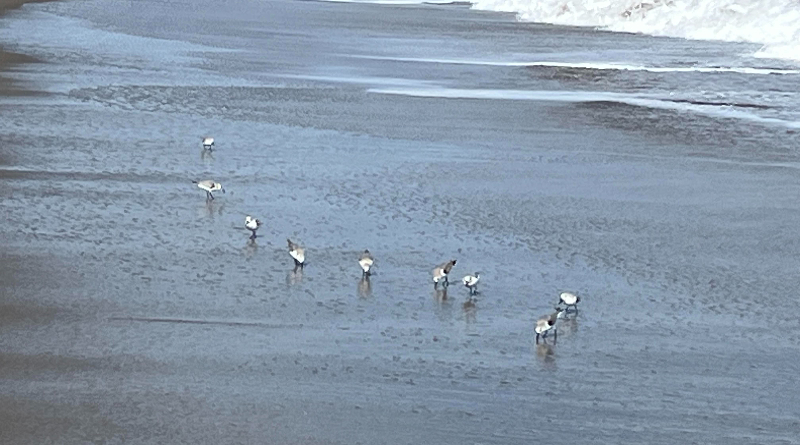
Compounding the problem is the architectural illusion created by glass. Migrating birds cannot differentiate between a genuine tree and the crystal-clear reflection of a tree mirrored in a glass window. Consequently, disoriented birds flying at high speeds slam directly into windows, resulting in severe trauma, internal bleeding, and instantaneous death.
Mid-November: The Conclusion of the Flight
The crisis gradually tapers off by mid-November as the last stragglers complete their passage to warmer climates in South America, the Caribbean, and the southern United States. Yet, the cumulative damage inflicted during these three critical months leaves an indelible mark on global biodiversity, underscoring the urgent need for seasonal behavioral changes among human populations.
Supporting Context & Metrics: The Scale of the Crisis
To fully grasp the gravity of avian window strikes and light pollution, one must examine the hard data and ecological metrics compiled by ornithologists and wildlife rehabilitators.
The Staggering Death Toll
According to Adriaan Dokter, a research associate and team lead at Cornell University’s BirdCast—an online resource that tracks bird migration in real time—at least one billion birds die every year in the United States alone from building collisions. This staggering figure encompasses both massive commercial skyscrapers in urban centers and everyday residential homes in suburban neighborhoods.
The localized impact is equally sobering. In New York City alone, more than 250,000 birds perish annually after colliding with buildings. The data recorded by frontline rehabilitation centers provide an even more granular look at the immediate destruction. In early September alone, the Wild Bird Fund admitted 453 birds for emergency care; of that total, a staggering 124 individuals—more than 27 percent—were brought in specifically for acute window-strike trauma.
The Intersecting Crisis of Coastal Lighting
The issue of artificial light at night (ALAT) extends far beyond avian conservation, intersecting with other critical wildlife protection efforts. For residents living along oceanfront communities, managing night lighting is already a familiar ritual.
On the Atlantic coast, where beach environments host hundreds of sea turtle nests each year, local ordinances and conservation groups strictly mandate that coastal residents pull down blinds or shades at sunset. This practice prevents newly hatched sea turtles from becoming disoriented by indoor lighting, which can lure them away from the ocean toward inland perils.
However, a noticeable disconnect remains within these same coastal communities. While ocean-facing windows are routinely draped and shielded to protect marine life, properties facing inland or away from the beach frequently leave their windows entirely bare. These unshielded windows beam twinkling lights and indoor activity out into the night, creating lethal secondary hazards for migrating flocks passing overhead.
Official Statements and Expert Perspectives
Leading researchers, ornithologists, and conservation advocates emphasize that solving this crisis requires a two-pronged approach: large-scale municipal policy changes and individual grassroots action.
Cornell University and BirdCast Insights
Adriaan Dokter of Cornell University’s BirdCast project stresses that the danger posed by human-made light is entirely avoidable. By illuminating buildings throughout the night, human society inadvertently disrupts millions of years of evolutionary behavior.

"Migratory birds rely on the night sky—the stars, the moon, and geomagnetic cues—to guide them across thousands of miles," notes research pointing to historical avian navigation patterns. "When we flood the night sky with high-intensity artificial light, we effectively blind their internal compasses, luring them into concrete and glass labyrinths from which many cannot escape."
The Audubon Society’s Architectural Recommendations
The National Audubon Society has long advocated for proactive architectural modifications to reduce bird mortality. According to Audubon guidelines, property owners, corporate real estate managers, and homeowners can drastically minimize collision risks through several low-cost, high-impact strategies:
- Exterior Lighting Management: Switch off or dim exterior decorative lighting, architectural floodlights, and landscape spotlights during peak migration hours (typically 11:00 PM to 6:00 AM).
- Interior Light Reduction: Mandate internal "Lights Out" policies in commercial high-rises, requiring employees to draw window blinds before leaving offices for the evening.
- Smart Technology Integration: Install automatic motion sensors and timers on exterior security lights so they only activate when necessary, rather than burning brightly all night long.
- Glass Retrofitting: Apply UV-patterned decals, exterior screens, or specialized bird-friendly glass to existing windows to break up reflections and make the barrier visible to approaching wildlife.
Wildlife Rehabilitation Perspectives
From the front lines of wildlife rescue, Catherine Quayle of the Wild Bird Fund emphasizes that behind every statistic is a conscious, sentient creature experiencing avoidable trauma.
"When birds are admitted to our facility with window-strike injuries, they often suffer from severe concussions, broken coracoids, and fractures," Quayle explains. "Many do not survive the initial impact, and those that make it to us require intensive, specialized veterinary care. The tragedy is that these injuries are entirely preventable if humans simply take a moment to look at their homes from a bird’s-eye perspective."
Future Outlook: A New Mindset for Coexistence
As human populations continue to expand and urban footprints encroach further into natural habitats, the pressure on migratory species will only intensify. Addressing this challenge does not require waiting for slow-moving legislative bodies to pass sweeping zoning laws. Instead, it invites a profound cultural shift in how we relate to the natural world.
The Power of Conscientious Homeownership
While cities like Minneapolis and Chicago have made headlines for implementing official "Lights Out" programs for municipal buildings, the aggregate impact of individual homeowners cannot be overstated. A single home outfitted with glaring interior lights can act as a localized beacon of death for a passing flock of warblers or thrushes.
Conscientious homeowners and business leaders now have an opportunity to embrace a new mindset of planetary stewardship. Taking action requires very little: drawing curtains at dusk, turning off unnecessary indoor lights, and upgrading exterior lighting fixtures to dark-sky compliant models. While these small adjustments may demand a minor modification to evening routines—and perhaps a momentary inconvenience—the results are immeasurably worth it.
Looking Toward a Dark-Sky Future
The broader movement toward dark-sky preservation aligns perfectly with the goals of avian conservation. Reducing unnecessary artificial illumination not only saves migratory birds from fatal window strikes and exhaustion; it also slashes municipal energy consumption, lowers greenhouse gas emissions linked to climate change, and restores humanity’s connection to the starry night sky.
As the autumn migration continues its march toward mid-November, every household holds the power to make a difference. By dimming our lights and closing our blinds, we can guide these resilient travelers safely through the night, ensuring that the skies remain filled with the vibrant diversity of bird life for generations to come.



