

As climate change accelerates, altering weather patterns and shifting ecosystems, American agriculture and forestry are facing an invisible yet devastating enemy: climate-driven diseases and invasive pests. A damning new report from the Government Accountability Office (GAO)—titled Agricultural Diseases and Pests: Nationwide Assessment and Strategy Needed to Enhance the Climate Resilience of Farms and Forests—has revealed that the United States Department of Agriculture (USDA) has taken "few actions" to mitigate these escalating biological threats.
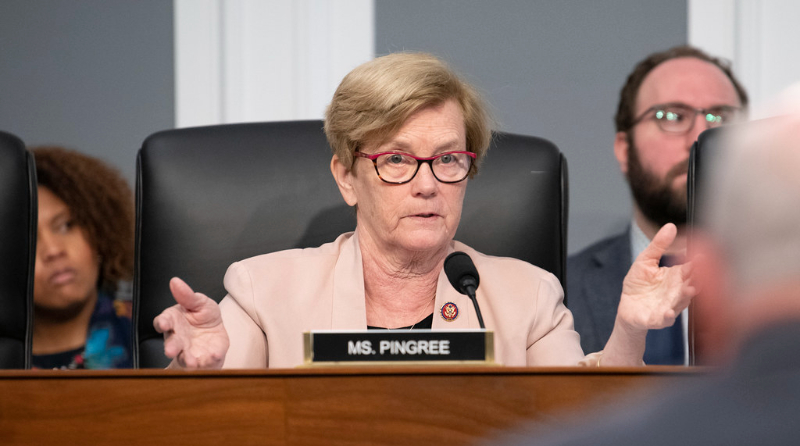
In response, US Representative Chellie Pingree (D-ME), a longtime organic farmer and senior member of the House Agriculture Committee, has launched a vigorous legislative push demanding immediate, decisive action from USDA Secretary Rollins. Pingree argues that the department’s current posture is dangerously shortsighted, particularly at a time when administrative budgets are attempting to slash funding for the USDA’s Climate Hubs—the very entities tasked with bridging the gap between climate science and on-the-ground producers.
The stakes could not be higher. Between 1960 and 2020, invasive species and agricultural diseases cost the US economy at least $550 billion. With a shifting climate compounding these vulnerabilities, models predict that federal crop insurance costs alone could surge by up to $2.2 billion annually. For farmers, ranchers, and foresters from Maine to California, climate change is no longer a distant threat debated in legislative halls; it is an economic and ecological crisis unfolding daily in their fields and forests.
Detailed Chronology: The Escalating Crisis and Congressional Pushback
The trajectory leading to Representative Pingree’s recent confrontation with the USDA is rooted in decades of compounding ecological pressures, punctuated by recent policy missteps and legislative warnings.
The Historical Baseline (1960–2020)
For over half a century, the creeping expansion of invasive species, pathogens, and agricultural pests has drained billions of dollars from the American economy. Historical data compiled by economic and ecological agencies highlights a staggering toll: at least $550 billion lost to the agricultural and forestry sectors combined. Despite these mounting figures, federal strategies have frequently treated invasive outbreaks as isolated, regional anomalies rather than symptoms of a systemic, climate-driven crisis.
The 2024–2026 Climate Projections
As global temperatures have broken successive records, scientific models have grown increasingly dire. A 2024 landmark analysis underscored that shifting climate conditions—characterized by milder winters, extended growing seasons, and erratic precipitation—would exponentially amplify pest survival rates. Economists projected that these biological pressures would drive up federal crop insurance liabilities by anywhere from $300 million to $2.2 billion annually, placing an unsustainable burden on both taxpayers and agricultural producers.
The GAO Report Release (2026)
The GAO published its definitive assessment, sounding the alarm that the USDA has failed to implement cohesive, nationwide strategies to protect farms and forests from climate-amplified biological threats. The report spotlighted a critical disconnect: while threats are multiplying rapidly, the agency has wound down or underfunded critical support structures, leaving food and timber producers dangerously exposed.
Representative Pingree’s Ultimatum (March 2026)
Seizing on the GAO’s findings, Rep. Chellie Pingree formally wrote to USDA Secretary Rollins, demanding that the department cease "hemming and hawing" and immediately adopt the GAO’s four-point roadmap. Highlighting the proposed fiscal year 2027 Agriculture Appropriations Bill—which targets USDA Climate Hubs for funding elimination—Pingree framed the administration’s actions as a reckless abdication of federal duty.
Supporting Context & Metrics: The Anatomy of a Biological Crisis
To fully grasp the urgency behind the GAO report and Representative Pingree’s demands, one must examine the intersection of climatology, ecology, and agricultural economics.
The Shifting Boundaries of Pests and Pathogens
Traditionally, natural geographic boundaries and predictable seasonal freezes kept many agricultural pests and forest pathogens confined to warmer, southern latitudes. However, rising temperatures have erased these historical lines of defense.
A prime example cited in the discourse is the northern migration of the southern pine beetle. Historically contained within the American South, warming winters have allowed the beetle to push its range as far north as Maine. The resulting wave of tree mortality not only decimates vital timber economies but also leaves northern forests structurally compromised, highly vulnerable to secondary insect infestations, and prime fuel for catastrophic wildfires.
Micro-Level Impacts on the Ground
For primary producers, these macro-level shifts translate into daily financial and operational scrambles. Farmers are no longer able to rely on generations-old management calendars. Outbreaks are initiating earlier in the spring and lingering later into the autumn.
In states like Maine, producers are forced to make massive capital investments—spending thousands of dollars out of pocket on protective netting, high tunnels, and enhanced biosecurity measures—simply to safeguard baseline yields from unseasonal pest pressures. When these measures fail, farmers are frequently stymied by bureaucratic delays in securing crop insurance or disaster assistance, compounding financial distress caused by concurrent extreme weather events like late freezes, torrential rainfall, and prolonged droughts.
The Four Pillars of the GAO Roadmap
The GAO report outlines a comprehensive, practical strategy that the USDA must operationalize without delay. The framework rests on four core activities:
- Improve and Coordinate Monitoring and Surveillance: Establishing robust, real-time tracking systems to detect emerging disease vectors and pest populations before they cross regional thresholds.
- Incorporate Climate Information into Modeling: Integrating advanced predictive climate data into biological forecasting to anticipate where pests will strike next.
- Expand Education, Outreach, and Technical Assistance: Revitalizing and expanding extension services and regional hubs to ensure producers have access to actionable, science-backed guidance.
- Modify and Develop Management Strategies: Investing in research and development to update outdated pest management protocols, shifting away from failing chemical interventions toward resilient, adaptive practices.
Official Statements and Institutional Discourse
The friction between legislative oversight and executive execution has brought the internal policies of the USDA under intense public scrutiny.
Representative Pingree’s Perspective
As an organic farmer who understands the realities of land stewardship, Representative Pingree has consistently used her platform on the House Agriculture Committee to champion science-based agricultural policies. In her communications with the executive branch, she emphasized that the agricultural community cannot shoulder the burden of a changing climate alone:

"Farmers, ranchers, and foresters know all too well that the impacts of climate change are not distant or theoretical—they are already materializing on the ground and affecting their operations and livelihoods… USDA must meet this moment with urgency, leadership, and a clear commitment to implementing the GAO’s recommendations."
Pingree has been particularly vocal regarding the strategic value of the USDA Climate Hubs. Operating as collaborative networks across various department agencies, these hubs have historically served as vital conduits, translating complex climate and pest data into regionally tailored tools for local agronomists. Targeting these hubs for budget elimination in the fiscal year 2027 appropriations bill was labeled by Pingree as "dangerously shortsighted" at a moment when producers require more expertise, not less.
The GAO’s Institutional Warning
The GAO’s findings serve as an institutional indictment of federal complacency. By documenting that the USDA has taken "few actions" despite clear empirical trends of escalating risk, the watchdog agency has made it clear that passive observation is no longer a viable policy. The report stresses that without a coordinated national assessment and strategy, the federal government risks shouldering catastrophic fiscal liabilities through emergency bailouts and bloated crop insurance payouts.
Future Outlook: The Path Forward for American Agriculture
The confrontation over the USDA’s response to climate-driven pests is a watershed moment for American environmental and agricultural policy. The choices made over the next several legislative cycles will determine whether the nation’s food systems and timberlands are systematically fortified or left to deteriorate under the compounding pressures of ecological destabilization.
The Imperative of Proactive Adaptation
Transitioning from reactive disaster relief to proactive climate resilience requires a cultural and structural shift within the USDA. Implementing the GAO’s recommendations is merely the baseline. Observers note that the department must fully restore and expand funding for regional Climate Hubs, treating them as frontline infrastructure just as critical to national security as roads or electrical grids.
Financial Stewardship vs. Short-Term Cuts
While attempts to trim federal spending through the elimination of climate-focused programs may appear fiscally prudent on a narrow ledger, the GAO’s data proves the exact opposite. Failing to invest in early warning systems, surveillance, and adaptive pest management guarantees exponentially higher costs down the line—measured in billions of dollars in lost crop yields, collapsed timber industries, and taxpayer-funded emergency bailouts.
Ultimately, America’s farmers, ranchers, and foresters are demonstrating remarkable ingenuity in adapting to a rapidly altering planet. However, innovation without institutional backing has its limits. As Representative Pingree and the GAO have made emphatically clear, the USDA must step up, abandon political hesitation, and provide the reliable science, early warnings, and practical assistance necessary to secure the future of American agriculture.



