

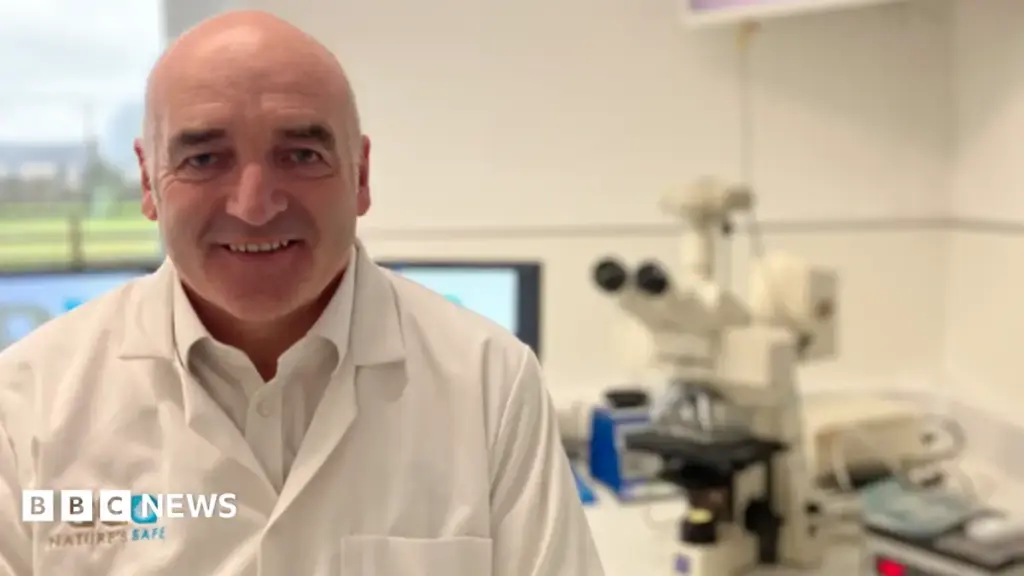
In a celebration of pioneering scientific achievement, resilience, and societal contribution, Shropshire’s prestigious Harper Adams University has announced its latest cohort of honorary degree and fellowship recipients. Among the most poignant recognitions is that of Tullis Matson, a trailblazing conservationist and biotechnology entrepreneur whose work establishing the "bio-bank" charity Nature’s SAFE is altering the landscape of modern biodiversity preservation. Matson, who hails from Whitchurch, admits that receiving this academic distinction is the absolute "highlight" of his year—a profound emotional milestone for a man who left formal education at age 16 with no qualifications, severely hindered by dyslexia and discouraged by early predictions of failure.
Matson’s induction comes as part of a high-profile group of seven distinguished individuals being honored during Harper Adams University’s 125th-anniversary celebrations. The diverse cohort includes prominent figures from entertainment, agriculture, and industry, such as comedian and actor Ed Byrne, The Archers actress Felicity Finch, agricultural entrepreneur Olly Harrison, corporate leader Christine Tacon CBE, New Zealand agricultural scientist Professor Grant Edwards, and Anthropy founder John O’Brien MBE.
For Matson, however, the honor symbolizes a remarkable personal redemption. Having built an international reputation for pushing the boundaries of cryopreservation technology, he now stands at the intersection of cutting-edge genetic science and desperate ecological defense. Through Nature’s SAFE, Matson and his team are actively fighting against the Earth’s sixth mass extinction event, freezing living cells from hundreds of endangered and extinct-in-the-wild species in liquid nitrogen at an ultra-low -196°C.
This comprehensive report examines Matson’s inspiring personal journey, the groundbreaking scientific methodologies driving Nature’s SAFE, the broader significance of Harper Adams University’s 125th-anniversary honors, and what the future holds for this vanguard of genetic conservation.
Detailed Chronology: From Academic Adversity to Scientific Pioneer
The Early Struggles: Overcoming the Stigma of Dyslexia
The narrative of Tullis Matson’s success is intrinsically tied to overcoming systemic educational barriers. Growing up with severe dyslexia at a time when learning differences were frequently misunderstood or mislabeled, Matson’s early years in the classroom were defined by frustration and alienation.
"The journey through my education was really tough," Matson reflected. "So now to get this is quite incredible, I’m absolutely blown away."
In an era when academic tracking heavily penalized those who struggled with conventional reading and writing, Matson was routinely told by educators that he was destined for failure. Left to navigate a world structured entirely around literacy without the necessary tools, he faced intense anxiety about his future. When he left school at 16 with no formal qualifications, his prospects appeared severely limited.
Yet, rather than capitulating to the limitations imposed upon him by traditional schooling, Matson channeled his energy into practical, hands-on enterprise and a profound intuition for biological sciences. This unorthodox path eventually led him to found Stallion Artificial Insemination Services, a world-leading enterprise specializing in equine cryopreservation technology. By mastering the delicate art and science of freezing and preserving reproductive cells, Matson laid the technical foundation for what would later become his life’s defining conservation mission.
The Inception of Nature’s SAFE
As Matson witnessed accelerating global biodiversity loss and the rapid depletion of wildlife habitats, he realized that standard field conservation—while vital—was no longer sufficient to stop the staggering rate of extinctions. Species were disappearing faster than natural ecosystems could protect them.
Driven by this ecological urgency, Matson established Nature’s SAFE, operating on a radical yet simple premise: if animals cannot be saved in their natural habitats today, their genetic blueprints must be preserved so they can be resurrected or supported scientifically in the future.
The charity functions as a biological "time capsule." By working closely with zoos, wildlife parks, and veterinary surgeons worldwide, Nature’s SAFE collects tissue and cellular samples immediately following an animal’s death. These samples are meticulously processed and submerged in liquid nitrogen tanks maintained at a constant -196°C. At this temperature, biological time essentially stops, halting cellular degradation and preserving the complete genetic diversity of the individual animal for decades, or even centuries.
Supporting Context & Metrics: The Science of Cryogenic Salvation
The Scale of the Crisis and the Bio-Bank Solution
The work conducted by Nature’s SAFE is both timely and monumental. Earth is currently experiencing what conservation scientists classify as the Anthropocene extinction, driven by human activity, climate change, deforestation, and poaching. According to various conservation metrics, species are vanishing at rates thousands of times higher than the natural background rate.
Nature’s SAFE has rapidly evolved into one of Europe’s most active and comprehensive wildlife bio-banks. The scale of its operations underscores its critical scientific importance:
- Species Coverage: The bio-bank currently houses biological samples from 400 distinct species.
- Endangered Focus: Among these, 200 species are formally classified as critically endangered, with several already extinct in the wild.
- Taxonomic Diversity: The cryogenic archives span a vast array of mammals, reptiles, and amphibians, ranging from massive African elephants to the elusive Scottish wildcat.
- Preservation Methodology: Tissue samples, skin cells, and reproductive cells are frozen using advanced cryopreservation protocols designed to prevent ice crystal formation, ensuring that cellular structures remain viable upon thawing.
Harnessing Advanced Reproductive Technologies
Freezing genetic material is only the first step in a complex, multi-stage scientific strategy. The ultimate goal of Nature’s SAFE is not merely to curate a cryogenic museum, but to actively inject this stored genetic material back into living populations when conditions allow, or to rescue genetically depleted species from the brink of inbreeding depression.
By utilizing emerging assisted reproductive technologies (ART)—including artificial insemination (AI), in vitro fertilisation (IVF), and somatic cell nuclear transfer (cloning)—scientists can potentially generate healthy offspring from individuals that have long since died. This approach preserves vital genetic diversity, which is the primary shield against hereditary diseases and environmental shifts.
"To be recognised with something you really believe in in the conservation world, using science and technology to try and help […], it doesn’t get any better," Matson noted.
"It re-emphasizes that the work we’re doing is the right thing. We’ve worked so hard, everybody has, for years to really push the boundaries of science to make a difference."
Official Statements & The Harper Adams 125th Anniversary Cohort
The University’s Perspective
Harper Adams University, renowned globally as a specialist institution for agricultural, land-based, and food supply studies, is marking its 125th anniversary with a series of celebrations highlighting excellence, innovation, and leadership.
In an official statement, Professor Ken Sloan, Vice-Chancellor of Harper Adams University, expressed profound admiration for the individuals chosen for this year’s honors.
"I am delighted to see such distinguished people from Shropshire and specialist industries being recognized," Prof. Sloan stated. "The fact that this recognition comes at the start of our 125th birthday year makes them particularly special."
Prof. Sloan further emphasized the institution’s commitment to building lasting bonds with its honorary alumni, noting that the university looks forward to "sustaining a close connection" with them as they collaborate on future educational and industry endeavors.
A Diverse Cohort of Luminaries
Matson will share the spotlight during the graduation ceremony on September 16, where he is scheduled to deliver an address to the graduating class. Recognizing the gravity of the moment, Matson views the address as an opportunity to impart wisdom to the next generation of scientists, agriculturalists, and innovators.
"To be able to stand up in front of them and try and give them some guidance is a big deal," he remarked. "They are our future."
The broader class of honorands mirrors the multifaceted nature of modern land use, media, and social enterprise:
- Olly Harrison: A prominent farmer and agricultural entrepreneur, recognized for his immensely popular YouTube channel that pulls back the curtain on the daily realities, economic pressures, and operational challenges of modern farming.
- Christine Tacon CBE: Awarded a fellowship in recognition of her stellar career in agricultural governance, notably serving as a director of the Co-Op Group and chairing the BBC Rural Affairs Committee.
- Professor Grant Edwards: Vice-Chancellor of New Zealand’s Te Whare Wanaka o Aoraki Lincoln University, honored for his global leadership in agricultural and environmental sciences.
- Felicity Finch: Acclaimed actress set to receive an honorary doctorate. Finch is widely recognized for her long-standing role as Ruth Archer in the BBC Radio 4 soap opera The Archers—a character who herself represents the agricultural ethos, having first appeared on the airwaves in 1987 as a Harper Adams student.
- Ed Byrne: Celebrated comedian, actor, and presenter with a three-decade career in television, whose early academic roots include studying horticulture at Strathclyde University.
- John O’Brien MBE: Shropshire business leader honored for founding Anthropy, a prominent leadership platform that convenes leaders from across British society annually at the Eden Project to strategize on national identity, economic resilience, and global positioning.
Future Outlook: The Road Ahead for Nature’s SAFE and Conservation Science
As Tullis Matson prepares to step up to the podium on September 16, his accolade serves as much more than a personal triumph over early academic adversity. It represents a broader cultural shift in how society perceives intelligence, capability, and contribution. By proving that dyslexia and a lack of traditional schooling do not preclude groundbreaking scientific innovation, Matson has emerged as an inspirational figure for unconventional thinkers everywhere.
Looking ahead, the imperative for Nature’s SAFE has never been more urgent. With climate disruptions escalating and habitat loss continuing unabated across the globe, the bio-bank is expanding its operational capacity to capture the genetic profiles of even more endangered species before it is too late. Plans are already underway to forge deeper institutional partnerships with international breeding programs, academic research centers, and global zoological networks.
The validation provided by Harper Adams University provides Matson’s mission with crucial academic and institutional momentum. By bridging the gap between practical cryobiology and theoretical conservation, Nature’s SAFE is ensuring that humanity does not simply record the passing of Earth’s magnificent fauna, but actively retains the biological tools required to bring them back from the edge of oblivion.
In a world often overwhelmed by ecological pessimism, Tullis Matson’s cryogenic time capsule offers a tangible blueprint for hope—proving that with tenacity, scientific ingenuity, and an unwavering belief in a purposeful mission, even the most daunting barriers can be overcome to secure a sustainable future for our planet’s most vulnerable inhabitants.



