

Executive Overview
California continues to cement its status as a global pioneer in clean energy, aggressively expanding its portfolio of utility-scale renewable power plants and distributed rooftop solar installations. As the state surges forward in its transition away from fossil fuels, energy experts and academic leaders are closely monitoring the metrics of this unprecedented transformation.
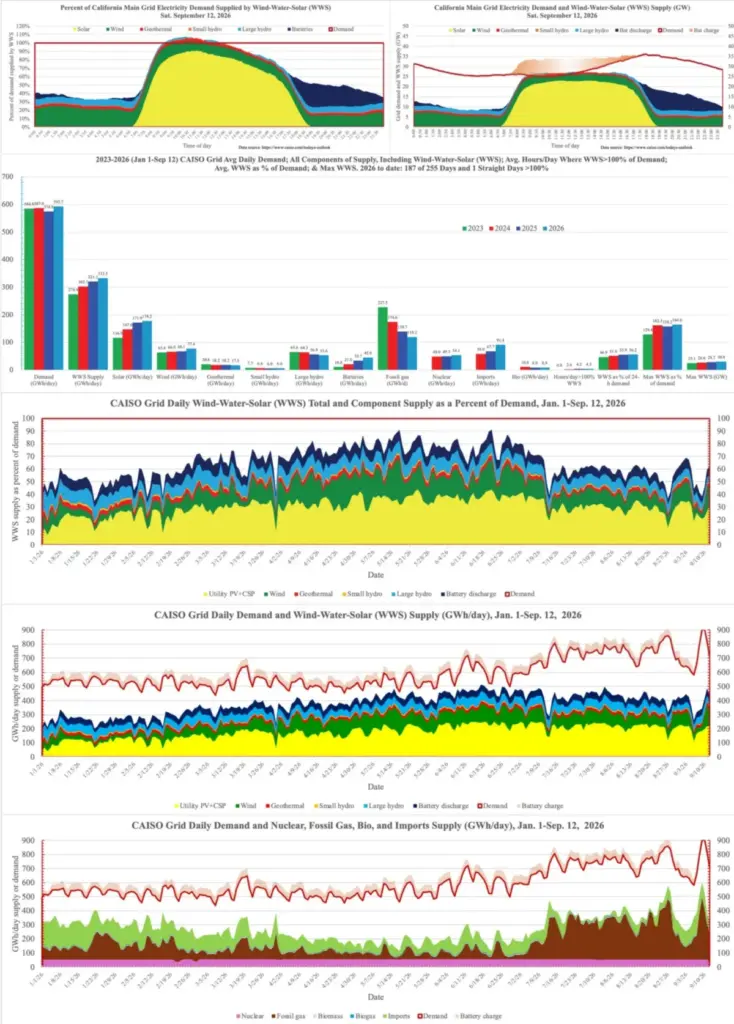
At the forefront of tracking this monumental shift is Dr. Mark Z. Jacobson, a prominent professor of civil and environmental engineering and the Director of the Atmosphere/Energy Program at Stanford University. For decades, Jacobson has championed the "WWS" framework—an energy strategy grounded entirely in Wind, Water, and Solar power. By meticulously evaluating state data, Jacobson and other industry analysts capture a dynamic picture of a state that is not merely setting ambitious climate targets, but actively crushing them ahead of schedule.
Recent milestones highlighted by academic and industry leaders emphasize that California’s clean energy acceleration is shifting from a policy aspiration into an operational reality. However, as experts note, the most remarkable aspect of California’s renewable trajectory is its velocity: records established today are routinely eclipsed tomorrow. This comprehensive report examines the underlying mechanisms driving California’s clean energy boom, the framework of the WWS transition, the implications for the broader American energy landscape, and the road ahead as the state marches resolutely toward a fully decarbonized grid.
The WWS Framework: Wind, Water, and Solar as the Bedrock of Modern Energy
To understand California’s ongoing clean energy transformation, one must first examine the diagnostic model used by researchers to evaluate it. The WWS framework—pioneered and popularized by academics like Professor Mark Z. Jacobson—serves as a comprehensive blueprint for transitioning entire state, national, and global economies away from combustion-based energy systems.
Defining WWS in the Golden State
- Wind Power: Encompassing both massive onshore wind farms situated in passes like Tehachapi and Altamont, as well as the burgeoning potential for offshore wind along the rugged Pacific coastline, wind energy provides a vital complement to solar generation, often peaking during evening hours or seasonal shifts when solar output dips.
- Water (Hydroelectric & Marine): Traditional hydroelectric dams have long formed the historical backbone of California’s renewable baseline. While subject to the vagaries of multi-year droughts and shifting precipitation patterns, hydro remains an indispensable, highly dispatchable asset within the state’s balanced grid.
- Solar (Utility-Scale and Distributed Rooftop): Solar photovoltaic (PV) technology has experienced the most explosive growth. From sprawling desert installations in the Mojave to millions of residential rooftops spanning from San Diego to Redding, solar power dominates daytime generation profiles, regularly driving wholesale electricity prices down—and occasionally into negative territory—during peak sunlight hours.
The Synergy of Integration
The genius of the WWS methodology lies in its holistic approach. Rather than viewing wind, water, and solar as isolated technologies, the framework treats them as an interdependent trinity. When the sun sets, wind and hydro often pick up the slack. When generation temporarily outstrips demand, advanced battery storage systems—which have also seen exponential deployment across California in recent years—capture the surplus for deployment during peak evening demand windows.
Detailed Chronology of California’s Clean Energy Evolution
California’s path to becoming a renewable energy powerhouse did not happen overnight. It is the result of decades of visionary legislative mandates, aggressive regulatory pushes, and continuous technological cost-reductions.
The Early Decades: Laying the Groundwork
The foundation for California’s modern renewable grid was laid in the late 20th century, spurred by early energy crises and progressive environmental legislation.
- 1970s–1980s: The establishment of the California Energy Commission (CEC) and the Public Utilities Commission (CPUC) introduced some of the nation’s first energy efficiency standards. Simultaneously, the state’s initial wind and solar tax credits triggered the world’s first modern wind farm developments.
- 2002: California enacted its pioneering Renewable Portfolio Standard (RPS), requiring investor-owned utilities to procure 20% of their electricity from eligible renewable sources by 2017—a deadline the state subsequently accelerated.
The Legislative Sprint (2015–Present)
In the past decade, the pace of legislative action has dramatically quickened, matching the precipitous drop in solar and battery hardware costs.
- SB 350 (2015): Raised the state’s RPS target to 50% by 2030, while also doubling energy efficiency savings in electricity and natural gas end uses.
- SB 100 (2018): Signed into law by then-Governor Jerry Brown, this landmark legislation mandated that 100% of retail electricity sold in California must come from zero-carbon resources by 2045. It established interim check-ins, requiring 60% renewables by 2030.
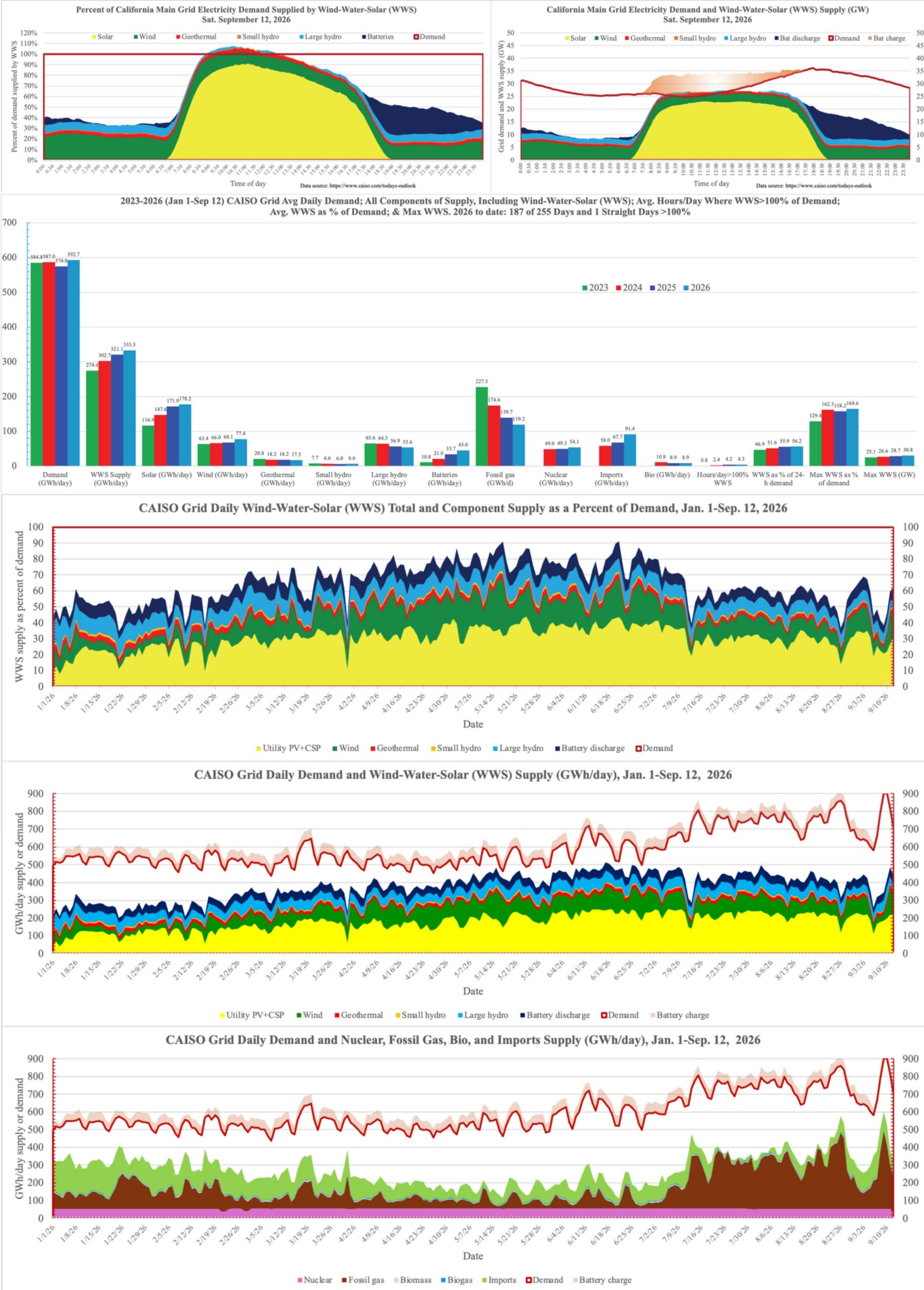
- Recent Milestones: As tracked by researchers like Professor Jacobson, the state has routinely shattered these interim markers ahead of schedule. On multiple spring and summer afternoons over the last few years, instantaneous renewable generation has exceeded 100% of total state demand, forcing grid operators to export surplus power or curtail generation, thereby emphasizing the urgent need for ongoing storage expansion.
Supporting Context & Metrics: Data Behind the Transition
Quantifying California’s renewable trajectory requires looking closely at generation capacity, storage integration, and fossil fuel displacement.
Capacity and Generation Metrics
According to data compiled by energy analysts and tracked by academic researchers at institutions like Stanford, California’s cumulative installed solar capacity—spanning utility-scale arrays and distributed rooftop systems—now exceeds tens of gigawatts (GW). To put this in perspective:
- Rooftop Solar: Over 1.5 million California homes and businesses feature solar installations, turning ordinary citizens into active participants in the generation of clean power.
- Utility-Scale Projects: Vast expanses of the southern deserts host multi-hundred-megawatt solar farms coupled with massive lithium-ion battery energy storage systems (BESS).
- Grid Penetration: On peak days, renewables frequently supply upwards of 95% to 100% of the instantaneous load, proving that a major industrial economy can run on clean power for extended periods without destabilizing the grid.
The Storage Revolution
A frequent critique of WWS strategies has historically been the intermittency of wind and solar. California has directly addressed this bottleneck through an unprecedented deployment of battery storage. In just a five-year window, the state’s grid-scale battery capacity skyrocketed from virtually zero to well over 10 GW. This rapid accumulation of storage has successfully mitigated the notorious "duck curve," absorbing midday solar overproduction and discharging it seamlessly during the net-peak hours after sunset.
Official Perspectives and Academic Insights
The transition occurring in California is frequently analyzed by economists, engineers, and policymakers worldwide. The consensus among these experts highlights that California is serving a crucial role as a live-action laboratory for the global energy transition.
The Academic Viewpoint: Dr. Mark Z. Jacobson
Dr. Mark Z. Jacobson has consistently emphasized that transitioning to 100% WWS is not only technologically feasible but economically advantageous. By eliminating the hidden health and environmental costs associated with fossil fuel combustion, WWS pathways pay for themselves over time. Jacobson’s ongoing public tracking of California’s milestones serves as an essential reality check against skepticism, demonstrating through hard data that the logistical hurdles of decarbonization are being systematically dismantled.
Regulatory and Industry Reactions
State regulators at the California Energy Commission and the Independent System Operator (CAISO) maintain a dual perspective: celebrating hard-won victories while keeping a wary eye on grid reliability during extreme weather events and wildfire seasons.
Industry leaders point out that California’s success has created powerful economies of scale. The components, software platforms, and regulatory frameworks developed and tested in California are now being exported across the United States and internationally, lowering costs for clean energy adopters everywhere.
Future Outlook: The Road to 2045 and Beyond
While California’s achievements to date are monumental, the state faces distinct challenges as it enters the final, most demanding phases of its decarbonization journey.

Scaling Long-Duration Energy Storage
While lithium-ion batteries have successfully solved short-duration (2-to-4 hour) storage needs, achieving a fully carbon-free grid 365 days a year will require long-duration energy storage (LDES) capable of bridging multi-day weather lulls or seasonal winter drops in solar generation. Technologies such as pumped hydro, compressed air energy storage, flow batteries, and emerging green hydrogen applications must scale rapidly over the coming decade.
Electrification of Transport and Buildings
Generating clean electricity is only half the battle. California’s climate strategy relies heavily on sweeping electrification—transitioning light-duty passenger vehicles, heavy-duty freight trucks, home space heating, and industrial processes away from natural gas and petroleum onto the cleanly powered electric grid. The success of the WWS generation sector directly underpins the viability of these downstream electrification mandates.
Grid Modernization and Transmission Expansion
Moving massive amounts of renewable energy from remote desert and offshore generation sites to urban load centers requires significant investments in high-voltage transmission lines. Streamlining the permitting and construction processes for these transmission corridors remains one of the most critical administrative hurdles facing state planners.
Conclusion
California’s ongoing renewable energy surge stands as a testament to what can be achieved when rigorous academic research, progressive public policy, and private sector innovation align. As Professor Mark Z. Jacobson and other observers routinely highlight, the milestones being set today will quickly become baseline standards tomorrow. By proving that a complex, modern economy can successfully pivot toward Wind, Water, and Solar, California continues to illuminate the path forward for a sustainable, zero-carbon global future.



