Across the globe, the drumbeat of environmental degradation, militarization, and socioeconomic inequality is increasingly met with coordinated, creative, and resolute civil resistance. From the bustling diplomatic corridors of Southeast Asia to the sinking coastlines of the Pacific, and from the smog-choked plains of Indonesia to the historic plazas of Europe, communities and activists are refusing to yield to intersecting crises. For over half a century, Greenpeace has deployed photo-activism as a critical instrument of truth-telling, bearing witness to ecological collapse, human rights violations, and the systemic failures of governance that underwrite them.
This past week offered a stark visual and operational summary of this global struggle. In Bangkok, activists fused traditional martial arts with high-stakes political lobbying to demand a binding, production-capping Global Plastics Treaty. Thousands of miles away in Fiji, Pacific islanders and Indigenous communities sailed traditional outrigger canoes past Pre-COP climate venues, drawing a hard line in the ocean against ecological overshoot and demanding that global leaders "Keep 1.5°C Alive." Meanwhile, in Europe and Southeast Asia, citizens took to the streets, waterways, and public squares to protest compounding hazards: toxic wildfire haze in Indonesia, scorching climate extremes in Switzerland, the creeping shadow of militarization in Germany, and a crippling housing crisis in Spain.
This report provides a comprehensive, chronologically organized examination of these pivotal global actions. By analyzing the intersection of policy failures, grassroots mobilizations, and frontline resistance, this dispatch underscores the urgent imperative for structural systemic change across environmental, economic, and security paradigms.
Detailed Chronology of Global Actions
The past week’s mobilization unfolded across multiple continents, illustrating that ecological and social crises are deeply intertwined.
1. Bangkok, Thailand: Fighting Plastic Pollution at the Source
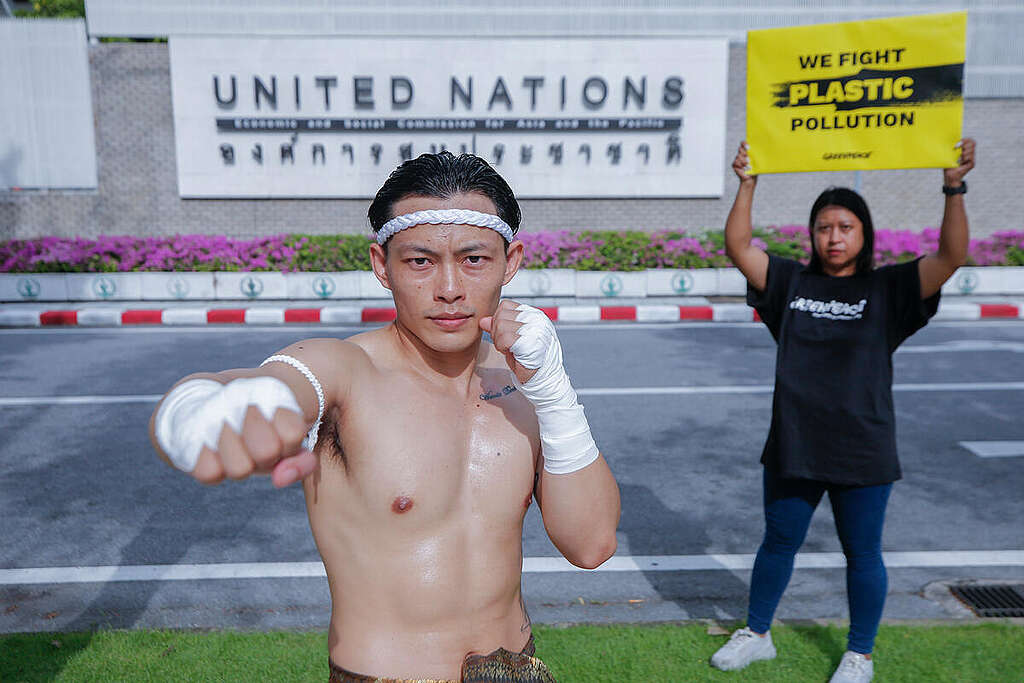
Outside the United Nations regional offices in Bangkok, where Heads of Delegation (HODs) from Member States convened to negotiate the terms of an international environmental accord, Greenpeace Thailand staged a striking visual protest. Accompanied by a professional Muay Thai fighter, activists utilized the symbolism of the national sport to deliver an uncompromising message: the world must "fight" plastic pollution not at the waste-management tailpipe, but at its industrial source.
The demonstration directly targeted the ongoing negotiations for the Global Plastics Treaty. Activists and organizers underscored that voluntary recycling schemes and downstream cleanup efforts are woefully inadequate against petrochemical conglomerates scaling up polymer production. By demanding mandatory, legally binding caps on virgin plastic production, the Bangkok action set an aggressive tone for international delegates, insisting that true environmental remediation requires halting the manufacturing of unnecessary plastics at the enterprise level.
2. Berlin, Germany: Rallying Against Militarization at the Brandenburg Gate
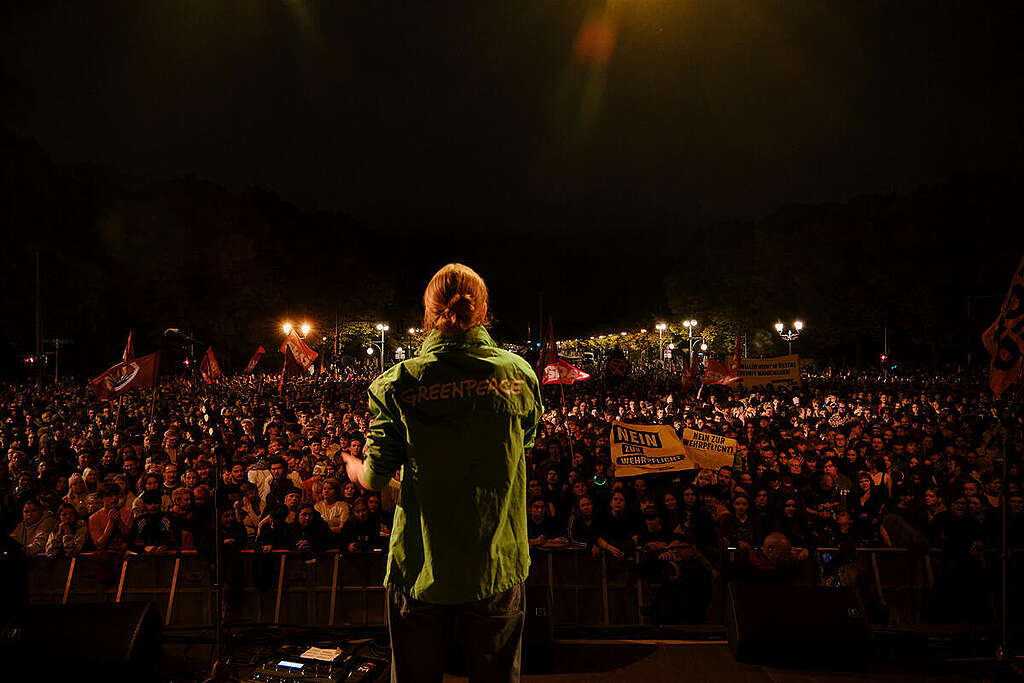
Shifting from ecological treaties to geopolitical security, tens of thousands of citizens, youth organizations, and peace coalitions gathered at Berlin’s iconic Brandenburg Gate. Operating under the banner "Unzwingbar – kein Bock auf Krieg und Wehrpflicht" ("Indomitable – No Interest in War and Conscription"), the massive rally featured prominent musical acts including K.I.Z., Disarstar, and Apsilon.
Greenpeace Germany, standing shoulder-to-shoulder with a broad civil society coalition, raised urgent alarms regarding the potential reintroduction of compulsory military service and a broader, unchecked spike in national rearmament. Speakers from Greenpeace Youth and various peace advocacy groups emphasized the disproportionate socioeconomic burdens that heightened militarization places on younger generations. The core critique challenged the prevailing political orthodoxy: that national security can be achieved solely through escalating defense budgets, diverting vital fiscal resources away from climate adaptation, social welfare, and education.
3. Nadi, Fiji: The Pacific Pre-COP Flotilla
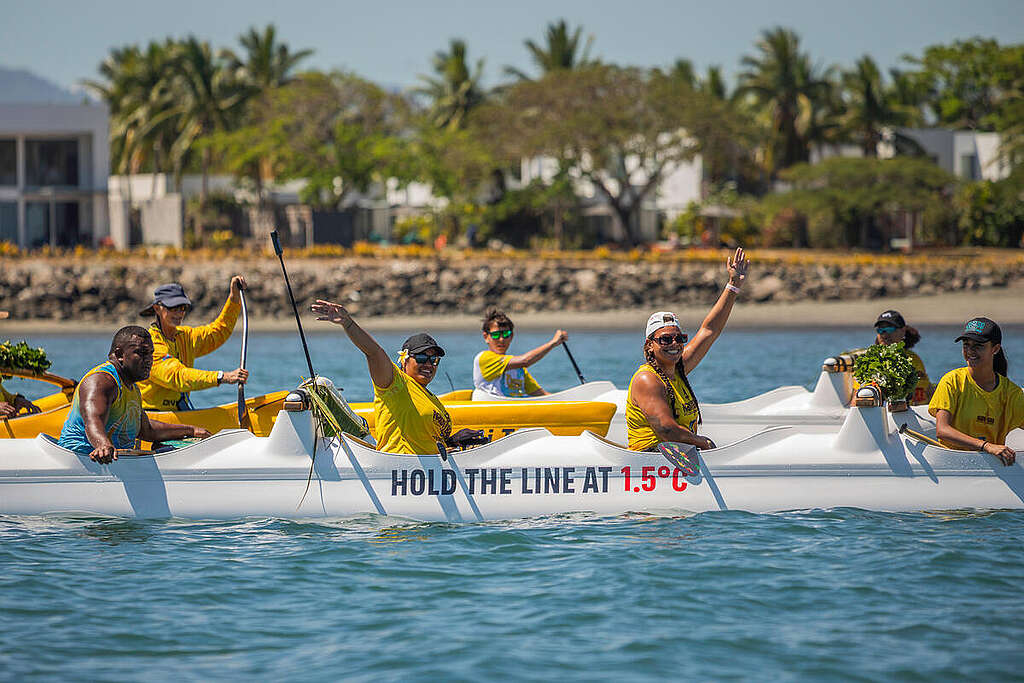
Against the backdrop of high-level climate consultations in Nadi, Fiji—precursors to the upcoming COP31 negotiations led by Australia in Türkiye—the waters bore witness to an act of Indigenous and environmental defiance. A vibrant flotilla of approximately 80 people, comprising Pacific and Torres Strait Islander community members, revered Elders, and youth climate champions, sailed past official venues aboard the vessel SV Oceania and traditional outrigger canoes.
Adorned with banners reading "Hold the Line at 1.5°C" and "Keep 1.5°C Alive," the flotilla delivered an unmistakable ultimatum to global policymakers. For island nations and frontline territories, the 1.5°C threshold established under the Paris Agreement is not an abstract political negotiating point, but a non-negotiable biological and cultural survival line. The action specifically highlighted Australia’s looming COP31 presidency, pressing Canberra and other regional powers to immediately halt the expansion of fossil fuel extraction.
4. Palembang, South Sumatra, Indonesia: Protesting Toxic Wildfire Haze
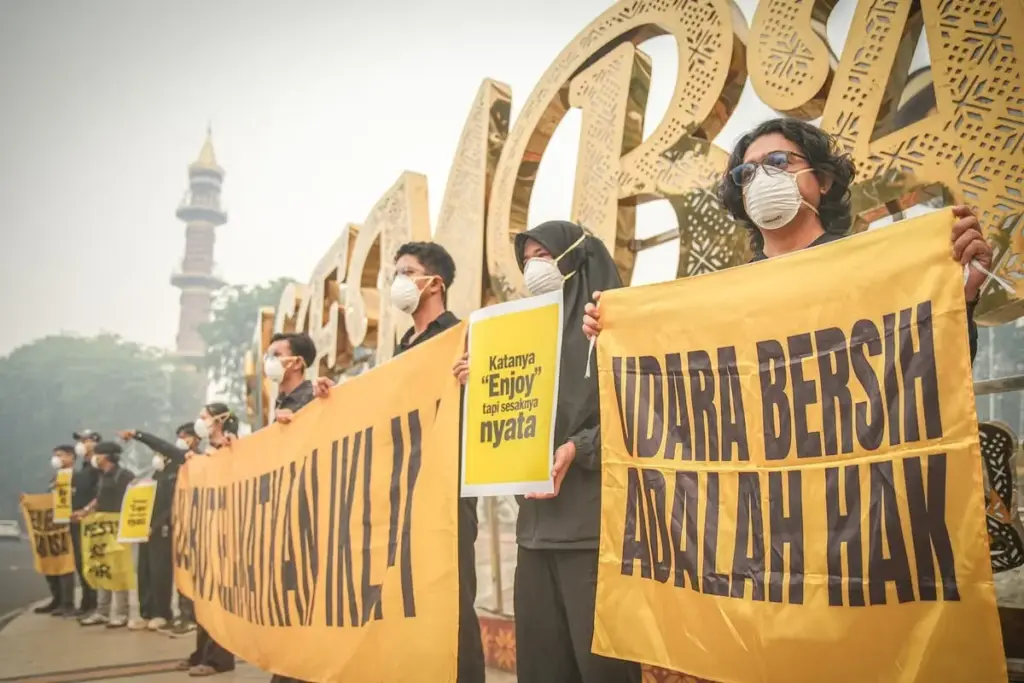
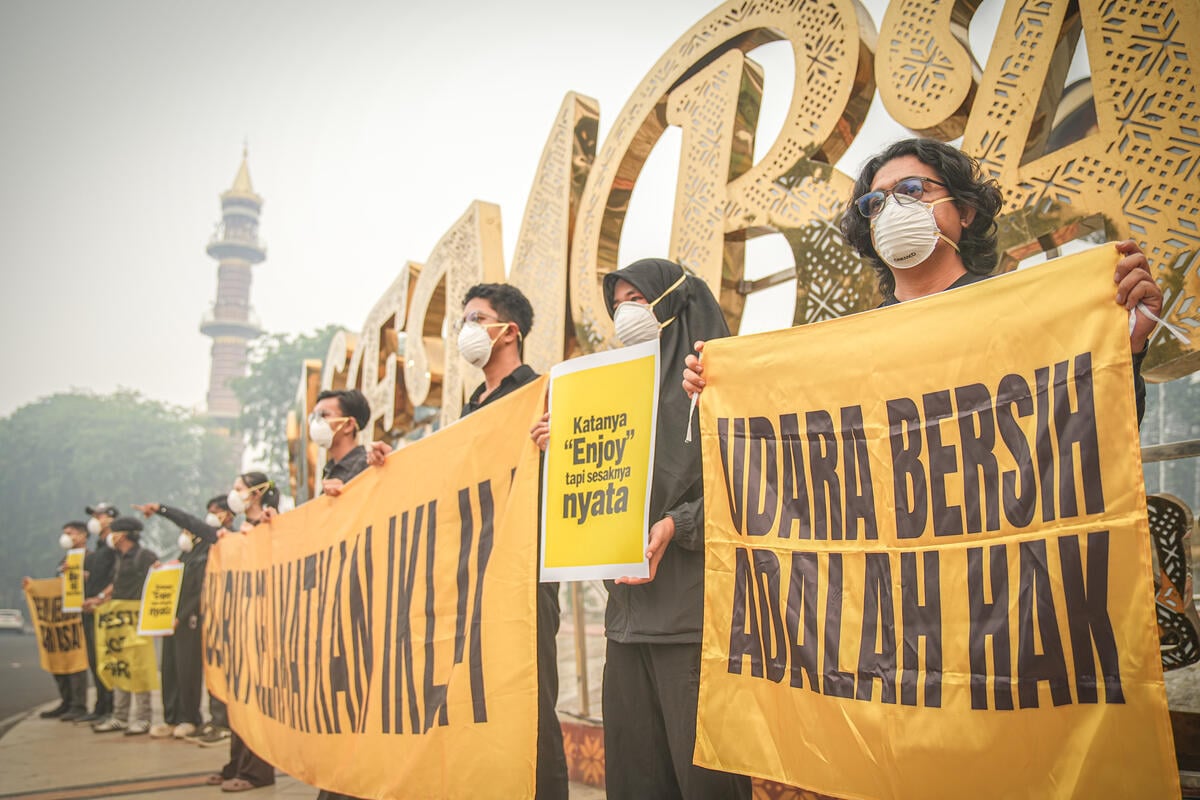
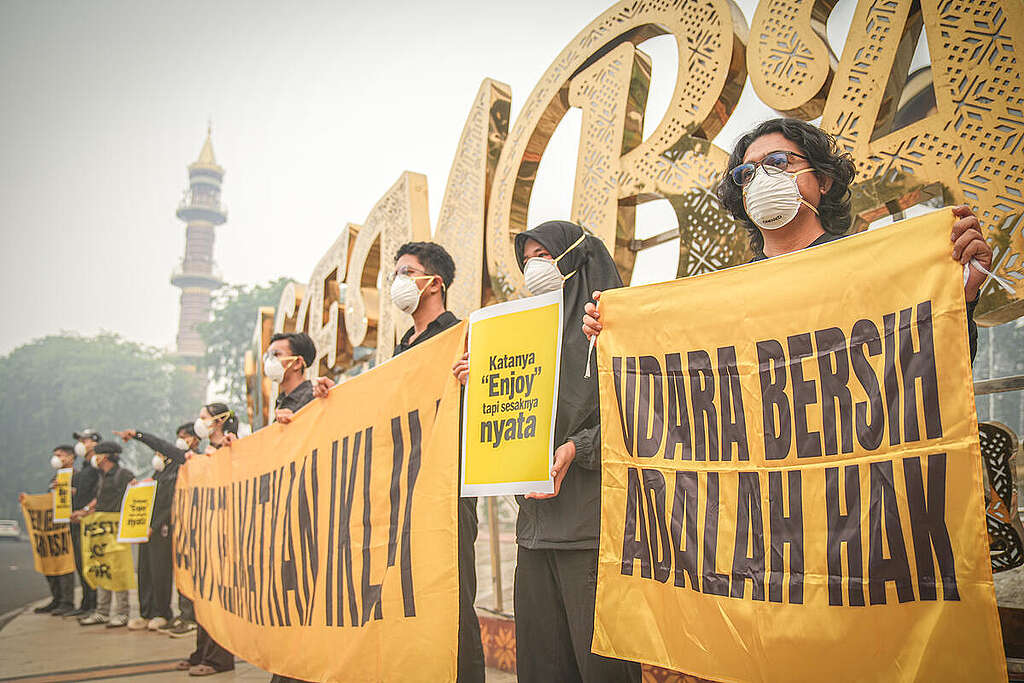
In Indonesia, the human cost of environmental degradation manifested in choking, hazardous palls of smoke. Members of the Greenpeace Indonesia Forest Fires Prevent Team (Tim Cegah Api) staged a peaceful protest in Palembang, holding banners to draw international attention to a severe regional crisis. For nearly two months, toxic haze generated by agricultural and land-clearing fires has blanketed South Sumatra, degrading air quality to hazardous levels and spilling across national borders to impact neighboring Singapore and Malaysia.
The protest served as a powerful reminder that corporate impunity in land management and peatland drainage carries catastrophic public health and cross-border environmental consequences, punishing vulnerable populations who bear no responsibility for industrial land-clearing practices.
5. Zurich, Switzerland: Demanding Protection Against Extreme Heat
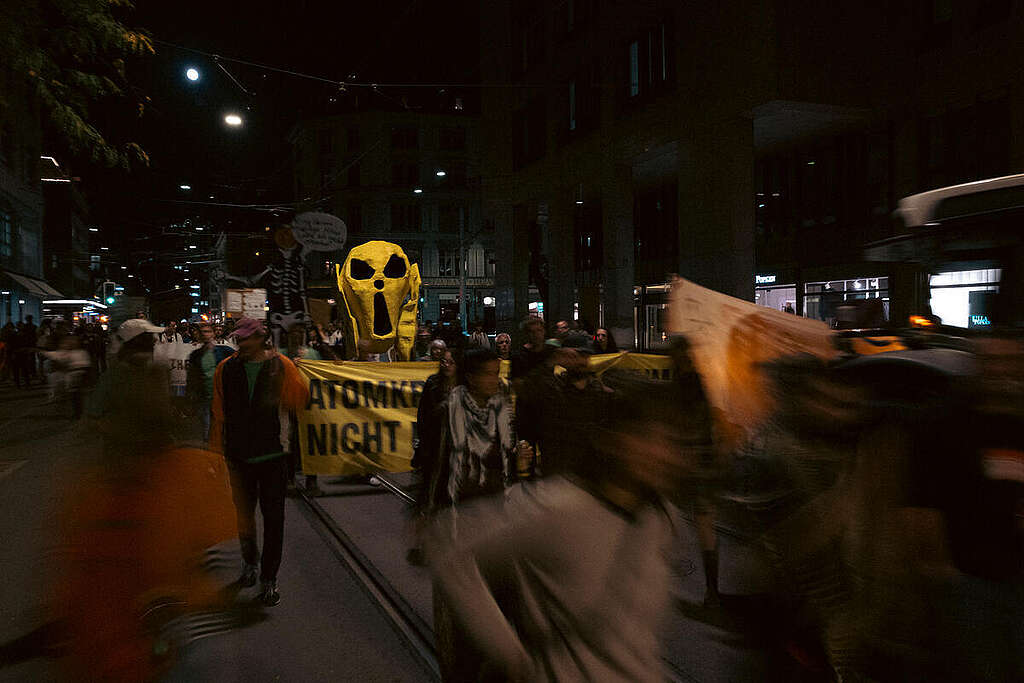
In Europe, the escalating reality of climate breakdown drove approximately 7,000 demonstrators through the streets of Zurich. Organized by an expansive coalition of more than 70 civil society, environmental, health, and agricultural organizations—with active participation from Greenpeace—the march rallied around a chillingly specific slogan: "No 50°C summers!"
Demonstrators demanded that the Swiss federal government implement immediate, legally enforceable adaptation and mitigation measures. The coalition emphasized that rising urban heat islands and agricultural droughts pose existential threats to public health and food security, requiring an urgent departure from political complacency.
6. Madrid, Spain: Camping Out for the Right to Decent Housing
In Spain, the struggle for environmental justice intersected directly with the socioeconomic crisis of urban livability. Greenpeace Spain activists joined a powerful sit-in and encampment at Madrid’s historic Puerta del Sol. The protest spotlighted the systemic failure of housing markets, soaring rental costs, and real estate speculation that deny citizens the fundamental human right to decent shelter. By standing in solidarity with housing rights movements, Greenpeace underscored that the fight for a sustainable future must also encompass equitable, livable human habitats.
7. Chachoengsao, Thailand: Flooding and Fossil Fuel Hypocrisy
Concluding this week’s global overview, Greenpeace Thailand staff and volunteers were deployed on the ground in Chachoengsao Province to deliver emergency relief to communities devastated by catastrophic flooding. Beginning in late September, floodwaters inundated 11 districts, impacting over 23,790 households.
In a grim display of governmental and industrial tone-deafness, the disaster-stricken province is simultaneously slated to host a massive 540-megawatt fossil gas power plant known as the Burapha Power project. Local communities and Greenpeace representatives fiercely opposed the development, pointing out the profound hypocrisy of building new fossil infrastructure in regions already being ravaged by climate-induced extreme weather. The project threatens local water security, exacerbates air pollution, and locks in further greenhouse gas emissions.
Supporting Context & Metrics
To fully contextualize these widespread actions, one must examine the empirical data driving the urgency of Greenpeace’s global campaigns:
Plastic Production Trajectory: Global plastic production has skyrocketed over the past half-century, surpassing 400 million metric tons annually. Without binding production caps in the upcoming Global Plastics Treaty, output is projected to double over the next two decades, overwhelming waste management infrastructures worldwide.
The 1.5°C Carbon Budget: According to the Intergovernmental Panel on Climate Change (IPCC), global greenhouse gas emissions must peak before 2025 and decline by 43% by 2030 to keep global warming within the 1.5°C Paris Agreement limit. Current fossil fuel expansion plans by G20 nations threaten to overshoot this carbon budget significantly.
Southeast Asian Haze Crisis: Peatland and forest fires in Indonesia release gigatons of carbon dioxide equivalent into the atmosphere, frequently turning Southeast Asia into a temporary global carbon hotspot while exposing tens of millions of citizens to particulate matter (PM2.5) levels well in excess of World Health Organization safety guidelines.
European Heat Vulnerability: Switzerland and the broader European continent are warming at roughly twice the global average rate. Urban centers like Zurich face mounting heatwave mortality risks, particularly among elderly and vulnerable demographic segments, should comprehensive urban cooling and emissions reduction strategies fail to materialize.
Official Statements
Leaders and frontline representatives participating in this week’s actions articulated the moral and political imperatives guiding their resistance:
"The climate limit established under the Paris Agreement is not a flexible political target; it is a non-negotiable survival line for humanity. Leaders meeting in the Pacific must understand that every new fossil fuel project approved is a death sentence for low-lying island nations."
— Pacific Youth and Elder Coalition, Pre-COP Action, Nadi, Fiji
"We cannot continue to manage plastic pollution at the disposal end while petrochemical giants churn out record volumes of virgin polymers. To protect our oceans, our health, and our global climate, governments must put mandatory production cuts at the very heart of the Global Plastics Treaty."
— Greenpeace Thailand Campaign Spokesperson, Bangkok
"It is an insult to communities drowning in floodwaters to propose new fossil gas infrastructure in their backyards. The Thai government must immediately halt fossil fuel expansion and accelerate a just, equitable transition to renewable energy."
— Greenpeace Thailand Relief and Field Team, Chachoengsao Province
Future Outlook
As the international community looks ahead to upcoming climate negotiations—including the COP31 preparations under Australian leadership, the finalization of the Global Plastics Treaty, and domestic policy battles over defense spending and urban housing—the trajectory of global activism is clear.
The convergence of ecological crises, economic inequality, and militarization requires an equally unified response from civil society. Greenpeace’s half-century legacy of photo-activism and direct action demonstrates that bearing witness is only the first step. The images captured across Bangkok, Berlin, Nadi, Palembang, Zurich, Madrid, and Chachoengsao serve as both a warning and a blueprint. They document a world in systemic distress, but more importantly, they record a global citizenry refusing to remain silent in the face of ecological collapse.
The coming months will test the political will of world leaders. Whether through legal challenges, diplomatic pressure, or peaceful civil disobedience, grassroots movements will continue to hold the line—demanding a habitable planet, social justice, and a sustainable future for generations to come.