

Executive Overview
In May 2026, the global conservation community witnessed a monumental victory for marine biodiversity as the Colombian government officially expanded the Acandí, Playón and Playona Wildlife Sanctuary by nearly 63,000 hectares. This decisive regulatory action more than triples the size of the previously protected zone, catapulting the total protected expanse to over 89,000 hectares.
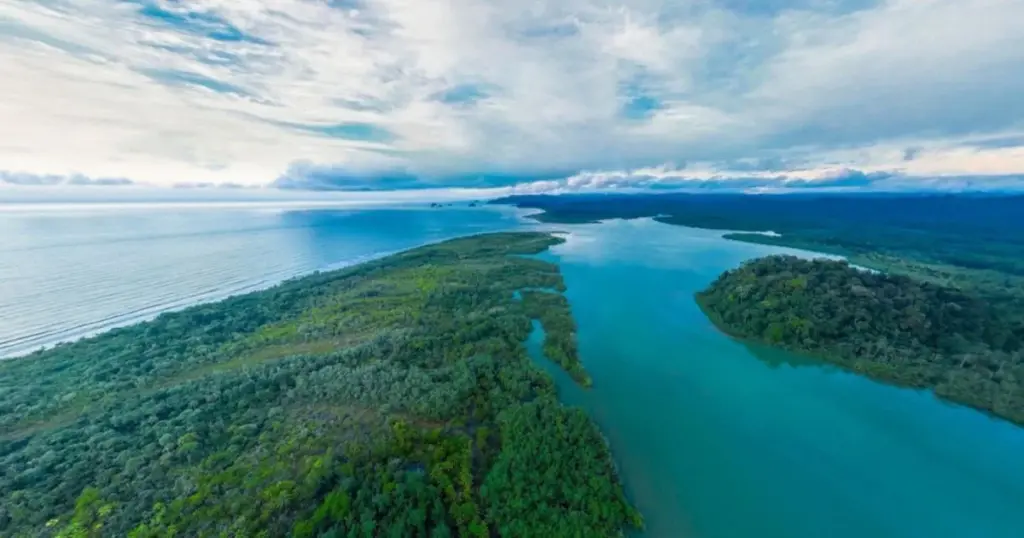
For the very first time, this sweeping legislative expansion extends formal, high-level national park protections to the rich, remarkably resilient offshore coral reefs embedded within the Capurganá and Cabo Tiburón Hope Spot. Located in the extreme northern reaches of the Chocó department along Colombia’s Caribbean coast, this marine ecosystem has long been recognized as a biological crucible. It serves as a vital migratory corridor, a feeding ground, and an irreplaceable nesting site for an array of endangered and threatened marine species.
This milestone is not merely a bureaucratic remapping of boundaries; it represents the culmination of nearly two decades of grassroots advocacy, rigorous citizen science, local leadership, and strategic international partnerships. Driven by the tireless efforts of local conservationists, community organizations—most notably the Foundation ICRI Colombia—and global marine protection initiatives like Mission Blue, the expansion bridges a critical historical gap in Colombian environmental policy.
Previously, conservation measures in the region were largely restricted to safeguarding the terrestrial and coastal beaches where sea turtles haul themselves ashore to nest. The 2026 sanctuary expansion adopts a holistic, ecosystem-based approach. By integrating offshore coral reefs, seagrass beds, and pelagic zones into the National Parks System, Colombia has established a continuous marine shield. This shields an interconnected web of habitats from unchecked overfishing, climate degradation, and anthropogenic pressures, cementing the region’s status as a global benchmark for community-led marine stewardship.
Detailed Chronology: A Decades-Long Battle for the Northern Chocó
The path to achieving this historic triple protection status in northern Chocó was paved by years of meticulous data collection, community mobilization, and persistent policy negotiations. The timeline of this ecological triumph illustrates how persistent local action can ultimately reshape national legislation.
2008–2015: Planting the Seeds of Grassroots Monitoring
The modern conservation narrative in northern Chocó began in 2008, when local stakeholders, fishers, and nascent environmental organizations recognized that the coastal waters of Capurganá and Cabo Tiburón were undergoing subtle yet alarming ecological shifts. Artisanal fishers reported declining catches, while coastal communities noted fluctuating numbers of nesting sea turtles.
Instead of waiting for top-down federal intervention, local leaders initiated long-term citizen science monitoring programs. Divers, fishers, and coastal inhabitants were trained to record reef health indicators, track fish populations, and monitor sea turtle nesting beaches. This decentralized monitoring effort laid an indispensable foundation of empirical data. It proved definitively that the coral reefs off Capurganá possessed a rare, intrinsic resilience, surviving thermal stress events that had devastated reefs elsewhere in the Caribbean.
2018–2023: International Recognition and the Rise of the Hope Spot
As the data accumulated, the ecological significance of the northern Chocó caught the attention of international conservation heavyweights. Mission Blue, in close collaboration and coordination with the local NGO Foundation ICRI Colombia, formally designated the waters of Capurganá and Cabo Tiburón as a Mission Blue Hope Spot.
This designation served as a powerful megaphone on the global stage. It drew international scientific scrutiny, funding, and media attention to an area that had historically lacked the institutional resources of more prominent marine reserves. During this period, local leadership—anchored by figures such as Nohora Galvis, director of the International Coral Reef Observatory (ICRO)—worked tirelessly on the ground. They bridged the gap between traditional artisanal fishers and marine biologists, demonstrating that protecting the reefs would directly benefit, rather than restrict, sustainable local fisheries through the spillover effect.
2024: The Marine Biosphere Reserve Designation
Momentum accelerated exponentially in 2024 when the Man and the Biosphere (MAB) Programme of the United Nations Educational, Scientific and Cultural Organization (UNESCO) officially declared the Darién North of Chocó as a Marine Biosphere Reserve.
This international designation validated the region’s global ecological value, formally linking the terrestrial Darién jungle ecosystems—famed for their impenetrable biodiversity and status as a biogeographic bridge between Central and South America—with the marine realms of the Caribbean Sea. While the Biosphere Reserve designation provided a sweeping framework for sustainable development and ecological preservation, conservationists knew that binding, enforceable legal protection was still required for the marine substrate itself.
May 2026: The Culmination of "Triple Protection"
The decades-long campaign reached its zenith in May 2026. Building directly upon the 2024 Biosphere Reserve framework, the Colombian government enacted a decree expanding the Acandí, Playón and Playona Wildlife Sanctuary by nearly 63,000 hectares.
This policy action successfully executed a "triple protection" strategy: combining the foundational grassroots monitoring of the Hope Spot, the regional landscape planning of the UNESCO Biosphere Reserve, and the ironclad, enforceable legal architecture of Colombia’s National Parks System. For the first time, the corals, fish nurseries, and migratory pathways of the Capurganá and Cabo Tiburón Hope Spot received comprehensive, long-term federal guardianship.
Supporting Context & Metrics: The Biological Treasures of Northern Chocó
To understand the profound significance of the 2026 sanctuary expansion, one must examine the extraordinary ecological metrics that make the northern Chocó one of the most vibrant marine strongholds in the wider Caribbean basin.
The Ecological Architecture: Resilient Coral Reefs
The coral reefs of Capurganá and Cabo Tiburón are biological anomalies in an era defined by global coral bleaching and mortality. Decades of citizen science monitoring, spearheaded by ICRO and local communities, have revealed that these reefs possess an exceptional degree of thermal tolerance and structural recovery capacity.
Sheltered by unique hydrographic conditions and nurtured by local conservation practices that restrict destructive fishing gear, these reefs support dense colonies of hard and soft corals, complex sponge matrices, and teeming invertebrate populations. They serve as the foundational architecture of the marine food web, providing structural shelter for hundreds of reef fish species that sustain the artisanal fisheries of the local coastal communities.
A Sanctuary for Imperiled Sea Turtles
Beyond the coral matrices, the terrestrial-marine interface of the northern Chocó is globally renowned as a nesting sanctuary for four distinct species of sea turtles, all of which face severe conservation threats globally:
- Leatherback Turtles (Dermochelys coriacea): The largest of all living reptiles, leatherbacks undertake trans-oceanic migrations to nest on the dark, dynamic sands of Playón and Playona. Long-term monitoring data indicate stable or positively trending nesting numbers here, defying global downward trajectories.
- Hawksbill Turtles (Eretmochelys imbricata): Critically endangered due to the historic illegal tortoiseshell trade, hawksbills rely heavily on the shallow coral reefs of the Hope Spot for foraging, feeding primarily on sponges.
- Green Turtles (Chelonia mydas): These migratory herbivores utilize the coastal seagrass beds and reef fringes of Chocó as vital developmental and feeding habitats.
- Loggerhead Turtles (Caretta caretta): Known for their massive, powerful jaws used to crush hard-shelled prey like conch and crabs, loggerheads frequent the offshore pelagic and benthic zones of the expanded sanctuary.
Fisheries Recovery and Socioeconomic Resilience
A common friction point in marine conservation is the perceived conflict between environmental protection and local livelihoods. However, the northern Chocó model refutes this dichotomy. By incorporating artisanal fishers into the monitoring and management framework since 2008, the initiative has demonstrated that well-managed, protected marine zones directly regenerate local fisheries.
As the coral reefs have recovered and expanded under strict oversight, fish biomass has surged. The "spillover effect"—where adult fish and larvae migrate from protected no-take zones into adjacent open-access fishing grounds—has resulted in healthier, more predictable catches for local fishers. This creates a virtuous cycle: community buy-in drives protection, protection restores the ecosystem, and the restored ecosystem sustains the community.
Official Statements and Leadership
The realization of this massive marine expansion is a testament to collaborative leadership across multiple tiers of society—from local diving guides and indigenous fishers to international marine scientists and government regulators.
Nohora Galvis and the International Coral Reef Observatory (ICRO)
At the heart of this scientific and advocacy engine is Nohora Galvis, Hope Spot Champion and Director of the International Coral Reef Observatory (ICRO). Galvis has spent years working on the front lines of Colombian marine conservation, bridging disparate sectors to build an irrefutable body of evidence.
"This expansion is the realization of a dream shared by generations of fishers, scientists, and local citizens who refused to watch their marine heritage degrade," Galvis notes. "For years, our monitoring showed that while we were protecting the beaches where turtles lay their eggs, the very coral reefs they relied upon for food and shelter remained vulnerable to unchecked exploitation. By extending the sanctuary offshore, we have finally closed the circle. We are protecting the entire continuum of marine life."
Mission Blue’s Global Perspective
Dr. Sylvia Earle’s organization, Mission Blue, has championed the Capurganá and Cabo Tiburón Hope Spot as a global case study in effective ocean stewardship. In official statements celebrating the May 2026 decree, Mission Blue emphasized that this milestone underscores the core philosophy of the Hope Spot initiative: empowering local leaders to catalyze systemic national change.
"Acting locally can, indeed, create global impact," Mission Blue representatives stated following the announcement. "The triumph in northern Chocó is a powerful example of what Hope Spots are designed to catalyze: elevating grassroots conservation leaders, seamlessly connecting hard science with passionate community action, and helping transform a shared, localized vision for ocean protection into lasting, enforceable national policy."
Institutional Alignment
The collaboration between Foundation ICRI Colombia, regional environmental authorities, and national park directorates highlights a maturing institutional framework in Colombia. By weaving together the legal weight of the National Parks System with the community-based oversight of local NGOs, the Colombian government has demonstrated a progressive model for achieving the global 30×30 target—the international commitment to protect 30% of the world’s lands and oceans by 2030.
Future Outlook: Challenges and Opportunities Ahead
While the expansion of the Acandí, Playón and Playona Wildlife Sanctuary to over 89,000 hectares is an extraordinary achievement, conservationists emphasize that the decree is merely the beginning of the next phase of stewardship. Translating lines drawn on a map into active, on-the-water ecological security presents ongoing operational challenges.
Enforcement and Surveillance
The newly protected 63,000-hectare offshore zone requires robust, continuous monitoring and surveillance to deter illegal industrial fishing, unpermitted anchoring, and poaching. Given the vast expanse of the Caribbean Sea and the remote geography of the northern Chocó, implementing cost-effective monitoring systems—such as satellite vessel tracking (AIS), radar integration, and community-led patrol boats—will be paramount.
Climate Change Adaptation
Even the most resilient coral reefs are not entirely immune to the accelerating impacts of global climate change, including marine heatwaves and ocean acidification. The future management plan for the expanded sanctuary must incorporate climate-smart adaptive strategies. This includes identifying and breeding heat-resilient coral strains, minimizing local stressors like land-based runoff and agricultural sediment, and protecting critical herbivore populations (such as parrotfish and sea urchins) that keep macroalgae from smothering the reefs.
Sustainable Ecotourism and Economic Diversification
As the Capurganá and Cabo Tiburón Hope Spot gains international acclaim, the region faces the delicate task of managing increased visitor interest. Sustainable ecotourism—centered around low-impact scuba diving, guided turtle-watching excursions, and educational marine science tourism—offers a lucrative alternative to resource-extracting industries. Ensuring that tourism revenue directly benefits local indigenous and artisanal communities will be essential to maintaining the robust social license that made the 2026 expansion possible in the first place.
A Beacon for Regional Replication
Ultimately, the success story of northern Chocó serves as a blueprint for the wider Caribbean and tropical Latin America. It proves that conservation does not succeed by imposing restrictions from afar, but by cultivating local ownership, respecting traditional ecological knowledge, and pairing grassroots vigilance with high-level political will. As Colombia steps into its role as a regional leader in marine conservation, the waters of Capurganá and Cabo Tiburón will continue to shine as a true Hope Spot—a living testament to what humanity can achieve when we unite to defend the blue heart of our planet.



