

Executive Overview
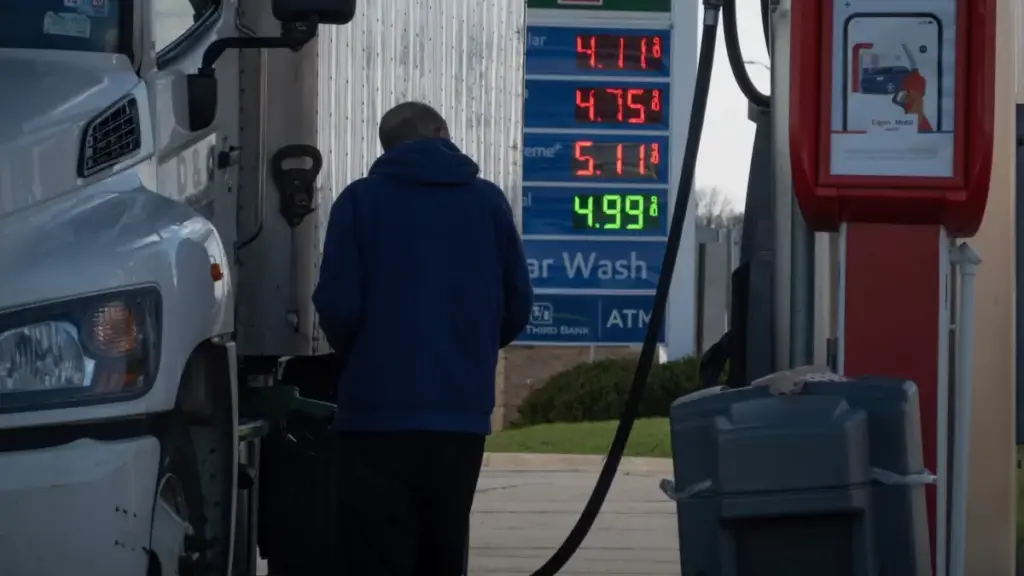
The American economy is facing an unprecedented energy crunch as diesel prices smash historic records day after day, sending shockwaves through supply chains, agricultural markets, and household budgets. According to data from the American Automobile Association (AAA), the national average price for a gallon of diesel reached an astonishing $5.98 by mid-September—marking a staggering $2.31 per gallon surge compared to late February, right when the United States and Israel launched military operations in a widening conflict against Iran.
While everyday motorists may focus primarily on the pain at the gasoline pump, the crisis unfolding in the diesel market carries far graver implications for the broader economy. Diesel is the literal lifeblood of global commerce, powering the heavy-duty trucks, locomotive freight networks, and cargo ships responsible for moving everything from fresh milk and pharmaceuticals to lumber and heavy machinery. As transport operators absorb these punishing costs, the expenses are inevitably baked into the final price tags of consumer goods.
Compounding the crisis is the stark reality of depleted domestic inventories, which sit at their lowest levels since 1982 according to the Energy Information Administration (EIA). With the crucial autumn harvest season underway and the freezing winter months looming—bringing soaring demand for heating oil, which is chemically identical to diesel—analysts warn that relief is nowhere in sight. Adding fuel to the political fire, these escalating energy burdens are colliding directly with the midterm election cycle, placing cost-of-living concerns at the absolute center of the national debate.
Detailed Chronology of a Crisis: From the Strait of Hormuz to U.S. Pumps
The roots of the current catastrophe stretch back to the late-winter escalation in the Middle East. When the U.S. and Israel initiated military engagements against Iran in February, the geopolitical repercussions were swift and severe. The ensuing hostilities effectively shuttered the Strait of Hormuz—a narrow maritime chokepoint through which roughly 10 percent of the world’s seaborne diesel once flowed.
The immediate disruption to international shipping lanes sent immediate tremors through global energy markets. However, the domestic impact in the United States took several weeks to fully materialize. By mid-summer, as existing freight contracts expired and corporate fuel surcharges began to compound, the reality of the disruption trickled down with vengeance.
By September, the benchmark national average had nearly eclipsed the previous all-time high set in 2022, when Russia’s invasion of Ukraine pushed diesel to $5.82 per gallon. This time, however, the pressures are multi-pronged. Alongside the Middle Eastern conflict, the ongoing war in Eastern Europe has severely degraded Russia’s ability to export refined products. Ukrainian forces have systematically targeted Russian oil refineries with increasingly sophisticated and successful drone and missile strikes, effectively cutting off a major pillar of the global fuel supply.
Consequently, American refineries—which were already operating at maximum capacity before the crisis began—have found themselves entirely incapable of picking up the slack. Domestic inventories plummeted through the summer months, leaving the nation vulnerable as it transitions into the peak consumption periods of fall and winter.
Supporting Context & Metrics: The Cost of Geopolitical Turmoil
The financial toll of this unprecedented fuel spike is staggering. Data compiled by a specialized research tracker at Brown University reveals that the surging price of diesel has cost U.S. consumers an additional $46 billion—translating to roughly $350 per household nationwide. While rising gasoline prices have extracted an even larger toll at $55 billion, the relative velocity of the diesel market has been far more violent. Diesel prices have experienced a meteoric 61 percent jump, far outpacing the 41 percent increase seen in standard gasoline over the same timeframe.
+-------------------------------------------------------------------------+
|                    DIESEL VS. GASOLINE SURGE METRICS                    |
+--------------------------+-------------------+--------------------------+
| Metric                   | Diesel Fuel       | Gasoline                 |
+--------------------------+-------------------+--------------------------+
| Price Increase           | +61%              | +41%                     |
| Total Consumer Burden    | $46 Billion       | $55 Billion              |
| Per Household Impact     | ~$350             | Varies by region         |
| Current National Average | $5.98 / gallon    | Lower comparative rise   |
| Regional Extremes        | $7.91 (California)| Elevated nationwide      |
+--------------------------+-------------------+--------------------------+
Regional disparities have magnified the pain. In states like California, structural environmental regulations, specialized fuel blend mandates, and geographic isolation have driven prices to eye-watering extremes, with a gallon of diesel currently commanding a punishing $7.91.
Patrick De Haan, head of petroleum analysis at GasBuddy, emphasizes that diesel is currently bearing the brunt of global instability to a degree that gasoline is not. "Diesel right now is caught up in more of a geopolitical turmoil than gasoline," De Haan noted, pointing directly to the compounding pressures of the Middle East conflict and the systematic dismantling of Russian refining capacity. "Russia is no longer supplying the global market, and U.S. refiners are already at full capacity, giving them little ability to pick up the slack."
Official Statements and Industry Insights
Economic and energy experts across the country are sounding the alarm, warning that the worst of the pass-through effects are still working their way through the economic pipeline.
David Ortega, a professor of food economics and policy at Michigan State University, explained the mechanics of how fuel inflation eventually reaches the consumer. "Early on, much of the cost increase gets absorbed along the supply chain through existing freight contracts and retailer margins," Ortega told the Associated Press. "But as contracts reprice and fuel surcharges take hold, more of that cost makes its way to the grocery store."
This sentiment is echoed by market strategists who track the physical commodities space closely. David Russell, global head of market strategy at TradeStation, highlighted the dangerous timing of the inventory drought. "We’re entering a key period for diesel consumption with the lowest inventories on record for early September," Russell told Reuters. "Farmers and truckers typically use more diesel in the autumn, which raises the stakes for the current crisis and increases the risk of sharper price increases."
The crisis also threatens to exacerbate social vulnerabilities as temperatures drop. Because home heating oil is fundamentally the same chemical distillate as diesel, the millions of American families—predominantly concentrated in the Northeast—who rely on oil heat are bracing for unprecedented utility bills.
This financial squeeze is further exacerbated by policy decisions in Washington. The administration of President Donald J. Trump has proposed cutting or outright eliminating the Low Income Home Energy Assistance Program (LIHEAP), a vital federal safety net that helps low-income households afford their winter fuel bills.
"If you’re in the Northeast, then this is much more burdensome than anywhere else in the country," Mark Wolfe, executive director of the National Energy Assistance Directors Association, warned Axios. "Families are getting hit by both gasoline and heating oil."
The convergence of high fuel prices and soaring utility costs is already casting a long shadow over the political landscape. Kevin Book, head of research at energy consulting firm ClearView Energy Partners, pointed out that fuel prices typically occupy a downstream role in voter psychology. However, in the current climate, that paradigm is shifting rapidly. "In cold-weather states—particularly those that rely on fuels other than natural gas," Book told Axios, "it could be a very big deal" as voters head to the polls for the midterm elections.
Future Outlook: A Long Road to Recovery
For weary consumers hoping for a rapid reprieve, energy analysts offer a sobering prognosis. Even if diplomatic breakthroughs were to miraculously end the wars in Iran and Ukraine overnight, the laws of supply, demand, and logistics dictate that physical relief will take months to materialize.
"After both of those are solved, then once the flow normalizes, that will start to help global inventories recover," De Haan explained, outlining the necessary sequence for market normalization. "Only after inventories have recovered do diesel prices really see a full decline."
Until international shipping lanes through the Strait of Hormuz are fully secured, Russian refining infrastructure is restored, and domestic U.S. stockpiles climb back to healthy historical norms, the American consumer will remain tethered to a volatile global energy market. In the interim, the unrelenting upward pressure on diesel prices guarantees that the true cost of ongoing global conflicts will continue to be paid at the cash register, the farm gate, and the home thermostat.



