Beneath the restless surface of the English Channel and the broader coastal waters of the United Kingdom, a silent, profound transformation is underway. What began as anecdotal whispers from charter boat skippers and veteran trawlermen has crystallized into an undeniable ecological crisis. Driven by persistent, climate-induced marine heatwaves, British coastal ecosystems are shifting at a pace that alarms marine biologists, economists, and conservationists alike.
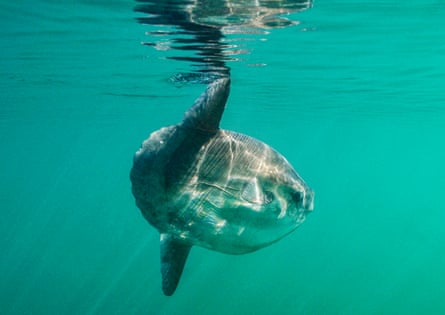
The signs are as bizarre as they are alarming. Sunfish—massive, disk-shaped pelagic giants typically associated with warmer, sun-drenched climes—are now arriving in unprecedented numbers, floating on their sides in the middle of shipping lanes to solicit parasite-cleaning services from passing seabirds. In the waters off Devon and Cornwall, native yet historically elusive common octopuses have staged a massive, disruptive boom, preying upon trapped lobsters and disrupting traditional fisheries. Conversely, cold-water staples like cod have all but vanished from southern ports, migrating north toward the chillier sanctuary of Scottish waters.
This is not a temporary anomaly or a fleeting seasonal quirk. Experts at the National Oceanography Centre and various marine biological associations warn that these recurring thermal shocks represent a "new normal." As greenhouse gas emissions continue to elevate baseline global temperatures, marine heatwaves are becoming more frequent, more intense, and more enduring. The consequences ripple across the entire marine food web, threatening vital blue-carbon habitats like kelp forests and seagrass meadows, introducing exotic species from the Mediterranean and the Caribbean, and forcing coastal economies to reckon with a radically altered aquatic landscape.
Detailed Chronology: A Sea Shift Unfolding
The reshaping of Britain’s marine environment has accelerated sharply over the past several years, turning what scientists once viewed as extreme outliers into recurring annual phenomena.
The Thermal Baseline Escalates (2023–2025)
The warning signs began to accumulate visibly around 2023, when exceptionally rare visitors, such as smalltooth sand tiger sharks, unexpectedly washed up on UK beaches. These tragic strandings served as early indicators that offshore thermal barriers were breaking down.
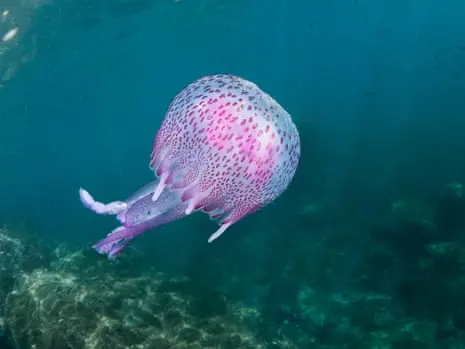
By 2025, the shifts moved from rare anomalies to established trends. Devon witnessed the first recorded sighting of the tropical hair curler sea slug (Trinchesia speciosa), a creature natively found in the warm waters of the Caribbean and the Mediterranean. Simultaneously, 2025 was dubbed the "Year of the Octopus" by marine researchers, as common octopuses arrived in force across the south coast, taking advantage of elevated winter and spring temperatures to establish robust populations.
The "Exceptional" Seas and Current Realities (2026)
The Met Office labeled the preceding year’s marine conditions as "exceptional," noting that various sectors of British waters experienced heatwave criteria for up to three-quarters of the year. The current year has immediately mirrored and amplified those extremes.
Charter skippers and commercial divers report that nearshore water temperatures are persistently hovering around 20°C (68°F) during the height of summer—a full three to four degrees Celsius above historical averages for regions like Cornwall. While warm-water enthusiasts like bass, comber, triggerfish, sardines, and anchovies thrive, traditional cold-water refuges are evaporating. Local species that rely on strict thermal envelopes, such as the small-spotted catshark, have vanished from their usual shallow haunts, presumably forced into deeper, cooler trenches to escape the uncharacteristic warmth.
Supporting Context & Metrics: The Biological and Environmental Toll
The physical metrics underpinning these ecological shifts reveal an environment under severe stress. Small shifts in water temperature—measured in fractions of a degree globally—translate into massive physiological shocks locally.
The Disappearing Cold-Water Foundations
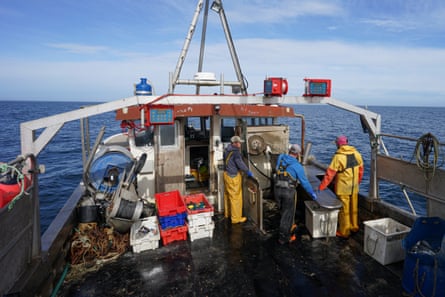
For commercial fishers, the economic toll is immediate and stark. Kurt Lander, skipper of the Brighton-based charter boat Yellowfin, recalls a time when hauling in a couple of hundred cod a year was standard practice. Today, catching a cod in southern waters is an extraordinary rarity—yielding perhaps one or two specimens per summer season.
This contraction is echoed by historical comparisons in kelp and seagrass habitats. According to environmental data:
Seagrass Loss: The UK has lost approximately 92% of its historic seagrass meadows since the 1930s due to a combination of coastal development, pollution, and rising water temperatures.
Kelp Devastation: In Sussex alone, kelp forest degradation is estimated to have exceeded 96%. Kelp thrives in cool waters ranging from 8°C to 12°C. In laboratory settings, researchers running the Hastings Kelp Project have reported that automated chillers struggle to maintain tanks below 12°C during peak atmospheric heatwaves, threatening experimental cultivation efforts.
Global Precedents: Similar marine heatwaves have wiped out vast swaths of kelp forests along the coasts of Australia and the United States, with devastated areas failing to regenerate even after temperatures temporarily recede.
The Invasive and The Opportunistic
As native habitats degrade, opportunistic species move in to fill the ecological vacuum. The sudden influx of common octopuses has severely impacted commercial crab and lobster fisheries. Traps designed to capture crustaceans have become floating feasts for octopuses, which easily enter the gear and consume the trapped catch.
Furthermore, biosecurity experts are monitoring new arrivals like Didemnum pseudovexillum, an ascidian sea squirt closely related to the invasive carpet sea squirt. While scientists are still determining whether this newcomer will aggressively smother the seabed in the manner of its infamous relative, its arrival underscores the vulnerability of UK coastal waters to biological invasions favored by warmer seas.
Official Statements and Expert Insights
The scientific community is increasingly vocal about the structural inadequacies of current coastal management and the long-term irreversibility of these trends.
Dr. Zoe Jacobs, a senior researcher at the National Oceanography Centre in Southampton, emphasizes that the predictability of British marine life is gone:
"Temporarily or permanently, we don’t know whether cold-water species have shifted their range north for good. I’m starting to call it our new normal because we seem to be getting hit by them in successive years. As greenhouse gases push up baseline temperatures, the extremes are just going to be more extreme."
Jacobs also highlights the public health and infrastructural risks associated with warming waters. In regions like the Bay of Biscay, authorities have been forced to temporarily close beaches due to toxic algal blooms harboring pathogens that cause severe illness in humans and marine fauna alike. According to Jacobs, the UK’s coastal infrastructure is wholly unprepared for such contingencies:
"We could see the same thing happen here, but our infrastructure is not yet set up for such closures. We’re just not ready."
On the ground, field researchers and divers offer a grassroots perspective on the speed of change. Gio Reale, a Falmouth-based diver, notes the swift desertification of local shark habitats:
"This summer, like every day, the water has been about 20°C. Small water temperature changes have such big effects on marine life. The small-spotted catsharks have vanished from their usual spots, likely retreating into deeper, cooler waters just like they do in the Mediterranean."
Chris Williams of the Hastings Kelp Project points out the invisible nature of marine degradation compared to terrestrial disasters:
"You don’t see a degrading kelp forest from the land like you might see a woodland burning down or dying off because of the temperatures. It’s entirely hidden beneath the waves."
Future Outlook: Adapting to the "New Normal"
Looking ahead, the trajectory of Britain’s marine ecosystems depends on a complex interplay of mitigation, adaptation, and ecological resilience.
Fisheries in Transition
The economic model of British fishing is facing an enforced evolution. Traditional southern fisheries targeting cod, mackerel, and cold-water crustaceans may be permanently unviable in English waters. Instead, southern fleets are beginning to pivot toward warm-water species such as triggerfish, comber, and the newly abundant octopus populations. Meanwhile, Scottish fisheries are temporarily benefiting from the northward migration of cold-water stocks, though scientists warn that even northern waters will eventually face thermal stress if global emissions remain unchecked.
Restoration and Conservation Initiatives
Despite the grim outlook for existing kelp and seagrass, conservation groups are doubling down on restoration efforts. Projects like the Seagrass Ocean Rescue aim to restore 15% of UK seagrass meadows by 2030, recognizing their critical dual role in sequestering carbon ("blue carbon") and stabilizing coastlines against erosion and storm surges. Concurrently, researchers are attempting to breed heat-resilient strains of kelp capable of surviving the higher summer temperatures plaguing the English Channel.
The Road Ahead
Ultimately, experts stress that local conservation measures—while vital—can only do so much in the face of unmitigated global climate change. Without rapid, aggressive reductions in greenhouse gas emissions, the marine heatwaves currently disrupting the English Channel will intensify from seasonal shocks into permanent ecological states. For skippers like Kurt Lander, divers like Gio Reale, and the generations of coastal communities dependent on the sea, the waters of Britain have crossed a historic threshold, leaving behind a familiar past and forcing an uncertain, warmer future.