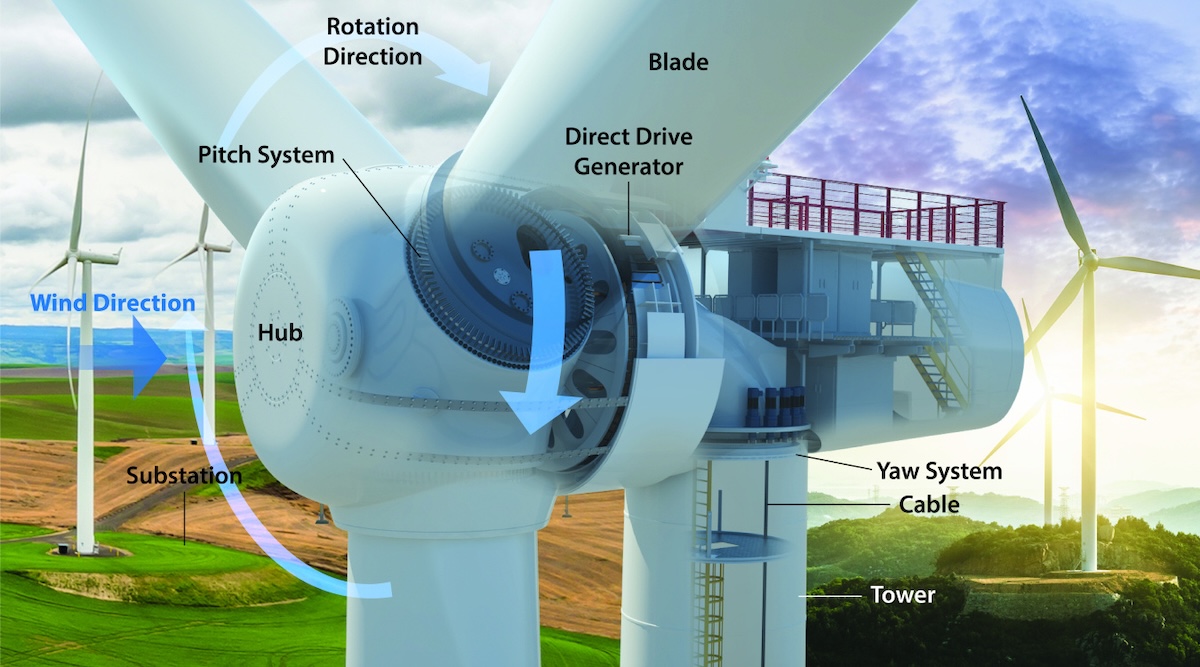
In a political environment where language is frequently weaponized to signal ideological alignment, the United States Department of Energy (DOE) has introduced one of the most uniquely convoluted terminological pivots in modern bureaucratic history. Amid an ongoing, multifaceted federal effort to curtail the expansion of wind energy under the administration of President Donald Trump, the DOE has quietly rebranded traditional wind turbines. They are now officially designated under a newly minted umbrella term: "aeromechanical energy systems."
This linguistic maneuver emerged alongside a structural reorganization that combined the former Solar Energy Technologies Office and the Wind Energy Technologies Office into a singular entity: the Integrated Energy Systems Office (IESO). Operating under the broader purview of the Office of Critical Minerals and Energy Innovation (OCMEI), the newly restructured office has absorbed responsibilities ranging from advanced photovoltaics and grid cybersecurity to the newly coined branch of aeromechanical energy systems.
While administration officials frame these bureaucratic shuffles as efficiency measures designed to "enhance grid reliability and secure U.S. technological leadership," clean energy advocates and legal analysts view the rebrand through a more cynical lens. Critics argue that replacing simple, direct terminology like "wind turbines" with an arcane technical abstraction is part of a broader, systemic effort to sanitize, obscure, and ultimately diminish the visibility of renewable energy generation under the current executive agenda.
This report provides an in-depth examination of the structural changes within the Department of Energy, the linguistic euphemisms deployed to sidestep political friction, the ongoing legal battles over onshore and offshore wind permits, and the broader outlook for the American wind energy sector.
Detailed Chronology: The Evolution of the IESO and Bureaucratic Rebranding
The restructuring of federal renewable energy oversight did not occur in a vacuum; it follows months of strategic adjustments within the Department of Energy’s divisions, coinciding with aggressive executive actions targeting the domestic wind industry.
Late 2025: The federal landscape for onshore wind faces a significant bottleneck when the U.S. Department of Defense (DoD), alongside the Federal Aviation Administration (FAA), abruptly halts its routine interagency review process for wind farm permits exceeding 200 feet in height. Federal officials stop countersigning mitigation agreements and communicating with developers, effectively freezing pipeline projects on private, state, and local lands.
August 2025 – July 2026: Recognizing the economic strangulation of the onshore sector, a coalition of 19 state attorneys general—led by figures such as Washington State Attorney General Nick Brown—files a multi-state lawsuit against the Trump administration. The legal challenge targets the DoD’s administrative freeze as an unlawful obstruction of energy development.
August 2026:
August 27: Amid the shifting regulatory climate, major clean energy milestones still press forward. A prominent example is the long-awaited launch of PacWave South, a major marine energy facility that officially opens for business following years of development.
August 2026 (Late Month): A federal judge rules definitively that the DoD’s blockade of onshore wind project permits was unlawful, ordering the federal government to resume normal administrative processing. However, industry observers note that while the formal freeze is struck down, the administration retains various indirect avenues to slow development.
September 10, 2026: The Department of Energy updates its online public explainers, including a document titled "Wind Manufacturing and Supply Chain." The page outlines agency goals to promote advanced manufacturing capabilities and lower production costs, though it reflects a marked absence of new federal capital commitments for the sector.
September 17, 2026: The DOE issues an internal and external memo announcing the formal consolidation of the Solar Energy Technologies Office and the Wind Energy Technologies Office into the Integrated Energy Systems Office (IESO). Within this new organizational schema, the administration formally introduces the term "aeromechanical energy systems" to describe the mechanical devices historically and universally known as wind turbines.
Late September 2026: Analysis of the newly launched IESO website reveals a skeletal operational framework. Out of all listed programs, zero upcoming funding opportunities are published, and nearly all legacy wind initiatives are placed under "review," leaving space-related solar technologies as the sole active funding priority on the portal.
Supporting Context & Metrics: The Administrative War on Wind
To fully grasp the significance of the "aeromechanical energy systems" designation, one must examine the hostile policy environment facing both offshore and onshore wind deployment in the United States.
The Offshore Front and Lease Buyouts
The administration’s animosity toward offshore wind has been exceptionally pronounced. Because virtually all offshore wind development sites fall under federal jurisdiction, executive control over leasing programs represents a potent choke point.
When a federal court affirmed that the executive branch holds the discretionary power to halt the issuance of new offshore wind leases, the administration effectively closed the door on future marine-based expansion. However, because courts simultaneously ruled that the executive lacks the legal authority to unilaterally revoke pre-existing, validly issued leases, the administration pivoted to a controversial strategy.
Reports indicate that federal actors have pursued aggressive lease buyout arrangements—characterized by critics as financial settlements or tactical "bribes"—to incentivize leaseholders to voluntarily abandon their development plans. This has sparked intense legal pushback:
Coastal State Lawsuits: A collective of coastal states filed legal challenges to invalidate these backroom buyouts, arguing they subvert statutory environmental reviews and public interest mandates.
Congressional Scrutiny: Lawmakers have raised formal inquiries into whether these financial maneuvers were improperly coordinated or funneled through the Department of Justice to bypass congressional oversight.
The Onshore Permitting Stalemate
While onshore wind projects largely avoid direct federal leasing hurdles by operating on private, state, or municipal land, they are deeply vulnerable to interagency bureaucratic delays. The DoD and FAA review framework—historically a predictable, administrative box-checking exercise for structures over 200 feet—became a weaponized delay tactic when officials systematically ceased signing off on radar and airspace mitigation agreements.
Although a federal judge ruled this operational freeze unlawful in August 2026, the temporary paralysis caused severe capital flight and investor hesitancy across the Midwestern and Western wind corridors.
Official Statements and Bureaucratic Rationale
The linguistic shift to "aeromechanical energy systems" represents a fascinating study in administrative messaging. When the Department of Energy formally established the Integrated Energy Systems Office (IESO), its public communications mirrored the rhetoric typically reserved for fossil fuel extraction and traditional energy dominance.
In its founding announcement, the DOE stated:
"Our core mission at IESO is to enhance grid reliability and resilience, secure U.S. technological leadership across diverse energy generation sources, and lower energy costs for hardworking Americans. By combining our efforts, we can more effectively seize the incredible opportunities presented by the evolving energy landscape to unleash American energy dominance."
By cloaking renewable generation in the muscular, traditionally fossil-fuel-oriented language of "energy dominance" and "grid resilience," the agency attempts to harmonize green technologies with the populist economic themes of the executive branch.
However, the introduction of the term "aeromechanical energy systems" to replace "wind turbines" baffled linguistic analysts and energy policy experts alike. According to the updated IESO documentation, the newly established Aeromechanical Energy Systems branch is tasked with addressing:
"Challenges to the long-term reliability and performance of wind energy systems"
"Facilitating the recycling of end-of-life wind energy components"
By substituting a common, evocative term with a sterile, multi-syllabic engineering descriptor, the administration achieves two psychological and political objectives:
De-emphasizing the Iconography of Green Energy: Wind turbines have long served as visual touchstones and cultural symbols for the clean energy transition. Rebranding them as mechanical assemblies strips away their identity as clean power generators, reducing them to generic industrial hardware.
Linguistic Compliance: It allows pro-fossil-fuel policymakers and bureaucrats to manage, fund, or regulate wind components without having to utter the politically sensitive word "wind"—a term frequently mocked or disparaged by executive leadership.
Future Outlook: Can Bureaucracy Outlast Physics?
The creation of the Integrated Energy Systems Office and the birth of "aeromechanical energy systems" highlight a fundamental tension in modern energy policy: the friction between short-term political posturing and long-term economic and physical realities.
The Capital Drought
In the immediate future, the outlook for federal grant funding specifically dedicated to wind energy is bleak. The IESO website’s current status—featuring zero active upcoming funding opportunities for wind and a heavy concentration of legacy programs sitting indefinitely "under review"—signals that federal venture capital and research grants will not be riding to the rescue of domestic wind manufacturing. Developers must rely on private financing, state-level clean energy mandates, and corporate power purchase agreements (PPAs) to sustain their pipelines.
The Resilience of Natural Forces
Despite regulatory hurdles, executive resistance, and semantic gymnastics within federal agencies, the underlying market fundamentals and environmental physics remain unchanged. As legal challenges against the DoD permitting freeze succeed in court, and as coastal states mount aggressive defenses against offshore lease terminations, the structural demand for utility-scale power generation persists.
As industry veterans frequently observe: Presidents come and go, but the wind blows forever. Whether federal bureaucrats choose to call them wind turbines, energy harvesters, or aeromechanical energy systems, the kinetic force of the wind—and the economic imperative to capture it—will continue to drive the evolution of the global energy grid long after current political naming conventions have faded into history.