

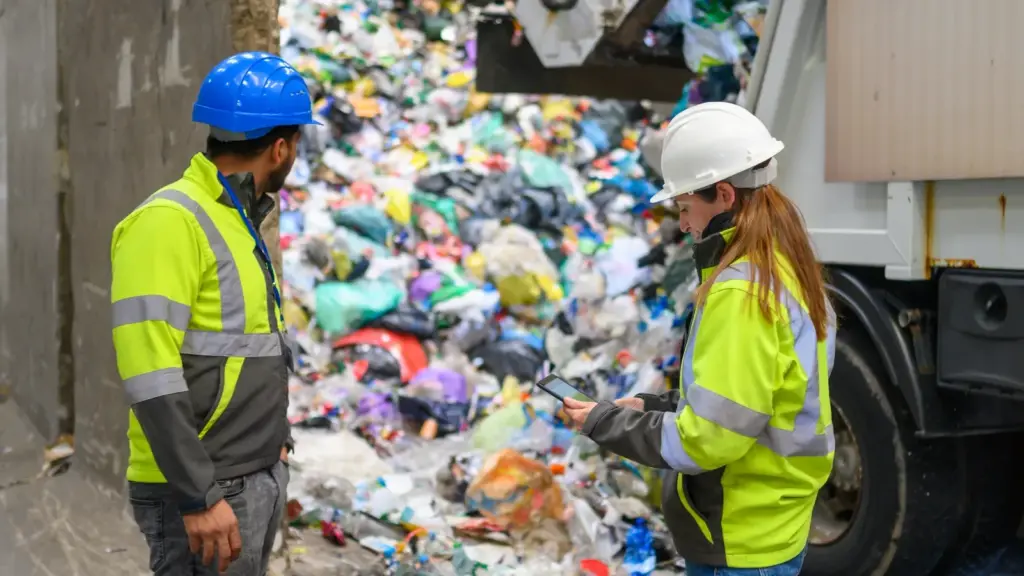
WASHINGTON — Over the past six years, the composition of American household waste has undergone a quiet yet monumental transformation. Driven by shifting consumer habits, e-commerce booms, and manufacturing innovations, the types of packaging and printed paper entering the residential waste stream have evolved at a breakneck pace.
However, according to a landmark new report, this material evolution has dramatically outpaced the capabilities of material recovery supply chains and recycling systems across the United States.
The findings come from the second installment of The Recycling Partnership’s (TRP) 2026 State of Recycling report, which provides a granular look at the packaging materials generated by U.S. households. The report serves as both a diagnostic tool and an urgent call to action, warning that unless sweeping, synchronized investments are made across every tier of the waste-management ecosystem, the chasm between what Americans throw away and what the nation can successfully recycle will continue to widen dangerously.
Executive Overview: A System Strained by Innovation
For decades, the American residential recycling system operated on a relatively predictable baseline of materials: corrugated cardboard boxes, glass containers, steel and aluminum cans, newsprint, and a standardized assortment of plastic bottles.
Today, that predictable baseline has been upended. The relentless pace of packaging innovation—spurred by corporate sustainability pledges, lightweighting technologies, and changing consumer demands—has flooded the residential waste stream with novel materials and formats. From flexible plastic films and specialized composites to multi-layered laminates, the modern household bin looks vastly different than it did at the start of the decade.
Yet, while packaging engineering has advanced at a lightning-fast speed, the physical infrastructure designed to process these materials has struggled to keep pace. Collection fleets, Material Recovery Facilities (MRFs), sorting technologies, and domestic end-markets are largely tethered to older generations of waste.
The core thesis of TRP’s 2026 report is unambiguous: the same level of capital investment and technological innovation that has transformed product packaging since 2020 must now be aggressively directed toward collection, sorting, processing, and end-market development. Without this holistic alignment, modern recyclable materials will fail to become the high-quality feedstocks needed to fuel a circular economy.
Detailed Chronology: The 2020–2026 Transformation of the Waste Stream
To understand how American household waste has shifted, one must examine the timeline of macro-trends that have reshaped consumer spending and product manufacturing over the last six years.
The E-Commerce Acceleration and the Rise of Corrugated Board
Beginning heavily in 2020—catalyzed by global shifts toward remote work and stay-at-home shopping—the reliance on home delivery skyrocketed. This structural pivot in retail permanently altered the domestic waste stream. Corrugated cardboard tonnage grew notably across the six-year study period, cementing its place as a dominant volume driver in residential bins.
Concurrently, manufacturers leaned heavily into lightweighting strategies. By engineering packages to use less material overall, brands successfully reduced shipping weights and lowered upstream material footprints. However, this triumph in packaging design created unintended complications downstream. TRP notes that while more individual items may be coursing through the system, the aggregate weight of traditionally collected materials has actually shrunk.
The Divergence of Traditional vs. Emerging Materials
The 2026 report categorizes household discards into two primary buckets: traditionally collected materials and non-traditional items.
Traditionally collected items—such as cardboard, glass, traditional aluminum cans, cartons, PET bottles, and polypropylene—still account for the vast majority (78%) of total residential recycling generation. However, within this group, significant internal shifts occurred between 2020 and 2026. While cardboard, rigid plastics, and metals saw relative generation increases, the volume of mixed paper and heavy glass generated in households declined sharply. These two declines served as the primary drivers behind an overall drop in total tonnage.
Meanwhile, the influx of non-traditional materials accelerated. Items that historically bypassed residential curbside programs—or worse, caused catastrophic operational disruptions when they ended up there—became permanent fixtures in American kitchens and garages. These include:
- Polyethylene film (e.g., retail shopping bags and bread bags)
- Polypropylene film (flexible packaging wrappers)
- Expanded polystyrene (EPS, commonly used for protective cushioning and food containers)
- Compostable paper products
Intra-Material Disparities: Bottles vs. Non-Bottles, Cans vs. Foils
One of the most revealing nuances uncovered by TRP is the divergence in generation rates between different packaging formats manufactured from the exact same raw material.
- PET Plastics: Traditional PET beverage bottle generation dipped by 3% from 2020 to 2026. Conversely, non-bottle PET packaging (such as thermoformed clamshells, cups, and trays) surged by a staggering 49%.
- Aluminum: Traditional aluminum beverage can generation grew by a healthy 19%. At the same time, aluminum foil and tray generation leaped by an impressive 44%.
These intra-material shifts expose critical vulnerabilities in the recycling system. For instance, while aluminum foil and tray generation is booming, the report highlights that fewer than half of U.S. residential recycling programs currently accept these items. This mismatch between what consumers bring home and what municipal sorting systems can accept represents both a major leakage point for valuable materials and a high-potential opportunity for industry growth.
Supporting Context & Metrics: By the Numbers
To grasp the full scope of the shifting residential waste landscape, the 2026 State of Recycling report compiles critical baseline data reflecting the intersection of population growth, consumer behavior, and material weight dynamics.
2026 Residential Recycling Metrics at a Glance
- 78%: The relative percentage of total residential recycling generation that currently consists of traditionally collected materials.
- 705 Pounds: The average amount of recyclables generated annually by a single U.S. household—marking a notable 12% decline from 2020 levels.
- -8%: The percentage change in the total tonnage of traditionally collected material generation by weight, representing a dramatic 3.7 million ton drop compared to 2020 benchmarks.
- 8.5 Million: The total number of new U.S. households added to the housing stock since 2020, broken down into 6 million single-family homes and 2.5 million multifamily complexes.
The Lightweighting Paradox
The data reveals a counterintuitive reality: even though the United States added 8.5 million new households between 2020 and 2026, the overall tonnage of generated recyclable material actually shrunk.
This phenomenon is largely explained by packaging lightweighting. While manufacturers have successfully dematerialized packaging—slashing the grams of plastic or glass required to contain a given product—this reduction in weight has complicated the economics of recycling.
As the waste stream grows progressively lighter, traditional metrics based purely on tonnage fail to tell the whole story. A lighter package that reduces upstream raw material use can inadvertently place an outsized burden on the recycling system if it exhibits low consumer capture rates, creates mechanical sorting challenges at the MRF, possesses weak end-market commodity value, or elevates contamination risks. Furthermore, lightweighting often strips material value away from MRFs, which historically relied on heavy glass and paper tonnage to subsidize their operational costs.
Official Statements and Industry Insights
According to The Recycling Partnership, navigating this complex era requires looking far beyond simple volume metrics.
"More material in the stream does not automatically mean more material recovered," the report emphasizes. "As the stream grows lighter, overall tonnage-based comparisons alone don’t fully explain what is happening."
Industry experts stress that material generation is inextricably linked to two foundational pillars: consumer access to robust recycling programs and active consumer participation. Without clear, standardized labeling, targeted public outreach, and continuous community education, consumers cannot be expected to navigate the rapidly shifting alphabet soup of modern packaging formats.
Another transformative policy factor entering the equation is Extended Producer Responsibility (EPR). As of 2026, nearly 20% of the U.S. population now resides in a state with active EPR legislation for packaging.
EPR frameworks fundamentally alter the economic incentives of packaging design. By tying producer fees to the recyclability and environmental impact of their containers, these programs reward design choices that minimize waste and simplify sorting. Through structured funding mechanisms, EPR laws unlock vital capital for system investments and technological innovation.
However, TRP cautions that the ultimate impact of EPR funds will remain severely constrained unless those investments are deliberately synchronized across the entire value chain.
Future Outlook: The Imperative for Synchronized Value Chain Advancement
As the United States looks toward the remainder of the decade, the overarching message from TRP’s 2026 report is clear: piecemeal solutions will no longer suffice.
The traditional linear model of "extract, make, dispose"—even when paired with legacy curbside recycling—is ill-equipped to handle the complex, lightweight, and diverse packaging formats of the 21st century. Closing the loop requires a coordinated, multi-stakeholder industrial strategy.
Stakeholders across every stage of the packaging value chain must advance in lockstep. This includes:
- Packaging Designers: Innovating with circularity in mind, ensuring new formats are readily sortable and recyclable using current or emerging MRF technology.
- Policymakers and Municipalities: Expanding universal curbside access and modernizing collection infrastructures to handle non-traditional items like flexible films and aluminum foils.
- Consumer Engagement Campaigns: Deploying transparent, unified labeling and education to empower citizens to sort correctly and minimize contamination.
- Processing Facilities (MRFs): Upgrading optical sorting, artificial intelligence, and mechanical separation technologies to efficiently capture novel materials.
- End-Market Innovators: Scaling domestic manufacturing capacity to utilize recycled feedstocks, ensuring that collected materials are successfully transformed back into valuable commercial products.
If packaging design, consumer access, municipal engagement, advanced processing, and end-market demand do not evolve simultaneously, the gap between what American households generate and what the national infrastructure can reliably recover will only continue to widen. The roadmap is established; the responsibility now lies with industry and government leaders to fund, build, and synchronize the future of American recycling.



