

This reporting is made possible through a collaborative partnership between Grist and WABE, Atlanta’s premier NPR station.
Executive Overview
For more than a century, the Georgia Public Service Commission (PSC)—the powerful, five-member regulatory body that dictates how the state’s dominant electric utility generates power and what rates millions of residents must pay—has conducted its official business almost exclusively within the marble-and-glass confines of the state capital. Confined to Atlanta, the commission’s hearings have long been dominated by corporate attorneys, industry lobbyists, institutional interveners, and metro-Atlanta residents. For rural and coastal Georgians, making one’s voice heard has historically meant enduring a multi-hour drive inland just to secure a three-minute public comment window.
That decades-old tradition shattered on a Tuesday morning in Savannah.
Prompted by months of aggressive lobbying from newly elected Democratic Commissioner Alicia Johnson, the PSC packed up its administrative files and traveled hundreds of miles southeast to the Georgia coast. The historic road trip was designed to bring state regulators face-to-face with the constituents they serve, stepping outside the comfortable echo chamber of Atlanta to gauge the real-world sentiments of coastal residents.
Yet, if commissioners were hoping for a polite meet-and-greet, they were sorely mistaken. Instead, they walked into a firestorm of public fury.
Packed into a Savannah meeting hall, residents confronted the state’s top energy regulators over skyrocketing monthly power bills, staggering corporate utility secrets, and a massive, controversial artificial intelligence data center slated for nearby Effingham County. The facility—tied to a landmark, highly redacted power contract with OpenAI—has become a flashpoint in a broader, nationwide crisis: the rapid, energy-intensive collision between the tech industry’s insatiable thirst for electricity and the finite carrying capacity of local power grids.
With two critical seats on the ballot in the upcoming November elections, the stakes for the PSC have never been higher. As voters prepare to head to the polls amid early voting periods, the Savannah meeting laid bare a deep and widening chasm between corporate utility interests, state regulators, and the everyday ratepayers left footing the bill.
Detailed Chronology: Breaking a Century-Old Tradition on the Georgia Coast
The journey to Savannah represents a watershed moment in the modern history of the Georgia Public Service Commission. For generations, the logistical inertia of the state capital dictated that public oversight remained centralized, distant, and largely inaccessible to the vast majority of Georgians living outside the immediate metropolitan ring of Atlanta.
The shift began in earnest earlier this spring. Following a historic 2024 election cycle that fundamentally altered the political composition of the commission, newly elected Commissioner Alicia Johnson—representing a district that spans coastal Chatham and Effingham counties—began applying persistent pressure on her colleagues. Johnson argued that the commission’s legitimacy was eroding precisely because it rarely, if ever, ventured beyond the perimeter of Atlanta to hear from ordinary citizens.
"For over 100 years, the Public Service Commission has met in Atlanta and rarely, if at all, has meetings across the state," Johnson reflected following Tuesday’s session. "This was an opportunity for me to have our commissioners come out and actually speak with their constituents outside of Atlanta to move away just from hearing the voices of interveners or advocates."
After months of internal discussions, the commission agreed to hold a special session in Savannah. The agenda for the day was carefully structured: a brief administrative meeting followed by a specialized briefing and presentation detailing the PSC’s recent, highly scrutinized regulatory actions regarding data centers. This included a breakdown of the commission’s recent approval of Georgia Power’s landmark contract with OpenAI, alongside newly minted regulatory protections aimed at shielding residential and small business customers from bearing the infrastructure costs of the tech boom.
Once the administrative formalities concluded, the floor was formally thrown open to public comment. The shift from policy presentations to public grievance was instantaneous and sharp.
Dozens of coastal residents stepped up to the microphone, their frustrations centered heavily on the massive OpenAI data center project planned for Effingham County—situated just northwest of Savannah. Speakers expressed profound alarm over the opacity of the transaction, noting that the agreement represents the largest single-customer load contract in Georgia Power’s history since the utility began publicly reporting such figures in 2024.
"There’s a reason you’re named the Public Service Commission and not the Georgia Power service commission or the OpenAI service commission," declared Bill Wright, a resident of nearby Pooler, capturing the prevailing mood of the room. "Your name tells you where your loyalty should lie."
In response, the commissioners attempted to delineate the precise boundaries of their regulatory authority. They reminded attendees that the PSC’s jurisdiction over data centers is strictly limited to overseeing the generation, transmission, and pricing of electricity if a data center voluntarily chooses Georgia Power as its electricity provider. Commissioners urged frustrated residents to direct their zoning, environmental, and land-use concerns to local municipal and county elected officials.
However, pivoting the conversation away from local zoning did little to quell the anger. The grievances quickly expanded from high-tech industrial expansion down to the fundamental cost of living in Georgia.
Michael Hawthorne, an organizing strategist with the Sierra Club, took to the podium to challenge the commission’s core mandate: ensuring that electricity rates remain "just and reasonable." Hawthorne paused, turned to face the crowded room, and posed a direct, rhetorical question:
"Does anybody feel like everything’s reasonably priced?"
The response from the audience was immediate, unified, and resounding: a deafening roar of "No."
Supporting Context & Metrics: The Data Center Boom and the Cracking Grid
To understand the raw hostility of the Savannah crowd, one must examine the unprecedented macroeconomic pressures reshaping Georgia’s energy landscape. Over the past three years, the American South has emerged as a primary national hub for the construction of massive data centers—energy-gargantuan facilities designed to power the computational infrastructure behind cloud computing, cryptocurrency mining, and generative artificial intelligence.
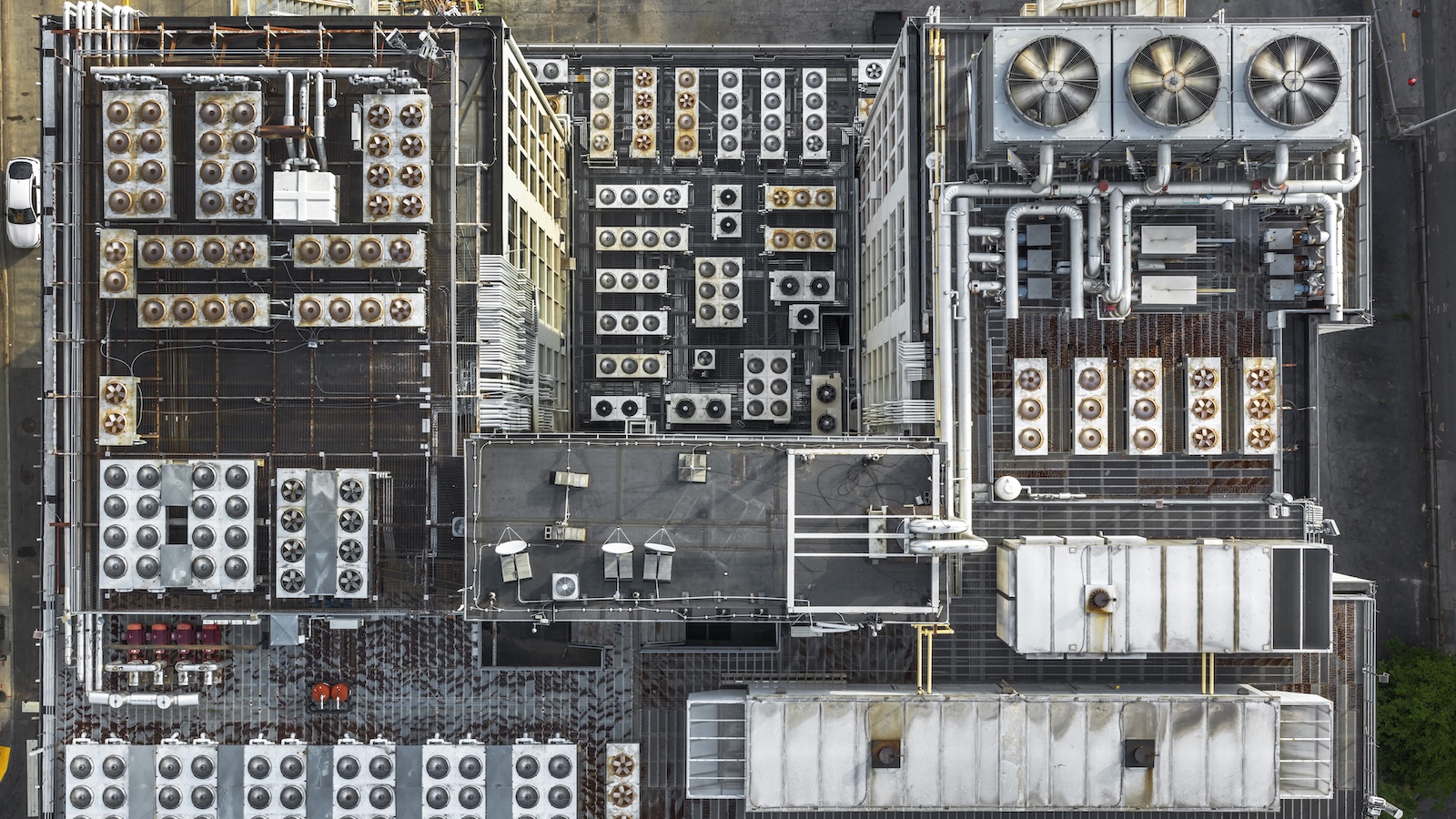
Georgia Power, the state’s largest investor-owned electric utility serving 2.7 million customers, has seen its projected load growth skyrocket far beyond historical models. To meet this sudden, industrial-scale demand, the utility has scrambled to secure new generation sources, frequently relying on fossil gas infrastructure and delaying coal plant retirements, while shifting substantial capital expenditure burdens onto the system.
This dynamic has triggered acute anxiety among consumer advocates and everyday ratepayers. When a single data center demands as much electricity as a mid-sized city, the high-voltage transmission lines, substations, and generation plants required to serve it cost billions of dollars. Historically, utilities amortize these capital costs across their entire customer base. While recent PSC actions have established guardrails attempting to insulate residential customers from the direct financial risks of speculative data center builds, deep skepticism remains. Ratepayers point to a series of consecutive rate hikes approved by the commission over recent years—hikes that have steadily driven up monthly power bills for families already struggling with inflation.
Furthermore, the lack of transparency surrounding industrial utility contracts has fueled deep public distrust. Major technology conglomerates and utilities routinely invoke proprietary business confidentiality to redact the financial terms, power consumption caps, and rate structures embedded in large-scale service agreements.
This corporate secrecy is not occurring in a vacuum. Environmental and regulatory watchdogs note that the rush to power data centers is actively straining state air quality regulations and complicating compliance with the federal Clean Air Act. As fossil-fired peaker plants and expanded gas pipelines are rushed online to maintain grid stability against the backdrop of soaring tech demand, everyday Georgians are left paying higher utility bills while absorbing the public health and environmental externalities of industrial growth.
Official Statements: Commissioners React to the Pressure Cooker
For the commissioners sitting on the dais, the Savannah town hall offered an unfiltered, visceral lesson in public accountability.
Commissioner Alicia Johnson noted that while the intensity of the blowback was fierce, it aligned precisely with the grassroots sentiment she encountered throughout her historic campaign. "It’s what I’ve heard since running for office," Johnson said, "and so I’m just glad that our other commissioners got to hear some of it, too."
Meanwhile, PSC Chairman Jason Shaw—a Republican representing a district in south Georgia—conceded in a post-meeting interview that the coastal forum underscored deep, systemic issues regarding institutional transparency. Shaw acknowledged that public frustration over the OpenAI data center project has valid roots, beginning with a lack of communication at the local municipal level and extending directly into the corporate boardrooms of Georgia Power.
Shaw admitted that the utility must be held to a higher standard of disclosure regarding its massive industrial contracts. "We’ve got to do a better job of forcing the company to be able to present more to us that’s not redacted," Shaw stated. "And I think that’s something that we’re working really closely on."
Despite these acknowledgments of executive opacity, the public’s patience is wearing paper-thin. Several community leaders and political candidates used the public comment period to issue explicit warnings regarding the upcoming electoral cycle.
Corey Foreman, a candidate running for the Georgia State Senate from a coastal district, delivered one of the most blistering critiques of the afternoon, directly tying the commissioners’ regulatory votes to their political futures.
"If you truly want to be on this board, it’s time to step up and protect the people," Foreman warned the commissioners. "If you can’t do that, I will be more than happy to help remove you."
Future Outlook: A Historic Electoral Reckoning on the Horizon
The anger displayed inside the Savannah meeting hall is more than just localized venting; it serves as a preview of an electoral seismic shift that could redefine the trajectory of energy regulation in the Deep South for decades to come.
For nearly two decades—specifically from 2006 until the dawn of 2025—the Georgia Public Service Commission operated as an unbroken political monopoly, with all five seats held reliably by Republicans. That era of one-party regulatory rule fractured at the start of this year when Democrats Peter Hubbard and Alicia Johnson were sworn into office. Their stunning victories came on the heels of a fierce populist campaign centered almost entirely on soaring power bills, contentious rate hikes, and the commission’s historic deference to Georgia Power.
Since taking their seats, Hubbard and Johnson have injected unprecedented friction into the historically quiet regulatory body. They have cast frequent dissenting votes, aggressively interrogated utility executives during evidentiary hearings, and forced public debates over emissions targets and rate structures. However, both commissioners have consistently leveled with the public about the math of their predicament: as a 3-2 minority, their capacity to unilaterally alter state energy policy remains structurally constrained.
That dynamic could change dramatically in November.
Two pivotal seats are currently hanging in the balance on the statewide ballot:
- District 3: Currently held by Commissioner Peter Hubbard—who won a specialized one-year term last year—is now locked in a high-stakes rematch election against former Republican Commissioner Fitz Johnson for a full six-year term.
- District 5: Recently vacated by long-serving Republican Commissioner Tricia Pridemore, this seat features a competitive match-up between Democratic candidate Shelia Edwards and Republican candidate Josh Tolbert.
While candidates are legally required to reside within their respective geographic districts, PSC elections are decided by a statewide vote. If Democratic candidates manage to secure victories in both contests, the political balance of power on the commission will flip, granting Democrats a majority on the regulatory board for the first time in modern history.
Early voting for these high-stakes regulatory races officially begins on October 13.
As the ballots are cast, the reverberations of Tuesday’s Savannah meeting will echo across the state. Whether the message delivered by coastal residents—demanding lower utility bills, radical transparency in corporate tech contracts, and a regulatory commission that answers to the citizenry rather than the monopoly utility—will translate into a sweeping mandate at the ballot box remains one of the most closely watched storylines in American energy politics.



