Executive Overview
Securing regulatory approval for municipal solid waste (MSW) landfill expansions has become one of the most contentious battlegrounds in modern environmental management. Nowhere is this crisis more acute than in the Northeastern United States. According to comprehensive industry reports, approximately a quarter of all municipal solid waste generated within the region is currently routed to disposal facilities projected to reach absolute capacity and shutter within the next five years.
As urban centers continue to generate millions of tons of waste annually, facility operators find themselves squeezed between shrinking local disposal options, stringent environmental oversight, aggressive municipal zoning restrictions, and fierce resistance from local indigenous communities and environmental advocacy groups. Recent regulatory developments and canceled proposals in Pennsylvania and Maine underscore the immense hurdles waste management giants and state agencies face when attempting to extend the operational lifespans of critical solid waste infrastructure. This report examines two major flashpoints from the past month that illustrate the high-stakes, volatile landscape of Northeastern waste disposal.
Detailed Chronology: Two States, Two High-Stakes Battles
The complexities of landfill expansion governance are currently playing out in real-time across two very different regulatory frameworks in Pennsylvania and Maine. While one project has collapsed under local legislative pressure, the other is navigating a labyrinthine multi-party administrative hearing process complicated by ongoing litigation and indigenous opposition.
The Collapse of WM’s Grand Central Landfill Expansion in Pennsylvania
In Plainfield Township, Pennsylvania, Waste Management (WM) is actively recalibrating its long-term strategic planning following a decisive political and legal setback. For more than half a decade, WM pursued an ambitious expansion of its flagship Grand Central Landfill, a crucial regional disposal asset. State environmental records indicate that the facility routinely processes approximately 2,750 tons of waste per day, operating just below its maximum permitted threshold of 3,000 tons daily.
With the existing landfill footprint projected to exhaust its remaining capacity within a matter of years, WM formulated a plan to acquire and develop a neighboring farm property. This eastern expansion would have added 133 acres of solid waste-permitted space, re-engineered the topographical slopes on-site, and theoretically secured an additional 20 years of operational life for the facility.
However, the multi-year planning effort unraveled rapidly. According to local municipal and media reports, the private owners of the targeted expansion property abruptly changed their minds and withdrew from the proposed land sale. Deprived of site control, WM could no longer pursue the project as originally conceived. Capitalizing on this shifting dynamic, the Plainfield Township Board of Supervisors moved swiftly, passing two consequential local ordinances designed to halt the expansion track permanently. The township reversed a prior rezoning decision that had classified the farm property for industrial waste use and repealed a crucial zoning exemption that would have allowed the facility to bypass strict local steep-slope development restrictions.
A WM corporate spokesperson officially confirmed that the company no longer maintains a financial or operational interest in the target property, signaling the definitive end of the controversial expansion bid. Moving forward, the company must evaluate alternative strategies to handle the immense waste volumes generated in the region. Pennsylvania remains heavily reliant on a vast network of commercial and municipal landfills—including WM’s Fairless Landfill, which commands the highest daily tonnage intake in the state—making every lost expansion a significant blow to long-term regional waste capacity.
The Regulatory Tug-of-War at Maine’s Juniper Ridge Landfill
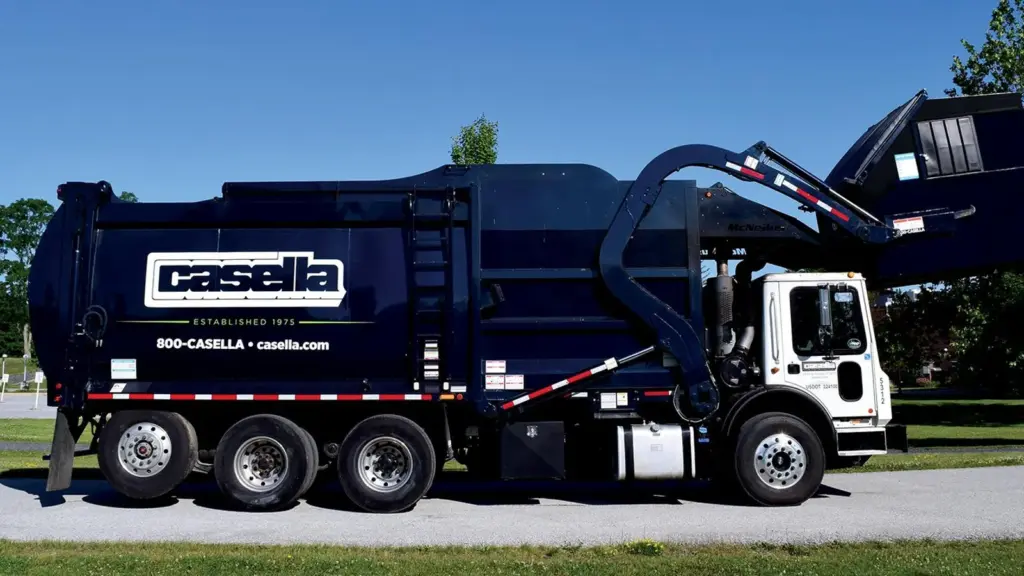
Farther north, the long-running operational and legal saga surrounding the Juniper Ridge Landfill in Maine has entered a new, highly contested phase. Owned by the State of Maine and operated via a long-term contract by NEWSME Landfill Operations—a subsidiary of waste management giant Casella Waste Systems—the facility is the focal point of a fierce regulatory battle over a proposed 61-acre expansion.
State officials and Casella argue that expanding the facility is an absolute necessity to prevent a capacity crisis. Without the additional acreage, predictive modeling from Casella indicates that the Juniper Ridge facility will be entirely full and forced to close its gates by 2028. The proposed expansion would inject approximately 11 additional years of operational life into the state-owned site, absorbing waste streams from across Maine that would otherwise lack a designated regional home.
The expansion application process took a dramatic procedural turn when the Maine Department of Environmental Protection (DEP) formally denied a request by Casella’s subsidiary, NEWSME, to be named as an official co-applicant on the expansion proposal. Consequently, the State of Maine’s Bureau of General Services (BGS) remains the sole applicant and licensee of record for the project.
This administrative decision triggered a cascade of procedural developments. Last year, the City of Old Town secured automatic intervenor status. In a pivotal procedural order issued on July 27, the DEP expanded the roster of official participants by granting formal intervenor status to the Penobscot Nation, alongside two prominent environmental advocacy organizations: Maine Rivers and the Penobscot Bay Waterkeeper, both of which have been vocal opponents of the expansion.
The July 27 procedural order established the legal boundaries for direct participation in the upcoming administrative hearings. As official intervenors, these groups possess the legal standing to introduce formal evidence, cross-examine expert witnesses, and present compelling arguments either supporting or opposing the BGS expansion application. The stakeholders convened for a critical pre-hearing conference on August 14 to establish discovery schedules and hearing parameters.
Supporting Context & Metrics: The Regional Capacity Crunch
To fully understand the ferocity of these localized battles, one must examine the broader macro-environmental data defining the Northeast solid waste market.
- The 25% Vulnerability Metric: Industry analytics from organizations such as the Northeast Waste Management Officials’ Association (NEWMOA) reveal that roughly 25% of all municipal solid waste generated across the Northeastern states is currently directed to disposal facilities that possess less than five years of remaining operational capacity.
- Daily Tonnage Demands: Facilities like the Grand Central Landfill in Pennsylvania (averaging 2,750 tons per day) and Juniper Ridge in Maine are not easily replaced. Siting a modern, engineered municipal solid waste landfill requires immense tracts of land, rigorous hydrological and geological testing, and hundreds of millions of dollars in capital investment.
- The 2028 Horizon: In Maine, the 2028 closure projection for Juniper Ridge hangs like a sword of Damocles over state planners. Without the 61-acre expansion—which would buy a modest 11 years of breathing room—Maine faces a severe infrastructure deficit, forcing municipalities to either truck their waste across state lines at exorbitant financial and environmental costs or dramatically accelerate aggressive diversion, recycling, and composting programs.
- Geographic and NIMBY Pressures: The "Not In My Backyard" (NIMBY) phenomenon is particularly potent in densely populated Northeastern states. Public pushback is routinely mobilized around concerns over truck traffic, property devaluation, odor, and environmental degradation, frequently translating into aggressive local municipal ordinances designed to zone out waste facilities entirely.
Official Statements and Legal Contentions
The legal and administrative battles surrounding these facilities are characterized by sharp ideological divides between corporate and state operators on one side, and local communities, indigenous nations, and environmental watchdogs on the other.
The Environmental and Indigenous Opposition
Opponents of the Juniper Ridge expansion, spearheaded by the Penobscot Nation and organizations like the Conservation Law Foundation (CLF), are fighting the project on multiple fronts. Beyond their participation in the DEP administrative hearings, these groups are pursuing a separate, high-stakes lawsuit aimed at blocking the expansion outright.
The core of their legal argument centers on environmental justice and ecological protection. The Penobscot Nation contends that the ongoing operation and proposed expansion of the landfill directly harms tribal lands, water resources, and cultural heritage due to alleged chemical releases into the adjacent Penobscot River. Similarly, representatives from the Penobscot Bay Waterkeeper and Maine Rivers have presented public grievances asserting that toxic leachate from the landfill has already impacted water quality in the Penobscot Bay and severely disrupted local commercial and recreational fishing activities.
The Operator and Regulatory Defense
In direct contrast to the claims made by environmental coalitions, legal counsel representing the Maine DEP and Casella Waste Systems maintain that modern engineering controls make the facility environmentally sound. During local informational rallies and formal proceedings—as documented by regional media outlets like WABI 5—attorneys and technical experts have testified that advanced design mandates will effectively neutralize environmental risks.
Proponents point to state-of-the-art engineering safeguards, including multi-layered composite double liner systems, advanced leak-detection grids, and cutting-edge per- and polyfluoroalkyl substances (PFAS) leachate treatment systems designed to capture and filter out persistent chemical compounds before treated water is discharged. Furthermore, the Maine DEP issued a formal "public benefit determination" in March, concluding that the expansion of the Juniper Ridge facility serves the overarching public interest of the state—a milestone ruling intended to insulate the project from localized political opposition.
The Corporate Role Dilemma
The procedural battle over NEWSME’s co-applicant status also brought corporate governance tensions to the surface. NEWSME argued before the DEP that stripping its name from the primary application could “deny or impair NEWSME’s right to participate fully as a party” in the administrative process.
However, the DEP’s July 27 ruling clarified that the operating subsidiary is by no means excluded from the process. The state designated NEWSME as an official agent and consultant to the BGS, permitting the company to participate in pre-hearing conferences and public sessions "up to and including the extent to which BGS authorizes." The DEP further instructed that any remaining ambiguities regarding NEWSME’s legal rights, operational duties, and financial privileges must be formally negotiated and codified within an updated operating services agreement between the state bureau and the private operator.
Future Outlook: The Road Ahead for Northeastern Waste Management
The struggles faced by Waste Management in Plainfield Township and Casella Waste Systems in Maine offer a clear preview of the challenges defining the future of American waste management. As existing municipal solid waste facilities approach their twilight years, the path to securing expansions is narrowing significantly.
- Heightened Municipal Resistance: Local governments are increasingly emboldened to use local zoning ordinances, steep-slope restrictions, and land-use reversals to block or heavily penalize expansion bids, as demonstrated in Pennsylvania. Waste operators can no longer rely solely on state-level permitting; they must navigate hostile municipal landscapes where local political shifts can instantly derail decades of capital planning.
- The Rise of Intervener Activism: State environmental agencies are facing unprecedented pressure from organized coalitions, including sovereign indigenous nations and environmental advocacy groups. The formal integration of intervenors into administrative proceedings—complete with expert witnesses, formal evidentiary discovery, and parallel litigation—will likely become the standard template for major infrastructure hearings.
- The Imperative of Alternatives: With traditional landfill expansions facing mounting legal, political, and physical barriers, the Northeast is approaching a critical juncture. State policymakers, waste generators, and private-sector operators will be forced to accelerate investments in alternative waste diversion technologies. This includes scaling up commercial composting, investing in advanced materials recovery facilities (MRFs), expanding waste-to-energy incineration infrastructure, and implementing stringent source-reduction mandates.
Ultimately, the events in Pennsylvania and Maine serve as a cautionary tale for the broader waste management industry. Expanding legacy landfills is no longer a routine administrative procedure; it is a grueling, multi-front war of attrition where environmental compliance, community relations, indigenous rights, and local politics intersect. Until regional waste generation drops significantly or alternative disposal technologies achieve massive commercial scale, the capacity crisis in the American Northeast will only continue to intensify.