

Executive Overview
For over half a century, the Endangered Species Act (ESA) of 1973 has served as the bedrock of American conservation law. Credited with pulling iconic species such as the bald eagle, the American alligator, the humpback whale, and the manatee back from the precipice of extinction, the legislation has long been regarded as one of the most powerful environmental statutes in the world.
However, foundational environmental protections are facing their most aggressive challenge yet. The Trump administration has implemented a sweeping reinterpretation of the law, fundamentally altering how federal agencies police industrial impacts on wildlife. Under a new directive issued by the U.S. Fish and Wildlife Service (FWS), the federal government will no longer penalize the unintentional killing of a federally protected animal, provided the act was not done "on purpose."
This directive coincides with a companion rule stipulating that the degradation or destruction of an animal’s natural habitat no longer constitutes legally actionable "harm." Together, these administrative changes effectively strip the teeth out of the landmark law. By narrowing the legal definitions of two pivotal words—“harm” and “take”—the administration has engineered a pathway for commercial industries, including logging, mining, commercial shipping, and large-scale real estate development, to operate in sensitive ecosystems with unprecedented impunity.
Legal experts, conservation advocates, and state attorneys general have signaled immediate pushback, promising a wave of federal lawsuits. Yet, the immediate consequence is a profound regulatory earthquake that upends decades of established environmental jurisprudence, introduces immense uncertainty for corporate compliance, and leaves America’s most vulnerable fauna dangerously exposed.
Detailed Chronology of the Policy Shift
To understand the magnitude of the current changes, one must trace the legal evolution of the ESA and the systematic dismantling of its enforcement mechanisms under recent executive action.
1973–1995: The Establishment and Expansion of "Take"
Enacted with overwhelming bipartisan support and signed into law by President Richard Nixon, the ESA was designed to protect ecosystems upon which endangered and threatened species depend. At the center of the law’s enforcement mechanism is Section 9, which makes it illegal for any person to "take" any endangered species within the United States.
The statute defined "take" broadly: to harass, harm, pursue, hunt, shoot, wound, kill, trap, capture, or collect, or to attempt to engage in any such conduct. For decades, the breadth of this definition allowed conservationists and federal regulators to curb industrial practices that indirectly destroyed wildlife populations.
This broad interpretation was famously affirmed by the U.S. Supreme Court in the landmark 1995 case Babbitt v. Sweet Home Chapter of Communities for a Greater Oregon. In a 6-3 decision, the high court ruled that the Secretary of the Interior’s definition of "harm"—which explicitly included habitat modification that kills or injures wildlife—was a reasonable interpretation of the statute. The ruling validated decades of federal oversight, allowing the government to protect creatures like the northern spotted owl by restricting clear-cutting in old-growth Pacific Northwest forests.
The 2024 Chevron Doctrine Shift
The legal landscape shifted dramatically in mid-2024 when the Supreme Court overturned the long-standing Chevron deference doctrine. This ruling stripped federal agencies of their presumptive authority to interpret ambiguous statutes, transferring that power squarely to the courts. While initially viewed as a sweeping blow to federal environmental regulations, this judicial shift ironically introduces immense vulnerability for the Trump administration’s current rewrite, as courts—not politically appointed agency directors—will ultimately decide the legal validity of the new FWS memos.
Summer to Fall: The Two-Pronged Dismantling
In the summer, the administration introduced a preliminary revision altering the legal threshold for what actions constitute "harming" an animal. It argued for a narrow, "traditional" definition of "take" limited strictly to direct acts of killing or capturing.
This was swiftly followed this week by the definitive FWS directive, signed by FWS Director Brian Nesvik. The memo codified this narrow view, stating explicitly that incidental or accidental deaths resulting from lawful activities do not constitute a violation of the ESA.
According to the text of the memo:
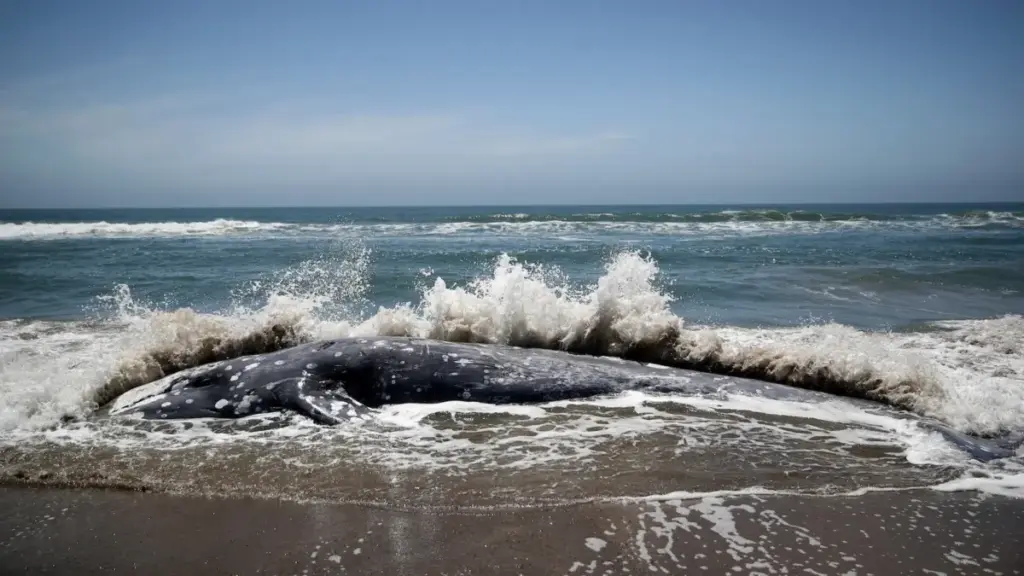
“A vessel that inadvertently strikes a whale has not taken it, because the vessel’s course was not set against the whale… Felling a tree is not a take of the bats roosting in it unless the tree was felled for the purpose of killing or capturing them.”
Supporting Context & Metrics: The Mechanics of "Take" and "Harm"
The entire debate over the future of American wildlife hinges on lexicography and statutory interpretation. The words “harm” and “take” are notoriously difficult to define precisely, a reality that has frustrated linguists and dictionary editors for over a century.
Lexicographer Kory Stamper famously detailed the psychological toll of attempting to define the verb "take" for the Oxford English Dictionary, noting that the exhaustive process "unspooled" her sanity. Yet, within environmental law, the term had achieved a workable, practical consensus over 50 years of administrative enforcement: human activities that predictably and demonstrably lead to the death or injury of protected wildlife—whether through a hunter’s bullet or a bulldozer leveling a forest—are illegal.
The Real-World Impact on Species
The stakes of this definitional shift are monumental, particularly for species that rely entirely on the broad interpretation of "harm" and "take" for their survival.
When species were added to the endangered registry during the early decades of the ESA—such as the Florida panther and the California sea otter—they were not universally granted explicit "critical habitat protections." These supplementary safeguards, which mandate rigorous environmental reviews for any federally funded or permitted project affecting designated lands, were primarily codified for species listed in later decades.
Consequently, older-listed species depend almost exclusively on the general prohibitions against "harm" and "take" to prevent their habitats from being obliterated. Under the new FWS memo, industrial projects can legally flatten, dredge, or pollute these vital ecosystems without federal penalty, provided the corporations can claim the resulting wildlife mortality was merely an "unintentional" byproduct of commerce.

Official Statements and Industry Reactions
The administration’s policy pivot has drawn immediate, scathing condemnation from environmental watchdogs, juxtaposed against a surprisingly complex reaction from the corporate sector.
Environmental Opposition
Conservation groups have pulled no punches in assessing the legal and moral weight of the new directives.
-
Ryan Shannon, Attorney at Defenders of Wildlife:
"They are trying to disregard 50 years of the act, and how the agency—and everybody—has always interpreted this word. This is not a bunt—they are really swinging for the fences with this."
-
Andrew Wetzler, Executive at the Natural Resources Defense Council (NRDC):
"The administration is telling every industry in America that killing endangered wildlife is fine as long as it wasn’t their primary goal. But unintentional harm is exactly what is driving many species towards extinction."
-
Brett Hartl, Director of Government Affairs at the Center for Biological Diversity:
Characterizing the memo as "essentially performative cruelty for the sake of it" and "barely worth the paper it’s printed on," Hartl added: "They’re trying to turn it into an anti-poaching statute, but it’s actually supposed to be the strongest conservation law in the world."
Corporate Uncertainty and the Paradox of Deregulation
Paradoxically, while the administration framed these changes as a pro-business deregulatory triumph, many corporate legal teams are viewing the sweeping changes with acute caution.
For decades, industries such as timber corporations, real estate developers, and commercial fisheries operated under a stable, albeit strict, set of compliance rules. They utilized established mitigation banking, habitat conservation plans, and legal consultations to navigate the ESA.
By abruptly invalidating 50 years of settled administrative precedent, the Trump administration has introduced chaotic legal ambiguity. Corporate attorneys now face a treacherous calculation:
- Should they advise clients to immediately exploit the FWS’s new, permissive stance?
- Or should they urge restraint, knowing that the directive is almost certainly doomed to face immediate judicial invalidation, potentially exposing companies to retroactive liabilities if courts or a future administration reinstate the traditional protections?
According to Ryan Shannon, this deregulatory swing may ultimately deliver "more than they ever really would have asked for," replacing predictable regulatory frameworks with a chaotic legal battlefield.
Future Outlook: The Legal Battlegrounds Ahead
The immediate future of the Endangered Species Act will not be decided in agency boardrooms, but in federal courtrooms across the nation.
Impending Litigation
Almost two dozen state attorneys general have already filed lawsuits challenging the administration’s preliminary revisions to the ESA. With the release of the definitive FWS memo legalizing accidental "takes," a fresh cascade of multi-state lawsuits and emergency injunctions filed by major environmental coalitions is guaranteed.
Legal scholars note that the administration is explicitly relying on the late Justice Antonin Scalia’s famous dissenting opinion in the 1995 Sweet Home case, wherein Scalia argued that a "take" must involve direct, intentional physical application against an animal. By adopting a minority judicial opinion that was explicitly rejected by the Supreme Court majority three decades ago, the administration is running headfirst into established legal precedent.
Furthermore, under the post-Chevron legal paradigm, federal courts owe no deference to the Fish and Wildlife Service’s novel interpretation of the statute. Judges will independently review whether the agency’s memo aligns with the clear intent of Congress when it passed the ESA in 1973. Given the statutory text’s expansive inclusion of terms like "harass" and "harm," federal judges are widely expected to view the FWS’s narrow redefinition as an arbitrary and capricious abuse of administrative authority.
The Ultimate Fate of American Wildlife
If the courts ultimately validate the Trump administration’s interpretation, the ecological consequences will be swift and severe. Species that depend on the broad protective umbrella of the "harm" standard will find themselves entirely defenseless against industrial encroachment.
As the legal battles unfold, the foundational premise of American conservation—that human economic progress must coexist with the preservation of our most vulnerable native species—hangs entirely in the balance.



