

Executive Overview
Renowned Welsh actor and activist Michael Sheen has held what he has described as a "constructive" meeting with First Minister Rhun ap Iorwerth, marking a pivotal turning point in the ongoing political and public fallout surrounding historic toxic chemical dumping across Wales and north-west England. The high-profile discussion directly follows the broadcast of Sheen’s hard-hitting BBC documentary, Buried with Michael Sheen, which exposed widespread contamination across 14 distinct sites historically linked to the chemical giant Monsanto.
The investigation, driven by decades of meticulous research initially compiled by the late farming consultant and whistleblower Douglas Gowan, has thrust the legacy of unregulated industrial waste disposal back into the national spotlight. For decades, communities residing in the shadow of major chemical works have harbored quiet suspicions about rising illness rates, environmental degradation, and corporate indifference. Now, armed with empirical soil and blood sample data collected by investigative journalists Lucy Taylor and Dan Ashby alongside Sheen, these communities are demanding systemic accountability.
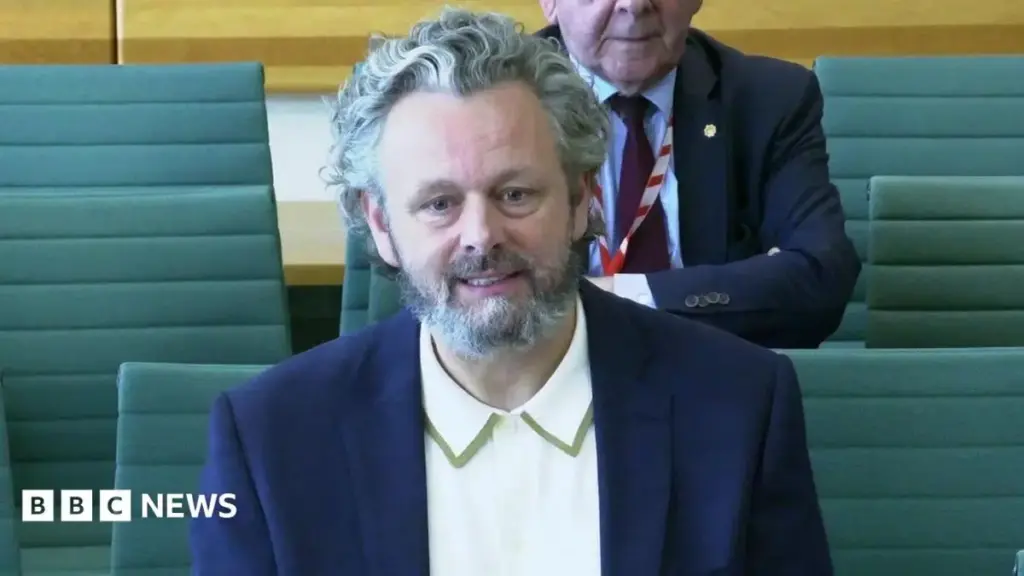
The political ramifications are escalating rapidly. Beyond his engagement with the Welsh Government, Sheen recently addressed the UK Parliament, where he pressed Members of Parliament to implement an immediate, nationwide testing program for historic toxic dumps. The central objective of this proposed initiative is to definitively verify the safety of these long-forgotten sites, many of which are now residential areas, farmland, or public recreational spaces.
At the heart of this unfolding crisis are dangerous synthetic compounds known as polychlorinated biphenyls (PCBs). Widely used in industrial applications throughout the 20th century before being banned due to their severe toxicity and persistence in the environment, PCBs are recognized carcinogens. The documentary’s findings—revealing elevated levels of these chemicals in soil samples and the bloodstreams of local residents near former Monsanto facilities—have transformed localized anxieties into a national scandal. As political leaders in Cardiff Bay and Westminster begin to grapple with the sheer scale of the contamination, affected families, local action groups, and public health advocates are uniting to demand transparency, comprehensive health screenings, and corporate accountability from the multinational entities that inherited the liabilities of the past.
Detailed Chronology of an Investigation
The road to the recent meeting between Michael Sheen and First Minister Rhun ap Iorwerth is paved with decades of persistence, investigative journalism, and heartbreaking personal testimonies. Understanding the gravity of the current crisis requires tracing the timeline from industrial operation to modern-day exposure.
The Gowan Years: Decades of Warning
Long before television cameras rolled and national politicians took notice, a lone farming consultant named Douglas Gowan recognized the impending catastrophe. For decades, Gowan dedicated his life to tracking the movement of hazardous wastes associated with Monsanto’s operations. He warned regulators, local authorities, and central government departments that industrial byproducts were leaching into the water tables, contaminating agricultural land, and putting nearby populations at severe risk.
Gowan amassed thousands of pages of internal documents, corporate correspondence, maps, and testing records. Despite his tireless advocacy, his warnings were largely sidelined or ignored by institutional bodies ill-equipped or unwilling to confront the immense legal and financial implications of industrial remediation. Gowan passed away shortly before the completion of the documentary, but not before handing his life’s work over to a new generation of investigative journalists.
The Journalistic Revival
Inheriting Gowan’s voluminous archives, investigative journalists Lucy Taylor and Dan Ashby recognized the historical and contemporary value of the documents. Partnering with Michael Sheen—an actor long celebrated for his grassroots political activism and deep commitment to Welsh social causes—the team resolved to verify Gowan’s claims on the ground.
Focusing on 14 specific sites across Wales and north-west England believed to have been utilized by Monsanto for the disposal of PCBs and other toxic residues, the team launched an independent testing operation. They collected soil samples and orchestrated blood tests for individuals living adjacent to these legacy sites. The laboratory results were startling: elevated levels of PCBs were detected at all but one of the 14 tested locations.
The Broadcast and Political Fallout
Buried with Michael Sheen aired in August, sending shockwaves through British households and instantly shifting the national discourse on environmental regulation. Initially, the fallout was marked by political friction. Sheen publicly voiced his frustration that an open offer for a formal meeting with the First Minister had "not been taken up" prior to the documentary’s broadcast.
However, intense public pressure and the undeniable gravity of the documentary’s empirical findings altered the political calculus. On Thursday, Sheen confirmed that the meeting with First Minister Rhun ap Iorwerth had finally taken place. Describing the talks as "constructive," Sheen struck a cautiously optimistic tone regarding future cooperation between advocacy groups and the devolved Welsh administration, while emphasizing that it remains "early days."
Shortly after the documentary’s release, Sheen took his campaign to the heart of British democracy, addressing the UK Parliament. He urged MPs from across the political spectrum to back a comprehensive national testing program for all historic toxic dumps. This parliamentary intervention transformed the issue from a localized environmental grievance into an urgent structural test of the UK’s regulatory preparedness and corporate liability frameworks.
Supporting Context & Metrics: The Science of PCBs and Local Impact
To fully comprehend the alarm raised by Sheen, Taylor, Ashby, and local action groups, one must examine the chemical antagonist at the center of the controversy: polychlorinated biphenyls (PCBs).
What Are PCBs and Why Are They Dangerous?
PCBs are a class of synthetic organic chemicals characterized by their exceptional chemical stability, heat resistance, and electrical insulating properties. Throughout the mid-20th century, they were widely utilized in electrical transformers, capacitors, hydraulic fluids, paints, and lubricants.
However, these very same industrial traits—stability and persistence—make PCBs catastrophic environmental pollutants. Once released into the soil, water bodies, or the atmosphere, PCBs do not easily break down. They persist for generations, bioaccumulating in the fatty tissues of wildlife and humans alike through the food chain.
Scientific consensus classifies PCBs as probable human carcinogens. Long-term exposure has been linked not only to various forms of cancer—including malignant melanoma and non-Hodgkin lymphoma—but also to reproductive disorders, neurological damage, immune system suppression, and endocrine disruption. Crucially, toxicologists emphasize that there is no known "safe" threshold for human exposure to PCBs; any accumulation carries an inherent, elevated risk of pathological harm.
The Human Toll: Voices from Wrexham
The abstract chemistry of PCBs translates into concrete, deeply personal human tragedies on the ground in communities like Wrexham. Susan Smith worked as a secretary at the Monsanto facility in Wrexham during her youth. Today, her fond memories of early employment have been entirely eclipsed by the shadow of chronic illness.
Susan and her husband, Geraint, have lived in their home for 53 years. Their property is separated from the decommissioned Ruabon chemical works by nothing more than a thin tree line. The proximity is more than geographical; it has defined their family’s medical history.
Geraint was diagnosed with prostate cancer 13 years ago, and more recently developed skin cancer. Susan herself was diagnosed with breast cancer at the young age of 38. While the couple acknowledges that proving definitive causation between the factory and their specific health outcomes is scientifically complex, the revelations of the documentary have forced them to confront horrifying possibilities.
During her time working at the plant, Susan’s desk was situated in the telex office immediately adjacent to the main warehouse. Delivery notes and instructions were transmitted via ticker tape through a small glass hatch.
"That hatch was never closed because people were passing things through so often," Susan recalled. "As a result, dust and powders and all sorts would blow through and coat the desks, the paper, even our sandwiches."
Employees were provided with no safety briefings, specialized training, or personal protective equipment (PPE). Office staff operated under the comforting assumption that only manufacturing floor workers faced industrial risks, remaining completely oblivious to the airborne hazards circulating through administrative areas.
When the documentary team facilitated blood testing for Susan, the results showed PCB levels that were not classified as statistically extreme; yet, given the toxicological reality that zero safe levels exist, the findings brought little comfort. Compounding her frustration is the wall of corporate opacity. Eastman Chemical Company—the major US multinational that now owns the legal and financial legacy of what was once Monsanto—has offered little in the way of accountability, transparency, or remediation.
In response to this corporate silence and government inaction, Susan and Geraint have joined the Monsanto Contamination Action Group. This grassroots organization brings together residents across Wrexham who live in communities directly impacted by decades of historic industrial waste dumping, serving as a unified legal and political front against corporate neglect.
Official Statements and Institutional Responses
The growing momentum of the campaign has forced government officials, political representatives, and corporate entities to issue responses, though the depth of their commitments varies wildly.
Welsh Government and the First Minister
Following his meeting with Michael Sheen, First Minister Rhun ap Iorwerth has faced intense scrutiny regarding the Welsh Government’s historic and future oversight of contaminated land. While the meeting was lauded by Sheen as "constructive" and focused on practical pathways forward, civil society groups are demanding concrete policy shifts.
The Welsh Government is under pressure to establish an independent inquiry into how environmental regulatory bodies permitted the systemic burial of hazardous waste throughout the 20th century. Furthermore, officials are being asked to clarify what data the government currently holds regarding soil and water safety near the 14 identified sites, and whether devolved public health agencies are prepared to initiate localized health screenings for affected populations.
Parliamentary Intervention and National Action
In Westminster, Sheen’s appearance before parliamentarians galvanized cross-party discussions regarding the adequacy of current legislation governing historic contamination. Under existing UK environmental law, liability for legacy pollution is frequently difficult to enforce, particularly when corporate structures have undergone multiple acquisitions, mergers, or bankruptcies over the span of decades.
MPs sympathetic to Sheen’s cause are drafting proposals for a statutory framework that would compel the UK Government—in coordination with devolved administrations in Wales and Scotland—to fund and execute a comprehensive national testing regime. Such a program would systematically map out every known historic industrial waste site, evaluate current containment integrity, and publish environmental safety audits for public scrutiny.
Corporate Silence: The Stance of Eastman
Eastman Chemical Company, the US-based multinational corporation that currently holds the legal legacy of the entities responsible for the historic operations at sites like Ruabon, has been repeatedly approached for comment by journalists and investigative teams.
To date, the corporate response has been heavily guarded, characterized primarily by silence or generalized statements of adherence to regulatory compliance. Activists and legal experts argue that corporate entities cannot inherit the assets and historical market dominance of chemical giants without simultaneously assuming moral, financial, and legal responsibility for the ecological destruction and human suffering left in their wake.
Future Outlook: The Path to Accountability and Remediation
As the dust settles on the initial media broadcast and the dust clears from political antechambers following Michael Sheen’s meeting with the First Minister, the movement to uncover and rectify Britain’s toxic legacy enters a critical new phase.
[Phase 1: Discovery & Exposure]
   └── Gowan's Research -> Journalistic Investigation -> BBC Documentary (*Buried*)
        │
        ▼
[Phase 2: Political Mobilization]
   └── Parliamentary Appeals -> Sheen-Ap Iorwerth Meeting -> Action Group Formation
        │
        ▼
[Phase 3: Systemic Remediation (Pending)]
   └── National Testing Programme -> Comprehensive Health Screenings -> Corporate Accountability & Cleanup
The Push for a National Testing Regime
The immediate policy objective remains the realization of a national testing programme for historic toxic dumps. Without accurate, government-backed data concerning the current geographic spread and concentration of PCBs, local communities remain entirely in the dark regarding the safety of the ground beneath their homes, schools, and farms. Establishing this programme requires bridging responsibilities between Westminster and Cardiff Bay, ensuring that funding is allocated not merely for superficial assessments, but for rigorous, long-term environmental remediation.
Expanding Health Surveillance and Support
Beyond environmental remediation, public health authorities face a moral imperative to address the human dimension of the crisis. Grassroots organizations like the Monsanto Contamination Action Group are demanding subsidized, comprehensive health screenings for individuals who lived or worked near the 14 contaminated sites. Early detection protocols for cancers and autoimmune disorders associated with PCB exposure could save countless lives, while epidemiological studies can finally establish definitive statistical links between historic industrial waste management and local disease clusters.
Legal Frontiers and Corporate Liability
The ultimate test of justice in this saga will lie in the courtroom. Legal scholars and human rights lawyers are closely monitoring the developments in Wrexham and other affected regions. Establishing legal precedents that hold multinational parent companies accountable for legacy contamination—even decades after operational cessation—is notoriously difficult, but not impossible. If successful, the legal challenges mounted by affected residents could rewrite the rules of corporate responsibility across the United Kingdom, ensuring that companies can no longer profit from industrial expansion while privatizing the long-term ecological and human costs.
For Michael Sheen, Douglas Gowan’s legacy, and the residents of Wrexham, the fight has only just begun. What started as an investigative documentary has evolved into an unstoppable movement for historical truth, environmental justice, and institutional accountability. As First Minister Rhun ap Iorwerth and other political leaders weigh their next moves, the citizens of Wales and England are watching closely, determined to ensure that what was buried in the soil is finally brought to light.



