

Executive Overview
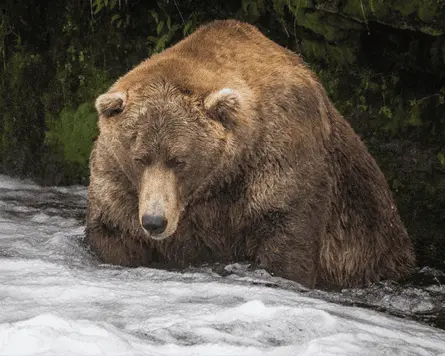
Deep within the rugged, pristine wilderness of southwestern Alaska, an annual transformation of gargantuan proportions is once again underway. As autumn casts a chilly shadow over the landscape, the brown bears of Katmai National Park and Preserve have converged upon the Brooks River. Their singular mission: to gorge themselves on the world’s last great salmon runs, packing on hundreds of pounds of fat in a frantic, high-stakes race against the impending freeze of winter hibernation.
For wildlife enthusiasts across the globe, this seasonal feast marks the return of Fat Bear Week—a wildly popular, highly anticipated single-elimination tournament that has evolved from a humble social media experiment into an international cultural phenomenon. Now in its 12th year, the competition invites millions of global citizens to cast their votes for the bulkiest brown bears in the park, matching contenders side-by-side in a March Madness-style bracket that celebrates brute biological success.
Beyond the undeniable internet charm of bowling-ball-shaped bears and playful online trash-talking, Fat Bear Week serves a profound ecological purpose. It functions as a masterclass in public conservation engagement, utilizing cutting-edge webcams and storytelling to bridge the gap between a remote, inaccessible wilderness and millions of urban living rooms. This year’s tournament, running from September 22 to September 29, promises to be one of the most competitive—and heaviest—in the event’s history. Propelled by a remarkably robust salmon season, the park boasts an unprecedented boom in both the overall bear population and a brand-new generation of exceptionally plump cubs.
Detailed Chronology: From Humble Facebook Experiment to Global Phenomenon
To understand the cultural juggernaut that is Fat Bear Week, one must trace its roots back to 2014, when the event was considerably more modest in both scale and title. Originally launched as "Fat Bear Tuesday" by the National Park Service, the concept was remarkably straightforward: rangers posted a simple bracket on Facebook featuring side-by-side photographs of Katmai’s brown bears, tracking their dramatic physical transformations from lean, hungry hunters in June to massive, rotund pillars of fur and fat by September.
Mike Fitz, a former National Park Service ranger stationed at Katmai who helped conceptualize the event, recalls the immediate, viral spark.
"The engagement on those few Facebook posts that we did was super high, like way higher than anything we had tried at the park previously," Fitz noted.
Recognizing an untapped appetite for wildlife content, Fitz and his colleagues seized upon an infrastructure upgrade deployed two years prior. In 2012, the philanthropic organization Explore.org installed a network of high-definition livestream cameras across the park, most notably at Brooks Falls. These webcams gave distant viewers real-time, uninterrupted access to the secret lives of wild brown bears.
Capitalizing on this technology, the park expanded Fat Bear Tuesday into a week-long tournament. Over the subsequent decade, the event snowballed exponentially. Last year alone, more than 1.7 million votes flooded in from over 100 countries, culminating in the coronation of Bear 32, affectionately and accurately nicknamed "Chunk," as the reigning champion.
The timeline of the modern tournament is meticulously structured to maximize public participation and scientific appreciation:
- Early September: Park rangers monitor the Brooks River, assessing which bears have successfully bulked up and survived the summer season to earn a coveted spot on the tournament bracket.
- The Friday Before the Tournament: The official Fat Bear Week bracket is dropped to the public, granting enthusiasts a crucial weekend of independent research, highlight-reel review, and fierce online debate.
- September 22–29: The single-elimination tournament officially kicks off. Daily voting rounds pit bear against bear, with winners advancing based on public tallies until the ultimate heavyweight champion is crowned.
Supporting Context & Metrics: The Science of Survival and the Brooks River Ecosystem
Katmai National Park is located approximately 260 miles southwest of Anchorage—a geographical isolation that keeps it largely shielded from mass tourism. Yet, it is precisely this remoteness that preserves one of the most vibrant, undisturbed ecosystems on the planet. Spanning over 4 million acres of dramatic volcanic landscapes, wild rivers, and dense forests, Katmai is home to an estimated 2,200 brown bears.

The engine driving this thriving apex predator population is the Brooks River salmon run. Every summer and autumn, tens of millions of Pacific salmon navigate these waterways to spawn. For Katmai’s brown bears, this aquatic bounty is a matter of life and death. To survive months of deep winter sleep—a period during which they will consume no food or water, losing up to a third of their body weight—bears must enter a physiological state known as walking hibernation while devouring staggering quantities of calories.
+-------------------------------------------------------------------+
|                  THE KATMAI SURVIVAL EQUATION                     |
|                                                                   |
|   [Millions of Spawning Salmon]                                   |
|                 │                                                 |
|                 ▼                                                 |
|   [Intense Summer/Autumn Gorging]                                 |
|                 │                                                 |
|                 ▼                                                 |
|   [Maximum Fat Reserves / "Walking Hibernation"]                  |
|                 │                                                 |
|                 ▼                                                 |
|   [Successful Winter Denning & High Cub Survival Rates]           |
+-------------------------------------------------------------------+
The metrics of this year’s ecosystem health are staggering. Park Superintendent Mark Sturm and resident naturalists have reported an unprecedented number of new cubs roaming Brooks Camp this season. According to Mike Fitz, there is a direct correlation between the success of the salmon run and the demographics of the bear population.
"If you are a well-fed brown bear you are more likely to have cubs in the den and you’re also more likely to have a large litter," Fitz explained.
This biological reality has translated directly onto this year’s tournament landscape. Families will be represented more heavily than in any previous year, offering viewers a rare, intimate window into maternal bear dynamics. Far from a simple beauty pageant for chunky mammals, Fat Bear Week highlights the brutal, beautiful realities of natural selection and ecological resilience.
Official Statements and Perspectives from the Frontline
The dual success of Fat Bear Week as both a conservation tool and an internet darling is driven by the passionate rangers, naturalists, and administrators who manage the park. Their insights paint a vivid picture of the animals that command the global spotlight.
Park Superintendent Mark Sturm emphasized the educational value of the event during a September 9 livestream, noting that Fat Bear Week "has become a phenomenon" that "certainly helps us deliver our message about the importance of large landscape conservation, brown bear conservation, and just having functional ecosystems that are healthy and viable."
Sturm also highlighted the remarkable new generation taking over the riverbanks:
"There are more cubs at Brooks Camp this year than have been seen in a long time. A new generation of fat bears is taking shape, and they’re off to a strong start."
Mike Fitz, now serving as the resident naturalist at Explore.org, points out that the webcams allow human audiences to forge profound, multi-year connections with individual animals. "One of the things that makes the webcam experience really special is that we get to follow the stories of individual bears, so we know them across the season and years," Fitz said. "And that helps us to form deeper connections with them and tell their stories about surviving in the wild."
These stories, however, are not always sanitized for public consumption. The rangers emphasize absolute transparency regarding the harsh realities of nature. Over the years, viewers have witnessed intense territorial battles, injuries—such as Chunk’s broken jaw last year—and the heartbreaking loss of young cubs to dominant males, including an incident involving reigning champion Bear 128 Grazer.
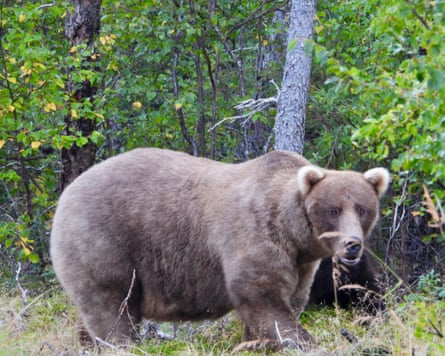
"It is filled with a lot of joy and fun—we see the bears playing with one another," Fitz acknowledged. "But they face real risk. They face real hardship. They’re fierce, large predators."
As the tournament approaches, specific standout personalities have captured the attention of park staff and online fans alike. Superintendent Sturm singled out Bear 910, a female who raised no cubs this year and has transformed into an absolute "balloon," and Bear 164, nicknamed Bucky, a sub-10-year-old male who is displaying unprecedented dominance over the river.
"He’s not even 10 years old and he’s just a giant," Sturm marveled.
Future Outlook: Escaping the Digital Madness Through Wilderness Appreciation
As Fat Bear Week enters its second decade, its cultural footprint continues to expand far beyond the borders of Alaska. In an era dominated by hyper-connected digital fatigue, political polarization, and endless internet noise, the tournament has carved out a unique space as a wholesome, universally beloved digital sanctuary.
Mike Fitz summarizes the sentiment shared by millions of annual voters:
"I hope it gives people an opportunity to break away from the madness of the world and the rest of the internet."
Looking ahead, park administrators plan to leverage the immense popularity of Fat Bear Week to advocate for broader environmental protections. As climate change, industrial pressures, and shifting aquatic ecosystems threaten salmon runs across the Pacific Northwest and Alaska, the health of Katmai’s brown bears serves as a vital ecological barometer. If the salmon thrive, the bears thrive; if the rivers fail, an entire ecosystem collapses.
Ultimately, Fat Bear Week is much more than an entertaining internet poll about oversized animals. It is a triumphant celebration of wild spaces, a masterclass in modern wildlife education, and an urgent reminder of what can be preserved when humanity chooses to protect the earth’s last great wildernesses. As the polls open and the votes pour in from Tokyo to Toronto, the true winners are not just the individual bears crowned in digital glory, but the global audience reminded of the majestic, untamed world that still exists just beyond our immediate reach.



