

Executive Overview
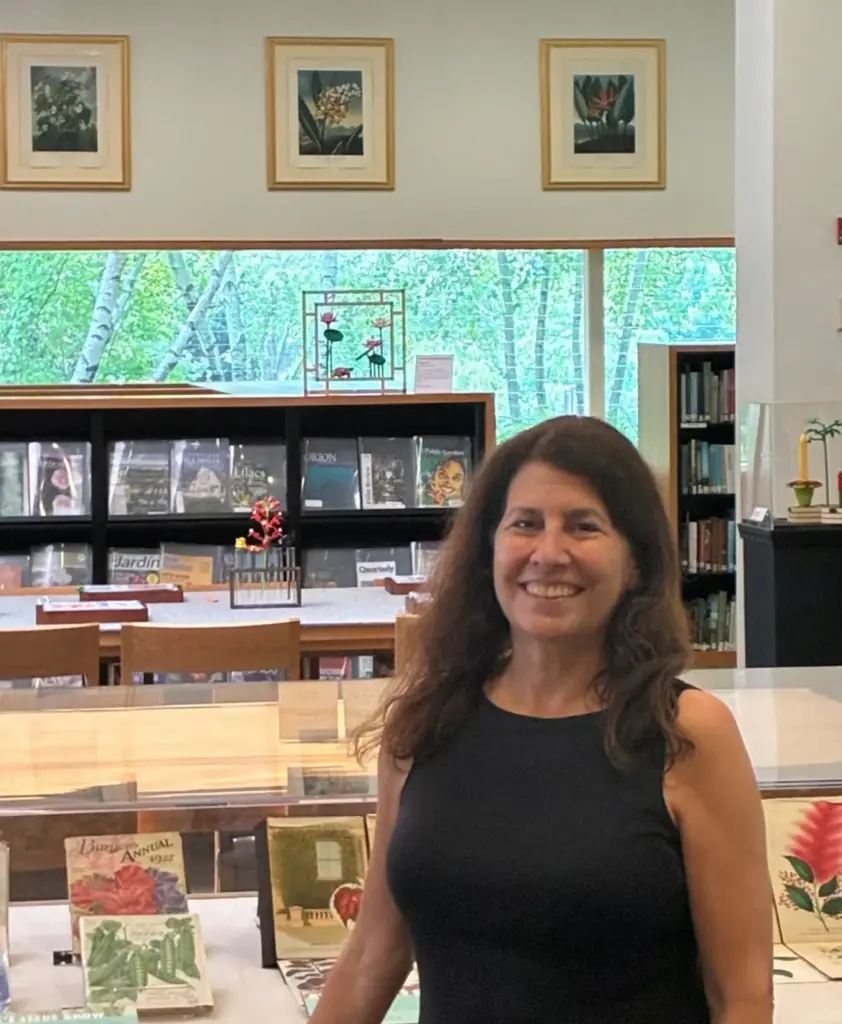
As the global scientific community faces unprecedented ecological challenges, the digital infrastructure underpinning biodiversity research is undergoing a historic evolution. The Biodiversity Heritage Library (BHL)—the world’s largest open-access digital repository for literature and archival materials regarding biodiversity—has officially welcomed two prominent library leaders, Amanda Boczar and Leora Siegel, to newly created positions on the Executive Committee of the BHL Members’ Council.
Formally stepping into their roles in July, Boczar has been appointed as BHL’s inaugural Strategic Development Officer, while Siegel takes on the mantle of the consortium’s first Member-at-Large. These appointments mark a critical turning point for the organization. Following its administrative transition to the Council on Library and Information Resources (CLIR) and its emergence as an independent, community-governed global consortium, BHL is actively fortifying its structural foundations.
The introduction of these specialized roles addresses the growing operational complexities of managing a massive, decentralized digital library network. By bolstering financial oversight, strategic fundraising, and community representation, the BHL Members’ Council is deliberately scaling its administrative capacity to ensure long-term operational sustainability, secure diversified revenue streams, and broaden institutional governance. As these provisional appointments head toward formal ratification at the 2027 BHL Annual Meeting, they signal a proactive, forward-looking era designed to safeguard humanity’s collective knowledge of the natural world for generations to come.
Detailed Chronology: A Transformative Era for BHL Governance
To understand the weight of these appointments, one must trace the recent trajectory of the Biodiversity Heritage Library. Over the past several years, BHL has transitioned from a hosted project model into a fully independent, distributed operational framework. This monumental shift required a reimagining of how the consortium governs itself, manages its shared resources, and sustains its vast technological and archival infrastructure.
- January 2026: The University of South Florida (USF) Libraries officially joined BHL as a member institution, simultaneously establishing itself as a crucial strategic partner for the consortium’s technical infrastructure. This integration brought forward-thinking digital practitioners like Amanda Boczar directly into the fold of BHL’s core developmental operations.
- June 2026: Meeting at a pivotal juncture in the organization’s history, BHL members voted to approve the creation of two unprecedented leadership positions within the Executive Committee: the Strategic Development Officer and the Member-at-Large. Recognizing that BHL’s burgeoning responsibilities required targeted expertise in financial stewardship, grant acquisition, and decentralized representation, the council initiated steps to amend operational capacities. Because formal amendments to the BHL Bylaws necessitate a vote at an Annual Meeting, these positions were established provisionally, pending final ratification at the 2027 BHL Annual Meeting.
- July 2026: Amanda Boczar and Leora Siegel officially assumed their duties on the BHL Executive Committee, instantly expanding the leadership team’s collective skill set, geographic diversity, and institutional breadth.
- August 2026: BHL leaders and community members gathered for the 2026 Annual Meeting—which famously featured memorable moments such as Boczar’s encounter with the Giant Squid specimen at the Natural History Museum in London. During this period, strategic planning writing groups were fully mobilized, with both Boczar and Siegel taking on heavy leadership roles in shaping BHL’s upcoming multi-year strategic roadmap.
Supporting Context & Metrics: The Anatomy of a Global Digital Repository
The necessity for expanded governance capacity cannot be overstated. BHL is not merely a static digital archive; it is a dynamic, globally distributed network connecting natural history libraries, botanical libraries, and research institutions worldwide. It provides open access to centuries of published literature documenting Earth’s biological diversity, serving researchers, taxonomists, conservationists, and historians across the globe.

The Structural Imperatives of Independence
Transitioning to an independent, community-governed global consortium hosted administratively by the Council on Library and Information Resources (CLIR) required BHL to decentralize its operations while tightening its fiscal and strategic alignment. Maintaining millions of digitized pages, high-resolution illustrations, taxonomic name-finding algorithms, and robust metadata requires continuous, predictable funding.
Historically, digital humanities and open-access biodiversity infrastructures have faced precarious funding models, often relying on soft grants and institutional contributions that fluctuate with economic shifts. By introducing an inaugural Strategic Development Officer, BHL is institutionalizing a proactive fundraising apparatus. Boczar’s role is specifically designed to diversify revenue streams, target major philanthropic and governmental grants, and build long-term financial resilience.
Broadening Governance and Representation
Simultaneously, the creation of the Member-at-Large position addresses a long-standing structural gap in BHL governance. BHL’s ecosystem comprises a diverse tier of full Member institutions and Affiliate institutions. Historically, executive leadership pipelines were largely restricted to primary members, potentially sidelining the rich expertise residing within affiliate organizations.
By opening the Member-at-Large position to staff from both Member and Affiliate institutions, the Executive Committee has unlocked a vital governance pathway. This role not only provides vital bandwidth for special projects and operational gap-filling but also serves as a leadership incubator, allowing skilled professionals from across the broader BHL community to gain executive experience and potentially transition into elected leadership roles in the future.
Official Statements: Leadership Perspectives on the Expansion
The integration of Boczar and Siegel has been met with widespread enthusiasm across the international library and archives community. Key figures within the consortium have emphasized how these appointments directly address BHL’s strategic trajectory.

Richard Wragg, Vice Chair of the BHL Executive Committee and Head of Library and Archives at the Natural History Museum in London, underscored the strategic value of the new members:
"We are delighted to welcome Amanda and Leora to the Executive Committee. Leora will be well known to many in the BHL community and, coming from an Affiliate institution, brings both extensive experience and new perspectives to the Committee. Amanda joins us with a wealth of ideas and previous successes in a role that is vital to BHL’s long-term sustainability. With the expansion of the Executive Committee complete, and the addition of two such capable colleagues, we are now well placed to secure a bright and stable future for BHL."
Amanda Boczar reflected on her journey into the BHL network and the significance of her appointment as Strategic Development Officer:
"I have been working with digital collections related to Florida’s environment and natural history since 2020 and have always looked to BHL as a model for global outreach and community. After USF joined BHL as both a member and a strategic partner for its technical infrastructure in January 2026, I knew I wanted to really dive in and make the most of the opportunity. It has been such a privilege to engage with the other members and affiliates, and I am very honored to have been selected for this new role to help sustain the organization for many more years to come."
Leora Siegel, stepping in as the first Member-at-Large following her extensive leadership at the Chicago Botanic Garden’s Lenhardt Library (including co-hosting the landmark 2024 BHL Annual Meeting in Chicago), shared her optimism regarding BHL’s independent future:

"Through collaborations with BHL colleagues over the past 10 years as an Affiliate member, and witnessing BHL’s amazing growth and development, I’m honored to serve on the Executive Committee and contribute as BHL becomes fully independent."
Future Outlook: Building a Sustainable Ecosystem for Open Knowledge
As the Biodiversity Heritage Library looks toward 2027 and beyond, the impact of these executive appointments will be measured through the lens of strategic execution.
- Strategic Planning and Operational Sustainability: Both Boczar and Siegel are actively embedding their expertise into BHL’s current strategic planning efforts. Boczar co-leads the Collection Development and Discovery strategic planning writing group alongside Emily Benton of the University of Illinois Urbana-Champaign. Meanwhile, Siegel contributes her deep operational expertise to the Operational Sustainability writing group. These groups are architecting the framework that will guide BHL through its next decade of digital stewardship.
- Diversified Funding and Resource Mobilization: With Boczar leading development and fundraising initiatives in close coordination with the BHL Secretariat, the consortium is poised to aggressively pursue large-scale grants, philanthropic partnerships, and institutional sponsorships. This fiscal agility is crucial for weathering economic uncertainties and expanding BHL’s digital footprint.
- Democratic Governance and Community Engagement: The successful integration of the Member-at-Large role sets a precedent for inclusive governance. By breaking down barriers between full members and affiliates, BHL is cultivating a deeper, more resilient pool of human capital.
Ultimately, the expansion of the BHL Executive Committee is a testament to the resilience and ambition of the global biodiversity community. By combining visionary digital leadership, robust financial oversight, and inclusive representation, the Biodiversity Heritage Library is securing its place as an indispensable pillar of open science, environmental research, and planetary conservation for generations to come.



