

Executive Overview
Steel is the silent skeleton of modern civilization. It holds up our skyscrapers, bridges our rivers, underpins our transportation networks, and frames our energy grids. Yet, this foundational metal carries a devastating environmental footprint. Traditional steel manufacturing relies heavily on coal, single-handedly generating roughly 7% of the global carbon emissions that drive accelerated climate change—an environmental impact roughly equivalent to the entire global fashion industry.
For decades, decarbonizing this heavyweight sector has proved nearly impossible. The industry operates on notoriously tight profit margins, and its massive blast furnaces have service lives spanning decades. For heavy-industry executives, justifying billions of dollars in unproven, capital-intensive green retrofits is a tough financial pill to swallow. Consequently, environmental progress in steelmaking has stalled, trapped in a paradox where the world desperately needs the material to build a sustainable future, yet cannot produce it cleanly without pricing itself out of the market.
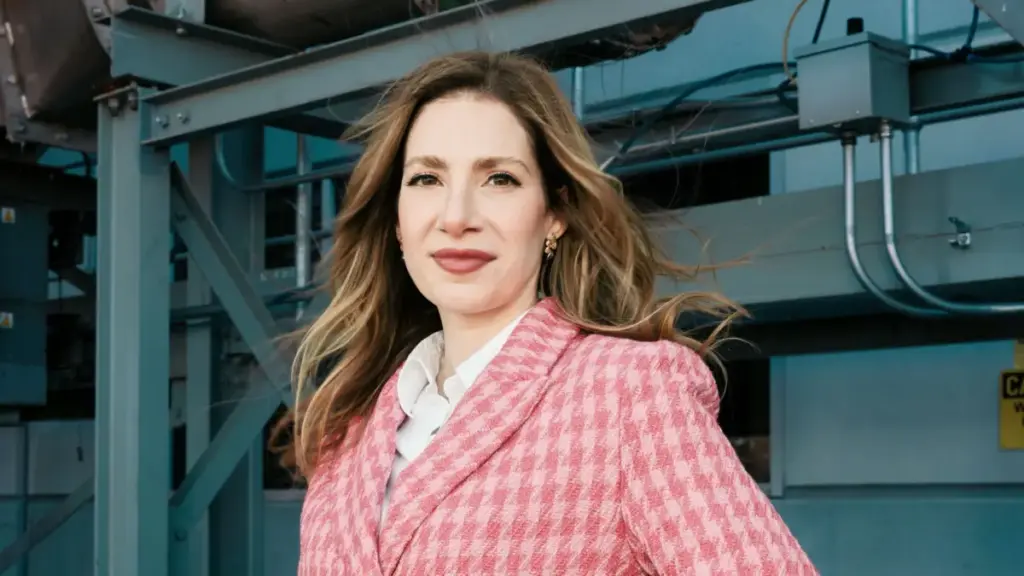
Enter Laureen Meroueh. The founder and CEO of Hertha Metals may have finally cracked the code to cleaning up steel production without triggering inflationary price shocks. Meroueh has invented a radically simplified furnace that streamlines the complex chemistry of the traditional smelting process. Her innovative method transforms raw iron ore into refined liquid steel in a single, streamlined step while swapping dirty coal for cleaner natural gas.
Together, these structural and chemical shifts slash greenhouse gas emissions by at least half while cutting production costs by an impressive 25% compared to business-as-usual steelmaking. If this technology successfully scales, it could completely upend the global heavy-metals market, proving that environmental stewardship and economic profitability do not have to be mutually exclusive.
Detailed Chronology: From Prodigy to Industrial Innovator
Pushing the absolute limits of possibility is not a new venture for Laureen Meroueh; it has been the defining theme of her entire life. Her journey from an unconventional childhood to the helm of a disruptive deep-tech startup illustrates a rare blend of intellectual horsepower and hands-on pragmatism.
Early Foundations and a Passion for Nature
Born a first-generation Lebanese-American into an enterprising family, Meroueh displayed an accelerated intellectual curiosity from a very young age. At just 12 years old, she was accepted into a rigorous pilot program allowing her to bypass traditional secondary education in favor of taking college-level courses through Florida Atlantic University. Immersed early in advanced mathematics and the physical sciences, she quickly gravitated toward engineering, exploring complex topics ranging from high-level calculus to the physics of ocean wave energy.
Despite the intense academic rigor of her youth, Meroueh maintained a deeply tactile connection to the physical world. She spent countless hours surfing the Atlantic swells and sitting high in the branches of trees, fostering a profound, lifelong appreciation for the natural environment. This immersion in nature cultivated an urgent, personal desire to safeguard the planet. "I don’t know how you can’t be drawn toward trying to help protect that," she reflects.
Academic Rigor and Industrial Leadership
That deep-seated passion ultimately guided her professional trajectory. Meroueh pursued her education relentlessly, culminating in a PhD in mechanical engineering from the Massachusetts Institute of Technology (MIT)—one of the world’s premier crucibles for hard-tech innovation. Armed with elite technical training and an entrepreneurial lineage that framed starting a business as a natural, expected life path, she entered the clean-energy sector.
Before striking out on her own, Meroueh honed her leadership skills serving as the head of a green hydrogen startup. This executive experience provided her with a front-row seat to the commercial realities, technological bottlenecks, and financial roadblocks facing the broader clean-tech ecosystem. Recognizing that speculative, zero-carbon technologies were still decades away from economic viability in heavy industry, she chose a more pragmatic route. In 2022, she founded Hertha Metals to tackle the problem from the ground up, setting up operations in Conroe, Texas, just north of Houston.
Speaking on a video call from her office at Hertha’s pilot plant, Meroueh demystifies her leap into entrepreneurship. Growing up surrounded by family members who built businesses made the daunting prospect of launching a deep-tech company feel entirely attainable. "Seeing how common it is to take that jump to start your own business is what made me feel like, ‘This is normal,’" she explains.
Supporting Context & Metrics: The Mechanics of Disruption
To understand the magnitude of Hertha Metals’ innovation, one must examine the archaic machinery and chemistry that currently dominate global steel production.
The Heavyweight Problem with Traditional Steel
Traditional blast furnaces and basic oxygen furnaces are monolithic, multi-stage industrial beasts. They require massive inputs of metallurgical coal not only to generate the extreme heat needed to melt iron ore, but also to act as a chemical reducing agent that strips oxygen molecules away from the ore. This process is energy-intensive, highly inefficient, and releases gigatons of carbon dioxide directly into the atmosphere.
According to Iryna Zenyuk, director of the National Fuel Cell Research Center at the University of California, Irvine, the sheer scale of existing facilities presents a monumental hurdle for sustainability efforts. "There’s huge value in reducing the size of this production system," Zenyuk notes. "They’re massive. They’re inefficient and require a lot of energy input, so even if they just save energy efficiency, that’s already a big step."
Hertha’s Radical Chemical Simplification
Hertha Metals focuses on a fundamental redesign of this chemical and mechanical workflow. Instead of using a multi-step process reliant on coal, Hertha’s proprietary furnace condenses the transformation of iron ore into refined liquid steel into a single, continuous step. Crucially, the process swaps out coal for natural gas.
This dual modification accomplishes what legacy steelmakers have spent billions trying to do: it slashes carbon emissions by at least 50% while simultaneously lowering operating costs by a quarter. By lowering the cost floor, Hertha removes the primary economic objection that corporate executives use to delay green investments.
Lean Capital and Outsized Output
Building industrial hardware is notoriously capital-intensive, often referred to by venture capitalists as the "hard-tech valley of death." Yet, Hertha has achieved remarkable milestones on a shoestring budget compared to its heavily funded peers.
As of July 2026, the company had raised approximately $20 million in total funding—a modest sum in the world of heavy metallurgy. Despite this lean balance sheet, Hertha’s pilot facility in Conroe is already successfully producing one metric ton of high-grade steel per day.
Rajesh Swaminathan, a partner at Khosla Ventures and an investor in Hertha, views this output as a massive technical validation. "One ton per day is a big metric for steel," Swaminathan says. He highlights that Hertha’s capital efficiency is exceptionally rare in the sector, noting that competing clean-steel startups have burned through $50 million or $100 million in venture funding while producing far smaller quantities of usable metal.
Official Statements & Industry Perspectives
Hertha Metals’ pragmatic, bridge-building strategy has generated significant buzz across the venture capital and academic research communities. However, it also represents a distinct philosophical departure from other decarbonization movements in the metals sector.
A Pragmatic Bridge Over an Idealistic Chasm
Many prominent green-steel initiatives center entirely on using green hydrogen—produced via renewable electrolysis—to strip oxygen from iron ore. In theory, this hydrogen-reduction method can eventually eliminate fossil fuels entirely, creating a true zero-carbon manufacturing process.
However, green hydrogen remains wildly expensive, structurally scarce, and economically unviable for widespread commercial deployment today. While other startups wait around for hydrogen markets to mature, Hertha has chosen a radically different tactical posture.
"Hertha’s approach focuses on what it can fix about the steel industry now, as opposed to waiting around for a zero-carbon system," industry analysts point out.
Meroueh is pragmatic about her reliance on natural gas during this transitional phase. She acknowledges that Hertha is content using fossil-fuel-derived natural gas in the near term precisely to keep production costs low and ensure market adoption. However, she emphasizes that the company’s hardware architecture is designed with future flexibility in mind. If and when green hydrogen becomes economically viable and widely available, Hertha’s current plant design can transition to a fully decarbonized system without requiring a costly overhaul of its core equipment.
The Validation of Academic Experts
Independent observers validate this pragmatic blueprint. Iryna Zenyuk emphasizes that incremental efficiency gains and emissions reductions deployed today are far more valuable to the global climate fight than speculative, 100% clean technologies that remain perpetually ten years away from commercial reality.
"The world isn’t going to outgrow its need for steel," Zenyuk notes, echoing Meroueh’s overarching philosophy. In an industrial landscape paralyzed by perfectionism, Hertha’s willingness to embrace a half-measure that actually gets implemented is viewed by many as a masterclass in pragmatic engineering.
Future Outlook: Scaling Up for Global Impact
Having successfully proven its chemistry and mechanics at a one-ton-per-day scale, Hertha Metals is preparing to make the hazardous leap from pilot project to full-scale commercial manufacturing.
The Roadmap to 2030
The company’s immediate strategic focus is the construction of a brand-new, expanded production facility located directly adjacent to its existing pilot plant in Conroe, Texas. This upcoming facility is slated to dramatically scale production, targeting an output of 10,000 metric tons of high-purity steel per year. Company executives project that this facility will reach full operational capacity by the end of 2027.
Looking further ahead, Meroueh has laid out an aggressive multi-phase growth trajectory. By 2030, Hertha plans to bring a third industrial site online, a move that will push the company’s total annual production capacity to 500,000 metric tons.
To put that figure into perspective, the United States alone produces approximately 80 million metric tons of steel annually. Hertha’s 2030 output will represent only a fraction of the domestic market. Yet, industry veterans emphasize that industrial scaling is non-linear; proving the economic and operational viability of a novel furnace design at half a million tons creates an undeniable blueprint for massive, multi-national licensing or replication.
Redefining Industrial Sustainability
For Laureen Meroueh, the overarching mission transcends mere corporate growth or technological novelty. It is about fundamentally rewiring how humanity interacts with the physical planet. As the heavy-industry sector faces mounting regulatory pressure, shifting consumer expectations, and the compounding realities of climate change, the fundamental question facing industrial architects is no longer if production must change, but how.
By asking the foundational question—"How can we be smarter about how we make things so that it’s also not going to harm us in the long term?"—Meroueh has positioned Hertha Metals not just as a business, but as a blueprint for the future of heavy manufacturing. By refusing to let the perfect be the enemy of the good, Hertha is proving that the path to a sustainable industrial future can be paved with pragmatism, profitability, and undeniable mechanical ingenuity.



