

Executive Overview
The waste and recycling industry has historically prioritized tackling landfill fugitive emissions and transitioning conventional diesel fleets to compressed natural gas (CNG). However, a profound transformation is currently underway on America’s streets. Republic Services, one of the nation’s largest waste management and environmental services providers, has established itself as an undeniable vanguard in heavy-duty commercial fleet electrification.
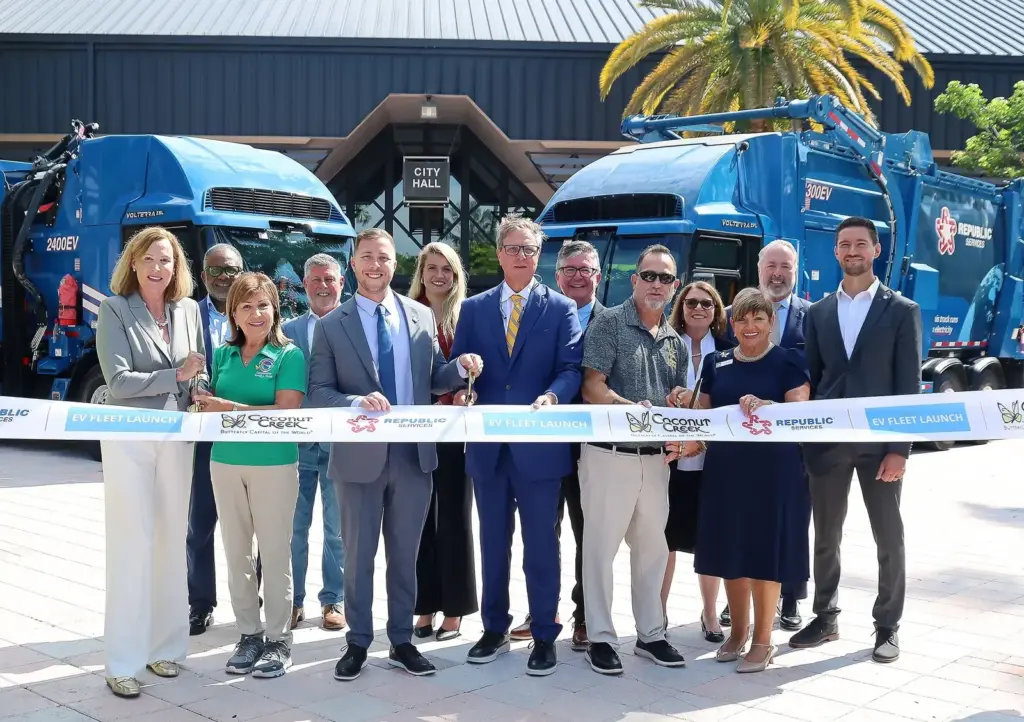
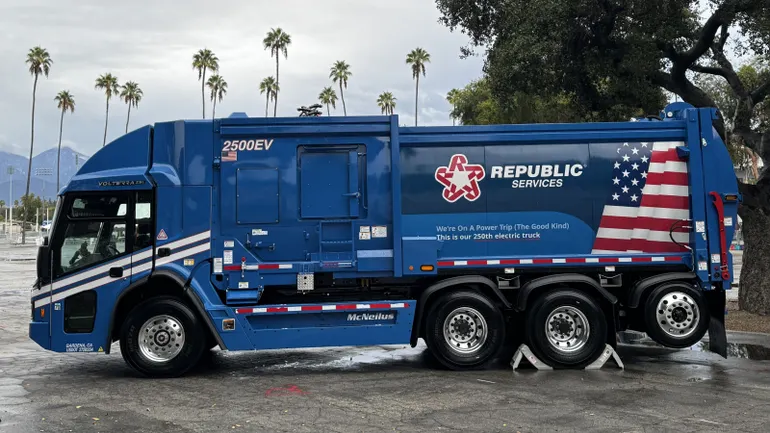
Surpassing a significant corporate milestone, Republic Services has now deployed more than 250 electric collection vehicles (ECVs) across coast-to-coast municipal partnerships—most notably highlighted by a landmark rollout in the city of Coconut Creek, Florida, which established the state’s first fully electric residential recycling and waste collection fleet. Propelled by careful strategic planning, proactive infrastructure deployment, and supportive municipal collaborations, the company is outpacing its initial projections and is comfortably ahead of schedule to meet its aggressive target of operating 300 electric collection vehicles by the close of the year.
While the broader regulatory environment experiences shifts, including recent federal adjustments and state-level policy modifications regarding clean vehicle mandates, Republic Services remains steadfast. Guided by Brett Rogers, the company’s vice president of operations technology, Republic is cementing its status as an industry pacesetter. By treating vehicle electrification not merely as a compliance box to check, but as an operational enhancement driven by driver ergonomics, superior safety technology, and genuine zero-tailpipe-emission sustainability, Republic Services is redefining what it means to run a modern, heavy-duty commercial fleet.
Detailed Chronology: The Evolution of Republic’s EV Strategy
The trajectory of Republic Services’ electric vehicle initiative is the result of years of disciplined, methodical testing and gradual scaling rather than a sudden, speculative jump into unproven technology.
Phase One: Early Pilots and Multi-OEM Collaboration (2019–2022)
Approximately five years ago, Republic Services initiated active testing of electric collection prototypes. Recognizing that heavy-duty vocational trucks face operational demands vastly different from passenger cars or light-duty delivery vans, the company opted for a multi-OEM (Original Equipment Manufacturer) approach. Rather than locking into a single supplier, Republic partnered with major industry heavyweights to evaluate how different platforms handled real-world refuse routes.
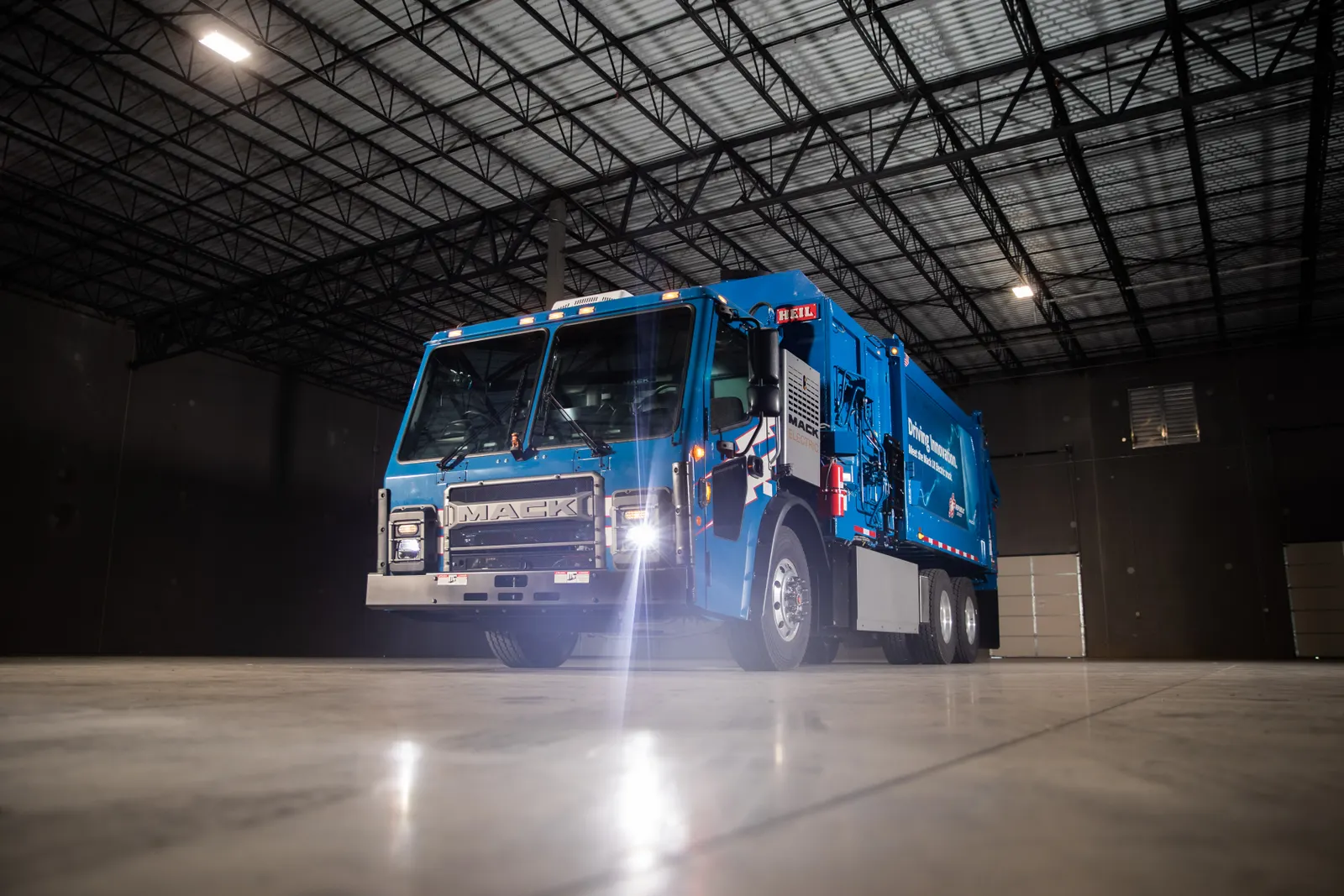
During this foundational window, Republic collaborated closely on early iterations of the Mack LR Electric, while also testing Peterbilt 520 platforms and various vocational chassis. This multi-vendor strategy allowed the operations technology team to gather invaluable telemetry on power draw, thermal management, and drivetrain durability across diverse geographic and climatic environments.
Phase Two: Strategic Infrastructure Prioritization (2022–2024)
A critical pivot in Republic’s timeline occurred when the leadership team established a strict operational rule: "Put the charger before the vehicle." Recognizing that logistical bottlenecks and permitting delays could cripple an ambitious fleet transition, Republic front-loaded its capital expenditures into charging infrastructure.
By actively fostering partnerships with regional electric utilities and investing in site feasibility studies well in advance of vehicle deliveries, Republic successfully sidestepped the common pitfalls plaguing other commercial fleets. The company steadily erected more than 30 dedicated, high-capacity charging stations strategically positioned at operational hubs.
Phase Three: Scaling, Full Integration, and the Volterra Era (2024–Present)
As charging networks stabilized and vehicle telemetry confirmed high route viability, Republic accelerated its deployments. A significant accelerator during this phase was the integration of the McNeilus Volterra ZSL, a vehicle built from the ground up specifically as an electric refuse truck.
The successful rollout culminated in major high-profile deployments, including the August 2026 launch in Coconut Creek, Florida. By surpassing the 250-vehicle threshold and tracking ahead of its 300-vehicle year-end objective, Republic has transitioned from an experimental pilot phase into a standardized, repeatable framework for commercial fleet electrification.
Supporting Context & Metrics: Overcoming Technical and Logistical Hurdles
Transitioning a heavy-duty vocational fleet to electric power requires navigating significant engineering challenges, ranging from gross vehicle weight ratings (GVWR) to thermal impacts on battery range. Republic Services’ operational data sheds light on how these hurdles are systematically managed.
Route Viability and Energy Efficiency
Skeptics within the waste industry have long argued that electric collection trucks lack the continuous power and battery endurance required to complete grueling, multi-stop residential routes without midday recharging. Rogers and his team discovered the exact opposite in practice.
Through rigorous route-auditing—accounting for topography, ambient temperature swings, and payload weights—Republic found that its electric trucks function exceptionally well as one-for-one replacements for internal combustion engine (ICE) vehicles. On a single charge, these vehicles successfully execute full, uninterrupted routes without requiring midday charging stops.
However, operational pragmatism remains central. Republic acknowledges that cold rural environments with exceptionally long route profiles are currently suboptimal for pure battery-electric applications. Consequently, the company deliberately targets moderate climates, urban centers, and suburban corridors where stop-and-go driving conditions maximize regenerative braking efficiency.
Total Integration and Vehicle Architecture
The heavy-duty truck market has historically operated on a fragmented model: a chassis manufacturer builds the frame and drivetrain, and a separate body manufacturer mates the refuse collection body on top. This traditional approach introduces excess weight and mechanical complexity.
Republic’s heavy reliance on the McNeilus Volterra represents a departure from this norm. The Volterra features a fully integrated design where the chassis and body are engineered as a single cohesive unit from inception. By eliminating the heavy internal combustion engine, the vehicle layout achieves several distinct operational advantages:
- Weight Reduction & Payload Optimization: Removing the traditional powertrain saves substantial mass, which translates directly into higher allowable refuse payload capacities.
- Cabin Ergonomics: The engine-free design yields a cab that is roughly 30% larger, featuring significantly reduced noise, minimized cabin vibration, improved climate control, and an optimized workspace that drivers frequently praise as superior to legacy diesel trucks.
Infrastructure Deployment Mechanics
Logistical bottlenecks in permitting and utility grid interconnectivity are frequently cited as insurmountable barriers to fleet electrification. Republic surmounted these barriers by treating infrastructure development as an upstream engineering challenge. By collaborating proactively with municipal planners and local power authorities early in the bidding and contract-renewal phases, Republic ensures that charging depots are fully energized and operational before the physical trucks arrive on site.
Official Statements and Industry Insights
In an in-depth operational review, Brett Rogers elaborated on the strategic philosophy driving Republic Services forward, addressing the realities of alternative fuels, regulatory environments, and multi-fuel fleet management.
The Dual-Fuel and Multi-Fuel Philosophy
While Republic is aggressively expanding its EV footprint, the company does not view electrification as an instantaneous, total eradication of legacy fuels.
"The bulk of our fleet today is diesel, and we have about 20-25% renewable natural gas (RNG) trucks as well," Rogers explained. "To get that next step of emissions reduction, it requires a different type of fuel. That fuel in this situation is electricity… When you really want to get to zero, EV is really the only way today."
Rogers emphasizes that Republic will maintain a dual-fuel transitional posture for the foreseeable future. Having operated successfully with a diesel-and-RNG mix, the company is shifting toward an RNG-and-EV operational model, viewing electric vehicles as the ultimate evolution for tailpipe emission elimination.
Pitching Municipalities: Sustainability Meets Safety
Convincing local government officials to support fleet electrification without triggering dramatic public resistance over rising solid waste collection fees is a delicate balancing act. Republic tackles this hurdle by presenting a multifaceted value proposition to municipal leaders.
- Sustainability Targets: Helping cities visibly achieve their municipal climate action plans and carbon-reduction pledges.
- Advanced Safety Technology: Modern electric chassis are engineered with expansive panoramic windshields, eliminating traditional blind spots. They come standard with advanced driver-assistance systems (ADAS), including 360-degree digital camera arrays, automated forward-braking, blind-spot warning sensors, and lane-keep assist.
- Acoustic Mitigation: Traditional diesel and CNG refuse packers generate considerable noise pollution during early-morning residential pickups. Electric collection vehicles operate with near-silent efficiency, drastically reducing community noise disruption and fostering positive public relations for municipal partners.
Navigating Policy Shifts and Incentives
Recent legislative and regulatory adjustments—such as modifications to federal clean truck goals and fluctuating state-level clean truck mandates—have caused hesitation among some commercial operators. Rogers remains unphased by political and regulatory headwinds, noting that Republic’s strategy is built on a long-term horizon.
"Our strategy is a long-term strategy. We realize incentives are going to come and go. Regulations could come and go, but our strategy is to go electric, and you’ll see us being very consistent with our rollout," Rogers asserted.
While federal incentives may experience cycles of contraction, state-level programs—including California’s Low Carbon Fuel Standard (LCFS) and various localized grants targeting nitrogen oxide ($NO_x$) reductions and charging infrastructure development—remain robust and, in many cases, are expanding. Republic actively leverages this complex matrix of state incentives to accelerate capital recovery and speed up infrastructure deployment.
Future Outlook: Beyond Waste Collection Trucks
Looking ahead, Republic Services’ electrification strategy extends well beyond residential and commercial side-loaders. The company is actively testing and integrating electrification across its broader operational ecosystem.
The Hydrogen Horizon
When questioned about the viability of hydrogen fuel cell electric vehicles (FCEVs)—which are currently being piloted by select competitors for heavy transport—Rogers expressed a measured, realistic perspective. While hydrogen offers rapid refueling times and extended range profiles that could eventually benefit long-haul transfer trucks, its thermodynamic efficiency falls short compared to battery-electric systems.
"The thing with EV is it’s always going to be more efficient… When you start going to hydrogen, you’re starting to use chemical to electrical conversion, and so your efficiencies are always going to be lower," Rogers noted.
Republic intends to monitor hydrogen developments closely as a niche solution for heavy transfer routes, but firmly believes that battery-electric technology—bolstered by anticipated breakthroughs like solid-state batteries offering higher energy density and reduced mass—will dominate municipal waste collection for decades to come.
Electrifying the Support and Supervisor Fleets
Republic’s commitment to electrification is also cascading down to administrative and operational support vehicles. The company has successfully deployed electric supervisor trucks, such as the Ford F-150 Lightning, which have received overwhelmingly positive reviews from field personnel. Additionally, light- and medium-duty stake trucks and box trucks from manufacturers like Mack and Peterbilt are being integrated into regional yards. While not yet deployed at massive scale, these support vehicles provide continuous operational data, ensuring that company-wide electrification expertise deepens organically.
As Republic Services moves past its 250-vehicle milestone and charges toward its year-end goals and beyond, the company serves as a living blueprint for heavy-duty fleet decarbonization. By pairing uncompromising operational discipline with advanced vehicle integration and strong municipal partnerships, Republic proves that the heavy commercial sanitation sector can successfully transition into a cleaner, quieter, and safer electric future.



