As the global population climbs toward projected peaks, the traditional paradigms of agriculture are facing an unprecedented reckoning. For generations, the food system has operated under a strict dichotomy: land farmers cultivate the soil, while commercial fishers and aquafarmers harvest the seas. However, decades of intensive industrial practices—marked by synthetic fertilizers, overfishing, habitat degradation, and heavy chemical inputs—have pushed both terrestrial and marine ecosystems to their ecological limits.
Recognizing that the health of our soils and the vitality of our oceans are inextricably linked, the renowned Rodale Institute has forged a groundbreaking research partnership with GreenWave, a pioneering organization dedicated to regenerative ocean farming. This strategic alliance aims to explore how multi-trophic, ocean-based food production can directly supply valuable, mineral-rich resources back to land-based organic farmers.
At the center of this initiative is kelp: a fast-growing, zero-input marine crop that acts simultaneously as a carbon sink, a marine habitat enhancer, and a powerful agricultural biostimulant. By evaluating the efficacy of kelp-based soil amendments through rigorous, multi-year scientific trials, Rodale Institute and GreenWave are laying the groundwork for a unified regenerative food system. This cooperative model transcends geographical boundaries, offering a scalable blueprint to restore planetary health, combat climate change, and redefine what it means to be a modern farmer.
Detailed Chronology: From Open-Ocean Overfishing to Regenerative Aquaculture
The Crisis of Industrial Seafaring
Long before humanity established settled agricultural communities and began cultivating staple crops, coastal populations gathered nourishment directly from the world’s waters. Today, seafood remains a vital global commodity; according to a 2024 report from the United States Department of Agriculture (USDA) Economic Research Service, the average American consumes roughly 20 pounds of fish and shellfish annually.
To meet this relentless demand, seafood cultivation has scaled up dramatically over recent decades. Data from the National Oceanic and Atmospheric Administration (NOAA) indicates that more than 50 percent of the global seafood supply is now raised on water-based farms. Yet, this rapid industrialization has mirrored the ecological pitfalls of conventional land-based agriculture.
Bren Smith, co-founder and co-executive director of GreenWave, understands this trajectory firsthand. A native of Newfoundland, Canada, Smith began fishing the treacherous waters of the Georges Bank and Grand Banks for tuna and lobster at the tender age of 14. By the 1990s, however, decades of overfishing, habitat destruction, and climate change had drastically depleted wild fish stocks.
Seeking a sustainable livelihood, Smith transitioned into finfish aquaculture, believing that "blue jobs" would revitalize coastal communities. Instead, he made a sobering realization:
"I soon saw that all the mistakes that have been made in farming on land were being repeated in the sea."
Commercial finfish aquaculture had devolved into a resource-intensive, environmentally damaging enterprise. It relied heavily on artificial nutrients, prophylactic antibiotics, and pesticides, resulting in severe water degradation, toxic runoff, and the disruption of local marine ecosystems.
Reinventing the Water Farm
Driven by a vision of restorative production, Smith reimagined aquaculture from the ground up. He reasoned that instead of raising mobile finfish that require heavy feed inputs, aquafarmers should focus on sessile species—crops that remain stationary and feed naturally on existing marine nutrients.
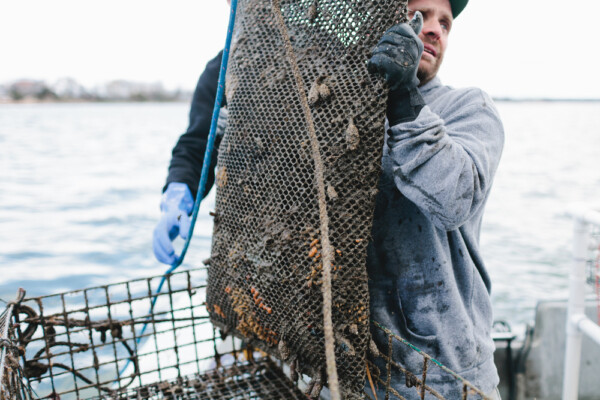
This realization birthed GreenWave’s revolutionary vertical underwater farming model. Designed to withstand severe weather events like hurricanes, these farms feature a low-profile architecture consisting of secure subsurface anchors and floating horizontal ropes near the surface.
"If you look for our farms from the shore, there’s almost nothing to see," Smith notes. "They have very small footprints."
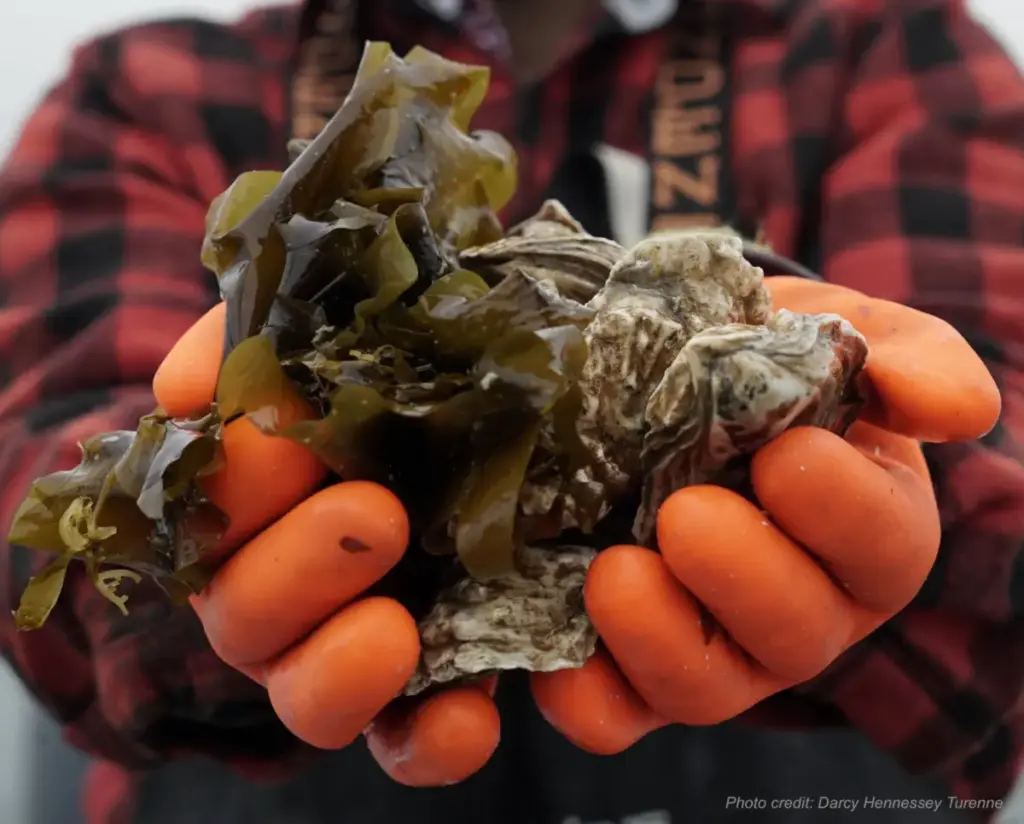
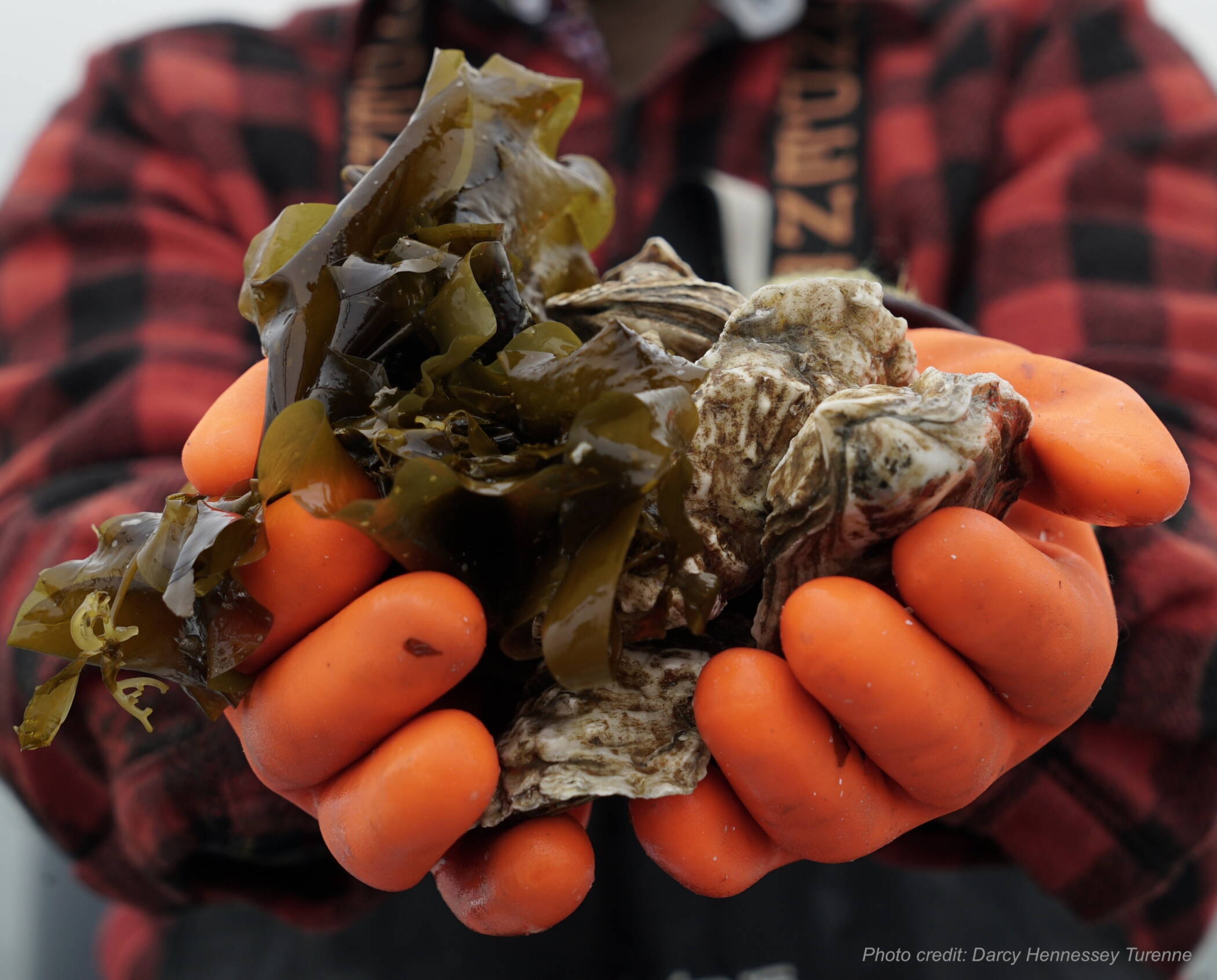
In this vertical matrix, kelp and other seaweeds cascade downward from the surface ropes. Suspended nearby are scallops in hanging nets and mussels housed in mesh socks. At the seafloor level, oysters are safely secured in cages while clams burrow into the natural sand substrate. Because these bivalves are natural filter feeders, they consume abundant, naturally occurring microorganisms—primarily phytoplankton and algae—without requiring external feed, freshwater, or chemical treatments.
Empowering a New Generation of Climate Farmers
Beyond developing an environmentally sound production model, GreenWave has built an open-source framework designed to lower the barriers to entry for coastal workers. The organization provides comprehensive toolkits, nursery operations training, and business planning resources to help establish farmer-owned and farmer-run cooperatives.
Since launching its first regional training program in 2017, GreenWave has educated and supported more than 8,500 ocean farmers, entrepreneurs, and hatchery operators. Through this open-source dissemination of knowledge, the organization has demonstrated that anyone with access to roughly 20 acres of water, a reliable boat, and an initial capital investment of approximately $30,000 can establish a viable regenerative ocean farm.
"We’re no longer pillagers hunting the last fish," Smith declares. "We are a new generation of climate farmers who have joined the fight to restore our planet."
Supporting Context & Metrics: The Science of Sea-to-Soil Synergy
The Ecological Engine of Vertical Ocean Farms
The brilliance of GreenWave’s multi-trophic aquaculture model lies in its closed-loop ecological synergies. Seaweeds such as kelp play an indispensable role in maintaining marine balance. As they grow, they absorb dissolved carbon dioxide from the surrounding water column and release vital oxygen, actively buffering against localized ocean acidification driven by climate change. This chemical stabilization is crucial, as it allows bivalves like oysters, clams, and mussels to build thick, resilient, protective calcium carbonate shells.
In turn, the filter-feeding activities of these shellfish clarify the water column. By removing suspended particulate matter, they increase water transparency, allowing greater light penetration to stimulate accelerated kelp growth.
Zero-Input Abundance
The productivity metrics of these vertical ocean farms challenge conventional notions of agricultural yield. According to GreenWave data, a single acre of vertical ocean farm can yield astonishing volumes of nutrient-dense food:
Shellfish Output: Up to 250,000 individual shellfish (mussels, oysters, clams) every five months.
Kelp Output: Up to 25 tons of mineral-rich marine greens every five months.
Resource Consumption: Zero freshwater, zero synthetic fertilizers, zero artificial feed, and zero arable land use.
The Historical and Scientific Soil Connection
For centuries, coastal agricultural communities recognized the profound fertility locked within the sea. Long before the advent of synthetic, fossil-fuel-derived fertilizers, farmers living near coastlines routinely harvested seaweed to amend their soils, bolster crop resilience, and replenish depleted trace minerals.
With the mid-20th-century boom of industrial agriculture, synthetic nitrogen and phosphorus fertilizers took precedence, ultimately degrading long-term soil microbiome health and driving massive nutrient runoff into watersheds. Organic land farmers reject these synthetic inputs, leaving a persistent need for natural, sustainable soil amendments.
This is where the new research partnership between GreenWave and Rodale Institute enters uncharted territory. Kelp functions as an advanced agricultural "biostimulant." Dr. Andrew Smith, Chief Scientific Officer at Rodale Institute, explains the mechanism:
"We have long known that products harvested from the sea have the power to promote plant growth and plant health. Kelp acts as a biostimulant that activates the beneficial microbes in soil, improves nutrient uptake by crops, and protects plants from stress such as drought."
To validate these biological mechanisms under controlled, empirical conditions, Rodale Institute has initiated a comprehensive, multi-phase research initiative. Headed by soil scientist Dr. Dinesh Panday, the project encompasses a two-year field trial and a one-year greenhouse experiment.
Researchers are actively evaluating how GreenWave’s kelp-based biostimulants impact the nutritional profile, yield, and overall health of specialty crops—specifically lettuce and bell peppers—grown within regenerative organic systems. The trials compare kelp application rates against biochar, a widely accepted organic soil amendment, testing kelp both independently and in synergistic combination with biochar plots.
Official Statements: Perspectives from Institutional Leaders
The partnership bridges two titans of ecological stewardship, uniting decades of soil-science research with cutting-edge marine conservation.
Bren Smith (Co-Founder and Co-Executive Director, GreenWave):
Emphasizing the necessity of rigorous, evidence-based validation for marine agriculture, Smith notes:
"We need credible science to evaluate kelp’s benefits and find out how to get the most from it. We knew we had to have a technically sophisticated partner to dig deep into this. When we were meeting with the research team at Rodale Institute, I knew we were talking farmer to farmer, that we are working toward the same goals."
Dr. Andrew Smith (Chief Scientific Officer, Rodale Institute):
Highlighting the functional overlap between marine and terrestrial husbandry, Dr. Smith emphasizes the biochemical advantages of marine amendments in organic systems, pointing out their capacity to stimulate deep soil microbial activity and enhance abiotic stress tolerance in crops.
Dr. Dinesh Panday (Lead Soil Scientist, Rodale Institute):
Discussing the ongoing empirical analysis slated for completion in 2027, Dr. Panday states:
"Kelp has many trace minerals that support healthy plant growth. We are studying its value for specialty crops in regenerative organic systems."
Future Outlook: A Unified Food System
As Rodale Institute and GreenWave press forward with their collaborative field trials, the implications of their work extend far beyond academic curiosity. The anticipated release of Dr. Panday’s research findings in 2027 is expected to provide the definitive empirical data needed by organic crop producers to integrate marine-derived biostimulants into standard regenerative practices.
Furthermore, this partnership underscores a fundamental shift in dietary consciousness. Consumers navigating the complexities of personal and planetary health can look to resources like the Monterey Bay Aquarium Seafood Watch program, which features a "Super Green List" highlighting nutrient-dense, ecologically restorative foods. Prominently featured on this list are the core outputs of the GreenWave farming model: mussels, clams, oysters, and kelp.
Ultimately, the alliance between Rodale Institute and GreenWave signals the dawn of a truly integrated agricultural epoch. By recognizing that land and sea are not isolated domains, but rather two halves of a single, interconnected biosphere, these organizations are helping construct a resilient food system. In this emerging paradigm, producers across both landscapes share a unified mission: safeguarding the natural resources upon which all life depends, ensuring health, abundance, and climate resilience for generations to come.