

Executive Overview
In a monumental victory for marine conservation, the Colombian government officially expanded the Acandí, Playón and Playona Wildlife Sanctuary by nearly 63,000 hectares in May 2026. This sweeping environmental decree brings the total protected area to more than 89,000 hectares, extending state-level ecological protection to the region’s coral reefs for the very first time.
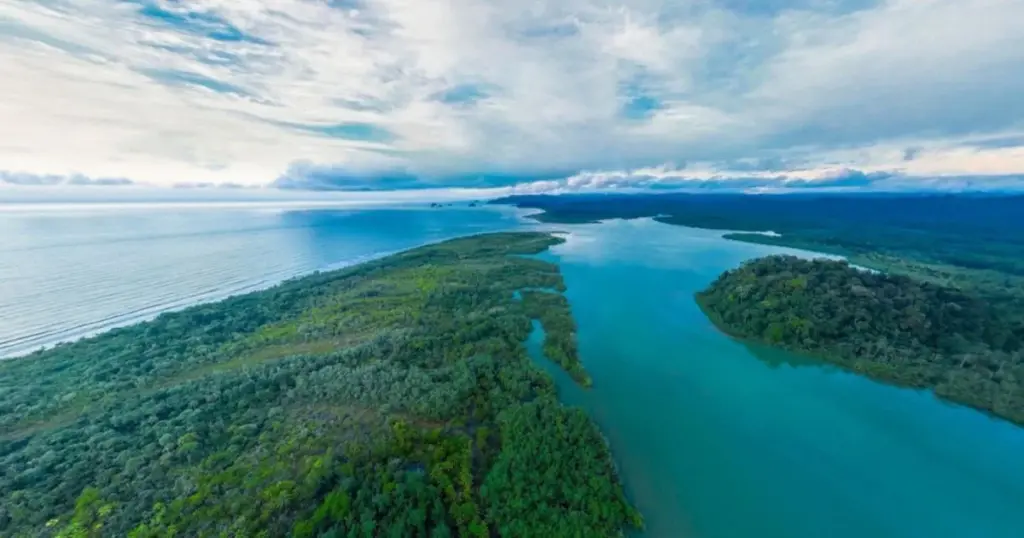
Located in the northernmost stretch of the department of Chocó, where the South American continent meets the Caribbean Sea, this maritime frontier has long been recognized as a biological crucible. For nearly two decades, local grassroots leadership, persistent scientific monitoring, and international advocacy have converged to safeguard these fragile aquatic habitats. The latest territorial expansion completes a "triple protection" framework initiated years prior, cementing the Capurganá and Cabo Tiburón Hope Spot—designated by the global marine conservation foundation Mission Blue—as a global model for community-driven ocean stewardship.
By integrating nesting beaches, vibrant coral ecosystems, and critical pelagic pathways into a unified legal sanctuary, Colombia has not only secured a vital refuge for four endangered species of sea turtles and recovering artisanal fisheries, but has also proven that grassroots advocacy can successfully shape national public policy. This report explores the chronological development of the sanctuary, the socio-ecological metrics driving its protection, the frontline leaders behind the movement, and the enduring global implications of this Caribbean milestone.
Detailed Chronology: From Grassroots Resolve to National Policy
The legal safeguarding of the northern Chocó coastline did not happen overnight. It is the product of an arduous, eighteen-year campaign driven by local fishers, international marine organizations, community groups, and dedicated scientists who recognized that the rich waters of Capurganá and Cabo Tiburón were dangerously vulnerable to unchecked environmental pressures.
2008–2015: The Foundation of Citizen Science and Local Advocacy
The modern conservation narrative in northern Chocó began in 2008. Long before government agencies stepped in with sweeping environmental decrees, local communities—working alongside regional organizations—initiated systematic citizen science monitoring programs. Recognizing the precipitous declines in marine life globally, these early champions began tracking reef health, documenting the slow recovery of artisanal fisheries, and recording population trends of critically endangered leatherback sea turtles (Dermochelys coriacea).
These initial years were defined by grassroots resilience. Local fishers transitioned from resource-extractors to data collectors, collaborating with marine biologists to build an irrefutable baseline of evidence. They proved that the coral reefs of Capurganá and Cabo Tiburón were not merely surviving, but actively demonstrating remarkable resilience in the face of warming global sea temperatures and localized degradation.
Partnerships and the Hope Spot Designation
As data accumulated, international attention gravitated toward the region. Recognizing the exceptional ecological value of these resilient reefs and their status as a critical nursery for threatened marine life, Mission Blue—in close collaboration with the local non-governmental organization Foundation ICRI Colombia—officially designated Capurganá and Cabo Tiburón as a global Hope Spot.
This designation served as a powerful catalyst. It elevated a localized struggle onto the international stage, drawing global eyes, financial resources, and scientific prestige to the remote shores of Chocó. It provided local leaders with the institutional backing needed to demand formal, federal recognition for waters that had sustained coastal communities for generations.
2024: Achieving Biosphere Reserve Status
The momentum reached a significant international milestone in 2024 when the Man and the Biosphere (MAB) Programme formally declared the Darién North of Chocó a Marine Biosphere Reserve. This prestigious UNESCO-backed designation acknowledged the profound interconnection between the terrestrial forests, coastal mangroves, and marine ecosystems of the region. It signaled to the international community that the Darién Gap was not merely a terrestrial wilderness, but a seamless biocultural landscape requiring holistic, cross-border, and multi-layered management frameworks.
However, despite the prestige of the Biosphere Reserve status, a critical regulatory gap remained: while the terrestrial and immediate coastal nesting zones enjoyed various degrees of protection, the offshore coral reefs—the very engines of marine biodiversity in the region—remained legally exposed to commercial exploitation and unmanaged impacts.
May 2026: The Triple Protection Completed
The culmination of nearly two decades of advocacy arrived in May 2026. The Colombian government formally decreed the expansion of the Acandí, Playón and Playona Wildlife Sanctuary by nearly 63,000 hectares.
This historic legislative act fused past conservation victories into a unified whole, completing the "triple protection" framework:
- The Local Foundation: Sustained community monitoring and civil advocacy dating back to 2008.
- The International Recognition: The 2024 UNESCO Marine Biosphere Reserve declaration for the Darién North of Chocó.
- The National Enforcement: The 2026 sanctuary expansion integrating offshore coral reefs directly into Colombia’s National Parks System.
By stretching the sanctuary’s boundaries to encompass more than 89,000 hectares, the decree bridged the divide between land and sea, establishing a comprehensive, legally binding fortress for marine biodiversity.
Supporting Context, Ecosystem Metrics, and Biodiversity
To fully appreciate the gravity of the May 2026 expansion, one must examine the extraordinary ecological assets sheltered within the Capurganá and Cabo Tiburón Hope Spot. Situated in the southern Caribbean, this marine corridor acts as an ecological crossroads, blending nutrient-rich upwellings with sheltered bays that foster an astonishing array of marine life.
Coral Reefs of Exceptional Resilience
Coral reefs worldwide are currently reeling from the devastating impacts of climate change, marine heatwaves, ocean acidification, and destructive coastal development. The reefs of northern Chocó, however, have emerged as defiant exceptions to this global trend.
Studies conducted by the International Coral Reef Observatory (ICRO) and local researchers indicate that these reefs possess an intrinsic, high-level resilience to thermal stress. This resilience is attributed to unique hydrographic conditions, strong local currents, and the absence of massive industrial runoff. The 2026 sanctuary expansion ensures that these genetic reservoirs of resilient coral species are shielded from destructive anchoring, unsustainable fishing practices, and commercial dredging, allowing them to serve as natural seed banks for the wider Caribbean.
A Sanctuary for Threatened Marine Life
Beyond the coral formations, the expanded sanctuary is a critical haven for megafauna. Most notably, the coastal waters and beaches of Acandí, Playón, and Playona represent one of the most important nesting grounds in the entire Caribbean basin for four distinct species of sea turtles:
- Leatherback Turtles (Dermochelys coriacea): The largest of all living reptiles, leatherbacks rely heavily on the dark, undisturbed sandy beaches of the sanctuary to lay their eggs. Long-term monitoring has documented encouraging stabilization and positive population trends for this critically endangered species within the protected zone.
- Hawksbill Turtles (Eretmochelys imbricata): Heavily dependent on the health of coral reefs for their primary diet of sponges, hawksbills find both abundant foraging grounds in the newly protected reefs and secure nesting sites along the shore.
- Green Turtles (Chelonia mydas): These gentle herbivores graze extensively on offshore seagrass meadows, playing a vital role in maintaining the health of benthic ecosystems.
- Loggerhead Turtles (Caretta caretta): Known for their powerful jaws adapted to crushing hard-shelled prey like conch and crabs, loggerheads utilize the deeper marine corridors encompassed by the sanctuary expansion.
Revitalizing Artisanal Fisheries
A common point of tension in marine conservation is the perceived conflict between environmental protection and the livelihoods of local fishers. In the case of the Capurganá and Cabo Tiburón Hope Spot, however, the sanctuary expansion has proven to be an economic lifeline for traditional communities.
Decades of localized management and the restriction of destructive industrial fishing methods have allowed fish stocks to rebound significantly. Artisanal fishers operating within the region report healthier catch sizes, stabilized fish populations, and improved long-term economic security. By safeguarding the coral reefs—which act as nurseries, feeding grounds, and protective barriers for juvenile fish—the sanctuary directly underpins the sustainable blue economy of coastal villages that have fished these waters for generations.
Official Statements and Frontline Leadership
Behind every major conservation triumph are tireless advocates who bridge the gap between scientific reality and political will. The success in northern Chocó is deeply intertwined with the visionary leadership of local scientists, community organizers, and institutional partners.
At the heart of this progress stands Nohora Galvis, Mission Blue Hope Spot Champion and the current Director of the International Coral Reef Observatory (ICRO). For years, Galvis has operated on the frontline of Colombian marine conservation, weaving together disparate threads of society to build an unassailable case for federal protection.
"This expansion is the realization of a dream shared by fishers, scientists, and local communities who refused to watch their marine heritage degrade," notes Galvis. "For nearly twenty years, our collective focus was on protecting the beaches where sea turtles nest. But we always knew that half a defense was not enough. To truly save these species, we had to look beneath the waves and secure their marine homes—the coral reefs. Today, that vision is a reality."
Galvis’s work exemplifies the collaborative ethos championed by Mission Blue. By actively engaging local fishers, recreational divers, academic institutions, community-based organizations, and regional government partners, ICRO transformed abstract scientific data into a compelling narrative of urgency and hope.
In a joint statement celebrating the 2026 decree, Mission Blue praised the Colombian government’s decisive action, framing it as a textbook example of how Hope Spots are designed to function globally:
"Hope Spots are not merely lines drawn on a map; they are catalysts for systemic change," the organization stated. "They elevate local conservation champions, bridge rigorous scientific research with impassioned community action, and translate a shared, grassroots vision for ocean protection into enduring, legally binding national policy."
Future Outlook: Challenges and Opportunities Ahead
While the May 2026 expansion of the Acandí, Playón and Playona Wildlife Sanctuary is a monumental triumph, conservationists and policymakers emphasize that the true work of protecting more than 89,000 hectares of sensitive marine habitat is only just beginning.
Enforcement, Monitoring, and Surveillance
The immediate challenge facing the Colombian government, National Parks System, and local communities is effective enforcement. Designating an offshore area of nearly 63,000 additional hectares on paper is a critical first step, but preventing illegal trawling, unmanaged tourism, and poaching requires robust, continuous surveillance.
Moving forward, the integration of community-based surveillance—empowering local fishers as wardens of the sea—combined with modern satellite tracking and remote sensing technologies will be essential to ensure that the sanctuary’s boundaries are respected by commercial interests.
Climate Change Adaptation
Even with strict legal protections in place, the overarching threat of global climate change looms large over the Caribbean Sea. Rising sea surface temperatures, intensifying tropical storms, and shifting ocean chemistry pose persistent risks to coral calcification and marine biodiversity.
However, the proven resilience of the Capurganá and Cabo Tiburón reefs offers a glimmer of hope. Scientists plan to utilize the sanctuary as a living laboratory to study natural thermal adaptation, potentially unlocking crucial insights that can be applied to degraded reef systems elsewhere in the Caribbean and around the globe.
A Blueprint for Global Replication
Perhaps the most enduring legacy of the northern Chocó initiative is its replicability. In an era when international bodies are pushing for aggressive global targets—such as protecting 30% of the planet’s land and ocean by 2030 (the 30×30 initiative)—the Chocó model demonstrates precisely how those ambitious targets can be achieved from the bottom up.
By proving that local communities can initiate monitoring, partner with global NGOs like Mission Blue and ICRI Colombia, secure international accolades like the UNESCO Biosphere Reserve designation, and ultimately compel national governments to enact sweeping environmental decrees, northern Chocó has written a masterclass in modern conservation.
As the waters of Capurganá and Cabo Tiburón flow undisturbed past healthy coral gardens and safe nesting shores, they carry a profound message across the globe: Acting locally can, indeed, create global impact. The Caribbean’s emerald edge is secured—and in its preservation, the international marine community finds renewed hope for the blue heart of our planet.



