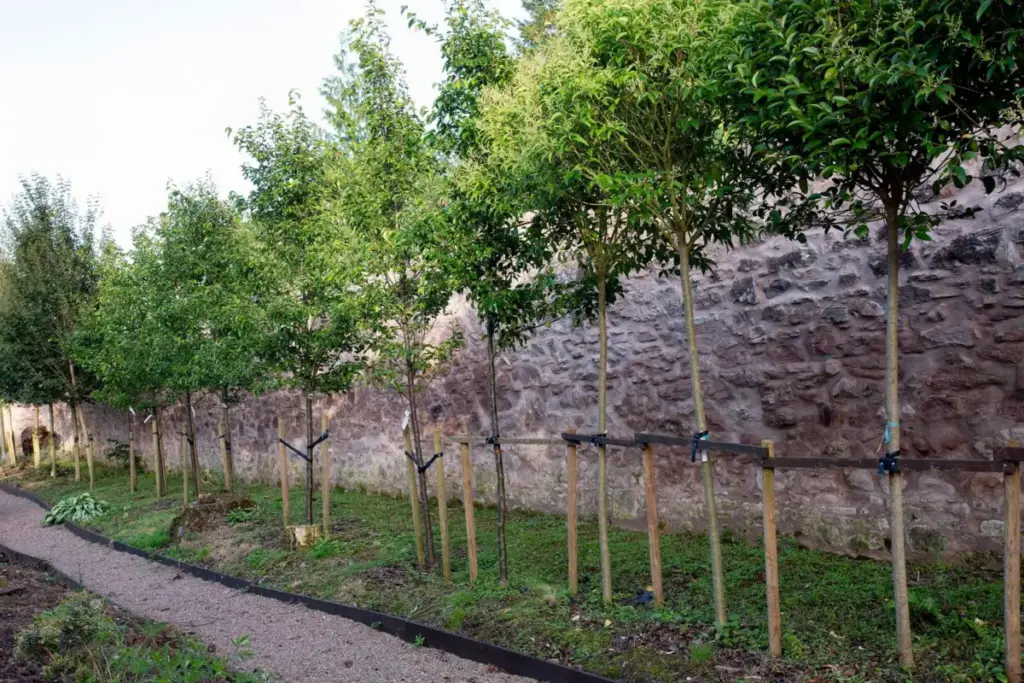
In an era defined by high-density housing, urban expansion, and increasingly overlooked outdoor spaces, the traditional suburban or rural garden is facing a profound privacy crisis. Nosy neighbors, looming second-story windows, unsightly utility infrastructure, and disruptive urban backdrops have transformed many once-peaceful yards into exposed fishbowls. While architectural remedies such as wooden fencing, brick walls, and steel panels offer an immediate structural fix, they frequently fail to soften the environment, can disrupt local microclimates, and often clash with the natural beauty of the landscape.
The antidote to this modern spatial intrusion lies not in hard construction, but in living architecture. Trees, shrubs, and climbers offer an organic, dynamic, and ecologically rich alternative for boundary management. Beyond merely shielding a patio or blocking a second-story view, botanical screens deliver year-round environmental value: they filter particulate pollution, absorb urban noise, mitigate wind shear, and provide vital habitats for local biodiversity.
This comprehensive guide investigates 37 of the finest trees, shrubs, and climbers available to property owners today. Drawing upon professional horticultural insights, performance metrics, and aesthetic evaluations, we explore the definitive botanical catalog for transforming an exposed boundary into a private, flourishing sanctuary.
Detailed Chronology and Selection Methodology
Selecting the right plant for privacy requires moving past immediate visual gratification to understand establishment timelines, growth habits, and structural persistence. Unlike a fence that is instantly complete upon installation, a living screen undergoes a precise physiological chronology:
Phase 1: Establishment (Years 1–3): The critical period where root systems anchor into the soil. During this stage, deep regular watering and structural staking or training are paramount. Growth rates vary wildly, from rapid climbers like Trachelospermum jasminoides that can cover a trellis in a single season to slow-growing structural sentinels like Taxus baccata.
Phase 2: Maturation & Canopy Densification (Years 4–10): The transition from individual plants to an integrated, interlocking barrier. Branches thicken, side-shoots merge, and the plant begins actively fulfilling its privacy rating. Regular maintenance—such as light pruning, hedge trimming, or tying in climbers—is introduced during this epoch to direct vertical and lateral density.
Phase 3: Long-Term Maturity (Decades 1+): The realization of ultimate height and spread. Mature specimens establish permanent microclimates, support complex multi-tier ecosystems, and offer unwavering seasonal structure.
To assist property owners in navigating this living inventory, the following catalog evaluates each selection across vital performance metrics, including plant type, privacy efficacy (rated out of 5), aesthetic value (rated out of 5), and spatial footprint.
The Botanical Catalog: Trees, Shrubs, and Climbers for Complete Seclusion
1. Italian Cypress (Cupressus sempervirens)
A quintessential architectural statement, the Italian cypress is the ultimate tool for achieving vertical drama without sacrificing ground space. Its columnar form fits narrow boundary corridors while pushing upward to heights of up to 15 meters within two decades.
Type: Tree | Privacy Rating: 4/5 | Beauty Rating: 4/5 | Dimensions: 15m x 2.5m (at 20 years)
2. Holly (Ilex aquifolium)
For an impenetrable, secure boundary, the classic holly provides dense, prickly foliage combined with glossy evergreen leaves and bright red winter berries. Highly prized by local wildlife for winter shelter and forage, it thrives in both sun and deep shade.
Type: Tree/Shrub | Privacy Rating: 4/5 | Beauty Rating: 3/5 | Dimensions: 15m x 4–8m (variable by variety)
3. Photinia × fraseri ‘Red Robin’
Famous for its brilliant crimson new growth, this vigorous evergreen shrub or small tree forms an exceptionally thick visual barrier. It responds brilliantly to urban conditions and hard pruning, maintaining a vibrant splash of color throughout the seasons.
A powerhouse of resilience, the holm oak features leathery, dark green foliage capable of withstanding salt-laden coastal gales and heavy city pollution. It offers a permanent green backdrop and acts as a formidable windbreak. (Note: Harmful to pets if ingested; invasive potential near ancient woodlands).
Type: Tree | Privacy Rating: 5/5 | Beauty Rating: 3/5 | Dimensions: 8m x 6m (at 20 years)
5. Cherry Laurel (Prunus laurocerasus)
Rapidly establishing a lush, impenetrable screen, cherry laurel is the stalwart of quick privacy. It features large, glossy leaves and upright white flower spikes in spring. (Note: Toxic to humans and pets; handle with protective gloves).
With an upright habit and narrow profile, this versatile evergreen is custom-built for tight urban spaces. Its dense foliage blocks unwanted sightlines, while autumn brings elegant clusters of white flowers. (Note: Toxic if ingested).
Offering ornamental brilliance alongside year-round screening, the strawberry tree features rough reddish bark, dark green foliage, and the unique simultaneous display of white bell-shaped flowers and ripening red fruits in autumn.
For damp, shaded corners where typical boundary plants fail, the architectural fronds of the tree fern create a lush, tropical enclave, providing deep dappled shade for intimate seating zones.
Type: Tree Fern | Privacy Rating: 3/5 | Beauty Rating: 5/5 | Dimensions: 4m x 4m
9. Cotoneaster frigidus ‘Cornubia’
A semi-evergreen multi-tasker whose arching branches provide an informal, wildlife-friendly screen. It boasts white summer flowers, brilliant autumn berries for avian visitors, and bronze-tinted winter leaves.
Type: Shrub/Small Tree | Privacy Rating: 3/5 | Beauty Rating: 4/5 | Dimensions: 6m x 4m (at 20 years)
10. Hornbeam (Carpinus betulus)
A native masterpiece ideal for pleaching or formal hedging. Its apple-green summer leaves transition to golden bronze in autumn, with many dead leaves holding onto the branches through winter to maintain privacy.
Type: Tree | Privacy Rating: 4/5 | Beauty Rating: 4/5 | Dimensions: 10m x 6m (at 20 years)
Pyramidal and intensely neat, this urban-tolerant tree leafs out exceptionally early in spring and retains its foliage late into autumn, showcasing brilliant red and purple fall coloration alongside white spring blossoms.
Type: Tree | Privacy Rating: 3/5 | Beauty Rating: 4/5 | Dimensions: 5m x 3m (at 20 years)
12. Silver Birch (Betula pendula)
For privacy without heavy shading, the silver birch delivers an airy, fluttering canopy and iconic white winter bark. Planting them in tight groves creates a tranquil, naturalistic woodland screen.
Type: Tree | Privacy Rating: 3/5 | Beauty Rating: 4/5 | Dimensions: 25m x 10m
13. Rowan (Sorbus aucuparia)
Also known as mountain ash, its feathery foliage and slender silhouette slot easily into narrow boundaries, offering creamy spring blossoms and heavy clusters of autumn berries loved by thrushes.
Type: Tree | Privacy Rating: 2/5 | Beauty Rating: 3/5 | Dimensions: 15m x 7m
14. Field Maple (Acer campestre)
A native British tree featuring a dense, lobed crown that handles urban pollution and varied soils with ease. Its golden-yellow autumn canopy provides stunning seasonal color for medium-to-large boundaries.
Type: Tree | Privacy Rating: 3/5 | Beauty Rating: 4/5 | Dimensions: 15m x 8m
15. Snowy Mespilus (Amelanchier lamarckii)
A delightful small tree offering multi-season interest: a froth of star-shaped white spring blossoms, coppery pink young foliage, summer dark berries, and fiery autumn reds.
Type: Tree | Privacy Rating: 3/5 | Beauty Rating: 4/5 | Dimensions: 12m x 4m
16. Hawthorn (Crataegus monogyna)
An extraordinarily tough native plant that functions as a clipped hedge, barrier shrub, or small tree. Its thorny stems deter intruders while supporting hundreds of insect and bird species.
Valued for its dense, rounded crown, the crab apple delivers heavy spring pollinator feasts, reliable summer leafy cover, and a rich display of autumn fruits for garden birds.
Type: Tree | Privacy Rating: 4/5 | Beauty Rating: 3/5 | Dimensions: 10m x 5m
18. Golden Rain Tree (Koelreuteria paniculata)
A striking feature tree and screen rolled into one, featuring pink-bronze spring foliage, brilliant yellow summer panicles, and lantern-like autumn seed pods.
Type: Tree | Privacy Rating: 3/5 | Beauty Rating: 4/5 | Dimensions: 10m x 10m
19. Yew (Taxus baccata)
The timeless king of formal topiary and hedging. Slow-growing yet virtually immortal, yew regenerates effortlessly from old wood, forming an impenetrable, dark green fortification. (Note: Highly toxic).
Type: Tree | Privacy Rating: 5/5 | Beauty Rating: 3/5 | Dimensions: 20m x 10m
Deep purple, glossy leaves create a dramatic, dense screen suitable for substantial estates. It accepts hard clipping while maintaining deep structural presence throughout the landscape.
Type: Tree | Privacy Rating: 4/5 | Beauty Rating: 3/5 | Dimensions: 25m x 15m
21. Garden Privet (Ligustrum ovalifolium)
A fast-growing, semi-evergreen classic that forms a robust green boundary. It takes rigorous shaping in stride and thrives under challenging urban and coastal wind conditions.
Armed with thorny branches and colorful foliage, barberries provide impenetrable physical security alongside bright spring blooms and autumn berries.
Type: Shrub | Privacy Rating: 4/5 | Beauty Rating: 3/5 | Dimensions: Variable by species
23. Firethorn (Pyracantha)
An evergreen champion for boundary security. Its vicious thorns, creamy summer flowers, and heavy winter berry loads make it a fortress that feeds winter thrushes.
Delivering glossy, dark green evergreen screens for acidic, shaded soils, camellias burst into lavish, rose-like double blooms during the early spring months.
A resilient, shade-tolerant shrub offering continuous green cover, flat clusters of winter-to-spring pink-white blossoms, and deep blue-black autumn berries.
Ranging from deciduous shrub varieties like Hydrangea paniculata to the evergreen climbing species Hydrangea seemannii, these plants offer lush summer foliage and massive, long-lasting flower heads.
Compact and intensely fragrant, this shade-loving evergreen is ideal for small front gardens, low boundary hedges, or underplanting beneath taller canopy trees.
Known as the lily-of-the-valley shrub, it commands attention with vibrant red or bronze spring foliage flushes, cascading white bell flowers, and an affinity for sheltered, acidic soil.
An exceptional shade-dweller that tolerates dry soils under deep tree canopies, rewarding the winter gardener with intensely fragrant, tiny white flowers and year-round glossy foliage.
A stellar evergreen climber that quickly transforms bare brick walls and wooden fences into fragrant, star-flowered green tapestries with year-round density.
Unrivaled in its adaptability, ivy conquers deep north-facing shade and harsh sun alike, generating instant vertical coverage and crucial wildlife habitats. (Note: Skin allergen).
Featuring diverse species like Clematis tangutica and Clematis alpina, these vigorous climbers scale trellises and pergolas to deliver sensational seasonal floral displays.
A classic twining climber famous for its heady evening scent and tubular summer flowers that act as a magnet for nocturnal pollinators and garden birds.
A heavyweight deciduous climber capable of turning pergolas and house facades into breathtaking spring cascades of scented purple or white racemes. Requires dedicated structural support and annual pruning.
36. Chinese Virginia Creeper (Parthenocissus henryana)
Easier to manage than its invasive American cousin, this self-clinging climber features velvety green-and-silver leaves that blaze fiery crimson before dropping in winter.
Supporting Context & Metrics: Environmental Impact and Urban Integration
Beyond the immediate psychological comfort of privacy, implementing a living screen yields measurable ecological dividends. According to urban forestry research, dense evergreen barriers like Taxus baccata and Quercus ilex reduce particulate matter (PM2.5 and PM10) concentrations in adjacent outdoor living spaces by up to 35%. Furthermore, multi-stemmed trees and dense shrubs function as acoustic dampeners, absorbing mid-to-high frequency urban noises such as traffic hum and pedestrian chatter.
Comparative Performance Matrix
Plant Category
Average Establishment Time
Winter Privacy Efficacy
Wildlife Value
Urban Pollution Tolerance
Evergreen Conifers (C. sempervirens)
Moderate (3-5 Years)
Maximum (5/5)
Moderate
High
Broadleaf Evergreens (P. laurocerasus)
Fast (1-3 Years)
Maximum (5/5)
High
High
Deciduous Hedging (C. betulus)
Moderate (3-5 Years)
Moderate-High (3/5)*
Very High
Moderate
Vigorous Climbers (T. jasminoides)
Fast (1-2 Years)
High (4/5)
High
High
*Note: Species like Hornbeam and Beech retain dead brown leaves through winter (marcescence), providing surprising out-of-season screening.
Official Statements and Horticultural Guidance
Horticultural authorities and landscape architects consistently emphasize the importance of site-appropriate selection over aggressive fast-growing shortcuts.
"When designing for privacy, homeowners frequently make the mistake of planting species that outgrow their space within five years," notes senior arboreal consultant Dr. Aris Thorne. "The key to long-term success is matching the root vigor and mature canopy spread to the scale of the property. A living screen should be an asset, not a perpetual maintenance burden or a neighborly dispute waiting to happen."
Furthermore, local environmental agencies urge gardeners to remain mindful of invasive potential and toxicity when planting near boundary lines shared with livestock, pets, or public footpaths. Species such as Prunus laurocerasus and Taxus baccata require mindful positioning and regular waste disposal management to ensure safety.
Future Outlook: The Resilient Garden of Tomorrow
As climate volatility increases—bringing prolonged summer droughts interspersed with heavy winter precipitation—the criteria for selecting garden privacy screens are shifting. Resilient, deep-rooting native trees like Acer campestre and tough, pollution-tolerant exotics like Quercus ilex are projected to form the backbone of sustainable suburban landscape design over the coming decades.
Property owners investing in living screens today are not merely shielding themselves from immediate architectural eyesores; they are constructing self-healing ecosystems that adapt to climate stressors, sequester carbon, and foster local biodiversity. By carefully pairing the structural traits of trees, shrubs, and climbers with the specific microclimatic demands of their gardens, landowners can permanently reclaim their outdoor sanctuaries with elegance, authority, and enduring natural grace.