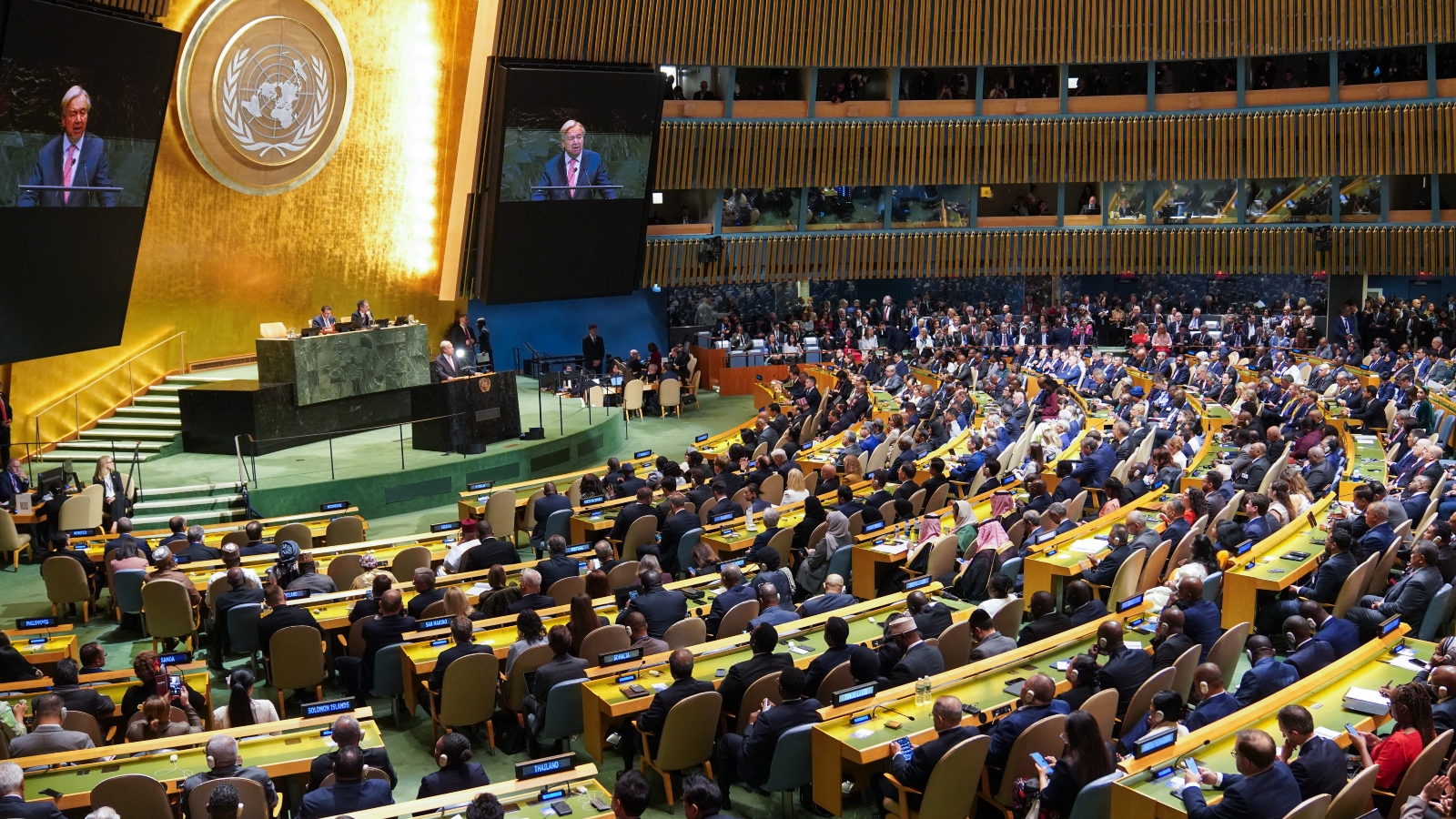
In an era defined by geopolitical fragmentation and a general retreat from multilateral climate action—epitomized by the policies of Donald Trump’s second presidential term—the international community achieved a surprising and historic consensus. Meeting at the United Nations General Assembly, world leaders voted unanimously to adopt a sweeping resolution addressing the existential threat of global sea level rise.
Significantly, the United States, which has aggressively dismantled international climate commitments, withdrawn from the Paris climate agreement, attacked global carbon-tax initiatives, and threatened trade tariffs against vocal climate advocates, chose not to block the accord.
The passage of this declaration represents a monumental milestone for low-lying island nations. It establishes a groundbreaking legal precedent: sovereign states will continue to exist as political entities and retain absolute control over their established maritime borders, even if rising oceans completely submerge their physical landmasses. Furthermore, the agreement explicitly acknowledges the urgent obligation of wealthy, historic emitters to expand access to climate adaptation finance.
While the accord does not instantly mobilize new capital to rescue sinking nations, legal scholars, diplomats, and international leaders view it as a tectonic shift in global governance. It transforms what was once merely a legal presumption into an affirmed global consensus, safeguarding vulnerable populations from becoming stateless climate refugees and shielding critical ocean territories from a predatory "might-makes-right" global scramble.
Detailed Chronology
The Backdrop: A Hostile Climate Landscape
The road to the United Nations General Assembly vote was paved against a backdrop of severe diplomatic hostility toward global cooperation. Since taking office for his second term, President Donald Trump has systematically dismantled U.S. engagement with international climate frameworks. Beyond the formal withdrawal from the Paris Agreement, the administration launched verbal and economic attacks against international efforts to levy carbon taxes on cargo shipping. It also applied heavy-handed diplomatic pressure—including explicit tariff threats—against foreign nations attempting to elevate climate change on the global agenda.
Concurrently, the Trump administration gutted foreign aid structures, dismantling the U.S. Agency for International Development (USAID) and exiting numerous multilateral pacts. For climate advocates, the prospect of securing a consensus resolution that explicitly mentioned climate change and climate aid appeared virtually impossible.
The Alliance of Small Island States (AOSIS) Campaign
Despite these formidable headwinds, an influential diplomatic bloc known as the Alliance of Small Island States (AOSIS) spearheaded a relentless, multi-year campaign. Representing dozens of nations whose average elevations sit mere feet above sea level, AOSIS sought to translate mounting international legal victories—culminating in a landmark advisory opinion from the International Court of Justice (ICJ)—into concrete political reality.
For years, international legal bodies hinted that the physical disappearance of a state’s territory should not inherently strip it of its international legal personality. However, the world’s superpowers had consistently refused to endorse these interpretations. Initiated through talks catalyzed by nations like Trinidad and Tobago, AOSIS drafted a comprehensive text designed to cement these legal protections into a formal UN declaration.
The Breakthrough at the UN General Assembly
On a Thursday during the UN General Assembly session, the diplomatic strategy bore fruit. When the resolution on sea level rise came to the floor, it bypassed the expected U.S. veto or procedural derailment. To the astonishment of seasoned observers, the United States did not block the text from moving forward, allowing the assembly to approve the accord by unanimous consensus.
The inclusion of explicit references to climate change, historical emissions, and adaptation finance transformed what could have been a watered-down administrative text into a sharp, progressive mandate for international law.
Supporting Context & Metrics
The Plight of Low-Lying Island Nations
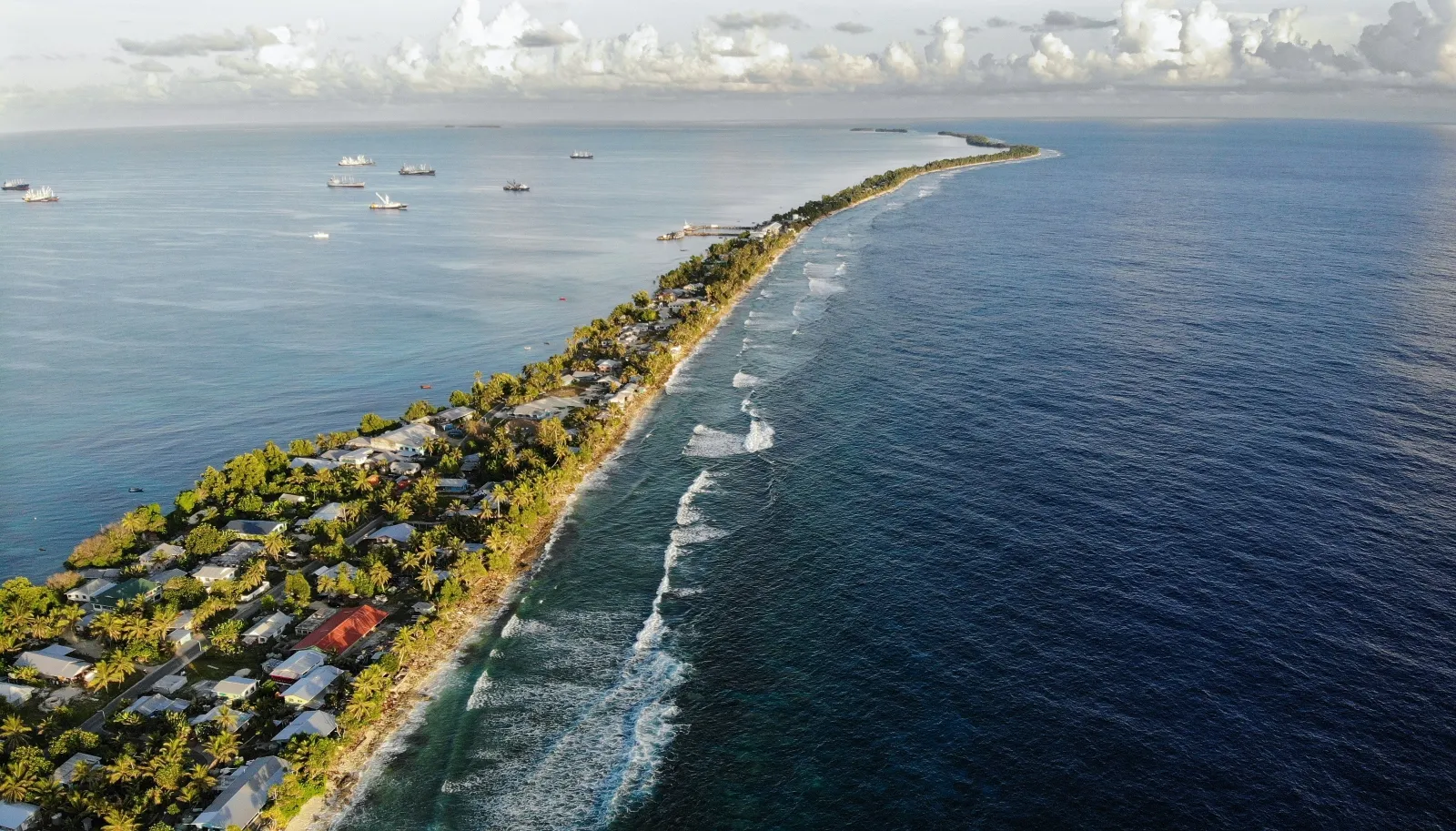
The urgency driving the AOSIS campaign cannot be overstated. Nations such as Tuvalu, the Marshall Islands, and the Republic of Kiribati face the terrifying prospect of near-total inundation over the coming century. Driven by thermal expansion and the relentless melting of polar ice sheets and mountain glaciers, rising seas are actively swallowing coastlines, contaminating freshwater aquifers, and destroying arable land.
For the Bahamas—where the landmass averages less than 3 meters above sea level—the crisis is already a daily reality. Prime Minister Philip Davis highlighted the existential nature of the crisis in an interview with Grist, noting that global efforts to stem carbon emissions have largely stalled while domestic landscapes disappear into the sea.
The Economics of Adaptation and the Finance Gap
While the declaration establishes critical legal baselines, it operates within a deeply flawed global financial architecture. Currently, developed nations provide approximately $130 billion annually in grants and low-interest loans for clean energy and climate adaptation projects. Experts note this figure falls woefully short of what is required to avert catastrophic socio-economic collapse in the developing world.
At the COP29 climate summit, the international community nominally agreed to scale up annual climate finance to $300 billion by 2035. However, progress toward this benchmark remains opaque and highly contentious. Moreover, a significant portion of this funding is delivered via loans rather than grants, compounding the debt burdens of vulnerable nations. For instance, the Bahamas carries billions of dollars in sovereign debt, a massive proportion of which stems from the devastating recovery efforts following Hurricane Dorian in 2019.
Protecting Maritime Zones and Sovereign Wealth
A critical element of the UN declaration is the preservation of maritime zones. Under the United Nations Convention on the Law of the Sea (UNCLOS), coastal states control exclusive economic zones (EEZs) extending up to 200 nautical miles from their baselines. These zones grant exclusive rights to fishing, energy development (such as offshore wind and oil), and mineral exploration.
If rising waters erased a nation’s physical landmass, historic legal interpretations could have left these vast ocean territories open to exploitation as unclaimed international waters (res nullius). By enshrining the principle that countries can maintain their maritime zones despite physical land loss, the UN declaration shields island nations from predatory industries like deep-sea mining. As Prime Minister Davis bluntly asserted: "This cannot be a free-for-all. This cannot be might is right, and might takes what is there."
Official Statements & Legal Perspectives
The Shift from Presumption to Affirmation
Diplomatic and legal leaders immediately recognized the profound weight of the UN consensus. Kamal Amakrane, managing director of the Global Center for Climate Mobility and climate envoy for Trinidad and Tobago, emphasized the historic nature of the agreement:
"What was long treated as a legal ‘presumption’ is now an affirmation… The world has agreed to preserve small islands by consensus, in a year when consensus has been hard to come by."
Why the United States Stepped Aside
Given the U.S. administration’s aggressive hostility toward climate diplomacy, political analysts questioned why Washington permitted the resolution to pass without obstruction. According to Bryce Rudyk, a New York University law professor and legal advisor to AOSIS, the answer lies in enlightened self-interest.
Sea level rise is not a localized crisis restricted to the Pacific or Caribbean; it poses a direct, long-term threat to the continental United States, which boasts thousands of miles of vulnerable coastline in states like Florida, Louisiana, and New York. Furthermore, a collapse of the international rules-based order regarding maritime boundaries could introduce geopolitical instability that threatens U.S. offshore economic interests.
"Everyone will lose land, and no one wants to lose ocean territory," Rudyk explained. "I think that’s why they were fine with making these relatively strong statements… It’s in everyone’s interest to say, ‘We don’t want states just disappearing.’"
Future Outlook
Securing Statehood Beyond Geography
The UN declaration fundamentally alters the Westphalian concept of statehood, which has traditionally required a defined territory, a permanent population, and a government capable of entering into relations with other states. By asserting a "presumption in favor of continued statehood," the international community has effectively created a new legal category: the deterritorialized sovereign state.
Even if islands like Tuvalu are submerged, their governments can continue to operate internationally, seat delegates at the United Nations, and manage their sovereign trust funds and maritime resources from abroad. This provides displaced populations with continuous legal representation and protects their cultural and political identity.
Implementing Adaptation Mandates
The true test of the new declaration will lie in its implementation. While the text forcefully asserts that historic emitters have an "urgent" obligation to provide expanded access to adaptation finance, turning moral obligations into financial transfers remains an uphill battle.
As wealthy nations grapple with domestic economic pressures and isolationist political movements—exemplified by the U.S. administration’s gutting of international assistance programs—civil society and developing nations will need to leverage this UN consensus in international courts and climate negotiations.
Ultimately, the sea level rise declaration serves as both a defensive shield and a moral indictment. It builds a legal fortress around nations threatened by physical erasure, ensuring that while the oceans may rise, the sovereignty, dignity, and economic rights of the world’s most vulnerable people will not simply wash away.