

Executive Overview
New York City’s Department of Sanitation (DSNY) stands at a pivotal crossroads in its monumental effort to modernize urban waste management. Operating the largest municipal curbside organics collection program in the United States, the agency has spent years navigating a labyrinth of political resistance, logistical hurdles, and behavioral inertia. What began as a patchy, politically contentious rollout has evolved into a high-stakes test of municipal will, pitting aggressive enforcement strategies against the stubborn realities of public compliance.
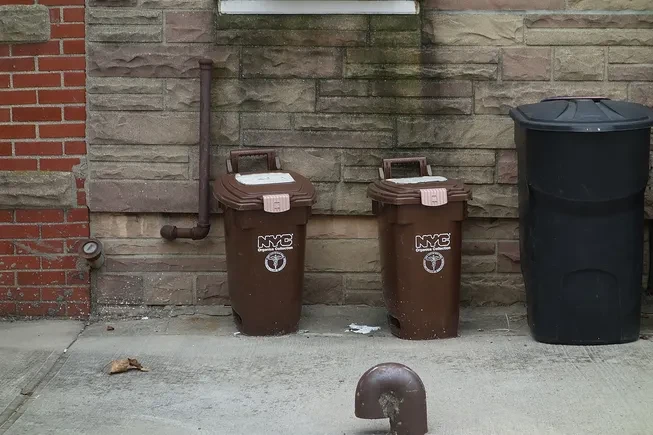
Mandated by local law, the citywide curbside organics initiative officially spanned all five boroughs by October 2024. To operationalize this massive undertaking, DSNY expanded its workforce by hiring 320 additional personnel and dedicating $20.3 million to the fiscal year’s rollout. While universal participation was legally required from the outset, the agency initially deferred enforcement actions until April 2025, hoping that voluntary adoption and public awareness campaigns would suffice.
However, recent evaluations—including a revealing critical report—demonstrate that neither the passage of time nor punitive enforcement alone can secure the cultural shift required to meet the city’s ambitious diversion goals. As DSNY continues to ramp up summonses, scale its commercial waste zones, and finalize its long-term solid waste management plan, the question remains: Can New York City successfully legislate a zero-waste future, or will public friction permanently stall its green ambitions?
Detailed Chronology: From Political Wrangling to Policy Enforcement
The path to a citywide organics program was never straightforward. Characterized by fits and starts, the rollout faced intense political debate and widespread skepticism from residents questioning their own readiness to separate food and yard waste from general refuse. Despite these doubts, the framework pushed forward, culminating in an all-borough mandate on October 7, 2024.
Aware of the friction inherent in altering daily household habits, DSNY initially adopted a soft-touch approach. Although participation was mandatory under local legislation, the agency withheld enforcement penalties until April 2025. This grace period was intended to ease the transition, giving residents ample time to acquire brown bins, understand sorting guidelines, and integrate composting into their domestic routines.
The initial enforcement window, however, was short-lived. Following roughly two weeks of issuing tickets, the administration of then-Mayor Eric Adams abruptly walked back the policy. The reversal was catalyzed by intense pushback from residents and local officials who argued that widespread confusion still reigned regarding the program’s intricate rules. Critics of the rollback, including the former head of the City Council’s sanitation committee, countered that the prevailing confusion stemmed directly from insufficient public education and outreach rather than an inherently flawed mandate.
Subsequent data analysis illuminated the complex psychological and behavioral impacts of that brief enforcement window. A comprehensive report authored by researcher MacBride revealed that the April 2025 enforcement push—and the intensive media attention it generated—triggered a marked, measurable spike in program performance. Overall participation surged by 5.6% compared to the previous month. Intriguingly, while DSNY issued nearly 5,000 tickets during this initial window, participation increased even in neighborhoods where zero tickets were handed out. MacBride noted in her findings that the behavioral pattern aligned more closely with a broad public awareness that ticketing was active, rather than a direct, building-by-building reaction to receiving a summons.
Seeking to capitalize on this dynamic, DSNY returned to ticketing in April of the following year. Yet, the anticipated performance leap failed to materialize. Year-over-year growth between March and April flattened out, with participation rates ticking up by a modest 1%. This stark contrast underscored a critical governance lesson: the law of diminishing returns applies heavily to municipal enforcement. Simply waving the stick of fines no longer guaranteed a proportional behavioral response.
Supporting Context & Metrics: Analyzing the Limits of Enforcement
The empirical findings highlighted in MacBride’s report offer a cautionary tale for municipal planners worldwide. They indicate unequivocally that DSNY cannot rely on enforcement alone to elevate organics separation rates to the levels required by local and state sustainability targets. Instead, the agency must recalibrate its strategy, merging punitive measures with a sophisticated education and outreach framework anchored in a clear "theory of change"—a blueprint detailing precisely how the agency intends to influence and reshape urban human behavior.
"The evidence to date does not support relying on the passage of time or enforcement alone," MacBride wrote, challenging the traditional bureaucratic reflex of leaning solely on fines to force compliance.
The quantitative realities of the program paint a complex picture of progress offset by persistent resistance. According to DSNY data, the agency has aggressively accelerated its punitive measures, issuing nearly 50,000 summonses to property owners across the city for failing to properly separate food and yard waste. This massive jump from the initial 5,000 tickets in 2025 demonstrates a hardening stance from sanitation officials, who appear increasingly willing to use financial penalties to drive compliance in recalcitrant residential buildings and commercial properties.
Yet, public participation metrics reveal that structural behavior modification is a slow-burn process. While the raw volume of diverted organic waste has grown, participation curves flatten out once the immediate shock of a new enforcement campaign wears off. Urban housing density, tenant-landlord dynamics, spatial constraints in older apartment buildings, and language barriers across New York’s diverse immigrant communities continue to complicate the rollout. Without continuous, hyper-localized educational interventions, enforcement risks becoming a regressive tax on confused residents rather than an effective catalyst for environmental stewardship.
Official Statements and Administrative Counterarguments
Faced with criticism regarding the limits of its enforcement-heavy strategy, DSNY officials have vigorously defended the agency’s multi-pronged approach, emphasizing that institutional habits take years—if not decades—to transform.
In an emailed statement to industry media, DSNY Press Secretary Vincent Gragnani pushed back against the narrative that the agency’s strategy is falling short. Gragnani underscored the extensive groundwork laid prior to the initial enforcement phase.
"The data shows that our ongoing efforts are producing meaningful increases in participation," Gragnani wrote. "Our experience with mandatory curbside recycling programs has taught us that it takes time to change behavior."
Gragnani pointed out that the city invested two full years of intensive education and outreach before launching the April 2025 enforcement period that yielded the initial participation jump. He defended the nearly 50,000 summonses issued to date in 2026 as a necessary, unavoidable mechanism to hold property owners accountable for failing to comply with waste-separation mandates. According to DSNY leadership, changing the waste culture of 8.3 million residents living in millions of distinct housing units requires a sustained, unyielding pressure campaign that combines clear rules, accessible infrastructure, and steady enforcement.
Furthermore, sanitation leadership maintains that residential curbside collection is only one front in a broader war against urban waste. The agency is actively working to integrate its residential programs with major structural overhauls in commercial waste management, aiming to capture organic diversion streams across all sectors of the city’s economy.
Future Outlook: Commercial Zones, Waste Plans, and the Road Ahead
As DSNY looks to the future, the success of its organics initiative will depend heavily on the rollout of supplementary programs and the finalization of long-term strategic blueprints.
Foremost among these structural expansions is the ongoing implementation of the city’s commercial waste zone system. Designed to replace chaotic, overlapping private carting routes with an orderly, zone-based regulatory framework, this system introduces powerful financial incentives for local businesses. Commercial establishments that proactively separate their organic waste as part of the program can receive discounted service rates, aligning economic self-interest with municipal sustainability goals.
The commercial waste zone rollout is proceeding in strategic phases. The next major transition—bringing the commercial zones of Brooklyn North and Upper Manhattan online—is scheduled for October 1. City planners anticipate that capturing commercial organic streams will drive a significant upward spike in total tonnage diverted from landfills, compensating for the slower-than-expected behavioral adoption rates observed in certain residential sectors.
Concurrently, DSNY’s overarching roadmap for the future remains anchored in its draft solid waste management plan. This comprehensive document outlines additional forward-thinking strategies designed to boost waste diversion and material recovery across the five boroughs. However, the plan’s full execution remains contingent upon regulatory clearance; the draft is currently awaiting final approval from the New York State Department of Environmental Conservation.
Ultimately, New York City’s organics collection program represents an unprecedented administrative experiment. By wedding mandatory residential separation, targeted enforcement summonses, commercial zone incentives, and long-range strategic planning, DSNY is attempting to rewrite the metabolic relationship between a mega-city and its refuse. Whether the agency can successfully bridge the gap between policy mandates and everyday human behavior will determine not only the cleanliness of New York’s streets, but the viability of municipal zero-waste ambitions nationwide.



