

Executive Overview
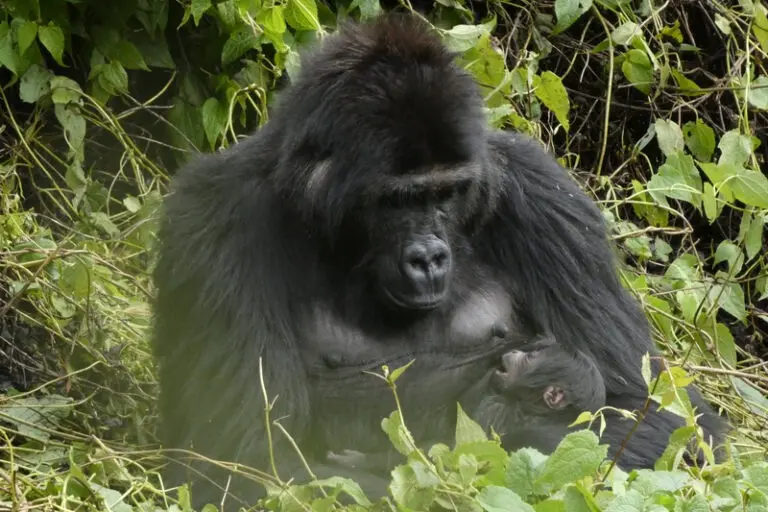
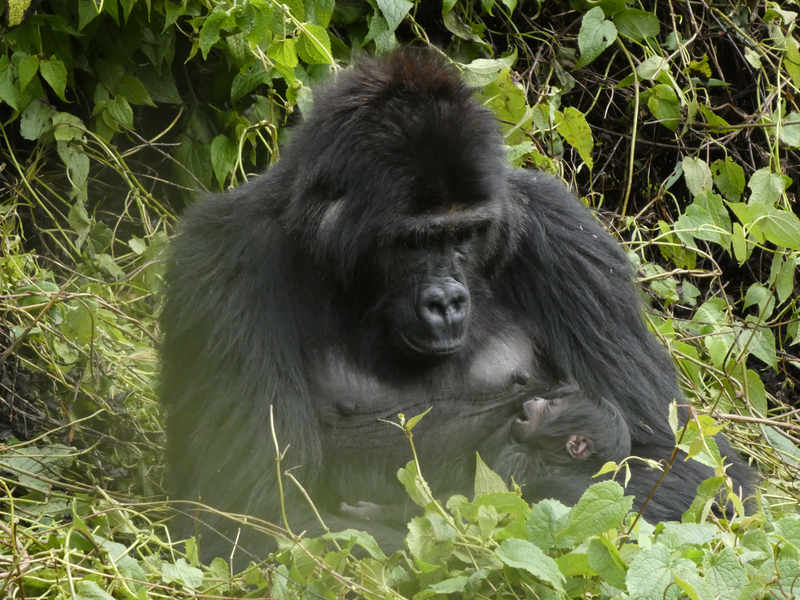
In the rugged, volatile landscapes of the eastern Democratic Republic of Congo (DRC), conservation efforts have yielded a moment of profound triumph. Lulingu, a rescued Grauer’s gorilla (Gorilla beringei), has successfully given birth to a healthy infant in the wild forests of Virunga National Park. Reintroduced to her natural habitat in 2024 following years of specialized rehabilitation, Lulingu welcomed her newborn in May 2026. This monumental birth marks a critical milestone not only for the dedicated teams who raised her from infancy, but for the entire conservation community battling to save the world’s largest primate from the brink of extinction.
Grauer’s gorillas—also commonly known as eastern lowland gorillas—are endemic exclusively to the dense tropical lowland rainforests of the eastern DRC. Once numbering in the tens of thousands, their populations have been decimated over the past three decades by a devastating convergence of civil unrest, rampant deforestation, illegal mining, and commercial poaching. Classified as Critically Endangered on the International Union for Conservation of Nature (IUCN) Red List, the subspecies has suffered an estimated 77% population decline since 1994.
Lulingu’s successful transition back into the wild, followed by the birth of her offspring, shatters lingering doubts about the long-term viability of rewilding captive-born or rescued great apes. It proves that with meticulous rehabilitation, strategic release protocols, and protected environments, individuals rescued from illegal wildlife trafficking can successfully reclaim their ancestral homes and contribute to the genetic recovery of their wild counterparts. However, this celebration of life unfolds against a backdrop of escalating geopolitical instability. Virunga National Park and its surrounding ecosystems face unprecedented security crises, making the protection of Lulingu and her newborn a high-stakes endeavor for local rangers and conservationists alike.
Detailed Chronology: From Rescue to Reintroduction and Motherhood
The remarkable journey of Lulingu spans a decade of dedicated veterinary care, behavioral rehabilitation, and strategic conservation planning across the forests and sanctuaries of eastern DRC.
2016: The Rescue
Lulingu’s life began under the shadow of the illegal wildlife trade. In 2016, at just 18 months old—an age when an infant gorilla should still be entirely dependent on its mother’s milk and constant physical protection—Lulingu was intercepted by the Congolese Wildlife Authority (ICCN), working in close collaboration with the wildlife health organization Gorilla Doctors. Ripped from her family group by poachers, she was thrust into the brutal underworld of international wildlife trafficking.
Recognizing her urgent need for specialized care, authorities transferred Lulingu to the Gorilla Rehabilitation and Conservation Education (GRACE) center. Situated on a sprawling 16-hectare (40-acre) forested wildlife sanctuary in the DRC, GRACE was established specifically to care for Grauer’s gorillas orphaned by poaching.
2016–2024: Rehabilitation and Socialization at GRACE
Upon arrival at the sanctuary, Lulingu was introduced to a surrogate-led environment designed to mimic natural social structures as closely as possible. Because young gorillas learn vital survival skills, foraging techniques, and social communication directly from their mothers, the absence of maternal care posed a significant developmental hurdle.
At GRACE, Lulingu was integrated into a community of other rescued orphans under the watchful eyes of specialized human caregivers and surrogate adult gorillas. Within the secure, 40-acre enclosure, she learned how to navigate the dense canopy, forage for wild vegetation, build nighttime nesting platforms, and communicate via vocalizations and body language essential for gorilla society. This prolonged socialization period ensured that while she was habituated to human protection for her safety, she retained her wild instincts and behavioral repertoire.
2024: Return to the Wild
By early 2024, conservationists determined that Lulingu had reached physical maturity and psychological readiness for life beyond the sanctuary fences. Preparations were finalized for her historic rewilding. Lulingu, alongside select companions, was transported to a remote, densely forested sector of Virunga National Park near Mount Tshiaberimu—a rugged area historically known to support wild gorilla populations.
The reintroduction process was methodically monitored by field researchers and park rangers. Telemetry, direct observations, and camera traps tracked her movements as she transitioned from relying on supplementary sanctuary provisions to foraging entirely independently. Her ability to integrate into the local ecosystem without human dependency marked a massive victory for the GRACE rewilding protocol.
May 2026: A New Generation
The ultimate validation of Lulingu’s rehabilitation arrived in May 2026, when field monitors confirmed she had given birth to her first infant. Observers reported that both mother and baby are thriving, displaying strong maternal bonding and natural behavioral patterns. This birth not only secures Lulingu’s legacy as a successful survivor of the illegal wildlife trade but also writes a hopeful new chapter for the future recovery of Grauer’s gorillas in their native range.
Supporting Context & Metrics: The Plight of the Grauer’s Gorilla
To fully grasp the magnitude of Lulingu’s achievement, one must examine the perilous conservation status of the Grauer’s gorilla (Gorilla beringei graueri). As the largest of all living primate subspecies, adult males can weigh upwards of 400 pounds, yet their immense physical stature has offered them no protection against human-induced threats.
Grauer's Gorilla Population Collapse (Estimates)
-------------------------------------------------
1994:  ~16,900 individuals
2015:  ~ 3,800 individuals
Decline: 77% population loss over two decades
Status:  Critically Endangered (IUCN Red List)
-------------------------------------------------
The 77% Population Collapse
For decades, Grauer’s gorillas were categorized as Endangered. However, comprehensive scientific surveys cataloging the devastating human toll of regional conflicts forced the IUCN to reclassify the subspecies as Critically Endangered in 2016. Conservation assessments revealed a catastrophic 77% population collapse over a span of roughly twenty years. Population estimates plummeted from an estimated 16,900 individuals in 1994 down to a mere 3,800 by 2015.
This precipitous decline is driven by an overlapping web of regional crises:
- Armed Conflict: The 1994 Rwandan genocide triggered decades of instability, refugee movements, and militia activity spilling across the border into the eastern DRC. Armed groups frequently utilize remote forested national parks as hideouts, living off the land and decimating wildlife populations through subsistence and commercial bushmeat hunting.
- Illegal Mining: The Albertine Rift is exceptionally rich in valuable minerals such as coltan, gold, and cassiterite. Artisanal mining camps spring up deep within protected forest reserves, bringing heavy human traffic, permanent forest degradation, and increased demand for bushmeat.
- Deforestation: As human populations expand around park boundaries, swaths of tropical rainforest are cleared for agriculture, charcoal production, and timber extraction, steadily fragmenting the gorillas’ remaining habitat.
Because every single female Grauer’s gorilla typically produces only one infant every four to six years, natural population recovery is painfully slow. Consequently, the birth of Lulingu’s infant represents a vital biological injection into a depleted gene pool, underscoring why captive-rearing and rewilding initiatives are no longer just experimental, but mandatory components of the subspecies’ survival strategy.
Official Statements and Perspectives
The birth of Lulingu’s infant has reverberated through international conservation networks, prompting reflections on the resilience of nature and the unwavering dedication of local conservation personnel.
Jackson Kabuyaya Mbeke, Country Director of the DRC Gorilla Rehabilitation and Conservation Education Center (GRACE), expressed unbridled joy and professional pride when discussing the milestone in a phone interview with Mongabay:
"The baby and the mother are doing perfectly well. It really makes us happy. We are proud of her, it is also a bit of our success. Imagine, we knew her as a baby, we watched her grow, be rehabilitated and now she is a mother."
Kabuyaya Mbeke emphasized that Lulingu’s motherhood serves as direct empirical proof that the sanctuary’s rehabilitation model successfully bridges the gap between captive rescue and autonomous wild survival:
"The purpose of our sanctuary is to take in rescued gorillas, but also to care for them until they can be released into the wild. The fact that Lulingu has had a baby is a sign that she has adapted well to life in the wild. By reintroducing them into the wild, we also hope to repopulate forests that have been stripped of their wildlife."
The psychological and institutional validation provided by this success has already spurred the leadership at GRACE to look toward the horizon. According to Kabuyaya Mbeke, the organization is actively evaluating the logistics of scaling up their rewilding operations:
"Thanks to this success, we are now looking at whether we will reintroduce more gorillas into the wild. We are in the preparatory phase."
Future Outlook: Security Challenges and Community Engagement
While the birth of Lulingu’s baby is a monumental conservation victory, the long-term outlook for wildlife in Virunga National Park remains inextricably tied to the volatile geopolitical landscape of the eastern DRC.
The Shadow of Ongoing Conflict
Virunga National Park—Africa’s oldest national park and a designated UNESCO World Heritage site—has endured relentless security pressures for over thirty years. The park has frequently served as a theater of war for clashes between the Congolese armed forces (FARDC), various regional militias, and local self-defense networks known as Wazalendo.
The security situation deteriorated further in early 2025, when the M23 rebel movement seized control of vast sectors of Virunga National Park. The vacuum created by insurgent occupation has severely hampered anti-poaching patrols, allowing criminal networks to accelerate commercial poaching, illegal charcoal trafficking, and unmitigated deforestation within protected boundaries. In this climate of lawlessness, reintroduced great apes face heightened risks from snares, crossfire, and opportunistic hunting.
Engaging Local Communities: The Naming Ceremony
Recognizing that long-term conservation cannot succeed without the backing of the human populations living adjacent to the park, GRACE and local authorities have devised an inclusive strategy to foster regional stewardship.
Rather than selecting a name internally, conservationists are turning to the local communities surrounding Virunga National Park to propose and vote on a name for Lulingu’s newborn. A public voting process will culminate in a celebratory cultural ceremony where the infant’s official name will be unveiled.
"A vote will be held to choose its name, which will be revealed during a ceremony," Kabuyaya Mbeke noted. "Everyone will be involved."
By deeply embedding the local community into the narrative of the newborn gorilla, conservationists hope to foster a sense of shared ownership and civic pride. In a region torn apart by decades of armed strife, Lulingu and her new baby stand not only as symbols of ecological resilience, but as a unifying bridge between human communities and the irreplaceable natural heritage of the Congo Basin.



