

Executive Overview
In the rapidly evolving landscape of advanced driver-assistance systems (ADAS) and autonomous vehicle development, comparative testing remains the gold standard for gauging software maturity. While American automakers and technology firms have long optimized their algorithms for the grid-based, predictable infrastructure typical of suburban and metropolitan landscapes in the United States—such as Austin, Texas—the true crucible for autonomy lies in historical European urban centers.
In the second installment of this rigorous comparative test series, we move past our initial evaluation of the XPENG L03 running VLA 2.0 to examine a Shanghai-produced, Hardware 4 (HW4)-equipped Tesla Model 3 Highland operating on Tesla’s Full Self-Driving (FSD) software suite. Tested on the unforgiving, densely packed, and multi-modal streets of Amsterdam, this evaluation offers a rare glimpse into how North American-honed autonomous algorithms cope with a chaotic symphony of thousands of cyclists, intricate tramway networks, narrow brick-paved lanes, and unpredictable pedestrian traffic.
Our findings reveal a stark contrast between algorithmic philosophies. While Tesla’s FSD demonstrates commendable caution, it frequently struggles with the fluid, context-heavy environments native to Europe, often behaving like an out-of-town driver paralyzed by indecision in a foreign labyrinth. This comprehensive report breaks down the performance of FSD across multiple vectors—including its reactive steering and braking models, handling of complex waypoints, and overall comfort—providing deep context for the ongoing global race toward unsupervised autonomy.
Detailed Chronology: A Tale of Two Loops
To ensure experimental consistency, the testing loop utilized for the Tesla Model 3 was identical to the route previously navigated by the XPENG L03. Due to minor camera configuration hurdles, the test loop was executed twice in the Model 3. Fortuitously, this duplication allowed the same human safety driver from the XPENG run to accompany the vehicle on its second lap, guaranteeing uniformity in driver risk tolerance, observational perspective, and intervention thresholds.
The Vehicle Configuration
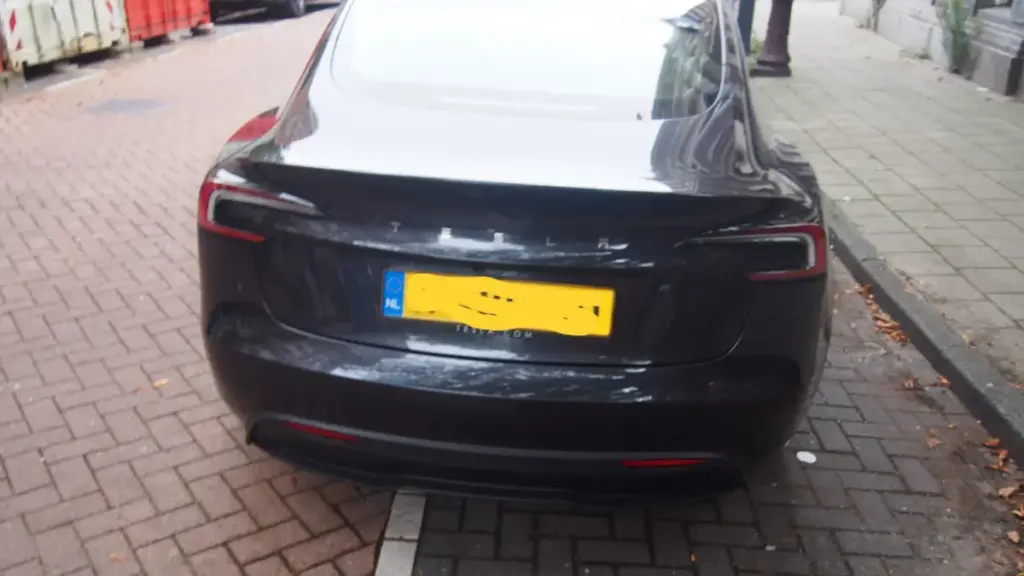
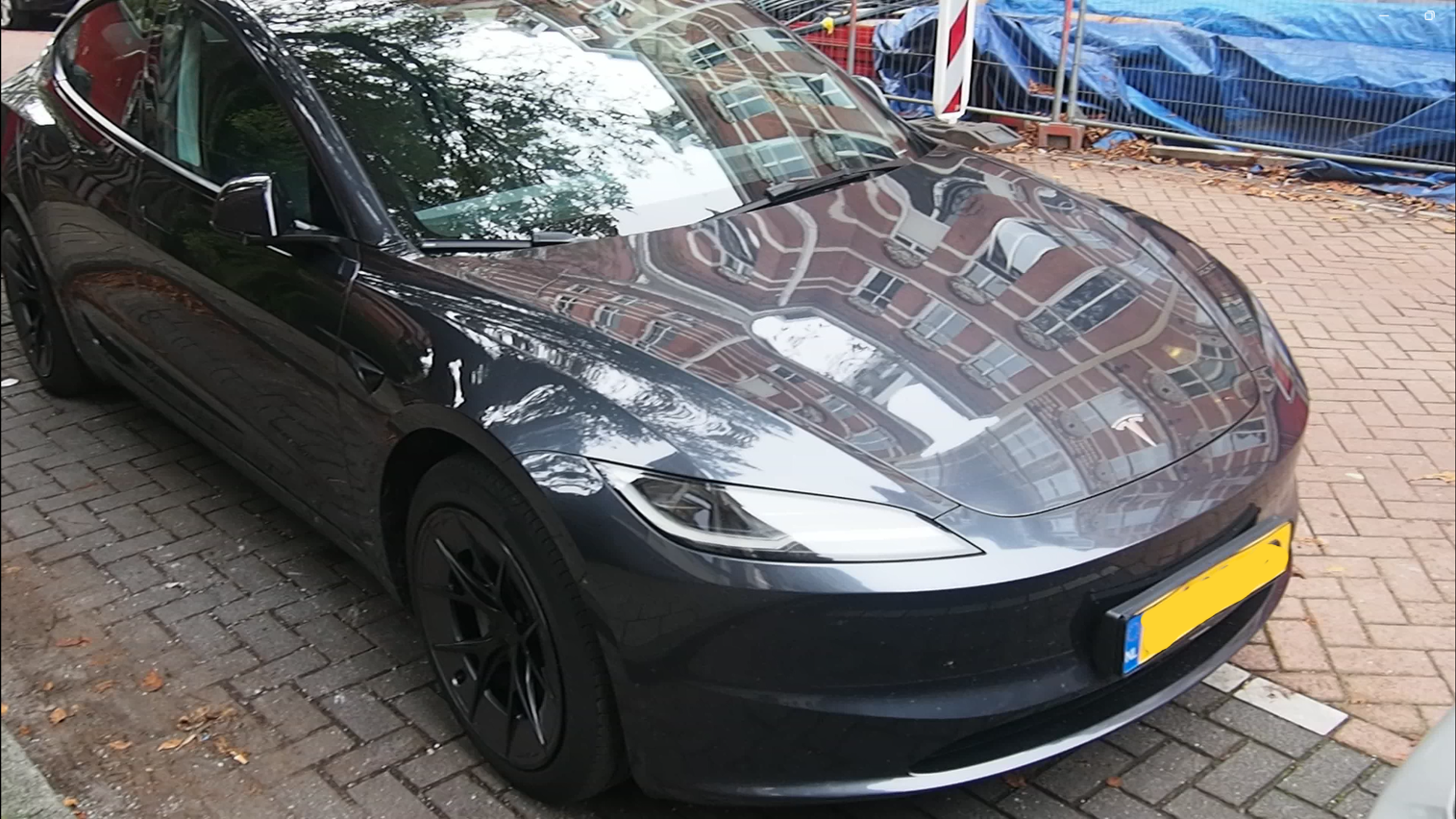
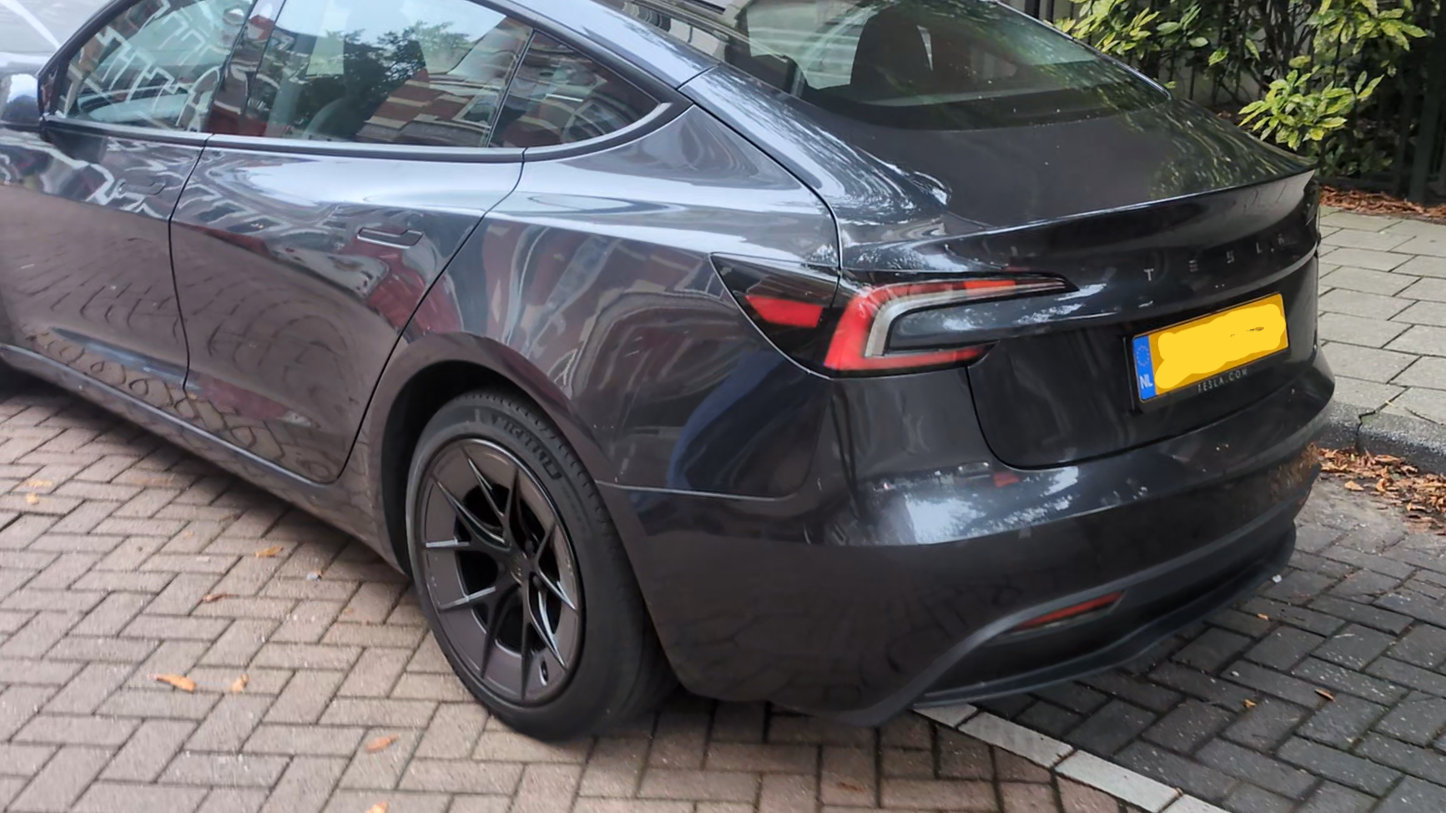
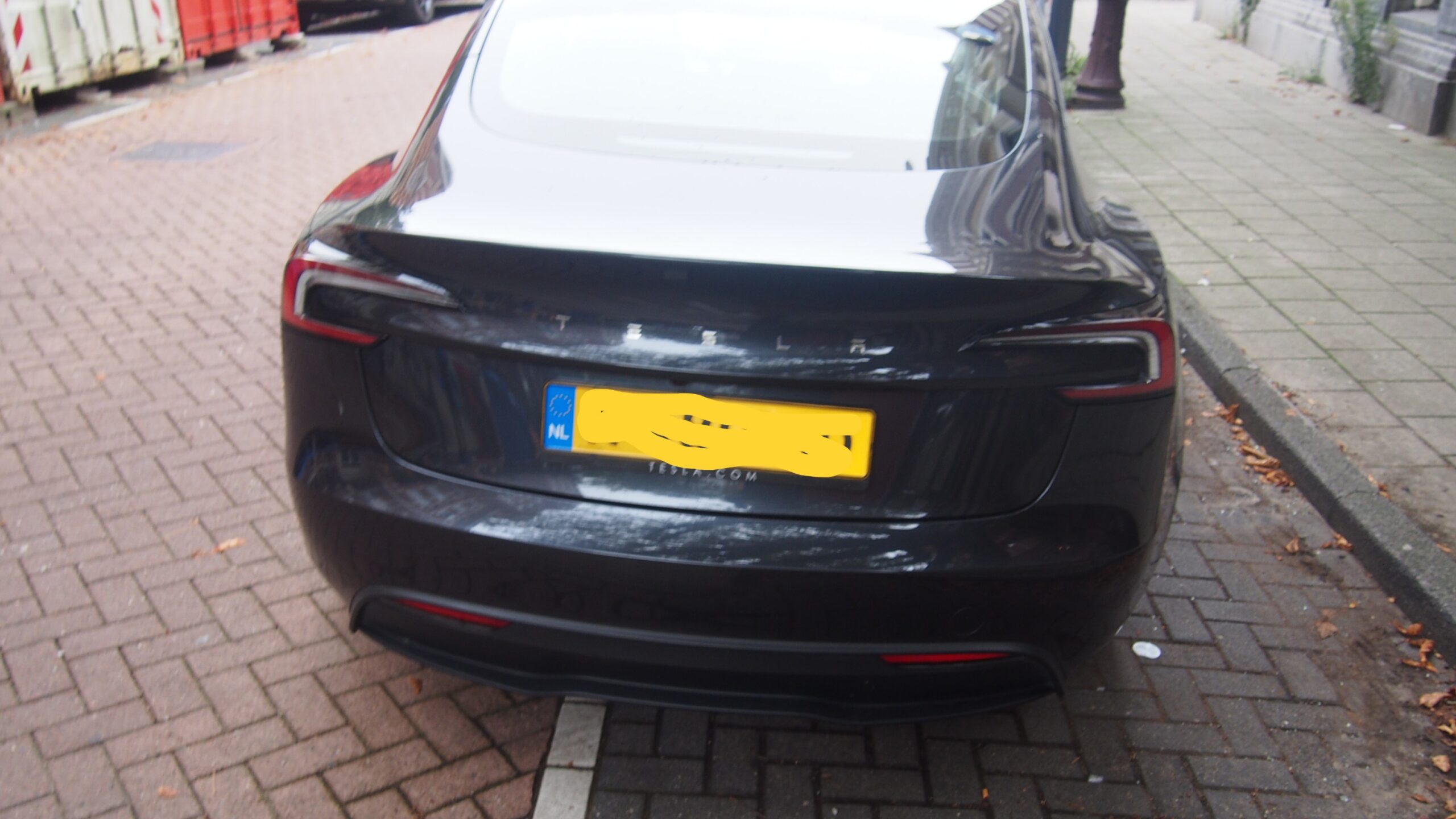
The test subject was a sleek, black Tesla Model 3 Highland—specifically, a customer-owned vehicle generously lent to XPENG for these cross-platform evaluations. Built at Tesla’s Gigafactory Shanghai for the European market, this particular configuration lacked a traditional turn signal stalk, relying instead on steering-wheel-mounted capacitive buttons. Operating on the latest iterations of FSD over HW4, the vehicle effortlessly blended into the high volume of Teslas populating the Netherlands, presenting no anomalous profile to surrounding motorists until FSD engaged in active traffic management.
Phase 1: The Outset and the "React & Correct" Paradigm
As testing commenced, traffic was notably heavier during the initial runs, though it subsided as the afternoon progressed into our third loop. Right from the outset, a distinct behavioral theme emerged: React and Correct.
Unlike systems designed to predict fluid flows of traffic continuously, Tesla’s FSD in this environment demonstrated a binary pattern of perception and abrupt action. When confronted with an oncoming bicycle at a distance, the Model 3 would instantly register the hazard, apply sharp and abrupt braking, and subsequently lurch forward only after satisfying a rigid safety threshold. While this strategy prioritizes an overabundance of caution, it frequently produced unintended secondary hazards:
- The Bike Lane Impasse: In one notable instance, the Model 3 slammed on its brakes in the middle of a designated bicycle lane upon spotting a cyclist far down the road. It remained stationary for long enough that it effectively blocked a second cyclist approaching from the opposite direction on the far side of the lane, creating a localized gridlock of non-motorized traffic.
- Traffic Light Hesitancy: During another maneuver, the vehicle approached a green traffic light but hesitated due to a pedestrian casually walking toward—yet not entering—the intersection. By the time FSD processed the pedestrian’s non-threatening trajectory, the traffic signal had transitioned from green to red, leaving the car stranded mid-intersection.
- Interference with Public Transit: On multiple occasions, the system’s cautious hesitation at complex intersections resulted in trailing vehicles sounding their horns. At one particularly challenging junction, the Tesla halted dead in the center of the roadway, obstructing an active tram line and backing up multiple lanes of vehicular traffic.
Phase 2: Steering Dynamics, Waypoints, and Construction Zones
Steering inputs under Amsterdam’s slick, wet brick surfaces further highlighted the algorithmic friction. While VLA systems often utilize smooth, continuous vector adjustments, FSD’s steering execution frequently operated in sharp, stuttered spurts: turn, correct, turn, correct. During these rapid micro-corrections, the tires could be felt slipping minutely on the damp historic bricks.
Waypoints presented yet another architectural hurdle:
- The Infinite Loop: On one designated waypoint, the Model 3 overshot its target, attempted a U-turn, missed the waypoint a second time, and routed itself into an extended loop around a residential block. The human driver was forced to intervene, manually canceling the waypoint and re-engaging FSD once the vehicle was correctly oriented.
- Navigation Errors: The vehicle also struggled with lane selection. In several instances, it committed to a right-turn lane when the planned route required a left turn, necessitating immediate human takeover to prevent navigational errors.
However, the system was not without its moments of impressive engineering execution. When navigating a narrow, one-way street blocked by active construction equipment, the Model 3 successfully reversed to grant the heavy machinery passage—a critical capability for navigating tight European corridors, such as those found in rural Greece or historical Dutch alleyways, and a notable benchmark where competing systems still require refinement.
Supporting Context & Metrics: FSD vs. European Infrastructure
To truly understand why North American ADAS architectures struggle in European environments, one must examine the fundamental differences in infrastructure design and traffic density.
| Metric / Environment Feature | Typical North American Suburb/City (e.g., Austin) | Historical European Metro (e.g., Amsterdam) | Tesla FSD Performance Impact |
|---|---|---|---|
| Road Geometry | Wide grid systems, clear lane markings, generous margins. | Narrow multi-modal lanes, historic brick surfaces, tight corners. | Causes jerky micro-corrections and tire slip on wet surfaces. |
| Vulnerable Road Users | Predominantly pedestrian-centric; bicyclists separated by infrastructure. | High-density mix of cyclists, trams, pedestrians, and cars sharing space. | Leads to over-cautious stopping, phantom braking, and blocked bike lanes. |
| Traffic Control Devices | Standardized overhead or corner-mounted lights with long visibility. | Complex multi-phase signals, embedded tram signals, temporary roadworks. | Prone to missing waypoints, stopping at green lights, and transit obstruction. |
| Parking Constraints | Generous parallel and lot-based stalls. | Ultra-tight street parking spaces flush with active traffic. | Frequently fails autonomous parking, requiring manual curb alignment. |
The Acceleration and Comfort Deficit
Beyond braking and steering, the vehicle’s longitudinal control left room for improvement. Acceleration profiles were rarely linear. When launching from a stationary position, the Model 3 would frequently hesitate, suddenly lurch forward with excessive torque, rapidly decelerate, and then settle into a standard pace. This erratic power delivery reduced overall ride comfort.
Furthermore, while the vehicle consistently attempted to accelerate beyond local speed limits based on preset configurations, upcoming regulatory shifts—such as United Nations Vehicle Regulations (UN DCAS)—are poised to mandate strict adherence to local limits and enforce continuous hands-on oversight for urban automated driving within Europe.
Official Statements & Industry Perspective
While manufacturers maintain strict confidentiality regarding ongoing algorithmic development loops, industry insiders and observers note that regional adaptation is the ultimate frontier for autonomous software.
"Operating an autonomous system designed primarily for American grid layouts within the historic, organic streetscapes of Amsterdam is the ultimate stress test. Software must evolve from recognizing static objects to intuitively predicting the fluid, chaotic choreography of multi-modal European transit." — Automotive Systems Analyst
Tesla’s engineering team has consistently emphasized that FSD operates on a generalized neural network architecture designed to learn from global fleet data. However, localized regulatory approvals dictate where these systems can legally test and deploy. While the Netherlands has emerged as an early adopter of progressive testing approvals within the European Union, the disparity between regulatory green lights and actual infrastructural competence remains wide.

Future Outlook: The Road Ahead for Global Autonomy
As this comparative series demonstrates, no single software suite currently holds a universal monopoly on absolute driving competence across wildly divergent global geographies.
- Regulatory Convergence: As European regulators implement frameworks like UN DCAS, autonomous software developers will be forced to tightly calibrate acceleration curves, lane-centering aggression, and driver engagement protocols specifically for European roads.
- Algorithmic Convergence: The stark divide between Tesla’s "React & Correct" paradigm and emerging Vision-Language-Action (VLA) architectures points toward a future where predictive, context-aware AI models will replace rigid rule-based or purely reactive neural nets.
- The Human-in-the-Loop Reality: Until unsupervised autonomy achieves true parity with complex, unpredictable urban ecosystems, human drivers in cities like Amsterdam will remain an indispensable safety net—acting not just as supervisors, but as necessary translators for artificial intelligence navigating human history.
In Part 3 of this series, we will dive deeper into the physical and software nuances separating these platforms, offering a definitive synthesis of how contemporary EV architectures handle the future of mobility.



