

Executive Overview
The global climate trajectory has reached a critical, sobering juncture. Earlier this month, a landmark United Nations environmental assessment delivered an unambiguous reality check to the international community: the planet is set to breach the critical 1.5°C global warming threshold—a milestone projected to occur "likely within the next few years." This announcement effectively extinguishes the lingering hope that signatory nations would curtail greenhouse gas emissions with sufficient rapidity to achieve the most ambitious targets outlined in the historic Paris Climate Agreement.
Yet, this sobering climatic milestone does not exist in a vacuum. In the United States, the world’s second-largest emitter of greenhouse gases, political leadership continues to actively deny prevailing climate science while systematically dismantling federal environmental regulations and green energy policies. Simultaneously, the historic energy demands of the artificial intelligence boom have prompted Silicon Valley and Big Tech to quietly backpedal on their once-ambitious corporate climate pledges, prioritizing immediate computational expansion over sustainability metrics.
These setbacks compound against a relentless backdrop of ecological disruption: another unrelenting season of shattered heat records, raging wildfires consuming entire communities, and catastrophic floods displacing populations worldwide. Under such intense pressure, the temptation to succumb to climate fatalism and institutional defeatism is stronger than ever.
However, a closer examination of the global landscape reveals a more complex, resilient narrative. Despite severe political and economic headwinds, humanity has forged unprecedented progress in decarbonization technologies. Across the globe, forward-thinking enterprises are rapidly scaling renewable energy generation, pioneering advanced grid-scale battery storage, electrifying global transportation networks, and inventing ultra-clean processes to manufacture industrial goods without traditional fossil fuels. Concurrently, innovators are deploying sophisticated adaptation frameworks designed to protect urban centers and vulnerable populations against the intensifying extremes of a volatile climate.
These technological advances are poised for exponential acceleration as manufacturing costs continue their precipitous decline and public demand for aggressive climate action intensifies. Citizens worldwide increasingly recognize that the transition to a low-carbon economy is not merely an environmental imperative, but a catalyst for monumental economic growth, job creation, and public health improvements.
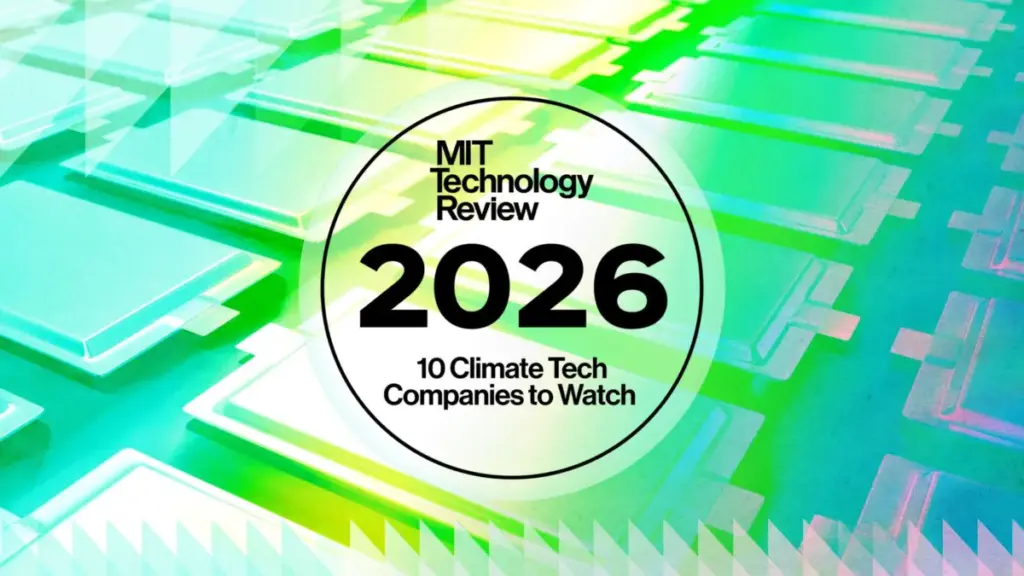
To spotlight the visionaries turning the tide against global emissions, MIT Technology Review has finalized its prestigious annual list of Climate Tech Companies to Watch for 2026, scheduled for publication on October 6. This exhaustive report highlights ten pioneering organizations operating at the bleeding edge of energy storage, advanced nuclear power, green transportation, and climate adaptation. These are the entities proving that substantive, market-driven climate progress is still achievable, even amid regressive political climates.
Detailed Chronology: The Escalating Climate Crisis and Industrial Pivot
To understand the urgency driving the 2026 climate tech landscape, one must examine the rapid accumulation of scientific warnings, political friction, and industrial shifts that have characterized the past several years.
The Slipping Threshold: From Paris to 1.5°C
When the Paris Agreement was adopted in 2015, nations pledged to pursue efforts to limit global temperature rise to 1.5°C above pre-industrial levels, recognizing that crossing this boundary significantly increases the probability of triggering irreversible tipping points in the Earth’s climate system. For years, scientists maintained that keeping within this guardrail was technically feasible, provided that global emissions peaked immediately and declined by roughly 43% by 2030.
Instead, global emissions have continued to hover near historic highs. The cumulative impact of delayed policy execution, geopolitical conflict, and entrenched fossil fuel reliance culminated in the UN’s recent announcement. The scientific consensus is now absolute: the planet is locked into a trajectory that will breach the 1.5°C ceiling within the decade. This transition forces a paradigm shift from pure mitigation—stopping emissions before they occur—to a dual imperative of aggressive decarbonization coupled with large-scale climate adaptation and carbon removal.
The U.S. Policy Rollercoaster and Regulatory Rollbacks
Domestically, the United States has experienced severe volatility in its climate posture. Following legislative victories in the early 2020s, federal momentum has faced fierce headwinds. The executive branch has increasingly accommodated climate skepticism, actively rolling back Environmental Protection Agency (EPA) emissions rules for heavy industries and power plants. Landmark clean-air mandates have faced prolonged legal challenges, creating regulatory uncertainty for green investors and threatening to stall domestic clean energy deployment just as international competitors accelerate their manufacturing capabilities.
The AI Energy Paradox: Silicon Valley’s Green Retreat
Adding a new layer of complexity to the emissions puzzle is the meteoric rise of generative artificial intelligence. The construction of massive hyperscale AI data centers requires staggering amounts of continuous electricity—demands that frequently exceed the capacity of local grids.
In response, major technology conglomerates that once championed aggressive 24/7 carbon-free energy goals have been forced to recalibrate. Several tech giants have quietly extended their emissions timelines, renegotiated power purchase agreements, and, in some cases, turned to fossil-fuel-fired generation to keep pace with computational demands. This tension between the digital revolution and environmental sustainability has created an urgent market demand for novel energy solutions, forcing tech titans to invest heavily in advanced nuclear small modular reactors (SMRs) and next-generation geothermal energy to power their facilities cleanly.
The 2026 Climate Tech Response
Out of this crucible of converging crises—ecological devastation, political regression, and surging energy demand—a new breed of climate technology company has emerged. Refusing to wait for legislative consensus, these enterprises are leveraging private capital, deep-tech innovation, and market incentives to build the infrastructure of tomorrow. It is this exact cohort of resilient disruptors that forms the backbone of MIT Technology Review’s 2026 tracking initiative.
Supporting Context & Metrics: The Dual Reality of Our Era
The paradox of the current climate moment is defined by a stark contrast: accelerating ecological degradation set against exponential technological adoption curves.
The Environmental Toll: Metrics of a Warming Planet
- Temperature Anomalies: Global average temperatures have consistently broken historical records month after month, pushing baseline anomalies dangerously close to the 1.5°C threshold.
- Economic Losses: Extreme weather events—ranging from multi-year droughts in agricultural breadbaskets to catastrophic urban flooding—have inflicted hundreds of billions of dollars in insured and uninsured losses globally.
- Emissions Trajectory: While renewable energy deployment is breaking records, absolute global greenhouse gas emissions have failed to register the steep, sustained declines required by climate models, underscoring the stubborn carbon footprint of heavy industry, maritime shipping, and aviation.
The Technological Counterweight: Metrics of Progress
Conversely, the vectors of clean technology exhibit exponential growth patterns that defy historical skepticism:
- Solar and Wind Cost Declines: Over the past decade, the levelized cost of solar photovoltaic electricity has plummeted by more than 80%, making it the cheapest source of new electricity generation in history across the vast majority of the global market.
- Battery Economics and Density: Lithium-ion battery pack prices continue their downward trend, while solid-state and alternative chemistry options move closer to commercial viability, radically altering the economics of electric vehicles and grid storage.
- EV Adoption: Despite temporary market plateaus in specific Western regions, global electric vehicle sales continue to surge, driven heavily by rapid manufacturing scale-ups in Asia and tightening efficiency standards in Europe.
Public Sentiment and Economic Drivers
According to long-term tracking data from the Yale Program on Climate Change Communication, public support for climate action and clean energy transition remains remarkably durable and bipartisan across broad demographics. Citizens increasingly connect the dots between local environmental health, economic vitality, and energy independence. This grassroots and consumer-driven demand creates a powerful economic buffer against temporary political regressions. Companies that align with this reality are thriving; those that ignore it face increasing capital constraints and consumer backlash.
Official Statements and Industry Insights
The gravity of the current climate landscape has prompted candid assessments from international leaders, scientific bodies, and media institutions dedicated to tracking technological solutions.
Reflecting on the psychological and practical imperative of maintaining momentum in the face of daunting odds, the editors of MIT Technology Review emphasized the necessity of spotlighting active solutions:
"It can be tempting to give in to climate doom and defeatism. But despite the headwinds, the world has still made incredible progress. Companies are developing and deploying renewables, batteries, and EVs; inventing cleaner means of producing industrial goods; and devising ways to keep cities and people safe even in the face of more extreme weather conditions."
— MIT Technology Review Editorial Board
Detailing the rigorous curation process behind their signature annual franchise, the publication outlined how the 2026 cohort was selected from a vast pool of global contenders:
"Once a year the editors and writers use their deep industry knowledge and academic sources to compile a long list of companies around the world that are transforming the way we generate energy, produce goods, move people and things, or mitigate rising climate dangers. We then conduct several rounds of spirited newsroom debate to winnow that list down to 10 that we believe have done the most, or have the best chance, to make a real dent in emissions or improve public safety and health."
Highlighting the unique geopolitical and industrial flavor of this year’s selections, the editors noted:
"It features a mix of companies making strides in energy storage, nuclear power, transportation, and other areas, including ones that have figured out how to continue to make progress amid the regressive climate politics of the moment. We hope you’ll enjoy the package and perhaps come away feeling a bit more hopeful that we can move fast enough to avoid the gravest dangers of climate change, and build a safer, healthier, and more sustainable world."
Future Outlook: Building a Resilient World Beyond 1.5°C
As the world prepares for the formal publication of the 2026 Climate Tech Companies to Watch list on October 6, the overarching outlook is one of calculated urgency. Breaching the 1.5°C threshold is no longer a theoretical risk to be avoided through future policy debates; it is an imminent reality that demands immediate, pragmatic adaptation and aggressive innovation.
The future of climate action will not be defined by political declarations alone, but by the commercialization and deployment speed of transformative technologies. The companies featured in this year’s MIT Technology Review report represent the vanguard of this movement. By solving critical bottlenecks in energy storage, unlocking clean baseload power via advanced nuclear systems, decarbonizing hard-to-abate industrial sectors, and fortifying urban infrastructure against climate shocks, these enterprises are proving that human ingenuity remains our most powerful renewable resource.
Readers interested in staying ahead of these developments can sign up for The Download newsletter to be among the first to review the complete 2026 list upon its October 6 release, or secure full access through MIT Technology Review’s subscription portal.
Ultimately, while the climate challenge ahead is unprecedented in scale, the tools to confront it are more sophisticated, affordable, and potent than at any point in human history. The path forward requires casting aside defeatism, accelerating deployment, and backing the technological pioneers who are actively engineering a safer, healthier, and more sustainable world.



