

Executive Overview
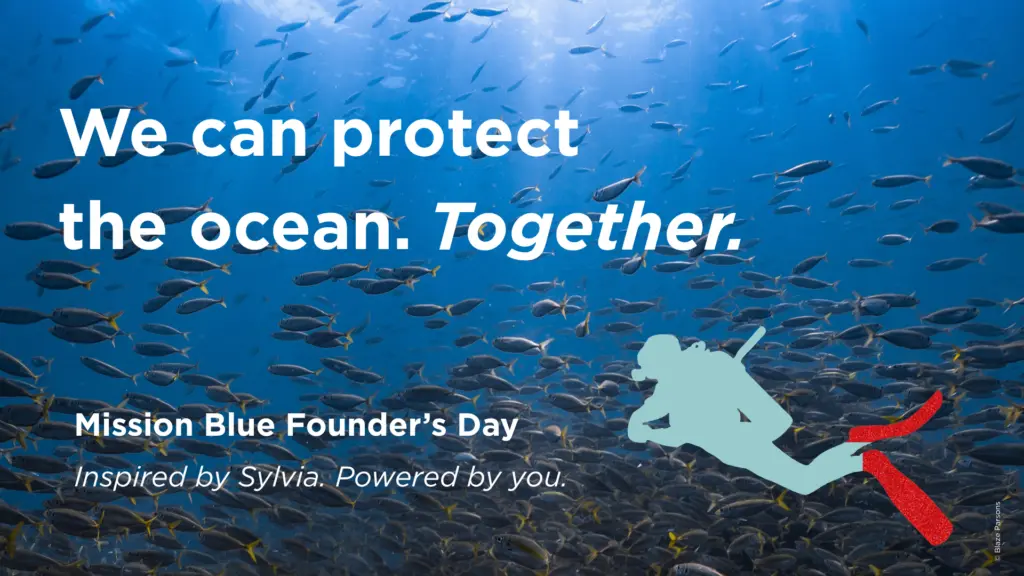
On August 30, international marine conservation organization Mission Blue will inaugurate a profound new tradition: Founder’s Day. Designed to coincide with the birthday of its legendary founder, oceanographer, and National Geographic Explorer-at-Large Dr. Sylvia Earle, this newly established annual observance seeks to transcend a traditional birthday tribute. Instead, Founder’s Day is envisioned as a global mobilization engine, channeling Dr. Earle’s decades of tireless advocacy into a decentralized, community-powered movement for planetary survival.
For over half a century, Dr. Sylvia Earle—affectionately known around the world as "Her Deepness"—has been the preeminent voice for the global ocean. From pioneering saturation diving in the late 1960s to mapping the blue expanse that covers more than 70 percent of our planet, her life’s work has fundamentally reshaped humanity’s relationship with the sea. Yet, as Mission Blue emphasizes in its foundational philosophy, the monumental task of saving the ocean has never been about a single individual. Rather, it is about the catalytic ripple effect of inspiration: how one person’s vision can spark the imagination of millions, turning passive observers into active environmental stewards.
Founder’s Day arrives at a critical juncture in Earth’s history. Marine ecosystems—the biological life support system of the globe, responsible for producing over half of the oxygen we breathe and absorbing vast quantities of anthropogenic carbon dioxide—face unprecedented threats. From overfishing and deep-sea mining to marine heatwaves, acidification, and plastic pollution, the ocean is in a state of emergency. In response, Mission Blue has championed the establishment of Hope Spots—special, scientifically identified marine areas critical to the health of the ocean.
However, as leadership at Mission Blue stresses, a Hope Spot is only as strong as the people who fight for it. Founder’s Day is designed to celebrate, expand, and empower this grassroots network. By encouraging individuals to leverage their unique spheres of influence—whether in the classroom, the boardroom, the laboratory, or around the family dinner table—the initiative operationalizes Dr. Earle’s core maxim: "When you know, you care; when you care, you act." This comprehensive report explores the origins of Mission Blue, the strategic importance of Founder’s Day, the mechanics of community-driven conservation, and how global citizens can take meaningful action to safeguard the future of our blue planet.
Detailed Chronology: The Legacy of Sylvia Earle and the Evolution of Mission Blue
To understand the weight and significance of the inaugural Founder’s Day, one must trace the extraordinary trajectory of Dr. Sylvia Earle’s life and the institutional evolution of Mission Blue.
The Pioneer of the Deep (1935–2009)
Born on August 30, 1935, in Gibbstown, New Jersey, Sylvia Earle developed an early, unwavering fascination with the natural world, which quickly gravitated toward the ocean when her family relocated to the Gulf Coast of Florida. Earning her Bachelor of Science degree from Florida State University, followed by a Master’s and a Ph.D. in phycology (the study of algae) from Duke University, Earle broke numerous glass ceilings in a male-dominated scientific community.
In 1970, she served as the leader of the pioneering Tektite II project, living for two weeks in an underwater habitat fifty feet below the surface of the Caribbean Sea alongside an all-female crew of aquanauts. Five years later, in 1979, she achieved a historic deep-ocean feat by walking untethered on the seafloor off the coast of Oahu, Hawaii, at a depth of 1,250 feet—a record for solo deep-ocean diving that remains unbroken. Throughout her career, Earle has led more than a hundred expeditions, logged upwards of 7,000 hours underwater, and authored over 200 publications.
Despite her scientific accolades, Earle’s greatest contribution has arguably been her evolution from a marine researcher into a fierce, global ambassador for ocean conservation. Witnessing firsthand the devastating impacts of industrial overfishing, chemical runoff, and coral bleaching during decades of diving, she recognized that science alone was insufficient; humanity needed a profound cultural and emotional reconnection with the sea.
The Birth of Mission Blue (2009–Present)
The turning point for institutionalizing this vision arrived in 2009, when Dr. Earle won the prestigious TED Prize. The annual award grants its recipient "one wish to change the world." Earle’s wish was unequivocal and bold:
"I wish you would use all means at your disposal to igniting public support for a global network of marine protected areas; Hope Spots large enough to save and restore the ocean, the blue heart of the planet."
From that single, galvanizing wish, Mission Blue was born. Operating as an initiative of the Chordata Foundation, Mission Blue brought together a coalition of leading ocean conservation organizations, scientists, filmmakers, and philanthropists. The core strategy centered on identifying and championing "Hope Spots"—areas of the ocean that are scientifically verified to be critical to the health of marine biodiversity, but which lack formal legal protection.
Over the past fifteen years, Mission Blue has grown into a formidable international network encompassing over 150 Hope Spots spanning the globe, from the icy waters of the Arctic to the vibrant coral reefs of the Coral Triangle, and the deep trenches of the Pacific. Each Hope Spot is championed by local leaders—scientists, indigenous communities, fishermen, educators, and activists—who dedicate their lives to protecting their local waters.
The establishment of Founder’s Day on August 30 marks the next evolutionary leap for Mission Blue. By creating a dedicated annual touchpoint, the organization is pivoting from institutional advocacy to distributed, peer-to-peer mobilization, ensuring that the ethos of Dr. Earle becomes a permanent, self-sustaining global tradition.
Supporting Context & Metrics: The State of the Global Ocean and the Hope Spot Strategy
The urgency driving the creation of Mission Blue’s Founder’s Day cannot be overstated. Contemporary marine science paints a sobering picture of the health of the global ocean, while simultaneously highlighting the proven efficacy of targeted, community-led conservation frameworks.
The Planetary Imperative
The ocean is Earth’s ultimate life-support system. It covers approximately 71% of the Earth’s surface, holds 97% of the planet’s water, and generates roughly 50 to 80 percent of the oxygen in the atmosphere. Furthermore, the ocean acts as the world’s largest carbon sink, having absorbed more than 90% of the excess heat generated by anthropogenic climate change and roughly 25% of all human-generated carbon dioxide emissions.
Despite its critical buffering capacity, the marine environment is facing a triple planetary crisis of climate change, biodiversity loss, and pollution:
- Overfishing: According to the Food and Agriculture Organization (FAO) of the United Nations, more than 34% of global fish stocks are currently fished at biologically unsustainable levels, leading to the collapse of major marine food webs.
- Habitat Destruction: Destructive fishing practices like bottom trawling ravage fragile benthic ecosystems, including deep-sea coral reefs that took millennia to form, in a matter of minutes.
- Warming and Acidification: Rising ocean temperatures have triggered unprecedented, widespread coral bleaching events. Concurrently, increased carbon dioxide absorption has lowered ocean pH, threatening the ability of shell-forming organisms—from microscopic plankton to commercially vital shellfish—to build their exoskeletons.
The Hope Spot Model: Science Meets Community
Faced with these staggering challenges, the global community has increasingly recognized the necessity of Marine Protected Areas (MPAs). Scientific consensus, championed by frameworks like the "30×30" initiative (protecting 30% of the land and ocean by 2030), demonstrates that fully or highly protected marine reserves allow fish populations to rebound, habitats to regenerate, and ecosystems to build resilience against climate change.
However, top-down government mandates often fail without local buy-in. This is where Mission Blue’s Hope Spot model revolutionizes conservation. Hope Spots are not merely designated by distant bureaucrats; they are nominated and championed by the people who live, work, and interact with those waters every day.
- Local Ownership: When a community becomes the custodian of a Hope Spot, enforcement of conservation rules increases organically. Local fishers transition from adversaries of regulation to guardians of sustainable yield.
- Scientific Rigor: Each Hope Spot is backed by robust ecological data, identifying critical spawning grounds, migratory corridors, and biodiversity hotspots.
- Global Visibility: Mission Blue provides these local grassroots campaigns with an international platform, connecting them with donors, scientists, and media outlets to amplify their local struggles onto the global stage.
Founder’s Day is designed to inject vital energy and resources into this network. By mobilizing the public on Dr. Earle’s birthday, Mission Blue aims to raise awareness and capital to support these frontline defenders, transforming isolated pockets of resistance into a unified, unstoppable global wave.
Official Statements and Visionary Perspectives
In announcing the launch of Founder’s Day, leadership within Mission Blue and its global network have articulated a clear vision of collective responsibility, hope, and action.
Dr. Sylvia Earle, reflecting on the establishment of this new tradition, emphasized that the true measure of her life’s work is not found in personal accolades, but in the awakening of public consciousness:
"For decades, I have traveled to the farthest corners of the ocean, descending into the deep in submersibles and swimming alongside creatures both majestic and vulnerable. What I have learned above all is that the ocean is the blue heart of our planet—and our heart is failing. Yet, I am endlessly filled with hope. I see it in the eyes of children who touch the ocean for the first time; I see it in the passion of scientists and local champions who refuse to let their waters die. Founder’s Day is not a celebration of me; it is a celebration of us. It is a recognition that saving the ocean requires every single one of us, working together, to turn the tide."
Board members and executive leadership at Mission Blue have echoed this sentiment, framing Founder’s Day as a vital structural evolution for the organization. In an official release detailing the initiative, Mission Blue noted:
"Sylvia’s life and leadership have inspired generations to see the ocean differently and to take action. But Mission Blue has never been about one person. It is about what happens when inspiration spreads. A Hope Spot Champion rallies a community around a place they love. A scientist shares what they have learned. A teacher brings the ocean into the classroom. A donor funds conservation and restoration projects. A friend tells another friend why the ocean matters to them. That is the idea behind Founder’s Day: building a global community of people who care, connect, and act."
Environmental sociologists and conservation partners have similarly praised the initiative. By democratizing philanthropy and activism, Founder’s Day bridges the gap between high-level policy discussions at the United Nations and kitchen-table conversations in households worldwide. It reinforces the foundational democratic premise of environmentalism: that every individual possesses a sphere of influence, and that collective micro-actions generate macro-scale transformation.
Future Outlook: How to Participate and the Road to 2030
As Mission Blue prepares to celebrate its first-ever Founder’s Day on August 30, the organization is extending an open invitation to individuals, families, educators, businesses, and civil society organizations worldwide to become active participants in the movement.
The initiative is built on the principle that there is no single "correct" way to contribute; rather, every action—big or small—adds momentum to the global crusade for ocean health. Mission Blue has outlined several concrete ways for the public to engage:
1. Direct Financial Support and Philanthropy
Financial contributions remain the lifeblood of grassroots conservation. Donations made to Mission Blue on Founder’s Day directly fund the operational capabilities of the global Hope Spot network. These funds provide essential resources for local champions—ranging from scientific monitoring equipment and legal advocacy support to educational outreach materials and community workshops. Supporters can contribute directly via the official Mission Blue donation portal.
2. Peer-to-Peer Fundraising Campaigns
Amplifying the impact beyond traditional donations, Mission Blue has launched a dedicated peer-to-peer fundraising platform (hosted via platforms like Network for Good). Supporters can create their own personalized Founder’s Day fundraising pages, setting goals to rally their friends, family members, and social media networks. Whether in lieu of birthday gifts, as a corporate team-building challenge, or as a school project, peer-to-peer fundraising empowers everyday citizens to become active fundraisers for the ocean.
3. Educational Outreach and Conversation
Dr. Earle has frequently noted that ignorance is the ocean’s greatest enemy. Founder’s Day encourages individuals to act as informal educators. This can take the form of bringing ocean conservation topics into classrooms, sharing Mission Blue’s educational videos and documentaries, or simply initiating conversations with friends and neighbors about why the health of the sea is inextricably linked to human survival on land.
4. Advocacy for Special Places
Action begins locally. Supporters are encouraged to speak up for a Hope Spot or any marine environment that holds personal significance. This involves writing to elected officials, supporting local sustainable fisheries, participating in beach cleanups, and advocating for the expansion of strictly enforced marine protected areas within national waters.
Looking Ahead: The Decade of Ocean Action
The timing of Founder’s Day aligns perfectly with the United Nations Decade of Ocean Science for Sustainable Development (2021–2030) and the global push to achieve the 30×30 marine protection target. As the world races against the clock to reverse biodiversity loss and mitigate the worst impacts of climate change, initiatives like Mission Blue’s Founder’s Day provide the essential cultural and social infrastructure needed to sustain long-term environmental commitments.
By transforming Dr. Sylvia Earle’s birthday into an annual festival of global action, Mission Blue ensures that the torch of ocean stewardship is securely passed to new generations. Founder’s Day serves as a powerful reminder that while the challenges facing our blue planet are immense, the collective power of an awakened, connected humanity is infinitely greater.
Inspired by Sylvia. Powered by you. Because protecting the ocean takes all of us.



