

Executive Overview
Steel is the silent skeleton of modern civilization. It braces our skyscrapers, spans our canyons, reinforces our bridges, and frames our vehicles. Yet, this indispensable backbone of global infrastructure carries an immense environmental price tag. Relying heavily on coal-fired blast furnaces, conventional steelmaking generates roughly 7% of all global carbon emissions—a staggering footprint roughly equivalent to the entire global fashion industry.
Decarbonizing this sector has long been treated as an industrial Everest. Traditional steel mills operate on notoriously tight profit margins, and their massive infrastructure assets—towering blast furnaces and rolling mills—feature service spans measured in decades. For risk-averse executives, justifying the capital expenditure required to overhaul multi-billion-dollar legacy systems has proven nearly impossible, leading to decades of incremental tweaks rather than revolutionary transformation.
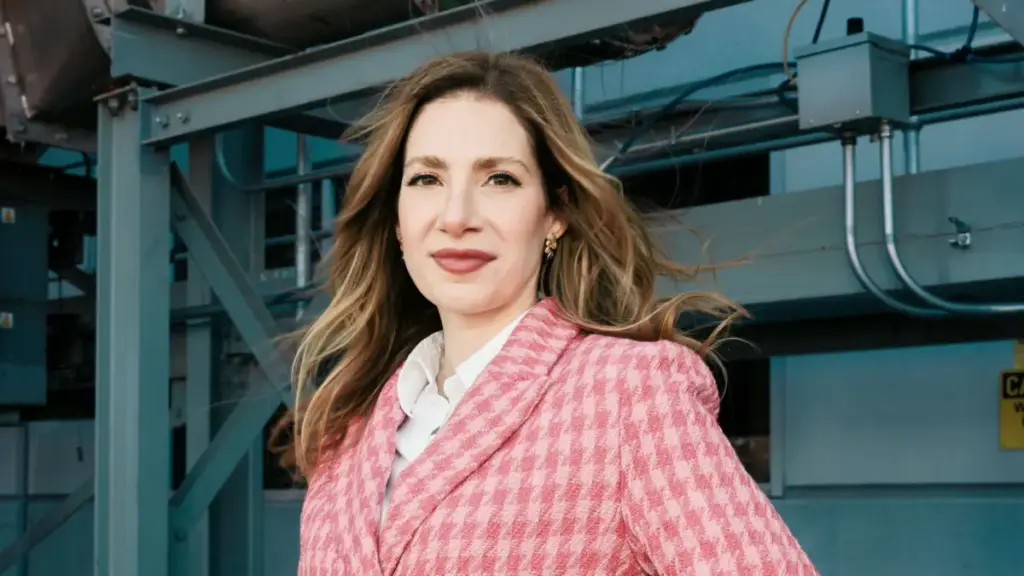
Enter Laureen Meroueh, a 34-year-old mechanical engineer, MIT PhD, and founder of Hertha Metals. Meroueh may have unlocked the holy grail of heavy industry: a way to clean up steelmaking not by waiting for a distant, cost-prohibitive zero-carbon utopia, but by aggressively targeting the economics of production today. By redesigning the chemical process of refining iron ore into liquid steel, Meroueh’s startup has invented a furnace that cuts carbon emissions by at least 50% while simultaneously reducing production costs by 25%.
Operating out of a lean pilot facility in Conroe, Texas, Hertha Metals is challenging the orthodoxy of green manufacturing. By prioritizing commercial viability over ideological purity—swapping coal for natural gas rather than waiting for unviable green hydrogen markets to mature—Hertha is offering a pragmatic bridge to a cleaner industrial future. If scaled successfully, Meroueh’s breakthrough could fundamentally rewrite the cost-benefit analysis of global heavy industry, proving that environmental stewardship and bottom-line profitability do not have to be mutually exclusive.
Detailed Chronology: From Prodigy to Industrial Disruptor
The journey from a childhood spent surfing the waves of Florida to leading a high-stakes industrial clean-tech startup in Texas is as unconventional as the technology Meroueh has engineered.
A Non-Traditional Foundation
Long before she was tackling thermodynamics and materials science, Meroueh was shattering educational norms. At just 12 years old, she was accepted into a rigorous pilot program through Florida Atlantic University, bypassing traditional secondary education entirely. Immersed in collegiate-level academics, she gravitated instantly toward the precision and logic of engineering, exploring advanced topics ranging from multivariable calculus to the kinetic potential of ocean wave energy.
Despite the intense academic load, Meroueh maintained a deeply tactile connection to the outdoors. She spent countless hours surfing and resting in the branches of trees, cultivating a visceral appreciation for nature that would ultimately shape her professional North Star. "I don’t know how you can’t be drawn toward trying to help protect that," she reflects.
Academic Rigor and Early Leadership
That foundational love for the natural world directed her intellectual pursuits. Meroueh earned her Bachelor’s degree before pressing onward to the Massachusetts Institute of Technology (MIT), where she completed her PhD in mechanical engineering. Her doctoral and post-graduate work gave her a granular understanding of thermal-fluids, chemical processing, and the thermodynamic inefficiencies plaguing heavy industry.
Before launching her own venture, Meroueh sharpened her operational teeth leading a green hydrogen startup. This stint provided a sobering masterclass in the complexities of the clean-tech landscape: the high costs of infrastructure, the volatility of regulatory markets, and the yawning chasm between laboratory theory and commercial reality.
Drawing from her background as a first-generation Lebanese-American raised in an entrepreneurial family, stepping out on her own felt less like an irrational gamble and more like a natural continuation of her lineage. "Seeing how common it is to take that jump to start your own business is what made me feel like ‘This is normal,’" Meroueh explains from her office in Conroe, Texas, just north of Houston. In 2022, she crystallized her vision, founded Hertha Metals, and began building the prototype that would change her life—and potentially the industrial landscape.
Supporting Context & Metrics: The Chemistry of the Breakthrough
To understand why Hertha Metals is turning heads in Silicon Valley and the industrial heartland, one must understand why traditional steelmaking is so stubbornly dirty and expensive.
The Problem with the Blast Furnace
For centuries, primary steel production has relied on the blast furnace and the basic oxygen furnace. Iron ore (iron oxide) must be stripped of its oxygen to yield pure iron, which is then alloyed into steel. Traditionally, this is achieved by burning massive quantities of metallurgical coal in a blast furnace at searing temperatures. This chemical reduction process releases gigatons of carbon dioxide directly into the atmosphere.
Over the past decade, climate advocates have pinned their hopes on "green hydrogen"—using emissions-free hydrogen gas derived from water electrolysis to strip oxygen from iron ore, producing water vapor instead of $CO_2$. While theoretically pristine, the hydrogen approach stumbles on severe economic and logistical hurdles. Green hydrogen is currently scarce, prohibitively expensive, and lacks the vast pipeline infrastructure required to supply heavy industry at scale. Waiting for a 100% green hydrogen economy to materialize is a luxury the climate cannot afford.
Hertha’s Radical Simplification
Hertha Metals sidesteps this bottleneck through radical chemical and mechanical simplification. Instead of multi-stage processing that requires massive facilities and complex material transfers, Meroueh’s novel furnace transforms iron ore into refined liquid steel in a single step.
Concurrently, Hertha swaps out coal for natural gas. While natural gas is still a fossil fuel, its combustion and chemical utilization yield significantly fewer emissions than coal. By pairing the single-step reduction furnace with natural gas, Hertha achieves a dramatic dual victory:
- Emissions Reduction: Carbon emissions are slashed by at least 50% compared to business-as-usual steelmaking.
- Cost Savings: Operating costs are lowered by 25%, transforming a potential green premium into an immediate financial incentive for steel manufacturers.
Furthermore, Hertha’s architecture is intentionally forward-compatible. Meroueh notes that the current hardware design is flexible enough that it can eventually transition to a fully decarbonized, hydrogen-based system without requiring a wholesale redesign of the plant, should green hydrogen achieve economic parity in the future.
Lean Capital and High Efficiency
Hertha’s lean operational model has also become a legend in venture capital circles. Operating out of its pilot plant in Conroe, Texas, the company successfully brought online a facility capable of producing one metric ton of steel per day.
To the uninitiated, one ton per day may sound modest, but in the heavy machinery sector, it represents a monumental proof-of-concept. As of July 2026, Hertha had raised a relatively modest $20 million in venture funding—a pittance compared to the nine-figure sums burned through by many clean-tech hardware startups.
Official Statements & Industry Perspectives
The pragmatic approach adopted by Hertha Metals has earned praise from manufacturing experts and venture capitalists alike who are fatigued by over-promised, under-delivered climate tech.
Rajesh Swaminathan, a partner at Khosla Ventures and a key investor in Hertha, highlights the stark efficiency of Meroueh’s execution.
"One ton per day is a big metric for steel," Swaminathan notes, describing the company’s scale-up trajectory as "impressive." He points out that competing startups have frequently consumed $50 million to $100 million in venture capital while yielding far less physical output. Hertha’s ability to do more with less points to disciplined engineering and a laser-focused commercial strategy.
Academic experts echo this sentiment, emphasizing the desperate need for incrementalism that actually moves the needle today. Iryna Zenyuk, director of the National Fuel Cell Research Center at the University of California, Irvine, underscores the monumental scale of traditional infrastructure:
"There’s huge value in reducing the size of this production system," says Zenyuk. "They’re massive. They’re inefficient and require a lot of energy input, so even if they just save energy efficiency, that’s already a big step."
Zenyuk defends Hertha’s pragmatism, noting that focusing on what can be fixed now—rather than holding out for a zero-carbon system that may be decades away from commercial viability—is the exact mindset required to jumpstart industrial decarbonization. Even producing a fraction of the market’s total volume serves as an invaluable proof point that the entrenched paradigms of heavy manufacturing can, in fact, be disrupted.
Future Outlook: Scaling the Vision to 2030 and Beyond
With its initial pilot plant validating the chemistry and engineering, Hertha Metals is no longer just a laboratory experiment; it is transitioning into a commercial contender.
The Road to 2027 and 2030
The company’s roadmap is aggressively paced. Plans are already underway to break ground on a secondary commercial plant immediately adjacent to the existing Conroe facility. This new plant is engineered to scale output drastically, aiming to produce 10,000 metric tons of high-purity steel per year upon reaching full operational capacity by the end of 2027.
Looking further ahead, Meroueh has set her sights on a third site slated for completion by 2030, which she projects will push Hertha’s annual output to 500,000 metric tons. While 500,000 tons represents only a fraction of the roughly 80 million metric tons of steel produced annually in the United States, it crosses the crucial threshold from "pilot project" to "market-relevant supplier." More importantly, it provides a replicable modular blueprint that other regional facilities can adopt.
Redefining Industrial Progress
Ultimately, Laureen Meroueh’s philosophy is rooted in industrial realism. Humanity is not going to outgrow its need for steel; urbanization, renewable energy infrastructure, electric vehicle grids, and modern housing all demand structural metal on an unprecedented scale.
Instead of asking how society can stop using steel, Meroueh is asking the harder, more constructive question:
"How can we be smarter about how we make things… so that it’s also not going to harm us in the long term?"
By proving that environmental responsibility can walk hand-in-hand with profitability, Hertha Metals is doing more than just building a better furnace. It is offering a masterclass in how modern engineering can tackle the planet’s most intractable problems—one ton of clean, affordable steel at a time.



