

From the sun-bleached fragments resting on the deepest ocean floors to the congested stomachs of marine turtles and filter-feeding invertebrates, synthetic polymers have woven themselves into the fabric of Earth’s biosphere. Yet, as humanity’s synthetic footprint grows exponentially heavier, the ways in which plastic interacts with the natural world continue to mutate in alarming, unforeseen directions.
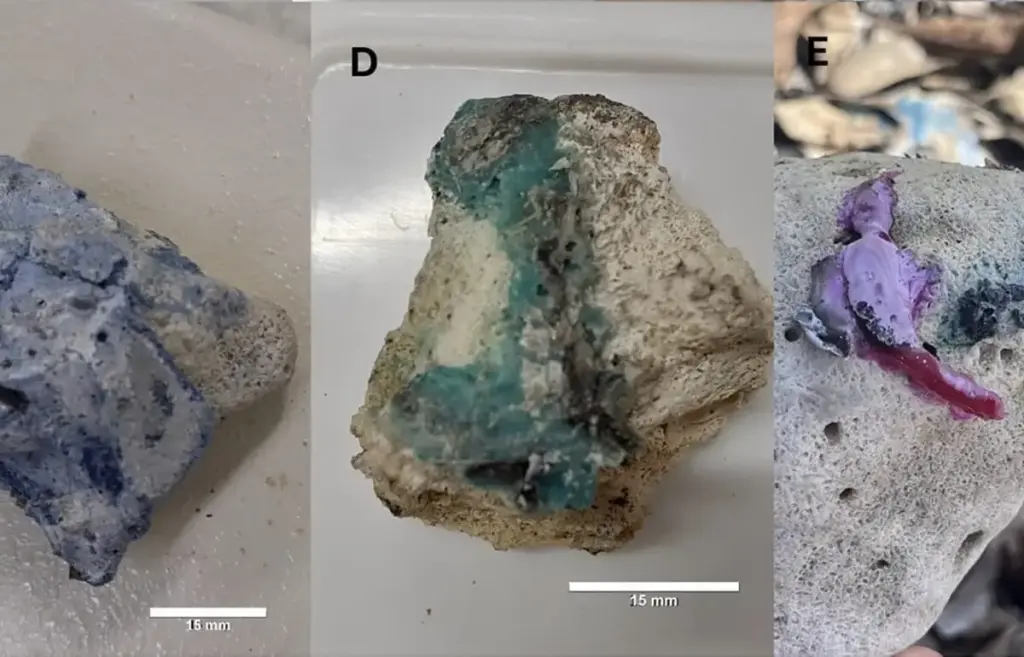
Marine scientists in Japan have now identified a disturbing new manifestation of this global crisis: plastic thermally fused to the intricate, porous structures of coral rubble. The researchers have coined a term for this unsettling amalgamation: "plasticoral."
Uncovered during a routine marine litter survey on the shores of Okinawa Island in August 2024, these bizarre hybrid samples reveal a terrifying intimacy between modern waste and ancient marine foundations. Far from being merely trapped or entangled in ocean debris, the plastic found in plasticoral has been melted down to a liquid state, seeping deep into the microscopic crevices and skeletal frameworks of dead coral.
The implications of this discovery reach far beyond local beach pollution. As detailed in a landmark study, plasticoral introduces severe, multifaceted threats to tropical marine ecosystems. It accelerates the degradation of critical microhabitats, acts as a potential vehicle for dangerous chemical leaching, and adds a permanent, unnatural entry point for microplastics into the marine food web. More ominously, scientists warn that this phenomenon may represent an emerging geological marker—a literal cementing of human waste into the nascent stratigraphic record of the "Plasticene."
Executive Overview
The discovery of plasticoral bridges the gap between conventional marine litter and long-term geological pollution. While researchers have long documented "plastiglomerates"—composite rocks formed when melted plastics fuse with natural elements like basalt, sand, and wood—plasticoral represents a distinct, highly invasive subcategory.
When single-use plastics are exposed to extreme heat sources, such as unauthorized beach fires or open waste incineration near coastal zones, the polymers soften, liquefy, and flow. Unlike debris merely washed ashore and wedged against rocks, liquidized plastic seeks out the path of least resistance. On a beach composed of coral rubble, that path leads directly into the complex, porous architectural matrix left behind by deceased stony corals.
[Open Heat Source / Beach Fire]
       │
       ▼
[Single-Use Polymers (Polyethylene / Polypropylene)]
       │
       ▼
[Liquefaction & High-Temperature Seepage]
       │
       ▼
[Infiltration of Porous Coral Skeletal Matrix]
       │
       ▼
[Permanent Formation: "Plasticoral"]
Laboratory analyses conducted by the research team at the University of Ryukyus confirmed the chemical makeup of these samples. Four of the retrieved pieces were composed of polyethylene (PE), the ubiquitous polymer driving the global manufacturing of single-use water bottles and packaging films. The fifth sample was identified as polypropylene (PP), a tougher, more rigid plastic heavily relied upon for food containers and screw-top bottle caps.
Both materials rank among the most abundant synthetic pollutants choking the global marine environment. When heated, these polymers deform rapidly, losing structural integrity while retaining chemical toxicity. When this molten soup bakes directly into coral rubble, it creates a synthetic-natural composite that is nearly impossible to cleanly separate, introducing a toxic matrix into coastal environments that were once pristine.
Detailed Chronology: The Accidental Discovery on Okinawa’s Shores
The story of plasticoral began not in a high-tech laboratory, but on the sun-baked sands of Okinawa, Japan, in late August 2024.
Ifenna Ilechukwu, lead author of the study and a researcher at the University of Ryukyus, was conducting a routine marine litter survey alongside his colleagues. The team’s objectives were standard: quantify plastic waste accumulation, categorize debris types, and assess the localized impact of coastal litter on Okinawan beaches.
"We did not set out to discover plasticoral," Ilechukwu recounted in an interview.
Amid the typical clutter of weathered fishing nets, fragments of expanded polystyrene, and degraded bottle caps, the researchers stumbled upon several pieces of coral rubble that initially looked like they had been stained or painted. Upon closer inspection, however, the anomalies revealed themselves to be fragments of white and multi-colored plastic fused directly onto and into the coral skeletal fragments.
Unlike typical beach trash that can be picked up and tossed into a recycling bin, these pieces resisted physical separation. The plastic was bonded at a molecular and structural level.
Realizing they had encountered something entirely novel, the team gathered five distinct specimens of this fused material across three separate Okinawan beaches. They transported the samples back to the university laboratory for advanced spectroscopic and physical examination.
Investigating the Origin: The Fingerprints of Heat
A central question facing Ilechukwu and his colleagues was determining the precise mechanism of formation. How does a sturdy piece of plastic wrap itself so thoroughly around calcium carbonate coral skeletons?
The answer, the researchers suspect, lies in anthropogenic thermal activity—most likely localized beach fires. Coastal tourism, illicit trash burning, and recreational beach parties frequently involve open-flame burning directly on sandy substrates. When plastic refuse is tossed into or near these fires, it melts.
In a beach environment rich in coral detritus, the melting polymer runs over and into the calcium carbonate skeletons. As the material cools, it solidifies inside the intricate micro-architecture of the coral, locking the synthetic polymer into the stone.
While controlled experiments and further fieldwork are required to map out the exact geographical frequency and thermal thresholds of this process, the working hypothesis highlights a dark synergy between coastal waste management failures and thermal pollution.
Supporting Context & Metrics: The Scale of the Plasticene
To understand why the discovery of plasticoral resonates so deeply within the scientific community, one must examine the staggering scale of the global plastic crisis.

The Numbers Behind the Crisis
- 199 Million Tons: Current conservative estimates suggest that upwards of 199 million metric tons of plastic litter currently accumulate within the world’s oceans and coastal zones.
- Global Distribution: Microscopic synthetic particles have been detected from the deepest trenches of the ocean floor to the highest peaks of the Himalayas, embedding themselves into virtually every known ecosystem.
- The Plasticene Epoch: Geologists and Earth scientists increasingly argue that human activity has pushed the planet out of the Holocene and into a new geological epoch defined by synthetic fallout: the Plasticene.
Plasticoral is not merely an aesthetic blight on tropical coastlines; it is a physical manifestation of this new geological era. According to Ilechukwu, plasticoral represents "potentially an early stage in the transition from transient plastic litter to a more persistent, lithified sedimentary record of the Plasticene in tropical reef environments."
Chemical Hazards and Degradation Pathways
The composition of plasticoral makes it a chemical time bomb. Polyethylene and polypropylene are petroleum-derived polymers that readily absorb persistent organic pollutants (POPs) from surrounding seawater, acting like chemical sponges.
Furthermore, when plastics are subjected to intense heat—such as the beach fires suspected of creating plasticoral—they undergo thermal degradation. This process releases a noxious cocktail of hazardous byproducts, including:
- Dioxins and Furans: Highly toxic, persistent organic compounds known to cause cancer, disrupt endocrine systems, and suppress immune responses.
- Fine Particulate Matter: Airborne toxins that settle over coastal waters and shores, presenting acute respiratory and systemic health hazards to local human populations and wildlife alike.
- Accelerated Microfragmentation: Heat-stressed plastics become brittle on a microscopic scale, shedding millions of microparticles far more rapidly than weathered plastics exposed solely to UV radiation and wave action.
These microplastics can then breach cellular membranes, working their way up aquatic food webs from filter-feeding zooplankton to commercially vital fish species, and ultimately threatening terrestrial predators and human seafood consumers.
Habitat Destruction at the Micro-Scale
While the plasticoral samples recovered in Okinawa were found on beach-bound coral rubble rather than living barrier reefs offshore, the ecological implications for coastal zones are profound.
Coral rubble is far from dead space. In marine ecosystems, broken coral fragments provide essential shelter, feeding grounds, and spawning substrates for a vast array of benthic organisms. Tiny marine invertebrates, crabs, polychaete worms, and juvenile fish rely on the complex nooks and crannies of rubble to hide from predators. Additionally, crustose coralline algae, sponges, and microbes colonize these surfaces, anchoring the local food web.
When melted plastic coats these surfaces and chokes the porous matrix, the rubble loses its ecological utility.
"When plastic is melted into the surface of rubble, it may not function effectively as natural substrates," Ilechukwu explained. Instead of a welcoming, nutrient-rich matrix that supports biodiversity, organisms encounter an impenetrable, hydrophobic sheet of synthetic polymer that repels life and alters local microhabitats.
Official Statements and Expert Perspectives
The scientific community has responded to the identification of plasticoral with a mix of fascination and deep-seated dread. As research papers circulate through international journals, experts are sounding alarms regarding the long-term integrity of coastal environments.
Dr. H. Tanaka, a marine ecologist uninvolved in the direct study, noted the structural uniqueness of the finding:
"We have known for years that plastic mingles with our natural world, but the transition from surface fouling to literal structural integration—where synthetic materials infiltrate the porous architecture of calcium carbonate skeletons—changes the game. It shows that our waste is physically rewriting the physical substrate of marine habitats."
The research team emphasizes that combating this threat requires a multi-pronged approach that bridges rigorous academic study with citizen science initiatives.
"Let us keep protecting our environment, it is all we have," Ilechukwu urged in his closing remarks to the scientific community.
To expand their understanding of how widespread plasticoral might be, Ilechukwu and his colleagues are actively collaborating with global initiatives—including platforms like ReefLitter—to encourage beachgoers, divers, and marine conservationists to document anomalous litter types, including thermally fused composites. By harnessing citizen science crowdsourcing, researchers hope to map out whether plasticoral is an isolated phenomenon confined to specific high-traffic Okinawan beaches or a widespread indicator of tropical coastal degradation spanning the globe.
Future Outlook: Confronting the Lithification of Waste
As the boundaries between the natural world and the synthetic creations of humanity continue to blur, discoveries like plasticoral serve as uncomfortable milestones in environmental history.
The prospect of plastic becoming a permanent fixture of the geological record—fused into stone, cemented into coral reefs, and baked into the sediment of tropical coastlines—demands an urgent escalation in global waste management strategies. Beach burning, open dumping, and single-use plastic reliance are no longer just aesthetic problems or localized pollution issues; they are planetary-scale transformations of Earth’s physical and chemical composition.
Mitigating the rise of formations like plasticoral will require systemic interventions:
- Stricter Coastal Regulations: Enforcing bans on open beach fires and unauthorized trash incineration in ecologically sensitive tropical and coastal zones.
- Circular Economy Adoption: Drastically reducing the production of virgin polyethylene and polypropylene single-use packaging in favor of biodegradable or truly circular materials.
- Targeted Remediation: Equipping coastal clean-up groups with the diagnostic tools to identify and safely extract thermally altered composites before they break down entirely into unrecoverable microplastic dust.
Until humanity addresses the root causes of plastic pollution, the geological record of our era will continue to harden—literally—into something entirely synthetic. Plasticoral is a stark reminder that what we discard does not merely disappear with the tide; it melts, it bonds, and it becomes a permanent part of the world we leave behind.



