

Executive Overview
In an era defined by rapid environmental degradation and unprecedented biodiversity loss, modern science faces a paradox: while our data-gathering technologies have grown remarkably sophisticated, our understanding of contemporary ecosystems remains inextricably bound to centuries-old observations. Ecological baselines, species classifications, and taxonomic nomenclatures do not emerge in a vacuum; they are built upon an accumulation of historical literature stretching back hundreds of years.
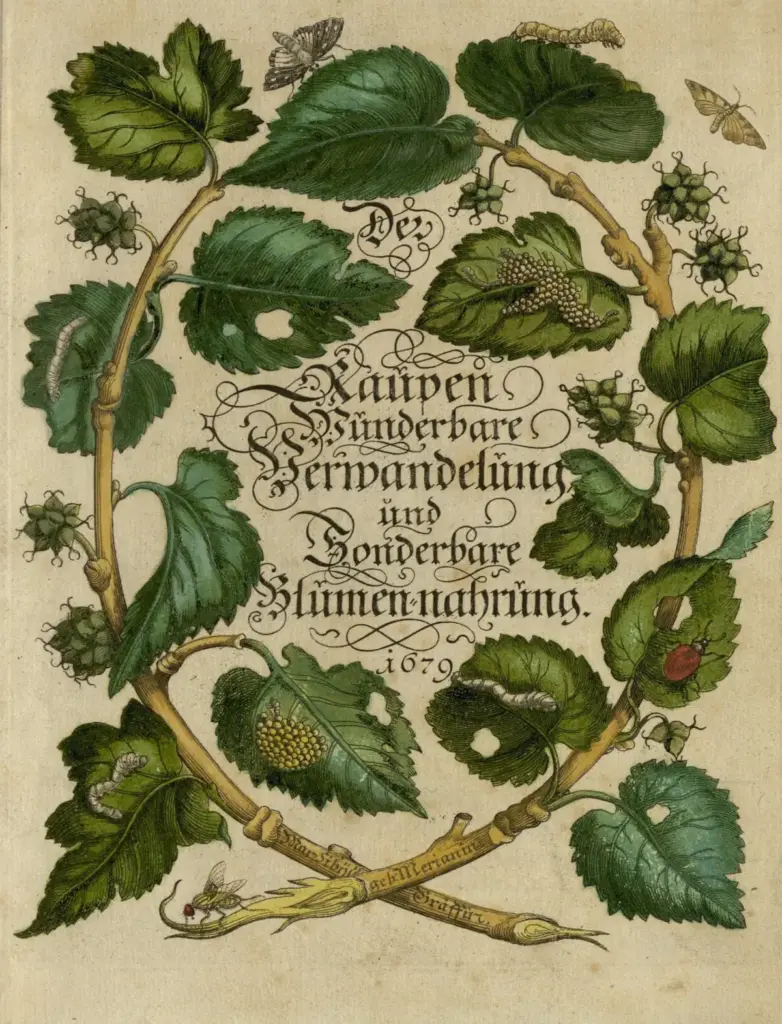
To bridge the gap between historical print archives and cutting-edge, data-driven ecological research, the prestigious Senckenberg Gesellschaft für Naturforschung officially joined the Biodiversity Heritage Library (BHL). This landmark partnership, formalized in 2026, integrates rare, specialized texts from Senckenberg’s distributed network of research libraries across Germany—most notably an original, 1679 edition of Maria Sibylla Merian’s pioneering entomological masterpiece—into the world’s largest open-access digital archive for biodiversity literature.
More than a simple digitization effort, this collaboration represents a profound paradigm shift in how historical scientific knowledge is utilized. By feeding rare taxonomic texts, field journals, and archival records into a global, machine-readable knowledge infrastructure, the partnership transforms static pages into dynamic data points. As biodiversity informatics moves toward artificial intelligence, text-mining, and semantic knowledge graphs, unlocking this legacy literature is no longer merely an exercise in historical preservation—it is a critical imperative for the future of conservation science.
Detailed Chronology: From Merian’s Quill to the Global Digital Ecosystem
The trajectory connecting seventeenth-century illustration to twenty-first-century bioinformatics spans nearly 350 years of scientific evolution. Tracing this timeline reveals how historical observation continues to serve as the bedrock of modern ecological inquiry.
1679: The Dawn of Comprehensive Metamorphosis Studies
The historical thread anchoring Senckenberg’s BHL membership reaches back to 1679, when naturalist and artist Maria Sibylla Merian published Der Raupen wunderbare Verwandelung, und sonderbare Blumennahrung ("The Wonderful Metamorphosis of Caterpillars and Their Singular Plant Food"). Published in Frankfurt—the historical and spiritual headquarters of Senckenberg—Merian’s work broke new ground.
Rather than treating insects as isolated specimens, Merian meticulously documented their life cycles alongside their specific host plants. Her work combined rigorous empirical observation with striking artistic precision. Today, an exceptionally rare original printing of this 1679 edition is carefully preserved within the library of the Senckenberg German Entomological Institute (SDEI) in Müncheberg (call number B 877:1). Long before modern ecology formalized the concept of trophic webs and plant-insect interactions, Merian mapped them out by hand, establishing a foundational reference point that modern taxonomists still reference.
The 20th and Early 21st Centuries: The Decentralized Growth of Senckenberg Libraries
Over the centuries, as natural history transformed from a gentlemanly pursuit into a rigorous institutional science, Senckenberg expanded into one of Germany’s premier natural history research organizations. This expansion resulted in a decentralized network of specialized research libraries spanning Dresden, Görlitz, Müncheberg, and Weimar.

These repositories amassed extensive print corpora covering diverse disciplines, including zoology, entomology, botany, geology, and paleontology. Crucially, these libraries evolved alongside physical specimen collections. The literature preserved within them—field notes, monographs, expedition reports, and taxonomic keys—was created to contextualize the millions of physical specimens housed in Senckenberg’s vaults.
2009–2026: The Evolution of the Biodiversity Heritage Library
Established in 2006, the Biodiversity Heritage Library began as an ambitious international consortium designed to digitize and make openly accessible the published literature of biodiversity history. Over the following two decades, BHL evolved from a pioneering digitization project into an indispensable pillar of the global biodiversity information infrastructure.
By the mid-2010s, leaders in European biodiversity informatics—including figures bridging Senckenberg, the Consortium of European Taxonomic Facilities (CETAF), and international biodiversity frameworks—recognized that isolated institutional digitization was insufficient. To meet the demands of global, cross-disciplinary science, specialized European archives needed direct integration into the unified BHL network.
2026: Institutional Integration and the New Era of Data-Driven Taxonomy
In 2026, the Senckenberg Gesellschaft’s formal entry into the BHL network bridged this institutional gap. By systematically opening its specialized German library holdings to international ingestion, Senckenberg ensured that localized, rare historical documents—such as the 1679 Merian volume and regional entomological serials—became globally discoverable nodes in an interconnected digital research ecosystem.
Supporting Context & Metrics: The Architecture of Modern Biodiversity Informatics
To understand the weight of Senckenberg’s contribution, one must examine the quantitative and qualitative scope of biodiversity literature, the institutional framework of SGN Libraries, and the technological transformations turning text into structured data.
The Anatomy of SGN Libraries
Senckenberg operates one of the most comprehensive natural history library systems in Central Europe. Distributed across four primary German cities, these libraries fulfill distinct thematic and historical mandates:
- Müncheberg (Senckenberg German Entomological Institute): Houses one of the largest specialized entomological research libraries in Europe, offering an irreplaceable corpus of historical and contemporary literature dedicated to hexapod systematics.
- Dresden, Görlitz, and Weimar: These sites maintain rich, historically layered collections focusing on regional fauna, flora, geological formations, and paleontological records deeply tied to eastern German scientific traditions.
Rather than duplicating the massive, general-interest holdings already captured by BHL, Senckenberg’s contribution is highly strategic. It targets specialized literature, rare monographs, and deep historical runs that plug critical gaps in the global digital library.

From Static Text to Semantic Knowledge Graphs
Historically, a researcher studying a specific insect species—such as Parnassius butterflies documented in historical plates like Georg Wolfgang Franz Panzer’s Deutschlands Insecten—had to physically travel to specialized archives or rely on fragmented, low-resolution PDFs. This friction severely limited the speed and scale of ecological research.
Today, integration into BHL allows historical literature to undergo semantic enrichment. Through advanced optical character recognition (OCR), text-mining algorithms, and Linked Open Data (LOD) frameworks, legacy texts are parsed into structured data.
- Taxonomic Name Recognition (TNR): Algorithms automatically scan historical pages to extract species names, linking them directly to global databases like the Global Biodiversity Information Facility (GBIF) and the Catalogue of Life.
- AI-Assisted Knowledge Graphs: Modern research workflows increasingly employ generative AI and machine learning (such as ChatGPT-assisted prompt engineering and graph visualization) to map the relationships between historical illustrations, physical museum specimens, genetic data, and modern ecological observations.
As a result, a researcher examining a butterfly specimen collected in the eighteenth century can instantly query the BHL database to pull up the original author’s field notes, taxonomic descriptions, and illustrative plates, all linked dynamically within a single analytical interface.
+-------------------------------------------------------------------------
|                      THE BIODIVERSITY KNOWLEDGE ECOSYSTEM
+-------------------------------------------------------------------------
|
|   [ Historical Literature ]  ---( OCR & Text Mining )---> [ Structured Data ]
|       (e.g., Merian 1679)                                       |
|                |                                                v
|                |                                    [ Taxonomic Name Resolution ]
|                v                                                |
|   [ Physical Museum Specimens ]                                 v
|       (Senckenberg Vaults)     ---------------------> [ Global Knowledge Graphs ]
|                                                                 |
|                                                                 v
|                                                     [ AI & Machine-Assisted Analysis ]
+-----------------------------------------------------------------------------------------
Official Statements
The strategic importance of this integration is underscored by leadership voices within both Senckenberg and the broader European taxonomic community.
Dr. Lutz Kunzmann, Member of the Board of Directors at Senckenberg, emphasized the institutional and global implications of the partnership:
"Our libraries contain numerous specialized and historically developed collections of great relevance to international research. Their digitization and integration into BHL anchor them within a global research infrastructure and increase their visibility. At the same time, membership provides an important impulse for the strategic development of Senckenberg in the areas of digitization, networking, and international collaboration."
Reflecting on the long-term evolution of biodiversity infrastructures, participating experts and representatives active within the Consortium of European Taxonomic Facilities (CETAF) noted that integrative taxonomy cannot exist without secure, verifiable baselines. Whether researchers are tackling contemporary biodiversity loss, modeling climate-driven shifts in insect populations, or constructing geobiodiversity data architectures, the foundational evidence base must remain universally accessible. Without open access to historical literature, opportunities for cross-disciplinary synthesis, historical comparison, and data reuse are permanently compromised.

Future Outlook: Literature as the Catalyst for Tomorrow’s Discoveries
As the scientific community confronts the dual crises of accelerating biodiversity decline and the loss of natural habitat, the demand for holistic, synthesis-driven research has never been more urgent. The integration of Senckenberg’s specialized holdings into the Biodiversity Heritage Library points toward several critical trajectories for the future:
1. Fortifying Artificial Intelligence and Machine-Assisted Discovery
Emerging artificial intelligence applications in ecology rely heavily on curated, citable, and scientifically validated training data. Uncurated internet text is prone to hallucinations and inaccuracies. By contrast, the peer-reviewed, historically vetted literature housed in BHL and contributed by institutions like Senckenberg provides a gold-standard corpus for training domain-specific large language models and computer vision tools designed to assist in species identification and automated ecological monitoring.
2. Closing the Loop Between Specimens, Archives, and Literature
The future of natural history museums lies in "total integration"—breaking down the traditional silos that separated physical specimen collections in the basement, archival manuscripts in the back office, and published literature in the library. By digitizing and linking these domains through shared digital standards, institutions like Senckenberg are creating unified research environments. At the Senckenberg Information Center for Entomology in Müncheberg, this vision is already taking shape, merging library collections, archival letters, and specimen databases into cohesive, queryable knowledge networks.
3. Democratizing Access for Global Conservation
Biodiversity science is inherently global, yet historical literature has often been geographically restricted to well-funded institutions in North America and Western Europe. By making rare works—from Maria Sibylla Merian’s foundational 1679 plates to specialized entomological monographs—freely available over the internet, BHL and Senckenberg democratize access to critical scientific heritage. Researchers, conservationists, and students anywhere in the world can access the foundational texts required to protect regional ecosystems.
Conclusion
Maria Sibylla Merian’s observation nearly 350 years ago that biodiversity knowledge is cumulative remains the ultimate guiding principle for modern ecological science. History is not merely a prologue; it is an active participant in the ongoing scientific dialogue. Through Senckenberg’s strategic integration into the Biodiversity Heritage Library, historical literature is rescued from the physical constraints of dusty archives and reborn as active, connected, and intelligent data. In doing so, the partnership ensures that the wisdom of the past remains fully accessible to the tools, technologies, and existential environmental questions of tomorrow.



