By Navin Singh Khadka Environment Correspondent, BBC World Service Enriched & Expanded Editorial Coverage
Executive Overview
Nepal is once again grappling with profound humanitarian and infrastructural trauma following a fresh wave of relentless monsoon rains, catastrophic landslides, and unseasonal blizzards. Coming on the heels of an unprecedented natural disaster in August—which left an estimated 1,400 people dead and thousands more unaccounted for—this latest meteorological crisis has claimed approximately 30 lives across the Himalayan nation.
National disaster management authorities report that since late last week, more than 1,900 families have been directly impacted, with over 240 homes reduced to rubble or swept entirely off their foundations. Critical arteries of transportation, including major national highways, rural roads, and vital suspension and concrete bridges, have been obliterated by raging torrents of mud and debris.
The crisis has extended deep into the country’s high-altitude tourism corridors. Hundreds of international hikers undertaking the world-renowned Annapurna Circuit—a foundational pillar of Nepal’s rural and national economy—have found themselves stranded, forced to cut short their expeditions, navigate treacherous makeshift paths, or undergo emergency helicopter evacuations out of the rugged Manang and Mustang districts.
As local communities mourn lost relatives from the safety of damp, leaking relief tents, government officials, rescue teams, and tourism operators are left struggling to manage the compounding risks of blocked river systems, localized avalanches, and severed communications. This comprehensive report examines the ground-level reality of the disaster, analyzing the immediate human toll, the grueling rescue operations, and the long-term vulnerabilities of a nation on the frontlines of global climate disruption.
Detailed Chronology: Unfolding Catastrophe in the High Himalaya
The Onset of the Late-Season Weather Shock
The renewed meteorological volatility began late last week, catching many rural communities and mountain travelers off guard. While August’s historic flooding had already pushed Nepal’s emergency infrastructure to its absolute breaking point, the latest storm systems brought a compounding mix of heavy, prolonged downpours at lower elevations and unseasonal heavy snowfall across higher mountain passes.
In the span of just a few days, saturated hillsides began to shear away. Rural municipalities in the country’s central and western districts reported sudden mudflows that swallowed entire homesteads in seconds. The national disaster management authority confirmed that the death toll quickly climbed to around 30, with fears that the number could rise as rescue workers pierce deeper into cut-off mountain enclaves.
The Trapped Trekkers of the Annapurna Circuit
For the international adventure tourism sector, the timing could not have been worse. Thousands of trekkers flock to Nepal during the autumn window, seeking clear skies and crisp mountain air along the famed Annapurna Circuit. Instead, hundreds found themselves caught in a high-stakes struggle for survival.
In upper Manang, near the village of Yak Kharka, 21-year-old British trekker Jake Stacy from Suffolk found his path blocked by sudden, heavy snow drifts last week. Recognizing the extreme hazards ahead, Stacy and his local guide abandoned plans to push toward the Thorang La pass—the highest point of the circuit at 5,416 meters.
"We made our own paths on mountain slopes," Stacy recounted after arriving safely at the Pokhara base camp. "It was quite steep and we were clambering because there was a river below… It was very muddy and very wet. Many trekkers were helicoptered out."
Similarly, Australian traveler Andrew Graham and his guide, Prem KC, found themselves cut off after deciding to retreat from Manang village. The duo was forced to traverse more than 15 active landslide zones. Their descent turned perilous when they reached the village of Chame, which had been pre-emptively evacuated due to severe landslide threats. Stranded and unable to move forward or backward safely, Graham and his guide were forced to spend a harrowing night sheltering in the dense jungle.
The Chame Damming Crisis
The village of Chame became the epicenter of a uniquely dangerous hydrological hazard. A colossal landslide tore down the mountainside, partially damming the local river that snakes through the settlement.
The resulting blockage created a volatile temporary lake that rapidly swelled, inundating residential homes and sweeping away a critical regional bridge. For three consecutive days, local residents and municipal workers utilized heavy excavators to clear the blockage and safely release the pent-up water, though progress has been painfully slow due to the sheer volume of rock and mud.
Tse Ring Doma, an experienced local trekking guide, described a journey defined as much by psychological trauma as physical exhaustion. Guiding a group out of the disaster zone, Doma reported crossing an astonishing 28 separate landslides.
"The mental stress was more difficult than the physical challenge," Doma explained, noting that the collective memory of August’s catastrophe cast a heavy shadow over every traveler. "Even thunder would make us run and come out to see if anything was coming our way."
Her client, Norwegian trekker Ellen Wahlström, reflected on the stark disparity between the experience of foreign visitors and local residents. While tourists faced the inconvenience of abandoning gear and cutting their vacations short, Nepalese villagers faced the permanent loss of their generational lands and livelihoods. Wahlström nevertheless commended emergency response efforts, noting that authorities had cleared many road-blocking landslides with "surprisingly fast" efficiency.
Supporting Context & Metrics: Statistics of a Vulnerable Landscape
To fully grasp the magnitude of the current crisis, one must evaluate the hard metrics supplied by local governance, disaster response units, and humanitarian organizations:
Casualties & Missing Persons: Approximately 30 confirmed dead in the latest wave of weather events, adding to the staggering toll of roughly 1,400 fatalities and thousands missing from August’s earlier floods. Additionally, four bodies have been recovered with 12 individuals still missing following a separate, catastrophic avalanche near the base of Himlung Peak close to the Tibetan border.
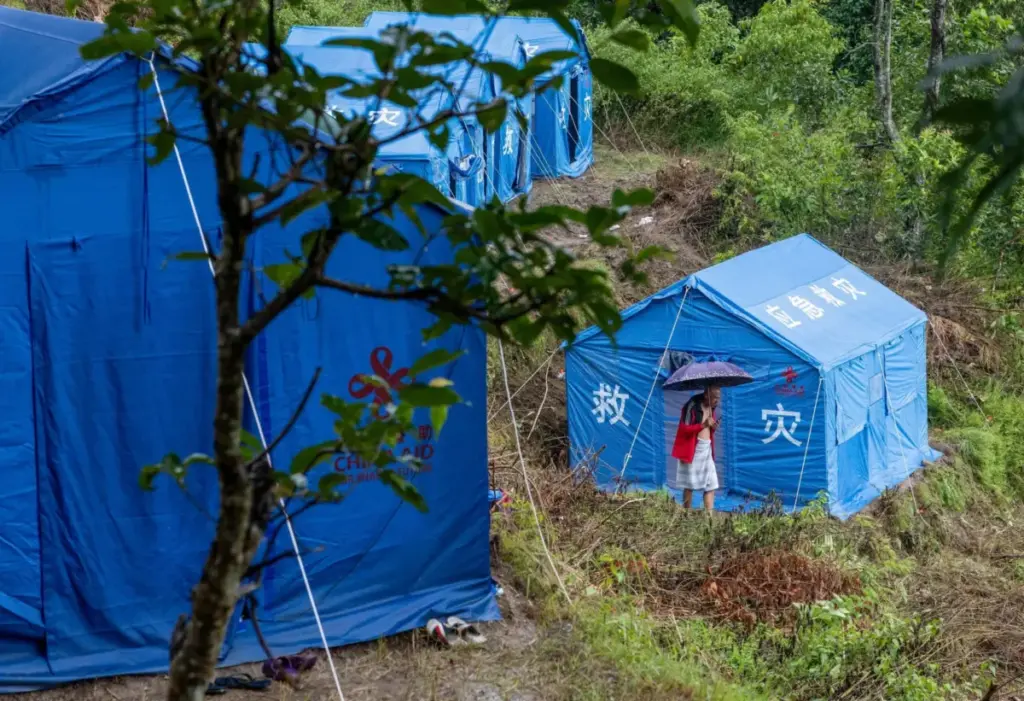
Displaced Populations & Property Damage: More than 1,900 families have been directly affected since late last week. Over 240 residential structures have sustained severe damage or total destruction, forcing families into emergency relief encampments, such as the damp blue tents pitched in Battar, north-west of Kathmandu.
Tourism Impact: Approximately 700 prospective trekkers remain in holding patterns in Pokhara, barred from embarking on the Annapurna Circuit as authorities prioritize safety over industry pressure to reopen the route. Thousands more have had to be airlifted out of Manang and Mustang districts via emergency helicopter sorties.
Infrastructure Breakdown: Dozens of vehicular and pedestrian bridges have been washed away. Key roadways—including sections servicing Hindu pilgrims traveling to the ancient Muktinath temple—have been severed, forcing a heavy reliance on domestic air routes between Jomson and Pokhara.
Official Statements and Relief Operations
Local and national authorities have mobilized emergency response teams, though their operations are continually hampered by damaged infrastructure and ongoing inclement weather.
Mukti Prasad Khanal, the Chief District Officer for Manang, offered a critical assessment of the situation in his administrative zone. While confirming that road destruction is profound and communication lines remain severed in multiple pockets, Khanal provided a measure of relief by stating that no fatalities had been officially recorded directly within the Manang trekking corridor itself—aside from the separate avalanche tragedy near Himlung Peak.
Meanwhile, representatives from the Annapurna Conservation Area Project (ACAP) defended their cautious approach regarding the reopening of trekking routes. Despite mounting economic pressure from local lodge owners, guides, and international tour operators eager to salvage the autumn trekking season, ACAP officials maintain an aggressive hold on permits.
"We have been holding back all these people who want to go to the Annapurna Circuit trek, although we are under pressure from the trekking industry to announce the route open," an ACAP representative stated.
For international visitors, alternative travel advisories have been quickly implemented. Indian nationals and other tourists undertaking Hindu pilgrimages to the revered Muktinath shrine have been strongly urged to bypass damaged overland routes entirely, utilizing regional flights between Jomson and Pokhara instead.
On the ground, displaced citizens paint a grim picture of daily survival. Speaking from a blue relief tent in Battar, Buti Tamang shared the despair felt by many rural Nepalis:
"We used to live in a hut, but now there is nothing. We have lost so many of our relatives. Now it is raining and the tent leaks, so we’ve been facing a difficult situation. We have nowhere to go."
Echoing these sentiments, Ramesh Ghale, another displaced resident forced to flee his home, emphasized the psychological weight of homelessness combined with adverse weather: "We are surrounded by mud and uncertainty. The support is welcome, but our lives have been upended."
Future Outlook: Infrastructure Adaptation and Climate Resilience
As Nepal looks toward the future, the compounding frequency and severity of extreme weather events present existential questions for the nation’s economy, infrastructure planning, and environmental management.
The Vulnerability of Modern Mountain Infrastructure
Paradoxically, infrastructural development in the Himalayas has sometimes exacerbated environmental risk. In recent decades, the construction of unpaved rural roads cut directly into fragile mountain slopes has destabilized terrain that previously remained secure under traditional footpaths. As noted by conservationists, while the vast majority of the historic Annapurna Circuit footpaths fell into disuse following road expansions, the recent disaster forced trekkers and locals alike to rely on these older, abandoned bypasses. Future civil engineering projects in Nepal will inevitably need to incorporate rigorous climate-resilient designs, avoiding road-building practices that trigger mass slope failures during heavy monsoons.
Economic Resilience vs. Public Safety
Nepal’s tourism sector—which contributes significantly to the national Gross Domestic Product (GDP) and supports hundreds of thousands of livelihoods in rural districts—faces a delicate balancing act. The pressure to reopen trekking routes quickly to salvage the financial year must be weighed against the catastrophic public relations and humanitarian fallout of another major disaster mid-season. Moving forward, the establishment of early-warning radar systems, localized meteorological monitoring stations along high-altitude passes, and standardized evacuation protocols will be non-negotiable for the survival of the trekking industry.
The Broader Climate Crisis
Ultimately, Nepal’s ongoing tragedies underscore the disproportionate impact of global climate change on vulnerable high-altitude nations. Despite contributing minimally to global carbon emissions, Himalayan nations bear the brunt of glacial melt, erratic monsoon patterns, and atmospheric destabilization. Without sustained international financial aid, technical cooperation, and aggressive global carbon mitigation policies, communities in districts like Manang, Mustang, and beyond will remain perpetually vulnerable to the shifting fury of the skies above.