

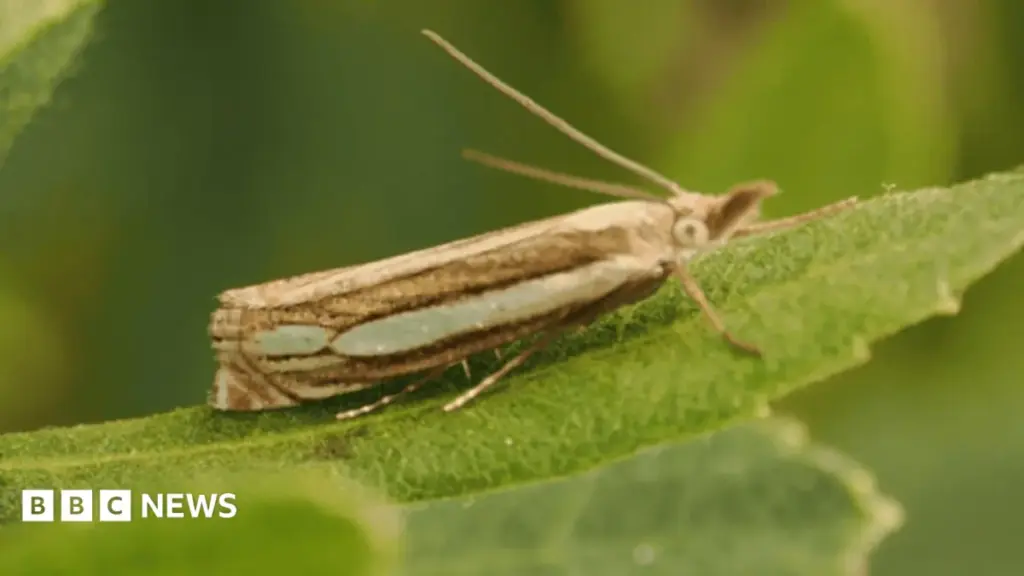
GWYNEDD, WALES — In what ecological experts are hailing as a landmark discovery for British entomology, a rare species of moth previously thought absent from the region has been documented for the first time in north Wales. The Bog Grass Moth (Chilo phragmitella or associated specialized fen-dwelling Crambidae, depending on regional classification) was identified during a routine nocturnal biodiversity survey at the Cors Geirch National Nature Reserve, situated on the windswept Llŷn Peninsula in Gwynedd.
The finding has electrified the conservation community, offering tangible proof that targeted, labor-intensive fieldwork in specialized wetland habitats can still yield breathtaking revelations about Britain’s hidden invertebrate populations. More importantly, the discovery underscores the vital ecological health and success of ongoing restoration work within one of the UK’s most delicate and threatened fenland ecosystems.
Executive Overview
The remarkable find occurred during a joint nocturnal survey conducted by specialists working under the umbrella of Natur am Byth! (Welsh for "Nature for Life"), Wales’ flagship natural heritage and species-recovery initiative. The project, which spans the Llŷn Peninsula and Ynys Môn (Anglesey), is specifically designed to halt and reverse the decline of some of the region’s most vulnerable, at-risk flora and fauna.
During a single night of intensive moth trapping at Cors Geirch—a sprawling, nutrient-poor valley mire and National Nature Reserve managed by Natural Resources Wales (NRW)—ecologists recorded an astonishing biological yield. A total of 446 individual moths, representing 91 distinct species, were cataloged. Among them were 19 specimens of the Bog Grass Moth, an insect so notoriously elusive and localized in the British Isles that its exact national population remains unquantified.
Historically, sightings of the Bog Grass Moth have been restricted to a handful of widely scattered English counties, notably Dorset and parts of East Anglia, where isolated wetland pockets remain. Prior to this survey, the species had never been officially recorded in Wales.
Entomologists and conservation managers emphasize that this discovery is not merely a statistical anomaly, but a powerful indicator of successful habitat management. The presence of the Bog Grass Moth requires very specific, pristine environmental conditions—specifically, the abundant growth of wet sedges, which serve as the exclusive larval foodplant. As environmental pressures mount across the British countryside due to agricultural runoff, climate change, and habitat fragmentation, the discovery at Cors Geirch serves as a beacon of hope for wetland conservationists across the UK.
Detailed Chronology of the Discovery
The sequence of events leading up to this monumental discovery reads like a classic field-biology success story, combining meticulous planning, expert execution, and a touch of serendipitous wonder.
Phase One: Survey Preparation and Habitat Targeting
Weeks prior to the survey, conservation scientists and local lepidopterists from the Natur am Byth! partnership mapped out priority zones within the Cors Geirch National Nature Reserve. Cors Geirch represents a classic Welsh valley mire—a dynamic, highly complex fen system characterized by alkaline peat soils, groundwater-fed flushes, and rich, specialized vegetation communities.
The site has long been recognized by Natural Resources Wales as a stronghold for rare wetland plants and invertebrates, but historical survey data for nocturnal micro-moths and specialized macro-moths remained patchy. Recognizing that traditional daytime surveys often miss cryptic or nocturnal species, the team planned a series of overnight trapping sessions designed to sample the insect fauna without causing harm to the wider population.
Phase Two: The Night of the Survey
Equipped with specialized actinic and mercury-vapor light traps designed to attract nocturnal flying insects without harming them, field experts Steve Palin and Charles Aron—both seasoned lepidopterists specializing in moth ecology—set up their equipment across strategic transects within the reserve.
As dusk fell over the Llŷn Peninsula, the traps began to draw in a diverse array of wetland-dependent species. Fenlands are notoriously rich insect habitats, but the sheer volume and diversity of life recorded that night exceeded expectations.
Phase Three: Morning Sorting and Identification
At dawn, the painstaking process of sorting, identifying, and recording the nocturnal catch commenced. As Palin and Aron meticulously examined the contents of the traps, sorting through common woodland and grassland species, they encountered specimens that immediately drew their attention.
Upon closer morphological examination under field microscopes, the distinctive features of the Bog Grass Moth became apparent. Realizing the significance of the find, the team cross-referenced regional databases and confirmed that these 19 specimens represented the first verified records of the species in Wales.
"The beauty of trapping moths is that you simply never know what is going to turn up when you check the traps in the morning," remarked Steve Palin and Charles Aron in a joint statement following the discovery. "This is a significant addition to our knowledge of the region’s winged insects and demonstrates the value of targeted moth recordings in these specialist fen habitats, where there is clearly still much left to discover."
Supporting Context, Metrics, and Ecological Significance
To fully understand why the arrival of the Bog Grass Moth in north Wales is causing such a stir among conservationists, one must examine the niche ecological requirements of the insect and the broader state of British fenlands.
The Ecological Role of Fens and Sedges
Fens are peat-accumulating wetlands that receive water and nutrients from mineral-rich sources, usually groundwater or surface runoff. Unlike bogs, which are acidic and fed almost exclusively by rainwater, fens are biologically rich systems capable of supporting an astonishing array of specialized life forms. However, fens are also exceptionally fragile. In the UK, centuries of agricultural drainage, peat cutting, and land-use conversion have reduced functional fenland to a fraction of its historical distribution.
At Cors Geirch, the hydrology creates ideal conditions for the proliferation of wet sedges (Carex species). Sedges belong to one of the largest and most ecologically successful plant families globally, thriving primarily in damp, waterlogged environments. For the Bog Grass Moth, these plants are non-negotiable; the female moth lays her eggs on or near specific sedge species, and upon hatching, the larvae bore into or feed extensively upon the stems and roots of the plants.
Without a robust, healthy, and uninterrupted expanse of wet sedges, the Bog Grass Moth cannot complete its life cycle. Therefore, the presence of a breeding population of 19 individuals in a single night strongly suggests that Cors Geirch possesses a stable, self-sustaining micro-habitat capable of supporting the species long-term.
Beyond the Moth: A Broader Biodiversity Hotspot
The significance of the Cors Geirch survey extends far beyond a single moth species. The nocturnal traps and daytime sweeps yielded a treasure trove of other rare and vulnerable invertebrate species, painting a picture of a thriving, highly integrated ecosystem.
Among the notable co-habitants discovered during the surveys were:
- The Six-Spotted Crane Fly (Prionocera species / related wetland tipulids): A specialized wetland fly whose larvae play a crucial role in decomposing organic matter and cycling nutrients within the peat substrate.
- The Black Nightrunner Ground Beetle (Pterostichus ater / regional fen specialists): An agile, nocturnal predator that patrols the damp ground layer, helping to regulate populations of smaller invertebrates.
These species, combined with the Bog Grass Moth, validate the intense conservation labor that has gone into restoring the hydrology and vegetation structure of Cors Geirch over the past decade.
Official Statements and Stakeholder Perspectives
The announcement of the discovery has drawn praise and commentary from across the Welsh conservation sector, highlighting the collaborative nature of modern species recovery programs.
Clare Sampson, Project Manager for RSPB Cymru—one of the key partner organizations within the Natur am Byth! coalition—highlighted the human effort required to make such discoveries possible.
"The incredible dedication shown by our staff, specialist contractors, and tireless volunteers has been instrumental in opening up and maintaining these complex wetlands," Sampson stated. "For generations, sites like Cors Geirch were slipping into unfavorable condition due to scrub encroachment and altered drainage. Seeing these rare invertebrate species return and thrive is the ultimate validation of our collective labor."
Natural Resources Wales (NRW), which oversees the management of the National Nature Reserve, echoed these sentiments, emphasizing that habitat restoration is a slow, methodical process that yields profound ecological dividends when executed correctly. Representatives noted that the discovery reinforces the importance of the Natur am Byth! initiative, which pools resources, expertise, and community engagement to protect Wales’ most threatened biodiversity hot-spots.
Future Outlook: Protecting Wales’ Newly Discovered Treasures
While the discovery of the Bog Grass Moth at Cors Geirch is undeniably a cause for celebration, conservationists are quick to point out that the work has only just begun. The identification of this rare population raises several critical questions for future research and habitat management.
Research and Monitoring Priorities
- Population Mapping: Conservation scientists plan to conduct extended monitoring surveys during the next flight season to determine the geographical spread of the Bog Grass Moth across the entirety of the Cors Geirch reserve and surrounding hydrological units.
- Larval Host-Plant Surveys: Detailed botanical surveys will be undertaken to map the exact distribution and density of the sedge species utilized by the larvae, ensuring that management practices do not inadvertently disrupt feeding grounds.
- Climate and Hydrological Resilience: Given that fen ecosystems are acutely sensitive to shifts in precipitation and temperature, researchers will monitor groundwater levels closely to safeguard the site against climate-induced drying.
Expanding the Natur am Byth! Vision
The success at Cors Geirch provides a blueprint for what can be achieved through targeted, landscape-scale conservation. Moving forward, the Natur am Byth! partnership aims to apply these lessons across other priority sites in north Wales, fostering community involvement through citizen science initiatives, educational workshops, and volunteer conservation days.
Ultimately, the humble Bog Grass Moth has emerged as an unlikely ambassador for the hidden wonders of Welsh wetlands. Its arrival on the official Welsh species list serves as a poignant reminder that nature, when given the space, resources, and protection it needs, possesses an astonishing capacity to endure, adapt, and surprise us.



