

Executive Overview
As millions of British households brace themselves for the bitter financial pinch of rising energy costs—compounded by a recent 4% spike in the national price cap and ominous forecasts warning of a further 16% jump in January—one family in Milton Keynes is facing the winter months with complete peace of mind. Clare Naylor and her household will not receive a single energy bill for the next five years.
While last winter demanded strict rationing, strategic layers of jumpers, hot-water bottles, and keeping the thermostat pinned to a frugal 18°C, this year tells a vastly different story. A comprehensive clean-energy retrofit of the Naylors’ 1980s four-bedroom detached home has transformed the property into an active, grid-feeding micro-power station. Equipped with 17 solar panels, a high-efficiency heat pump, four upgraded radiators, and a substantial garage-mounted battery storage system, the house generates more energy than it consumes.
By partnering with Octopus Energy and utilizing their pioneering "Zero Bills" tariff, the Naylors have traded their monthly overheads for absolute energy security. The arrangement operates on a "fair usage" policy, allowing the family of five to heat their home, power domestic appliances, and illuminate rooms without paying a single penny. It is a milestone that underscores a growing movement in sustainable housing: transitioning older properties away from fossil-fuel reliance and into self-sufficient ecosystems. Yet, while the technology proves transformative, it also highlights the stark financial barrier standing between the average homeowner and a truly zero-carbon future.
Detailed Chronology: From Frugal Survival to Total Energy Independence
The Hardships of Winters Past
For Clare Naylor and her family—which includes three children under the age of 10—managing domestic energy consumption was once a constant exercise in restraint. Like millions across the United Kingdom navigating post-pandemic inflation and skyrocketing utility tariffs, the Naylors treated home heating as a luxury rather than a given.
During the coldest months of the previous year, the family’s strategy relied heavily on behavioral modifications. The central heating was strictly capped at 18°C, only dialed up temporarily if extended family came to visit. Day-to-day comfort required traditional, low-tech interventions: thermal slippers, thick woollen jumpers, and the reliable hot-water bottle.
"We were always fairly careful," Naylor recalls, reflecting on the psychological weight of monitoring the smart meter. "Otherwise, it was slippers, hot-water bottle, jumpers—that’s how you get through the winter."
The Retrofit Transformation
That era of domestic rationing came to a dramatic halt when Naylor’s property was selected for a high-profile green energy pilot project funded by Santander. Over a short period, contractors gutted the home’s fossil-fuel infrastructure and installed a suite of cutting-edge renewable technologies.
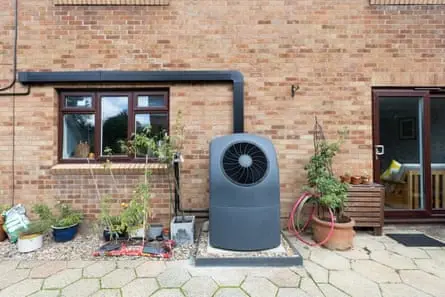
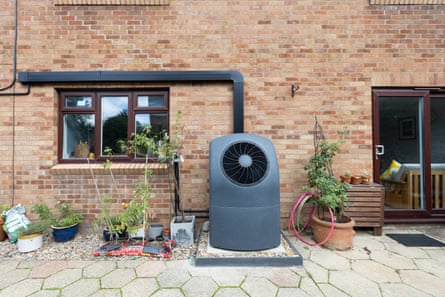
The focal point of the transformation is the removal of the home’s traditional gas boiler—a mandatory prerequisite for the zero-bill scheme, which bans gas use even for cooking. In its place, engineers fitted an advanced air-source heat pump alongside four high-output radiators designed to operate efficiently at lower flow temperatures.
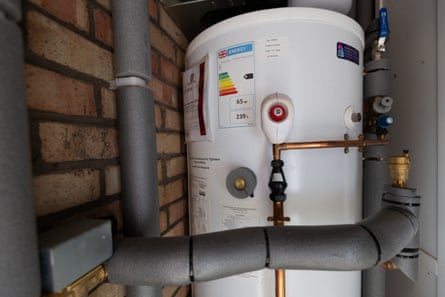
To harvest power from the elements, 17 high-capacity solar panels were mounted onto the property’s roof. Because solar generation peaks during daylight hours when families are often out, a large-scale domestic battery was installed in the garage. This unit intelligently stores surplus electricity generated throughout the day, releasing it to power the home during evening peaks or feeding excess clean energy straight back into the national grid.

A Changed Domestic Reality
The operational shift within the household is profound. No longer forced to wait until evening to warm the living spaces, Naylor plans to comfortably heat the house before the children return from school.
Financially, the relief is equally tangible. Previously, the family’s average monthly energy expenditure hovered around £130—a manageable sum for some, but a compounding burden during crises. That £130 monthly saving is no longer earmarked for utility companies; instead, the family plans to redirect the funds toward holidays and family experiences.
Of course, new systems bring new domestic challenges. "I will try to keep the home at a constant warm temperature during the coming winter," Naylor jokes. "And then train my children to keep the door shut, which will be fun."
Supporting Context & Metrics: The Mechanics of "Zero Bills"
How the Octopus Energy Tariff Works
The "Zero Bills" initiative, launched by Octopus Energy five years ago, has successfully operated in hundreds of newly built homes across the United Kingdom. However, the Milton Keynes project represents a critical evolution: testing whether the commercial model can be successfully scaled to older, pre-existing properties that require extensive retrofitting.
The fundamental economics of the scheme rely on a symbiotic relationship between the home and the national grid. Nigel Banks, Technical Director of Zero Bills at Octopus Energy, explains the underlying arithmetic:
"Typically the homes generate slightly more energy over a year than we’d expect them to use. One of the fundamental requirements is we need to make enough revenues from selling power back to the grid."
In essence, homes on the tariff act as decentralized energy assets. When the solar panels overproduce, the surplus electricity is exported to the grid at wholesale rates, subsidizing the energy the household draws during periods of low sunlight or high demand.
The Fair Usage Framework
The zero-cost guarantee is not a blank check for limitless power consumption. Customers must adhere to a customized "fair usage" limit calculated specifically for their property.
Octopus Energy establishes this threshold by analyzing the home’s historical energy profile and the expected baseline consumption of a family of that size, adding an intentional margin on top. Furthermore, to maintain safety and compliance with the zero-gas rule, properties must be entirely electric-run. However, a notable exclusion remains: the zero-bill promise does not cover the heavy electricity loads required for charging electric vehicles (EVs).
The Financial Mountain: Costs and Capital Investment
While the Naylor family received their green upgrades free of charge courtesy of Santander’s research initiative, the raw market economics of retrofitting an older British home are formidable.
If Clare Naylor had been required to pay for the installation out of pocket, the total cost for the heat pump, solar array, and battery storage system—even after accounting for available government grants—would have stood at just under £20,000.
For the vast majority of UK homeowners, raising £20,000 in capital is impossible without borrowing. To address this bottleneck, high-street lenders are beginning to engineer specialized green finance products. Santander, for instance, currently offers home improvement loans at a 6.4% interest rate over a five-year term. Under such a financing model, borrowing £20,000 would translate to monthly repayments of £389—a figure that, while lower than the combined mortgage and projected un-capped energy bills of some households, remains a steep hurdle for families navigating a cost-of-living squeeze.
Official Statements and Industry Perspectives
The intersection of banking, residential mortgages, and national decarbonization targets has created an unprecedented landscape for financial institutions. Major lenders are realizing that their lending portfolios are inextricably linked to the energy efficiency of the properties holding their mortgages.
Mick Taylor, speaking on behalf of Santander, laid bare the scale of the challenge facing the financial sector:
"We’ve got a big challenge. We’ve got 1.5 million mortgage accounts and the vast majority of those are paying monthly energy bills. Consumers are concerned that energy bills are only going one way—they’re probably the second- or third-biggest outgoing for most households."
Taylor emphasized that commercial banks can no longer remain passive observers of the climate crisis. With domestic heating accounting for a massive slice of the UK’s carbon footprint, financial institutions must innovate to protect both their borrowers and environmental targets.
"What can we do to help the country move towards net zero with such a big mortgage portfolio? We’ve obviously got a role to play."
Industry analysts point out that lenders hold the key to unlocking mass residential retrofitting. Without affordable, low-interest green loans or government-backed underwriting, the "Zero Bills" lifestyle will remain an elite luxury rather than an accessible public health solution.
Future Outlook: Can the UK Scale Zero-Bill Housing?
The success of the Milton Keynes pilot marks a watershed moment for British energy policy, but it also exposes the massive structural work ahead.
The Housing Stock Dilemma
Britain possesses some of the oldest and most thermally inefficient housing stock in Europe. Millions of Victorian terraces, 1930s semis, and post-war properties leak heat at alarming rates. Nigel Banks of Octopus Energy notes that the ideal candidates for immediate retrofitting are homes built within the last decade, as their baseline insulation levels require far less preparatory work.
For older properties, achieving the airtight thermal envelopes required for heat pumps and zero-bill tariffs demands significant additional investment in wall insulation, double or triple glazing, and ventilation systems. Without comprehensive national insulation programs, millions of older homes risk being left behind in the green transition.
Policy and Market Trajectory
As energy price caps fluctuate and geopolitical instability continues to buffet international gas markets, consumer demand for energy independence has never been higher. Schemes like Octopus Energy’s "Zero Bills," combined with experimental banking products from institutions like Santander, offer a tantalizing glimpse of a future where domestic energy bills are a relic of the past.
However, bridging the gap between a £20,000 upfront installation cost and widespread working-class adoption will require aggressive government intervention. Subsidies, tax incentives, and low-cost green mortgages must evolve from niche pilot projects into mainstream financial infrastructure.
For Clare Naylor and her family, the future has arrived early. Their Milton Keynes home stands as a quiet, solar-paneled testament to what is technically possible when cutting-edge software, renewable hardware, and forward-thinking corporate partnerships align. Yet, as the rest of the UK faces a punishing winter of rising utility bills, the central question for policymakers remains: how to turn an exclusive green experiment into an everyday British reality.



