

Executive Overview
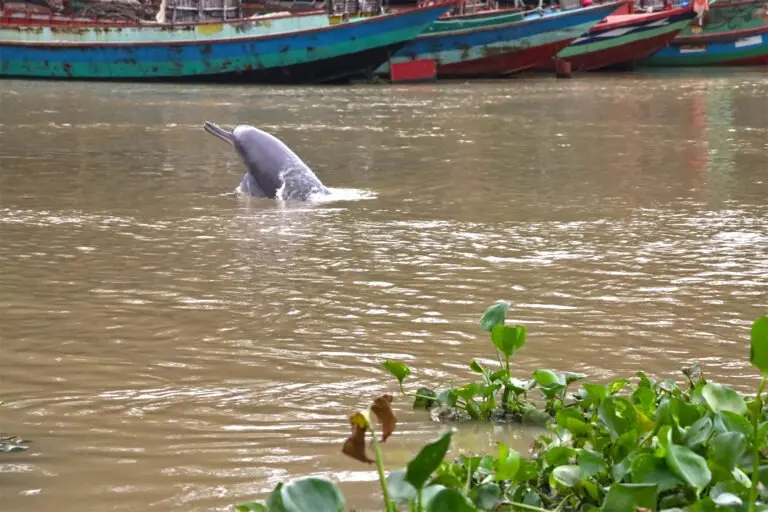
In the heart of South Asia, where the relentless march of industrialization and urbanization collides with fragile aquatic ecosystems, a stunning discovery has emerged from the murky depths of one of the world’s most contaminated waterways. A comprehensive 12-month scientific study has revealed that at least 20 endangered Ganges river dolphins (Platanista gangetica) are not only surviving but actively reproducing in Bangladesh’s infamous Buriganga River.
Skirting the southern edge of the country’s sprawling capital, Dhaka, the 29-kilometer (18-mile) river is widely recognized as an ecological dead zone. Choked by raw municipal sewage, untreated industrial effluents, and lethal concentrations of heavy metals, the waterway has largely lost its native fish populations. Yet, defying conventional biological expectations, researchers documented these magnificent, highly specialized cetaceans in 10 out of 12 survey months, with calves making up nearly 16% of all sightings.
This unexpected survival story—originally brought to light by contributor Md Jahidul Islam for Mongabay—forces a profound re-evaluation of resilience in the Anthropocene. While scientists remain bewildered by how these mammals endure such extreme toxicity, preliminary evidence suggests an ironic twist of adaptation: the dolphins may be thriving on a diet of pollution-tolerant invasive catfish that have overrun the dying river. Nevertheless, experts warn that this biological foothold is precarious, demanding immediate, aggressive conservation interventions to curb the relentless tide of pollution before this resilient population is lost forever.
Detailed Chronology: Unveiling the Buriganga Study
The revelation of the Buriganga dolphins is the result of a rigorous, year-long monitoring initiative spearheaded by a team of dedicated local researchers and conservationists. Understanding how this population was discovered and tracked requires a closer look at the timeline of the investigation.
September 2023 – August 2024: The Fieldwork Phase
Between September 2023 and August 2024, a team of aquatic ecologists embarked on a systematic survey covering a 27-kilometer (16.7-mile) stretch of the Buriganga River. Utilizing boat-based visual observations, acoustic monitoring, and standardized transect protocols, the researchers sought to establish baseline data on the presence, distribution, and behavior of mammalian wildlife in a waterway long written off as biologically barren.
To the utter astonishment of the scientific team, Ganges river dolphins were recorded during 10 of the 12 monthly excursions. Rather than transient visitors swimming through from cleaner trunk rivers like the Padma or Meghna, the consistency of the sightings pointed toward a resident or semi-resident population adapting to a hyper-urbanized niche.
Analyzing Group Dynamics and Reproduction
During the survey months, researchers noted that the dolphins typically traveled in small pods, with group sizes averaging approximately four individuals. More critically, demographic breakdowns of the sightings yielded an astonishing statistic: calves accounted for nearly 16% of total observations.
In conservation biology, the presence of dependent young is the gold standard indicator of active reproduction and demographic viability. Finding that roughly one in six sightings involved a calf proved that the Buriganga pod is not merely surviving out its final days, but is actively breeding within an environment that defies standard life-support parameters.
Peer-Reviewed Confirmation
The findings of this exhaustive 12-month monitoring effort were formally published in a peer-reviewed study, drawing international attention to the paradox of megafauna thriving in toxic waste. The publication validated the field methods used by the researchers and ignited broader conversations within the global scientific community regarding urban wildlife adaptation, heavy metal bioaccumulation, and the surprising limits of mammalian resilience.
Supporting Context & Metrics: Anatomy of an Ecological Crisis
To fully grasp the magnitude of the Buriganga dolphins’ survival, one must understand the staggering scale of environmental degradation that characterizes the river.
A Toxic Cocktail: Water Quality Metrics
The Buriganga River is not merely polluted; it is an aquatic sewer system serving a megacity of over 20 million people. A separate 2025 study detailing the river’s chemical composition paints a grim picture of its daily intake:
- Industrial Effluents: The river continuously absorbs untreated waste from hundreds of tanneries, textile dyeing plants, battery recycling facilities, and chemical processing units.
- Heavy Metal Contamination: Concentrations of toxic heavy metals—specifically lead, chromium, and cadmium—routinely and drastically exceed safety thresholds established by the World Health Organization (WHO). These elements do not break down naturally; instead, they persist in the water column and accumulate in sediment.
- Oxygen Depletion: Due to the massive biochemical oxygen demand (BOD) driven by decaying organic waste and chemical reactions, dissolved oxygen (DO) levels in the Buriganga plunge near zero during the dry season, creating hypoxic and anoxic zones where most aerobic organisms suffocate.
The Collapse of the Native Food Web
In a healthy aquatic ecosystem, Ganges river dolphins feed on a diverse array of freshwater fish and invertebrate species. However, the extreme toxicity of the Buriganga has caused native fish populations to effectively vanish. Species that once teemed in the waters surrounding Dhaka have been wiped out by chemical burns, asphyxiation from low oxygen, and systemic poisoning.
The Invasive Replacement: Hypostomus plecostomus
Nature, however, abhors a vacuum. While native species collapsed, a hardy, pollution-tolerant invasive species moved in to fill the ecological void: the suckermouth catfish (Hypostomus plecostomus), commonly known as the pleco. Native to South America and introduced globally through the aquarium trade, these armored catfish possess adaptations that allow them to endure severely degraded water conditions, low dissolved oxygen, and high levels of chemical pollutants. Today, the benthic zones of the Buriganga are choked with vast populations of these invasive fish.

Official Statements and Scientific Insights
The paradox of apex river predators hunting invasive species in a toxic sewer has left researchers both astounded and deeply concerned.
The Shock of Discovery
"The Buriganga is not a usual place for dolphins, where native fishes have largely vanished," remarked study co-author and researcher Md. Aminur Rahman in an interview with Mongabay. "When we found [the dolphins], we were amazed at how it was possible. Because the river is not livable for fish."
Rahman’s sentiment underscores the biological riddle at the heart of the research. How can an obligate air-breathing mammal that relies on fish for sustenance maintain metabolic function in waters that kill standard vertebrates?
The Dietary Shift Hypothesis
According to Mohammad Abdul Aziz, a co-author of the study and a professor of zoology at Jahangirnagar University in Dhaka, the answer lies in dietary flexibility. The dolphins have likely altered their feeding habits, capitalizing on the single abundant food source available to them.
"Right now, the Buriganga is full of suckermouth catfish. We believe the dolphins are hunting these fish," Aziz explained to Mongabay.
While switching to suckermouth catfish provides the caloric intake necessary for immediate survival, scientists remain uncertain about the long-term health implications. Plecos are heavily armored with dermal plates and bony scutes, and they are known to bioaccumulate heavy metals in their flesh and organs from feeding on contaminated riverbeds. Whether the dolphins are suffering from chronic heavy metal poisoning remains an urgent question for toxicologists studying the pod.
The Broader National Picture
To contextualize the Buriganga population, conservationists look at nationwide monitoring efforts. A comprehensive joint survey conducted by Bangladesh’s Forest Department and Wildlife Conservation Society (WCS) Bangladesh recorded a total of 2,307 Ganges river dolphins across 4,900 kilometers (3,045 miles) of the country’s river networks. While this national figure offers a baseline for the species in Bangladesh, isolated urban groups like the Buriganga pod face pressures entirely distinct from their rural counterparts in the Sundarbans or the Padma-Meghna river systems.
Future Outlook: Conservation Priorities and the Road Ahead
The survival of 20 Ganges river dolphins within shouting distance of Dhaka’s bustling industrial hubs is a testament to the sheer tenacity of wildlife. Yet, conservationists stress that this resilience should not be misconstrued as invulnerability. Without swift, systemic intervention, these dolphins are living on borrowed time.
The Imperative of Pollution Control
"If we want to conserve the dolphins in the Buriganga, the priority must be to stop the pollution," Professor Mohammad Abdul Aziz emphasized.
Mitigating the crisis requires a multi-pronged policy and infrastructure overhaul:
- Enforcement of Effluent Treatment Standards: Industrial facilities—particularly tanneries and textile dyeing plants—must be legally mandated to operate functional Effluent Treatment Plants (ETPs) before discharging wastewater into the river system.
- Municipal Wastewater Management: Dhaka’s expanding municipal sewage network requires massive upgrades to ensure that raw sewage is treated rather than funneled directly into the Buriganga and its tributaries.
- Curbing Destructive Fishing: Eliminating illegal and indiscriminate fishing practices that further destabilize the aquatic food web is vital for safeguarding both the dolphins and their prey base.
Balancing Urbanization with Biodiversity
The Buriganga River dolphins serve as a living barometer of ecological health—or lack thereof—in urban Bangladesh. Their continued presence offers a rare, second-chance window for policymakers to restore a dying waterway. If industrial titans and municipal authorities can be held accountable, and if targeted clean-up initiatives can improve water quality, the Buriganga might one day transition from a toxic ditch back into a thriving river ecosystem.
Until then, these 20 resilient cetaceans swim against the current of human neglect, serving as both a miraculous symbol of survival and a haunting indictment of urban environmental policy. Protecting them is no longer just about saving a charismatic megafauna species; it is about redeeming the very waters that sustain the capital city.



