

Executive Overview
The United States energy storage sector has shattered previous benchmarks, recording its most lucrative and expansive quarter in history during the second quarter of 2026. According to a landmark market report published jointly by Benchmark Mineral Intelligence and the Solar Energy Industries Association (SEIA), the nation brought an unprecedented 20.2 gigawatt-hours (GWh) of new battery storage capacity online between April and June. To put this milestone into perspective, this single-quarter injection of energy storage is capable of supplying the total daily electricity needs of approximately 700,000 American homes.
This explosive growth trajectory places the United States firmly on course to deploy a cumulative 71 GWh of new battery storage by the conclusion of 2026—representing a robust 20% year-over-year increase compared to 2025. This momentum underscores a fundamental evolution in the American electrical grid. As historic amounts of intermittent renewable energy sources, specifically utility-scale solar photovoltaics and onshore wind turbines, continue to integrate into regional transmission networks, the demand for reliable, scalable energy storage has shifted from a secondary consideration to an absolute operational necessity.
However, the anatomy of this record-breaking quarter reveals a complex narrative of contrasting market segments. While massive, utility-scale infrastructure projects and commercial data centers have experienced astronomical expansions, the residential storage market faces notable headwinds following the expiration of federal tax incentives. Simultaneously, the industry stands at a critical geopolitical and economic crossroads: navigating stringent regulatory changes, looming domestic manufacturing initiatives, and a heavy reliance on Chinese battery cell production. This comprehensive report explores the driving forces behind the Q2 2026 storage boom, the structural divides within the market, and the long-term outlook for America’s energy transition.
Detailed Chronology
To understand how the US energy storage market reached this historic juncture in Q2 2026, it is necessary to trace the convergence of regulatory pressures, technological maturation, and shifting macroeconomic conditions that shaped the preceding years.
The Run-Up to 2026: Policy Catalysts and Market Pressures
The foundation for the current storage boom was laid by the confluence of the Inflation Reduction Act (IRA) of 2022 and aggressive state-level clean energy mandates. The IRA introduced transformative investment tax credits (ITCs) for standalone energy storage, decoupling batteries from the requirement of being co-located with solar generation assets. This policy adjustment unlocked vast amounts of capital, sparking a multi-year development pipeline.
Throughout 2024 and 2025, developers raced to lock in supply chains and secure interconnection queue positions. However, these years were also characterized by growing pains. Supply chain bottlenecks, fluctuating raw material costs—particularly for lithium, cobalt, and nickel—and protracted grid connection queues threatened to slow deployment rates. Furthermore, the expiration of specific residential storage tax credits at the close of 2025 served as a definitive cliff edge for the distributed home battery market, triggering a frantic final quarter of residential installations in late 2025 followed by a sharp contraction in early 2026.
Q2 2026: The Gigascale Surge
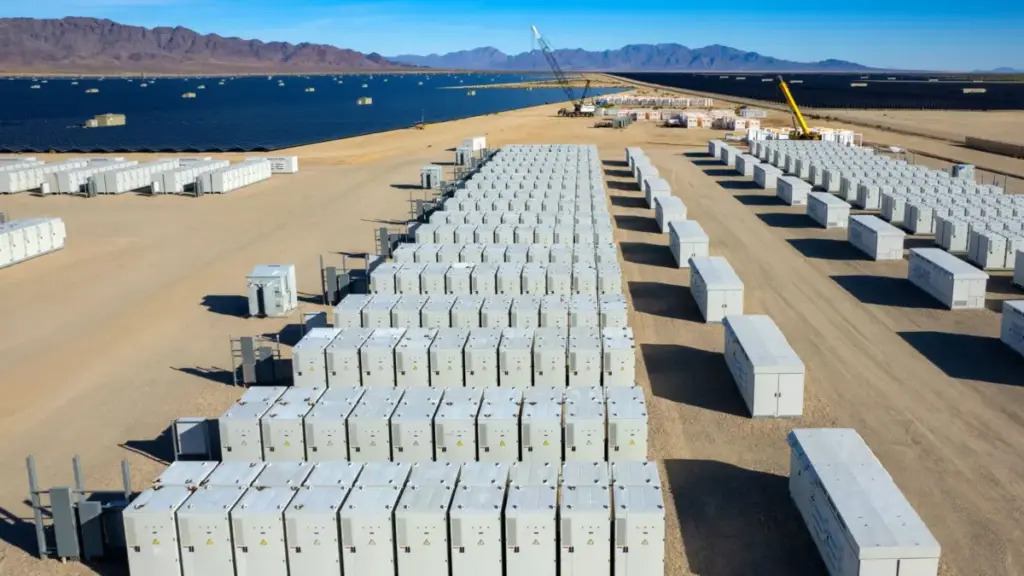
The second quarter of 2026 will be remembered in energy annals as the moment utility-scale storage matured into an industrial titan. The quarter’s historic 20.2 GWh figure was not achieved through a diffuse scattering of small projects, but rather through the coordinated deployment of colossal infrastructure assets.
During this three-month window, seven distinct "gigascale" battery installations—each boasting a capacity exceeding one gigawatt-hour—were successfully synchronized with the grid. These multi-acre installations, strategically sited in high-congestion transmission corridors across ERCOT (Texas), CAISO (California), and PJM Interconnection markets, absorbed excess midday solar generation and discharged power during peak evening demand hours, effectively preventing widespread curtailment and localized grid strain.
Industry experts have noted that Q2 2026 demonstrated the execution capabilities of leading independent power producers (IPPs) and utilities. While previous quarters relied on steady, incremental additions, Q2 was defined by the simultaneous commissioning of several multi-hundred-megawatt projects that had been delayed or refined during the post-pandemic supply chain adjustments of previous years.
Supporting Context & Metrics
The quantitative reality of the Q2 2026 report highlights a bifurcated market. While the macro-level indicators point to exponential growth, a granular examination of the data reveals distinct divergences between utility-scale power providers, commercial enterprises, and residential consumers.
Macro-Level Metrics and Growth Trajectories
- Q2 2026 Total Capacity Added: 20.2 gigawatt-hours (GWh).
- Projected Annual Deployment (2026): 71 GWh (a 20% increase over 2025 figures).
- Equivalent Homes Powered: 700,000 households for one full day.
- Gigascale Projects Commissioned: 7 installations, each exceeding 1 GWh of capacity.
The Utility-Scale Dominance
Utility-scale systems formed the bedrock of the Q2 2026 performance, accounting for the vast majority of the record-breaking capacity. These multi-megawatt and gigawatt-hour lithium-ion installations are designed to provide frequency regulation, spinning reserve, and peak-shaving capabilities. As coal and aging natural gas-fired peaker plants continue to retire across the United States, utility-scale batteries are stepping into the breach, providing the rapid-response balancing power required to maintain grid stability.
Behind-the-Meter (BTM) Dynamics: Data Centers vs. Residential Homes
Away from the massive utility installations, the "behind-the-meter" (BTM) category—encompassing systems installed on the customer side of the utility meter—displayed a stark internal contradiction.
- Commercial and Industrial (C&I) Surge: Within the BTM category, commercial installations experienced exceptional growth, dominated almost entirely by the technology sector. Data centers accounted for approximately three-quarters of all new commercial battery deployments in Q2 2026. Driven by the explosive computational demands of artificial intelligence (AI) workloads and cloud computing infrastructure, hyperscale data center operators are increasingly deploying massive on-site energy storage systems. These batteries serve a dual purpose: ensuring uninterrupted, high-reliability power quality to prevent catastrophic data loss, and mitigating exorbitant demand charges imposed by local utilities during peak grid utilization periods.
- Residential Slump: Conversely, residential battery installations experienced a severe contraction. Systems typically installed on single-family homes to store solar energy or provide backup power during grid failures are projected to drop by 16% over the course of 2026 compared to the previous year. This downturn is directly correlated with the expiration of federal residential battery subsidies at the end of 2025. Without these tax credits, the upfront capital expenditure for home storage systems has become prohibitive for many consumers, leading to a temporary cool-down in the rooftop solar-plus-storage market.
Official Statements & Industry Perspectives
Industry leaders and market analysts have offered critical insights into the underlying mechanics driving the Q2 2026 numbers, illuminating both the triumphs and vulnerabilities of the contemporary energy storage landscape.
The Power of Big Projects
Shan Tomouk, energy storage and energy lead for Benchmark Mineral Intelligence, emphasized the concentration of capital and engineering prowess required to achieve the Q2 milestones. In an interview regarding the SEIA-Benchmark report, Tomouk remarked:
"It really came down to a handful of big projects."
Tomouk expanded on the structural shifts within the market, noting that while utility-scale developments are operating at a breakneck pace, the residential sector is navigating a policy-induced vacuum. Regarding the residential drop-off, Tomouk explained that the 16% projected annual decline stems directly from the cessation of the home battery tax credit at the close of 2025. However, he remains optimistic about the long-term horizon, projecting that home installations will recover and resume growth by the end of the decade as technology costs continue their downward trajectory and consumer demand for energy resilience reasserts itself. Notably, Tomouk pointed out that tax credits supporting nonresidential (commercial and utility-scale) batteries have largely survived legislative reviews, preserving a favorable economic backdrop for industrial developers.
A Bright Spot in the Energy Economy
The exceptional performance of the storage sector stands in stark contrast to the regulatory and market uncertainties facing other segments of the traditional energy economy. Isshu Kikuma, an energy storage analyst at BloombergNEF, underscored the unique position batteries currently hold within the broader industrial landscape:
"This is one of the strong sectors in the US right now."
Kikuma noted that the convergence of falling battery cell manufacturing costs globally—driven by intense production overcapacity in international markets—has inadvertently benefited US developers by lowering the levelized cost of storage (LCOS). This cost reduction has enabled project developers to secure financing more easily, turning energy storage into one of the most bankable asset classes in the modern clean energy portfolio.
Future Outlook: Domestic Manufacturing, Tariffs, and Supply Chain Realignment
As the US energy storage market looks beyond the immediate successes of Q2 2026, it faces a profound industrial transformation centered on supply chain nationalism, international trade policy, and manufacturing capacity constraints.
The China Dependency Dilemma
A critical vulnerability underpinning the current US storage boom is its heavy reliance on foreign supply chains. Currently, nearly all of the battery cells being integrated into energy storage systems across the United States are manufactured in China. While a portion of these Chinese-made cells undergo final assembly into complete containerized energy storage systems (ESS) within domestic US facilities, the core technology remains heavily anchored to Asian manufacturing hubs.
This reliance has become a central point of tension for policymakers and domestic manufacturers. Over recent years, aggressive federal tariffs have been deployed to discourage unchecked reliance on Chinese clean energy hardware. More critically, new regulatory compliance frameworks taking effect this year stipulate that energy storage projects must systematically limit their reliance on Chinese-imported components to remain fully eligible for lucrative clean energy tax credits.
The Road to Domestic Self-Sufficiency
In response to these tightening regulatory and tariff regimes, a massive wave of capital has been directed toward building domestic battery cell and module manufacturing plants across the United States. Gigafactories are currently under construction in states such as Georgia, Tennessee, Michigan, and Nevada, promising a future where American-made batteries power the domestic grid.
However, bridging the gap between policy mandates and industrial reality presents a formidable challenge. According to industry projections cited by Shan Tomouk, while domestic manufacturing capacity is expanding rapidly, newly constructed US factories will likely not achieve the scale required to fully meet domestic demand until approximately 2030.
This temporal mismatch creates a near-term pricing risk for developers. As tariffs take full effect and projects are forced to transition away from low-cost Chinese imports before domestic production is fully online, system prices could experience upward pressure, potentially squeezing project margins and slowing deployment velocity in the late 2020s.
Conclusion
The second quarter of 2026 has definitively established energy storage as an indispensable pillar of the modern American electrical grid. With 20.2 GWh of new capacity brought online in a single quarter and a projected 71 GWh annual total on the horizon, the sector is successfully meeting the operational demands of a rapidly decarbonizing power system.
Yet, as the industry navigates the structural decline of the residential market, the skyrocketing demands of AI-driven data centers, and the complex geopolitical pivot toward domestic manufacturing, its long-term trajectory will depend heavily on regulatory stability, supply chain execution, and technological innovation. What is certain, however, is that the era of large-scale energy storage has arrived, and its foundational role in the future of American power is secure.



