

Executive Overview
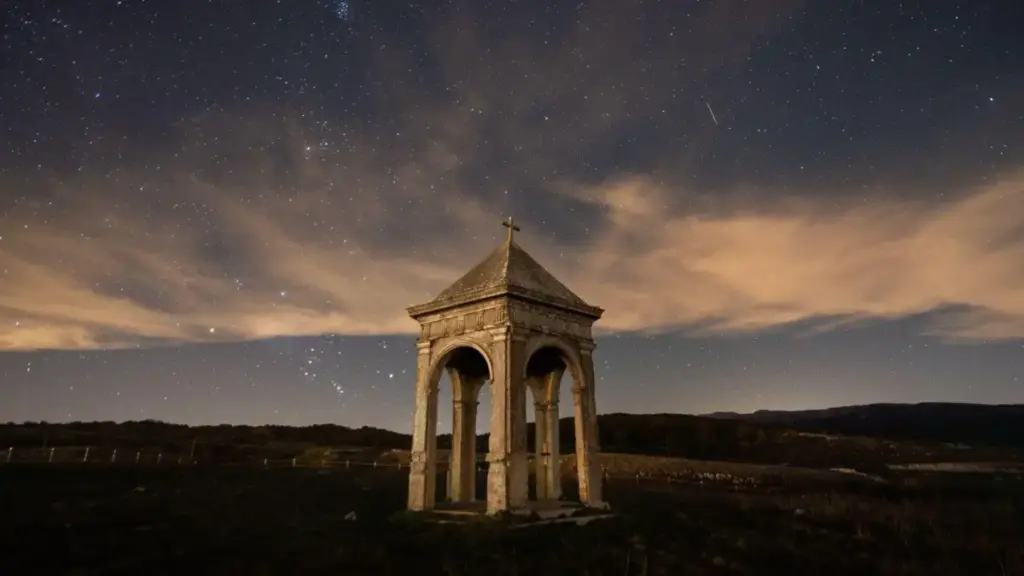
As the autumn chill deepens across the Northern Hemisphere, astronomy enthusiasts and casual skywatchers alike are turning their eyes upward for one of the celestial calendar’s most anticipated annual displays. The Orionid meteor shower—a stellar phenomenon renowned for both its astonishing velocity and its picturesque, lingering luminous trails—is currently active. Running through November 7, this cosmic event offers weeks of stargazing opportunities, culminating in an intense overnight peak between October 21 and October 22.
The Orionids are not born from the destruction of an independent passing asteroid, nor do they originate from the outer fringes of the Kuiper Belt. Instead, they are the direct byproduct of humanity’s most famous celestial visitor: Halley’s Comet. Twice a year, Earth’s orbital path intersects with the vast, ancient rivers of dust and debris left in the wake of this legendary 76-year periodic comet. While the Eta Aquariids grace the night skies in May, it is the October Orionids that frequently capture the public imagination, delivering rapid-fire streaks of light that slash across the earth’s atmosphere at blistering speeds.
Despite the broad activity window spanning several weeks, successful observation requires an understanding of local weather patterns, lunar cycles, and the precise mechanics of night-sky viewing. Regional forecasts indicate a mixed bag of viewing conditions, with southern and eastern parts of England enjoying the highest probability of uninterrupted, clear skies, while central and northern districts contend with lingering cloud cover and isolated rain fronts. Furthermore, the positioning of the Moon during the peak weeks will introduce a natural light pollution challenge, making patience, dark-sky scouting, and adherence to foundational stargazing techniques more vital than ever.
Detailed Chronology: The Lifecycle of the Orionid Display
To fully appreciate the meteors streaking overhead this weekend, one must understand the lengthy, precise timeline that brings these microscopic space rocks into our atmosphere. The journey of an Orionid meteor begins centuries, and sometimes millennia, before it ever catches a human eye.
Phase 1: The Trail Left Behind (Pre-Encounter)
Halley’s Comet, officially designated 1P/Halley, is a periodic comet that completes one full elliptical orbit around the Sun roughly every 76 years. As this icy body swings through the inner solar system, solar radiation heats its volatile compounds, causing them to sublimate and release billions of tons of rocky debris, dust, and pebbles. This material does not disperse randomly into deep space; rather, it settles into a broad, diffuse stream that traces the comet’s orbital ellipse. Because Earth crosses this orbital highway twice a year, our planet routinely runs headfirst into these historical deposits.

Phase 2: Atmospheric Entry (The Hyper-Velocity Show)
When Earth ploughs through the debris stream in October, the particles—most no larger than a grain of sand or a small pebble—encounter our upper atmosphere at extreme velocities. The Orionids rank among the fastest meteor showers known to science, hurtling into the air column at a staggering 41 miles per second (approximately 147,600 miles per hour).
At these phenomenal speeds, the kinetic energy of the incoming particle instantly compresses and heats the air molecules directly in front of it. This thermal shock causes the surrounding atmospheric gases to ionize and incandesce, while the meteoroid itself vaporizes in a brilliant flash of light. Because the particles are traveling with such immense momentum, they frequently carve deep, glowing ion channels through the upper atmosphere. This results in characteristic "trains"—luminous, smoky trails that can linger in the dark sky for several seconds after the initial flash has vanished.
Phase 3: The Peak Window (October 21–22)
While sporadic Orionids can be spotted any night from late September through early November, the shower hits its zenith during the overnight hours of October 21 to 22. Under ideal, pristine dark-sky conditions, observers can anticipate a Zenithal Hourly Rate (ZHR) of roughly 10 to 20 meteors per hour. Though not the most numerically dense shower of the year—such as August’s Perseids or December’s Geminids—the Orionids more than compensate for lower numerical yields with their sheer speed and aesthetic brilliance.
Supporting Context & Metrics: Halley’s Comet and Viewing Physics
The Legacy of 1P/Halley
Halley’s Comet remains the undisputed rock star of cometary astronomy. It holds the distinction of being the first short-period comet to be recognized as periodic, a breakthrough achieved by English astronomer Edmond Halley in 1758. Historical records of its appearances stretch back more than two millennia, with verified Chinese, Babylonian, and medieval European chronicles detailing its recurring visits.
- Orbital Period: Approximately 76 years (though gravitational interactions with major planets can alter this by a year or two).
- Last Perihelion (Closest Approach to the Sun): February 1986. During this appearance, the international scientific community dispatched an armada of spacecraft—including the European Space Agency’s Giotto and the Soviet Union’s Vega probes—to intercept and photograph the comet’s dark, potato-shaped nucleus.
- Next Return: July 2061. While the comet itself will remain hidden in the outer solar system for decades to come, its persistent orbital debris guarantees that humanity will continue to enjoy the Eta Aquariid and Orionid meteor showers annually without interruption.
Optical Mechanics and the Radiant Point
The Orionids derive their name from the constellation Orion, specifically because the paths of the meteors appear to originate—or "radiate"—from a single point just north of Betelgeuse, one of the constellation’s brightest stars.

Orion is arguably one of the most recognizable patterns in the nocturnal sky, anchored by its famous three-star belt and the surrounding hourglass configuration. However, astronomers emphasize a common misconception: observers should not look directly at the constellation Orion to see the meteors.
Because meteors close to the radiant point possess very short visible trails (moving head-on toward the viewer’s line of sight), looking straight at Orion will yield fewer sightings. Instead, stargazers are advised to cast their gaze toward darker patches of sky roughly 45 to 90 degrees away from the radiant. This vantage point reveals longer, more dramatic streaks as the particles cross a broader swath of the atmosphere.
Official Statements & Meteorological Forecasts
Observational astronomy is ultimately at the mercy of Earth’s local weather systems. Meteorological agencies across the UK and Europe have released comprehensive regional forecasts to help stargazers optimize their weekend plans. Viewing prospects are currently characterized as highly regionalized and variable:
- Southern and Eastern England: These regions hold the strongest cards for the weekend. Forecasters project prolonged clear spells, providing optimal windows for dark-sky observation. While occasional wispy clouds may drift across the horizon, they are unlikely to obscure the overarching celestial display.
- Wales, the Midlands, and Northern England: Stargazers in these areas face a more challenging environment. A slow-moving frontal system is slated to bring persistent cloud cover and intermittent outbreaks of rain. Nevertheless, meteorological models suggest that the precipitation will gradually transition into patchier, lighter showers as the night progresses, allowing for brief, opportunistic cloud breaks.
- Scotland and Northern Ireland: A mixed, dynamic atmospheric pattern is expected here, defined by alternating periods of clear skies, patchy cumulus clouds, and passing showers. Success will hinge on timing; viewers who time their sessions between passing showers will capture clear views of the heavens.
The Lunar Factor
Compounding the meteorological variables is the lunar cycle. As the Orionid season progresses toward its late-October peak, the Moon will steadily wax toward its full phase on October 26. The increasing lunar illumination introduces a degree of natural light pollution that can wash out fainter, more subtle meteors.
Meteor experts note that while fainter streaks may be lost in the lunar glare, the brighter members of the Orionid family—fueled by their high-speed atmospheric entry—will easily cut through the moonlight. To mitigate the moon’s impact, observers are encouraged to position themselves so that local topography or buildings block direct line-of-sight to the Moon, or to schedule their viewing sessions during the dark hours before moonrise or after moonset.

Future Outlook: Practical Guidelines for the Weekend Stargazer
To maximize the viewing experience of the Orionid meteor shower this weekend, professional astronomers and seasoned astrophotographers recommend a strict adherence to observational best practices:
- Escape Artificial Light: Light pollution remains the single greatest enemy of practical astronomy. Drive out of urban centers, residential developments, and brightly lit highways into designated Dark Sky Parks, rural expanses, or coastal lookouts.
- Abandon Optical Aids: Leave telescopes and binoculars in their cases. Meteor showers require a wide, unobstructed field of view. Binoculars restrict your peripheral vision and drastically lower the statistical probability of catching a fast-moving flash.
- Prioritize Dark Adaptation: The human eye requires roughly 15 to 20 minutes to fully dilate and maximize its rod-cell sensitivity in pitch blackness. Avoid checking smartphones, car dashboards, or flashlights during this adjustment period; even a brief flash of white light resets the biological dark-adaptation clock.
- Dress for the Season: October nights feature rapidly dropping temperatures and heavy autumnal dew. Layering thermal clothing, wearing thick woolen socks, and utilizing sleeping bags or reclining lawn chairs will ensure physical comfort during prolonged outdoor vigils.
- Exercise Patience: Meteors do not arrive in steady, metronomic intervals. They travel in sporadic surges, punctuated by quiet lulls. Committing to a minimum observation window of one hour significantly increases the likelihood of witnessing multiple high-velocity displays.
As Halley’s Comet continues its silent, multi-decade loop through the deep solar system, the ancient dust it left behind serves as a bridge between human observers on Earth and the wider mechanics of the cosmos. This weekend’s Orionid shower offers a rare, accessible reminder of our planet’s active journey through a dynamic, debris-laden stellar neighborhood.



