

Executive Overview
As summer temperatures soar and heatwaves become increasingly intense across the globe, the sartorial search for relief begins. Consumers are continually looking for garments that bridge the gap between keeping cool and maintaining a polished, intentional aesthetic. Enter linen: the undisputed champion of warm-weather fabrics. Celebrated for its exceptional breathability, lightweight texture, and timeless appeal, linen has transitioned from a rustic historical textile to the cornerstone of modern, conscious summer wardrobes.
However, not all linen is created equal. While the flax plant itself is inherently resilient, requiring significantly less water and fewer chemical pesticides than conventional cotton, the industrial journey from plant to finished dress can often involve resource-intensive and chemically heavy processes. From retting and mechanical processing to dyeing and finishing, conventional linen production can carry hidden environmental costs.
In response, a growing movement of ethical fashion advocates, transparency platforms, and independent rating systems are steering consumers toward better alternatives. Organizations like Good On You utilize rigorous, multi-faceted methodologies to evaluate fashion brands based on their impact on people, the planet, and animals. By championing high-rated brands—such as PANGAIA, LA Relaxed, Artknit Studios, and JAN N JUNE—conscious consumers can curate a summer wardrobe that honors both personal comfort and ecological integrity.
This report provides an in-depth exploration of linen’s ecological profile, practical guidelines for identifying truly sustainable garments, and a curated breakdown of 12 ethical linen dresses designed to keep you cool, stylish, and sustainable all season long.
Detailed Chronology: The Evolution of Linen from Ancient Staple to Modern Sustainable Icon
To fully appreciate the modern revival of linen, it is essential to understand its historical trajectory and how industrial practices transformed it into the material we know today.
Pre-Industrial Era: The Roots of Flax Cultivation
Linen is widely recognized as one of the oldest textiles in human history, with evidence of its production dating back tens of thousands of years to ancient Mesopotamia and Egypt. Early civilizations valued flax for its incredible durability and coolness in arid climates. Cultivated primarily in temperate regions, flax grew easily in poor soils where other crops struggled. The traditional process of turning flax into wearable fabric was entirely manual: pulling the plants by hand, retting (soaking the stalks to loosen fibers), scutching (beating to remove woody outer layers), hackling (combing), and finally hand-spinning and weaving. Because energy grids and synthetic chemicals did not exist, ancient linen production operated in a closed-loop harmony with local ecosystems.
The Industrial Revolution and Synthetic Displacement
With the advent of the Industrial Revolution, textile manufacturing shifted dramatically. The invention of the cotton gin, cheap synthetic dyes, and eventually petroleum-based synthetic fibers like polyester and nylon overshadowed linen. Linen production became mechanized, and to meet mass-market demands for uniformity, speed, and wrinkle resistance, manufacturers began introducing heavy chemical treatments, synthetic bleaches, and complex resin finishes. Consequently, linen temporarily lost its market share, often dismissed as a niche, high-maintenance fabric prone to wrinkling.
The 21st-Century Eco-Renaissance
In recent decades, a reckoning within the global fashion industry has pushed consumers and designers to reconsider natural, lower-impact fibers. As the environmental catastrophe of fast fashion—characterized by microplastic shedding, staggering water consumption, and modern-day exploitation—came to light, textile experts looked backward to move forward. Flax cultivation re-emerged as a shining example of regenerative agriculture potential, particularly in Western Europe, which currently produces the vast majority of the world’s high-grade flax. Today, modern independent rating systems and transparent supply chains allow consumers to verify the credentials of their clothing, ushering in a golden age for ethical linen dresses.
Supporting Context & Metrics: Unpacking the Environmental Profile of Linen
Evaluating the true sustainability of a linen garment requires a granular look at its lifecycle, from seed to landfill. While linen holds inherent environmental advantages over materials like conventional cotton or synthetic polyester, its production footprint depends heavily on agricultural and manufacturing practices.
1. Water Consumption and Agrochemicals
One of linen’s greatest ecological assets is the flax plant’s minimal thirst. Unlike conventional cotton—which is famously water-intensive, requiring thousands of liters per single t-shirt—flax relies primarily on rainwater in many growing regions, drastically reducing irrigation demands. Furthermore, flax is naturally resilient and robust, meaning it typically requires far fewer synthetic pesticides and fertilizers than cotton.
However, vigilance is still required. Non-organic flax farming may still utilize synthetic agrochemicals that degrade soil health and harm local biodiversity. Seeking out certifications like the Global Organic Textile Standard (GOTS) ensures that the flax was grown without harmful chemicals and processed under strict ecological guidelines.
2. The Nuances of Retting and Dyeing
While growing flax is relatively clean, the transformation of raw plant stalks into soft yarn involves critical processing steps:
- Retting: This process uses moisture and microbes to break down the pectin binding the fibers to the woody stalk. Traditional dew-retting relies on morning dew and rain, while water-retting involves submerging stalks in rivers or tanks. Poorly managed water-retting can lead to localized water pollution if oxygen-depleted effluent is discharged untreated.
- Dyeing and Finishing: In its natural state, linen exhibits earthy tones ranging from flaxen gray to oatmeal. Achieving vibrant colors or brilliant whites requires dyeing and bleaching. Conventional chemical dyes can release hazardous heavy metals and toxins into waterways. Sustainable brands increasingly utilize low-impact, non-toxic, or natural dyes, safeguarding aquatic ecosystems and garment wearers alike.
3. Biodegradability vs. Synthetic Blends
Pure, 100% linen is a natural, plant-based cellulose fiber, meaning it is inherently biodegradable. At the end of a garment’s exceptionally long lifecycle, pure linen can safely break down in compost environments without leaving persistent microplastics behind.
However, many contemporary fashion brands blend linen with synthetic fibers (such as polyester or nylon) or even other natural fibers to reduce its tendency to wrinkle or to alter its drape. While blends can sometimes enhance garment longevity or performance, they present a major recycling hurdle. Multi-fiber blends are notoriously difficult—and often economically unfeasible—to separate and recycle, frequently landing them in landfills. Therefore, opting for pure, 100% linen is the gold standard for circular fashion.
Official Statements and Industry Insights
Experts across the sustainable fashion landscape emphasize that consumer education is the primary weapon against greenwashing, particularly when shopping for natural materials like linen.
"Linen is a magnificent material with a rich history and stellar ecological credentials, but consumers must look beyond the green buzzwords," notes a leading sustainability analyst at Good On You. "Just because a dress is labeled ‘linen’ does not automatically make it ethical or sustainable. We must interrogate how the flax was farmed, whether harsh chemical treatments were used during manufacturing, and if the brand ensures fair labor standards throughout its supply chain."
Industry watchdogs also stress the importance of longevity. Because high-quality linen is extraordinarily durable—growing softer and more lustrous with every wash—its true environmental impact diminishes over time when worn across multiple seasons.
"When you invest in a well-constructed, 100% organic linen dress from a transparent, highly rated brand, you are buying into a system of durability," explains an independent sustainable textile researcher. "Fast fashion trains us to view clothes as disposable. Linen challenges that narrative because it is built to last for years, provided it is cared for correctly."
Curated Guide: 12 Ethical Linen Dresses to Elevate Your Summer Wardrobe
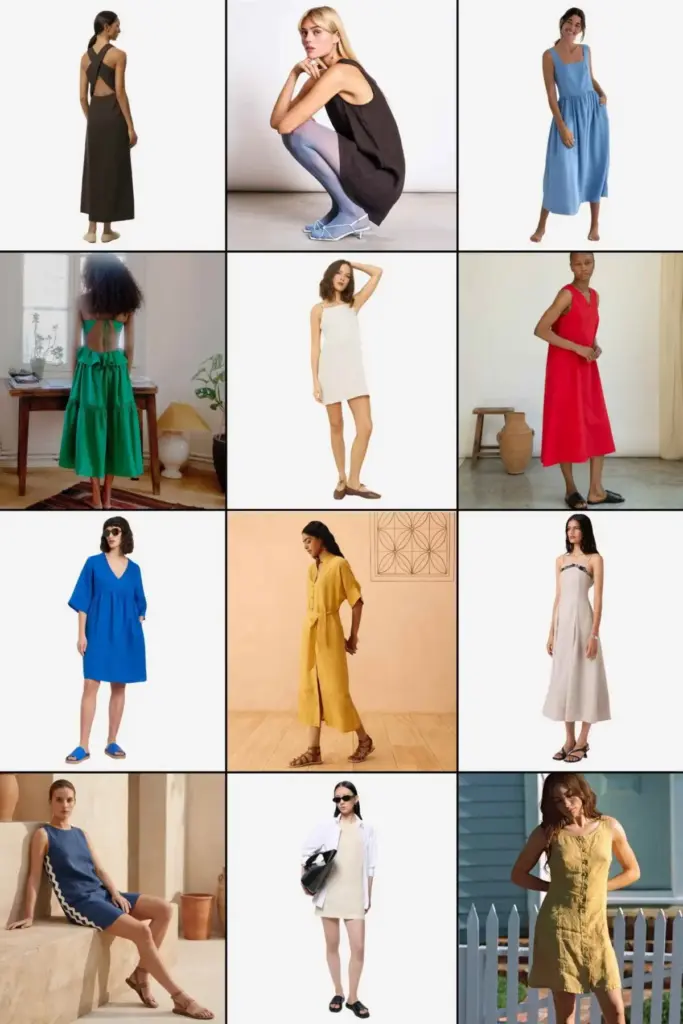
To help you navigate the market, we have curated a selection of 12 exceptional linen dresses from brands independently rated and vetted by Good On You for their robust commitments to people, the planet, and transparency. Spanning maxi lengths, breezy mini cuts, sophisticated shirt dresses, and versatile shift silhouettes, these options prove that style and sustainability can effortlessly coexist.
1. Artknit Studios – The Linen Twill Special Back Dress (Café Noir)
Merging minimalist Italian design with radical transparency, Artknit Studios utilizes premium natural fibers. This sophisticated café noir dress features a unique special-back design, making it an ideal transitional piece for warm summer evenings and formal outdoor gatherings alike.
2. JAN N JUNE – Linen Mini Dress (Salvia Mud)
Known for their dedication to eco-friendly urban streetwear, Berlin-based JAN N JUNE crafts this breezy linen mini dress in a calming, earthy "salvia mud" hue. It is an effortless, lightweight option for casual weekend outings under the sun.
3. TWOTHIRDS – Formentera Linen Dress (Denim Blue)
Inspired by the ocean, TWOTHIRDS creates garments designed to protect marine ecosystems. The Formentera dress in denim blue offers a relaxed, coastal aesthetic, crafted from pure, breathable linen that keeps you cool while honoring the brand’s blue-economy ethos.
4. OhSevenDays – Holly Linen Dress
Based in Istanbul, OhSevenDays focuses on slow fashion principles, frequently utilizing deadstock and lower-impact materials. The Holly Linen Dress showcases clean architectural lines and versatile styling, perfect for those seeking contemporary, conscious elegance.
5. Whimsy + Row – Lainey Striped Linen Mini Dress
L.A.-based sustainable favorite Whimsy + Row creates limited-batch clothing with a focus on local manufacturing and deadstock fabrics. The Lainey Striped Linen Mini Dress is a playful, lightweight option featuring classic summer stripes and a flattering cut.
6. Beaumont Organic – Cotton and Linen-Blend Dress (Scarlet)
Bridging the gap between casual comfort and striking color, Beaumont Organic crafts timeless womenswear using certified organic and lower-impact materials. Their striking scarlet dress blends organic cotton and linen, offering a soft drape and vibrant pop of color.
7. Lanius – Organic Linen Dress
German eco-fashion pioneer Lanius is renowned for its uncompromising commitment to animal welfare, fair labor, and certified organic materials. This GOTS-certified organic linen dress embodies effortless grace, ensuring that your summer wardrobe remains strictly cruelty-free and eco-conscious.
8. Sui – Golden Palm Linen Maxi Shirt Dress
Sui bridges traditional artisan craftsmanship with modern sustainable design across India and Italy. The Golden Palm Linen Maxi Shirt Dress offers structural sophistication, combining the ease of a button-down silhouette with the breezy flow of a summer maxi.
9. The Summer House – Suhjan Embroidered Linen Dress (Beige)
Celebrating slow, conscious craftsmanship, The Summer House partners with independent artisans in India. The Suhjan Beige Linen Dress features delicate embroidery and artisanal detailing, highlighting the beauty of slow-made, handcrafted apparel.
10. SeamsFriendly – Contrast-Detailed Linen Shift Dress
Offering customizable sizing to reduce textile waste, SeamsFriendly focuses on inclusive, conscious fashion. This contrast-detailed linen shift dress pairs navy blue tones with playful wavy stripes, delivering both comfort and versatile styling.
11. PANGAIA – A-Line Linen Dress (Bone White)
A global leader in material science and environmental innovation, PANGAIA applies cutting-edge sustainability to everyday essentials. Their bone-white A-line linen dress is engineered for optimal airflow, clean aesthetics, and minimal ecological footprint.
12. LA Relaxed – The Linen Pinafore
True to its name, LA Relaxed produces comfort-driven, locally manufactured garments in Los Angeles using sustainable fibers. The Linen Pinafore is a versatile layering piece that can be worn solo during peak heatwaves or layered over organic cotton tees as seasons shift.
Future Outlook: What Lies Ahead for Sustainable Linen
As the global textile industry faces mounting regulatory pressure and heightened consumer awareness regarding greenwashing, the demand for verified sustainable linen is projected to surge. Several key trends are shaping the future of the linen market:
- Traceability and Digital Passports: Emerging technologies, including blockchain and digital product passports, will allow consumers to scan a garment tag and trace their linen dress directly back to the specific European farm where the flax was harvested.
- Expansion of Regional Processing: While much of the world’s flax is grown in Europe, it has historically been sent to Asia for spinning and weaving due to infrastructure shifts. Efforts are underway to revitalize local processing mills in Western markets, significantly reducing the carbon footprint associated with global shipping loops.
- Regenerative Agriculture Integration: Forward-thinking brands are moving beyond mere "organic" labels toward regenerative farming models that actively restore soil microbiomes, sequester carbon, and enhance local biodiversity through crop rotation with flax.
Final Takeaway
Investing in a sustainable linen dress is more than a seasonal fashion choice—it is a vote for regenerative agriculture, transparent supply chains, and enduring craftsmanship. By prioritizing certified organic fibers, 100% pure linen constructions, and brands vetted by rigorous third-party platforms like Good On You, you can beat the heatwaves of today while safeguarding the planet for tomorrow.



