


Executive Overview
The modern electrical grid stands at a historic crossroads. Built generations ago on a centralized, unidirectional model designed to push power passively from massive fossil fuel or nuclear plants down to end-users, today’s grid is buckling under the weight of an unprecedented paradigm shift. Driven by the rapid proliferation of electric vehicles (EVs), home battery storage systems, rooftop solar arrays, smart thermostats, utility-scale renewables, and power-hungry artificial intelligence data centers, electricity demand and load volatility are surging simultaneously.
Enter Texture, an innovative grid software startup that is tackling this operational crisis head-on. The company announced today that it has successfully closed a $12.5 million Series A funding round, bringing its total venture backing to approximately $23 million. The round was co-led by prominent climate and tech investors VoLo Earth Ventures and Equal Ventures, with additional strategic participation from Lerer Hippeau and Abstract Ventures.
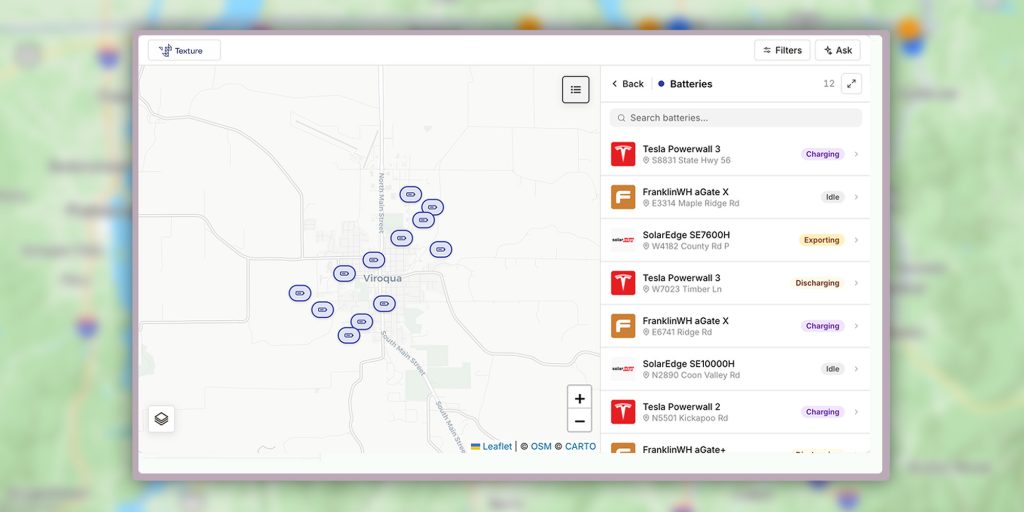
Texture’s core value proposition is straightforward yet desperately needed: rather than forcing utility operators to juggle a fragmented array of legacy software tools that fail to communicate with one another, Texture integrates meters, devices, and disparate data streams into a single, unified real-time operating layer. This system allows grid managers to monitor network health down to the meter level, anticipate localized stress points, and coordinate distributed energy resources (DERs) dynamically—all without necessitating costly, multi-year infrastructure overhauls or massive engineering deployments.
Detailed Chronology: The Journey to Series A and Rapid Market Expansion
To understand the significance of Texture’s recent capital injection, one must examine the rapid trajectory of the company and the compounding pressures facing grid operators over the past several years.

From Concept to Critical Infrastructure
Founded to address the glaring software deficit in modern utility management, Texture quickly recognized that traditional grid management systems (such as legacy SCADA and Advanced Metering Infrastructure platforms) were never designed to process the high-frequency, bidirectional data flows characteristic of modern renewables and edge devices.
- Early Development & Integrations: Over the preceding years, Texture focused heavily on building native, direct application programming interface (API) integrations with major hardware original equipment manufacturers (OEMs) and energy management platforms. Today, the platform boasts integrations with more than 50 industry leaders, including Tesla, FranklinWH, Honeywell, Ecobee, SolarEdge, Leap Energy, and WattTime.
- Real-World Deployments: These foundational integrations enabled early high-impact projects, such as supporting Ann Arbor’s Sustainable Energy Utility earlier this year in launching a pioneering community battery program utilizing FranklinWH home energy storage systems across 100 residential properties.
- The Strategic NRTC Partnership: In a major milestone for market penetration, Texture recently secured a landmark partnership with the National Rural Telecommunications Cooperative (NRTC). Through this alliance, the NRTC’s extensive network—representing roughly 850 utility cooperatives across the United States—gain streamlined access to distributed energy resource management software (DERMS) powered by Texture.
- The Series A Milestone: Culminating this period of rapid expansion, the $12.5 million Series A round announced today will provide Texture with the financial runway necessary to accelerate targeted hiring, expand its software platform capabilities, and onboard hundreds of new utility partners seeking rapid grid modernization solutions.
Supporting Context & Metrics: The Strain on Modern Power Grids
The urgency behind Texture’s software platform is rooted in hard economic and engineering data. Modern grids are facing unprecedented stressors that threaten reliability, escalate operational costs, and accelerate equipment degradation.
The EV Charging Boom and Localized Load Growth
While utility-scale renewable energy farms command major headlines, localized load growth—particularly from residential and commercial EV charging—presents an entirely different operational nightmare. Unlike predictable, gradual industrial load curves, EV charging creates sudden, highly concentrated spikes in electricity demand at the neighborhood level.
Texture’s software is uniquely engineered to detect these sudden surges at the individual meter level. By tracing how localized demand spikes propagate across local distribution transformers and feeders, the software grants operators vital situational awareness. This enables proactive load management before physical infrastructure fails.
The Transformer Crisis: Cost and Lead Time Surpluses
Proactive monitoring is no longer just a matter of operational efficiency; it is an economic imperative. According to market data from Wood Mackenzie, transformer prices have skyrocketed by as much as 95% since 2019. Compounding this financial burden, supply chain bottlenecks mean that lead times for large-scale utility transformers can now stretch beyond two years.
When a transformer blows due to unmanaged EV charging loads or extreme weather events, replacing it is exceptionally expensive and time-consuming. Software tools like Texture that can prevent equipment burnout by dynamically managing demand at the grid edge offer utilities multi-million-dollar risk mitigation.
The Vulnerability of Legacy Virtual Power Plants (VPPs)
As virtual power plants (VPPs) and demand-response programs become central to maintaining grid stability during peak events—such as winter storms or summer heatwaves—data accuracy is paramount. Texture notes that many existing VPP platforms suffer from a critical blind spot: they lack access to real-time, high-resolution meter data. Without direct visibility into actual, on-the-ground grid conditions, dispatch decisions can be inaccurate or poorly timed. Texture’s unified data layer bridges this gap, giving operators precise telemetry to coordinate batteries, smart thermostats, and EVs with surgical precision.
Official Statements and Industry Perspectives
The rapid adoption of Texture’s platform by smaller utilities highlights a massive, historically underserved segment of the energy market: utility cooperatives.

Bridging the Scale and Budget Gap for Co-ops
While investor-owned utilities (IOUs) often command massive capital budgets to fund bespoke, multi-year software deployments, utility cooperatives operate under severe financial and operational constraints. Serving approximately 42 million Americans, predominantly in rural and semi-rural areas, co-ops face the exact same clean energy transition and grid modernization pressures as their massive corporate counterparts—without the multi-million-dollar IT budgets.
"Co-ops kept telling me the same thing," explains Sanjiv Sanghavi, Co-founder and CEO of Texture. "They wanted to run modern grid programs but didn’t have software built for their scale or budget."
By designing a platform that can be deployed within days rather than years, Texture has positioned itself as an ideal partner for resource-constrained co-ops. Rather than requiring utilities to rip out and replace legacy infrastructure, Texture’s software overlays existing systems, creating an immediate intelligence layer.
Investor Confidence in the Energy Transition
The co-lead investors in Texture’s Series A round emphasized the critical role that software innovation must play if the global clean energy transition is to succeed without sacrificing grid reliability.

- VoLo Earth Ventures pointed to the sheer velocity at which electrification, decentralized generation, and artificial intelligence data center loads are scaling. Investors noted that physical wires alone cannot be built fast enough to keep pace; intelligent software orchestration is the only scalable solution to maximize the capacity of existing grid assets.
- Equal Ventures highlighted Texture’s exceptional go-to-market strategy, particularly its early foothold among rural electric co-ops and its deep hardware-agnostic API integrations, which give the startup a powerful competitive moat in the burgeoning DERMS market.
Future Outlook: The Path Forward for Texture and Grid Intelligence
As Texture deploys its newly secured $12.5 million in capital, the company’s roadmap centers on aggressive scaling, deepening its ecosystem integrations, and solidifying its footprint across North American utility networks.
Scaling the Cooperative and Municipal Markets
With the NRTC partnership acting as a massive distribution channel, Texture is poised to scale its software across hundreds of rural cooperatives over the coming years. Furthermore, municipal utilities and small-to-midsize investor-owned utilities facing identical regulatory and infrastructural pressures represent natural extensions for the platform.
Integrating AI and Advanced Grid Automation
Looking further ahead, the convergence of artificial intelligence and grid management will define the next decade of power engineering. As AI data centers continue to demand massive, continuous baseload power while simultaneously introducing complex load-shifting requirements, real-time software layers like Texture will serve as the neural network connecting decentralized energy assets to centralized grid commands.
Conclusion
The transition toward a decarbonized, electrified economy cannot succeed if the underlying grid software remains trapped in the 20th century. By delivering a nimble, cost-effective, and deeply integrated real-time operating layer that bridges meters, EVs, batteries, and renewables, Texture is giving utility operators the visibility and control they desperately need. With fresh capital, high-profile partnerships, and a proven track record among early adopters like the Vermont Electric Cooperative and rural co-ops nationwide, Texture is well-positioned to become a foundational pillar of the modern intelligent grid.



