


Executive Overview
The Earth’s climate system is undergoing a volatile, high-stakes shift. Off the Pacific coast of South America, the periodic climate pattern known as El Niño is mutating into an unprecedented meteorological anomaly. Surging past historical benchmarks, sea surface temperatures in the region have climbed more than 3 degrees Celsius above normal. This makes the current event the warmest El Niño recorded since satellite measurements began half a century ago. Climate scientists project that the phenomenon has not yet peaked; it is expected to intensify further, potentially reaching a staggering 4 degrees Celsius above baseline by November or December.
Yet, this climatic powerhouse is only half the story. On the opposite side of the Americas, the Atlantic hurricane season—which traditionally churns with destructive energy starting in June—is shattering records in the exact opposite direction. While a typical year would have produced roughly four named hurricanes by this point in the season, two of which would be classified as major, the Atlantic basin has recorded a historic lull.
These two extreme meteorological anomalies are not isolated occurrences. Instead, they are deeply interconnected manifestations of a rapidly warming planet. The gargantuan heat engine unfolding in the Pacific is simultaneously starving the Atlantic of its usual hurricane activity while spawning monstrous, rapidly intensifying cyclones off western North America and threatening island nations. Beyond immediate storm impacts, this colossal El Niño is projected to release waves of atmospheric heat capable of triggering catastrophic droughts, crippling agricultural yields, and threatening hundreds of thousands of lives globally.
As experts analyze the cascading effects of this event, a sobering consensus emerges: this record-shattering El Niño is not just an extreme outlier. It offers an alarming, unvarnished preview of what standard global climatic conditions will look like just two decades from now as anthropogenic climate warming continues unabated.
Detailed Chronology: A Tale of Two Oceans
To grasp the sheer scale of the current weather disruption, one must look at the simultaneous, contrasting behaviors of the Pacific and Atlantic basins—a timeline of extremes unfolding in real time.
The Pacific Engine Roars to Life
The warning signs began early, but the acceleration over the summer months caught even seasoned climatologists off guard. By late September, Pacific waters along the equator were boiling more than 3 degrees Celsius above historical averages.
The consequences of this thermal overload materialized with terrifying speed. In the western and eastern Pacific corridors, tropical systems transformed into weather monsters almost overnight. Earlier in the week, Hurricane Polo executed an astonishing display of rapid intensification—a meteorological phenomenon defined by an increase in sustained wind speeds of at least 35 mph within a 24-hour period. Polo mutated from a standard tropical storm into a Category 5 behemoth in less than a day, fueled by warm ocean waters supercharged by the El Niño anomaly. Climate models project that Polo will make landfall in Baja California, Mexico, posing severe risks to coastal infrastructure and inland communities.
Simultaneously, a second system, Tropical Storm Nolo, spun up into a hurricane, threatening the Hawaiian archipelago with torrential downpours capable of dumping several feet of rain and triggering catastrophic flash floods and landslides.
The Great Atlantic Silence
While the Pacific churns with life-threatening activity, the Atlantic Ocean presents an eerie, unprecedented silence. The Atlantic hurricane season officially commenced in June, setting the stage for what forecasters initially feared would be another active year given background ocean heat.
However, by late September, the basin had failed to produce even a single hurricane—obliterating the previous modern record for the latest first hurricane of a season, which had stood since September 11. While the water sitting beneath the tropical Atlantic is theoretically warm enough to fuel massive storms, the upper-level atmospheric conditions have locked the basin down, creating an impenetrable barrier to cyclonic development.
Supporting Context & Metrics: The Mechanics of the Anomaly
To understand why these simultaneous extremes are occurring, researchers point to the fundamental physics governing the interaction between the world’s oceans and its atmosphere.
The Ocean-Atmosphere Dynamic
The ocean is the ultimate thermal reservoir of the planet. According to Art Miller, a climate scientist at the Scripps Institution of Oceanography, the ocean possesses roughly 1,000 times more heat capacity than the atmosphere. Because of this monumental disparity, even seemingly minor shifts in sea surface temperatures can trigger profound, continent-spanning atmospheric changes.
In the case of El Niño, the temperature anomalies are far from minor. "This event is already in record territory," notes Zeke Hausfather, a climate scientist at Berkeley Earth. "And every model expects it to keep growing."
Why the Atlantic Is Starved of Storms
Hurricanes function as thermodynamic engines. Their primary fuel is warm ocean water, which absorbs solar radiation and transfers massive amounts of thermal energy and moisture skyward. Over recent decades, human-induced climate change has elevated baseline ocean temperatures, effectively feeding these storm engines higher-octane fuel and resulting in more destructive, rapidly intensifying cyclones.
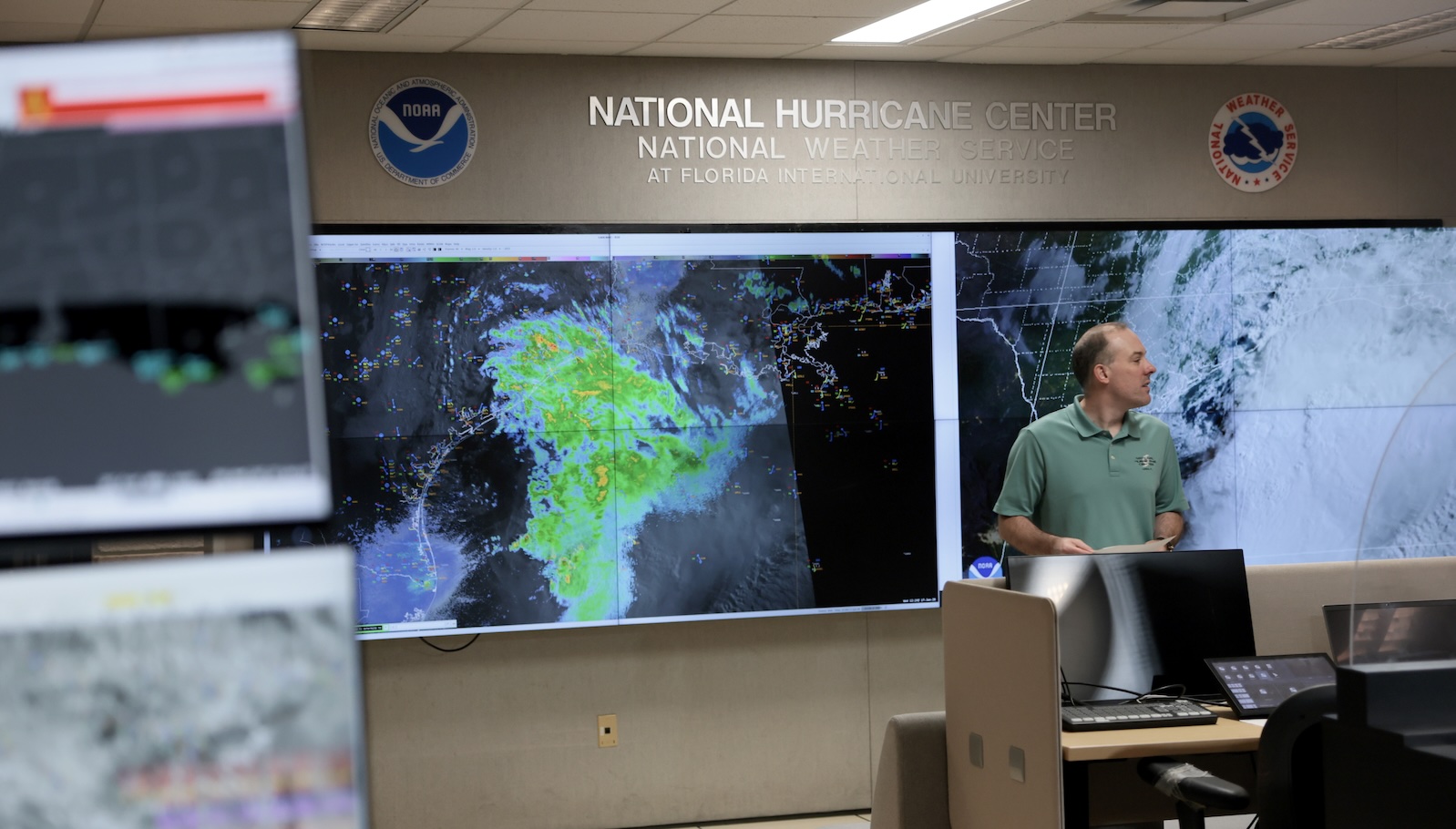
However, hurricanes require specific atmospheric ingredients to thrive beyond warm water alone:
- Low Wind Shear: Hurricanes need consistent wind speed and direction from the surface up through the upper troposphere.
- High Humidity: Masses of dry air act as an anchor, eroding the moisture core of a developing storm and tearing it apart.
While the Atlantic possesses the thermal fuel, El Niño disrupts the rest of the equation. A strong El Niño alters global circulation patterns, generating powerful wind shear across the tropical Atlantic. This creates a turbulent, gusty upper atmosphere.
"Hurricanes do not like that," explains Brian McNoldy, a senior research associate who studies tropical storms at the University of Miami. "So if any manage to form, it can limit how strong they get or how long they live. But so far, it’s managed to suppress anything even being able to form in the deep tropics."
Compounding this wind shear, El Niño drives masses of dry, sinking air directly into the region. "So it’s really, really a suppressed Atlantic hurricane season," McNoldy adds, "basically due to that very strong El Niño that’s taking shape."
Official Statements & Scientific Consensus
The scientific community views the current convergence of extremes not as a statistical fluke, but as a compounding crisis rooted in long-term global warming trends. Experts emphasize that while El Niño is a natural cyclical variation, its impacts are being severely amplified by an already overheated planetary baseline.
Human Toll and Mortality Projections
The physical impacts of El Niño extend far beyond immediate storm damage. Climate researchers and epidemiologists warn that the extra heat being pumped into the atmosphere will have devastating health consequences. Projections from the Climate Impact Lab indicate that in the first nine months of this El Niño event alone, extreme heat could claim approximately 451,000 lives globally.
Agricultural Disruption and Economic Shockwaves
Beyond direct heat stress, El Niño fundamentally disrupts global precipitation patterns. While regions like California and the American Southwest often experience increased rainfall and subsequent flood risks during such events, other critical agricultural breadbaskets face the opposite fate.
Southeast Asia, the Amazon rainforest, and vast swaths of sub-Saharan Africa are confronting severe drought conditions. Historically, these shifts have triggered widespread agricultural collapse.
"It’s crop failures in those regions that, at least historically, have driven the biggest economic and human impacts of these events," notes Zeke Hausfather. When staple harvests fail, local food systems collapse, generating severe humanitarian crises and rippling economic shocks through global markets.
Future Outlook: A Glimpse into Tomorrow
When the current El Niño event eventually wanes, global average temperatures may dip temporarily, but scientists warn that the relief will be short-lived. This event serves as a stark, accelerated preview of Earth’s near-future climate reality.
Within the next two decades, as anthropogenic greenhouse gas emissions continue to warm the globe, baseline planetary temperatures will catch up to today’s extreme peaks. Future El Niño events will layer on top of those higher baseline temperatures, producing weather anomalies far more intense than anything recorded in modern human history.
Preparing for the Unprecedented
As governments and international bodies grapple with the reality of this amplified climate volatility, policy experts stress the urgent need for proactive adaptation strategies across multiple sectors:
- Agricultural Resilience and Food Security: With droughts threatening global crop yields, nations must prepare to mitigate food shortages. This includes stockpiling strategic food reserves and establishing robust financial safety nets—such as direct cash transfer systems—to support subsistence farmers whose harvests fail, ensuring they can still afford basic sustenance.
- Wildfire Mitigation and Forest Management: As prolonged droughts turn vast landscapes into tinderboxes, governments must aggressively reduce wildfire fuels. This involves expanding controlled burn programs to clear dead brush before the dry season peaks, preventing fires from obliterating entire ecosystems and threatening human settlements. Furthermore, cracking down on agricultural waste burning can eliminate one of the most common catalysts for out-of-control blazes.
- Emergency Infrastructure Investment: Given the certainty that catastrophic fires and floods will occur regardless of prevention efforts, municipalities and national agencies must scale up investments in firefighting equipment, expand specialized training programs for emergency responders, and reinforce civil defense infrastructure.
Ultimately, the record-shattering El Niño of this decade is a flashing red warning light. "Everything’s happening on a baseline that’s much hotter than it was a century ago, which makes these impacts correspondingly more severe," Hausfather concludes. "It’s a little glimpse of what the planetary climate will look like."



