For over half a century, visual activism has served as one of the most potent instruments in the global fight for environmental justice. By bearing witness to ecological destruction, holding corporate and political actors accountable, and amplifying the voices of frontline communities, Greenpeace has long utilized photography not merely as a documentation tool, but as a catalyst for systemic change.
This week’s dispatch captures a sweeping panorama of resistance spanning multiple continents, highlighting a critical intersection of human rights, political elections, corporate overreach, and ecological preservation. From towering architectural projections in Manhattan to peatland fire lines in Sumatra, activists are confronting systemic threats head-on.
The events of this week underscore an escalating global tension: while grassroots coalitions mobilize to protect conservation lands, democratic institutions, and indigenous ecosystems, powerful corporate and political entities push forward with high-risk ventures—from deep-sea mining and fossil-fuel-guzzling AI data centers to the exploitation of public conservation areas. As these battles unfold from the courtrooms of Valencia to the halls of Congress in Brasília and the streets of Auckland, one overarching message reverberates across the globe: The world is watching.
Detailed Chronology of Global Actions
1. Spain: The Sagunto Case Trial and the 530-Square-Meter Eye in Valencia
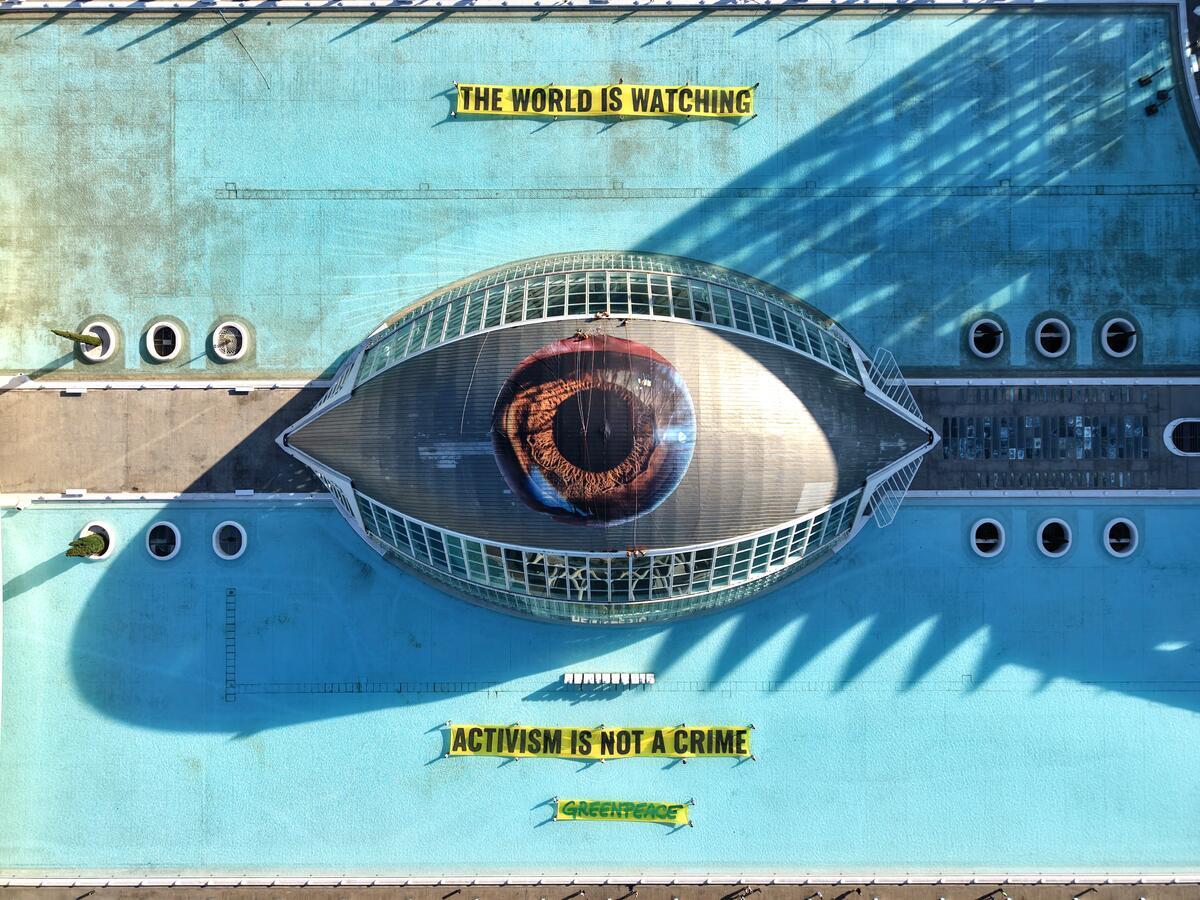
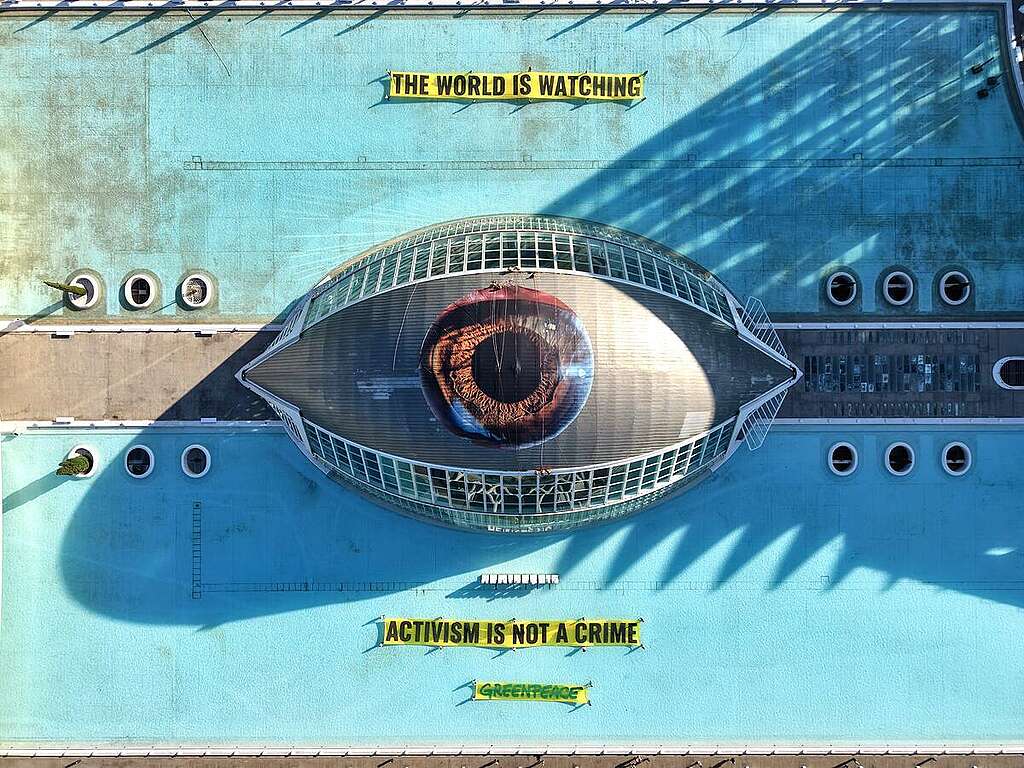
The week’s demonstrations kicked off with a dramatic visual statement in Spain, where Greenpeace unveiled a massive 530-square-meter installation featuring a giant eye at the iconic Hemisfèric in Valencia. Bearing the stark declaration, "The world is watching," the installation was mounted in direct solidarity with 11 Greenpeace activists facing severe legal retaliation.
The defendants are facing prosecution for a 2021 peaceful direct action targeting a gas tanker at the port of Sagunto. As the trial opened at the Ciudad de la Justicia in Valencia, prosecutors sought unprecedented penalties—demanding five years in prison for each individual. Legal experts and human rights advocates have noted that these are among the harshest criminal sentences ever sought against peaceful environmental protesters in Europe, raising critical questions about the criminalization of climate dissent and the shrinking space for civil disobedience across the continent.
2. Brazil: "#YourVoteMatters" and the House of Cards in Brasília
In South America, Greenpeace Brazil took its campaign directly to the doorstep of national governance. Ahead of the crucial 2026 elections, activists erected a precarious "House of Cards" in front of the National Congress in Brasília.
Part of the ongoing “Desembaralho do Senado” (Untangling the Senate Mess) initiative under the broader #YourVoteMatters banner, the installation aimed to dismantle voter apathy and highlight the vital importance of the upcoming Senate race. Activists sought to expose how political maneuvering and compromised legislative bodies jeopardize environmental safeguards, indigenous rights, and climate policies in the Amazon and beyond.
3. Indonesia: Fighting Peatland Fires in South Sumatra
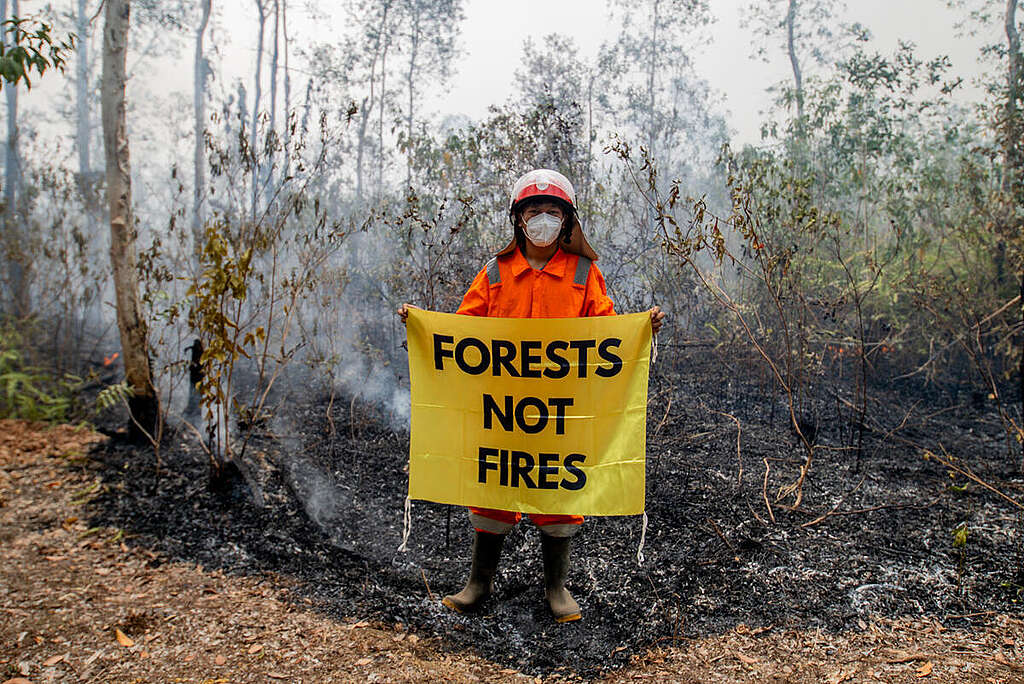
On the frontlines of ecological collapse, Greenpeace Indonesia’s Fire Prevention Team maintained its relentless vigilance in the PT Bintang Harapan Palma (BHP) concession area located in Ogan Komering Ilir, South Sumatra. Amid recurring blazes that threaten regional biodiversity, activist Ali held high a banner bearing the imperative slogan: "Forest Not Fires."
The ongoing conflagrations in Indonesia’s vital peatland ecosystems release staggering amounts of stored carbon into the atmosphere while fueling a toxic, recurring haze. This environmental crisis severely impacts nearby urban and rural populations in Palembang and surrounding districts. Vulnerable demographics—particularly children and the elderly—face exponentially higher risks of contracting acute respiratory infections (ARIs) and other debilitating chronic health conditions, compounding the daily socioeconomic struggles of local communities.
4. New Zealand: Thousands March Against the Conservation Amendment Bill
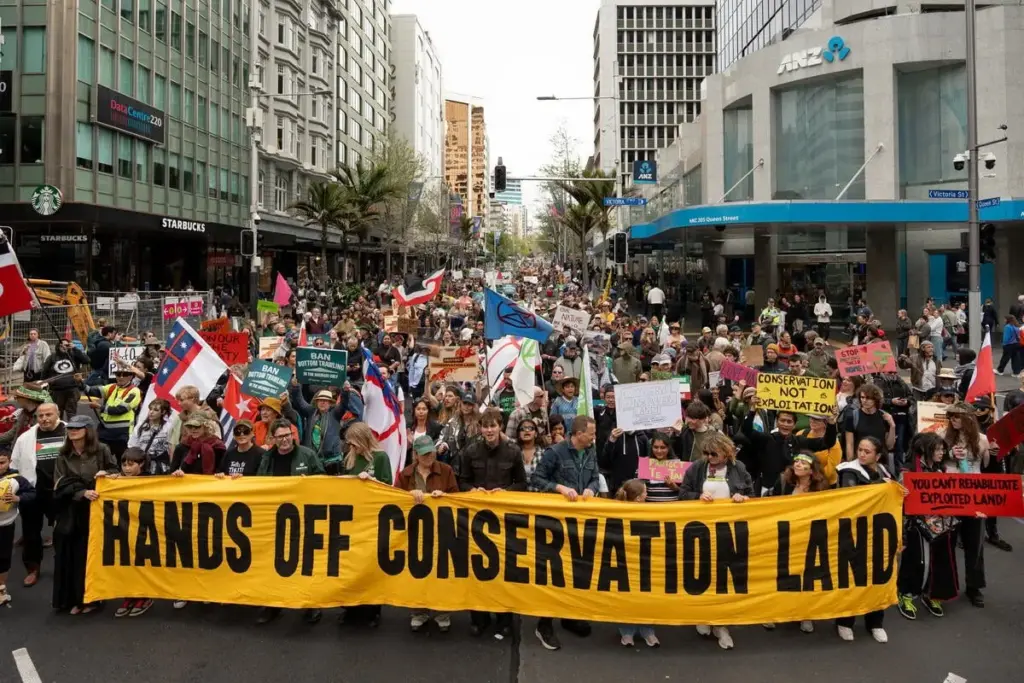
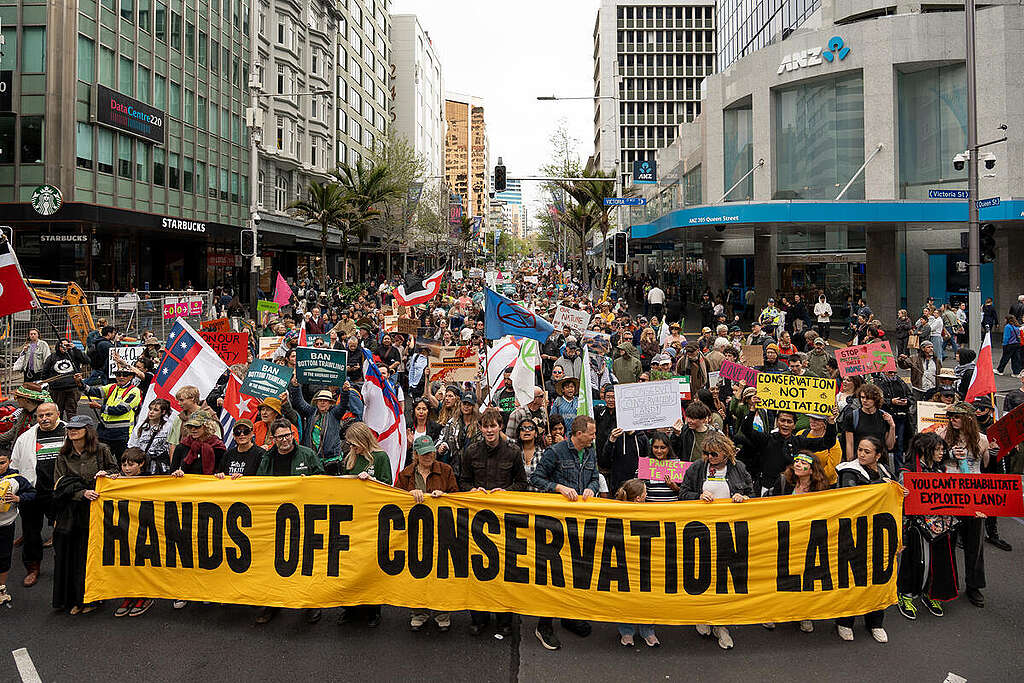
Public outrage reached a boiling point in Aotearoa (New Zealand) on Saturday, September 19th, when tens of thousands of citizens flooded the streets of Auckland. The massive mobilization was organized to protest the controversial Conservation Amendment Bill, a legislative measure critics argue would dismantle long-standing environmental protections and open up pristine conservation land to commercial exploitation and industrial extraction. The historic turnout demonstrated deep public opposition to the commodification of New Zealand’s natural heritage.
5. United States: New York Climate Week and UNGA Mobilizations
As world leaders gathered in New York City for the United Nations General Assembly (UNGA) and the kickoff of Climate Week 2026, Greenpeace USA deployed a multi-pronged wave of creative interventions targeting the architects of the climate crisis:
The Manhattan Bridge and AT&T Building Projections: Greenpeace illuminated the Manhattan skyline with massive architectural projections demanding systemic accountability. Calling out global autocrats and corporate billionaires, the projections flashed a clear formula for survival: "Defend your Freedoms + Defend your Rights = Defend the Planet. RESIST!"
Targeting Deep-Sea Mining at The New York Times Climate Forward: A digital billboard truck circled The New York Times building during the Climate Forward event, directly targeting The Metals Company (TMC) CEO Gerard Barron. The action exposed Barron’s strategic maneuvering to forge ties with the Trump administration, attempting to bypass the International Seabed Authority and fast-track U.S. permits for high-risk deep-sea mining under the false guise of a "climate solution."
Wall Street’s "AI Bubbles": Bringing the fight to the epicenter of global finance, activists deployed symbolic "AI bubbles" around Wall Street. The action named and shamed major financial institutions funding the massive proliferation of hyperscale data centers nationwide. These energy-gorging facilities are not only destabilizing local electrical grids and threatening communities, but are also projected to drive the largest surge in fossil-gas consumption and carbon pollution in the coming years.
Supporting Context, Metrics, and Environmental Impacts
The convergence of these global actions highlights the systemic nature of contemporary environmental crises. Each regional campaign touches upon quantifiable threats to planetary stability:
The Criminalization of Dissent in Europe: Legal watchdogs note that seeking five-year prison sentences for non-violent environmental protesters—as seen in Spain’s Sagunto trial—represents a dangerous authoritarian drift. This judicial posture mirrors global trends where governments increasingly deploy anti-protest laws to shield fossil fuel infrastructure from public scrutiny.
Peatland Degradation and Public Health: Indonesia’s peatlands are among the world’s most effective carbon sinks. When drained and burned for monoculture concessions, they transform from carbon stores into massive emitters. The resulting particulate matter (PM2.5) directly correlates with spikes in hospital admissions for acute respiratory infections, disproportionately affecting impoverished rural communities.
The Hidden Carbon Footprint of Artificial Intelligence: The rapid expansion of generative AI and cloud computing infrastructure has created an unprecedented energy demand. Hyperscale data centers require continuous, massive power loads—frequently driving utilities to keep aging coal and gas-fired power plants online or commission new fossil-gas infrastructure, actively undermining corporate and national net-zero targets.
The Frontier of Deep-Sea Extraction: Deep-sea mining threatens to disrupt fragile, poorly understood benthic ecosystems that play a critical role in carbon sequestration and marine biodiversity. Proponents’ attempts to fast-track regulatory approval through favorable political administrations bypass peer-reviewed scientific consensus regarding the irreversible damage such industrial operations could inflict on the global ocean.
Official Statements and Perspectives
While corporate PR machines attempt to greenwash high-risk industrial ventures—framing seabed minerals as green commodities or data centers as engines of modern progress—environmental defenders and civil society organizations are drawing a hard line in the sand.
"When prosecution seeks half a decade behind bars for peaceful climate defenders, they are attempting to silence an entire movement. But as our installation in Valencia demonstrates: the world is watching, and our collective resolve cannot be locked away." — Greenpeace Spain Campaign Spokesperson
Regarding the corporate rush into unproven marine extraction, Greenpeace organizers emphasized the severe dangers of political expedience:
"CEOs like TMC’s Gerard Barron are attempting to bypass international law and secure permits through backdoor political channels. Deep-sea mining is neither necessary nor safe; it is an unproven gamble with our oceans’ final pristine frontier." — Greenpeace USA Statement
On the domestic front, the fierce public pushback against legislative overreach in New Zealand underscored the enduring power of grassroots mobilization.
"Thousands of New Zealanders taking to the streets send an unmistakable message to lawmakers: our conservation lands are not for sale to the highest bidder." — Dom Zapata, Greenpeace Aotearoa
Future Outlook
As the legal battles in Valencia proceed, the political campaigns in Brazil reach a fever pitch, and the international community grapples with the unchecked resource consumption of big tech and deep-sea extractors, the road ahead remains fraught with immense challenges. Yet, the events of this week prove that global civil resistance is expanding, adapting, and refusing to be silenced.
Greenpeace remains steadfast in its 50-year legacy of bearing witness, exposing corporate greenwashing, and utilizing powerful visual journalism to document environmental injustice. The fight for a livable, just, and democratic planet requires relentless vigilance across every domain—from the courtrooms and legislative chambers to the corporate boardrooms, digital financial hubs, and burning forest floors.
To explore more high-resolution documentation, investigative photography, and video archives from Greenpeace’s global actions, visit the official Greenpeace Media Library.